
Turning Knowledge into Products

Creator Refunds and Chargebacks in 2026: 5 Rails, 3 Windows, and a $15 Fee

September 9, 2026
Share
Creator Refunds and Chargebacks in 2026: 5 Rails, 3 Windows, and a $15 Fee

Get Creator Revenue Insights

How creators are turning audiences into subscription businesses
Share
Key Takeaways:
  • A refund is your decision. A chargeback is a bank's decision, and Stripe states the outcome "is at the sole discretion of the account owner's bank"
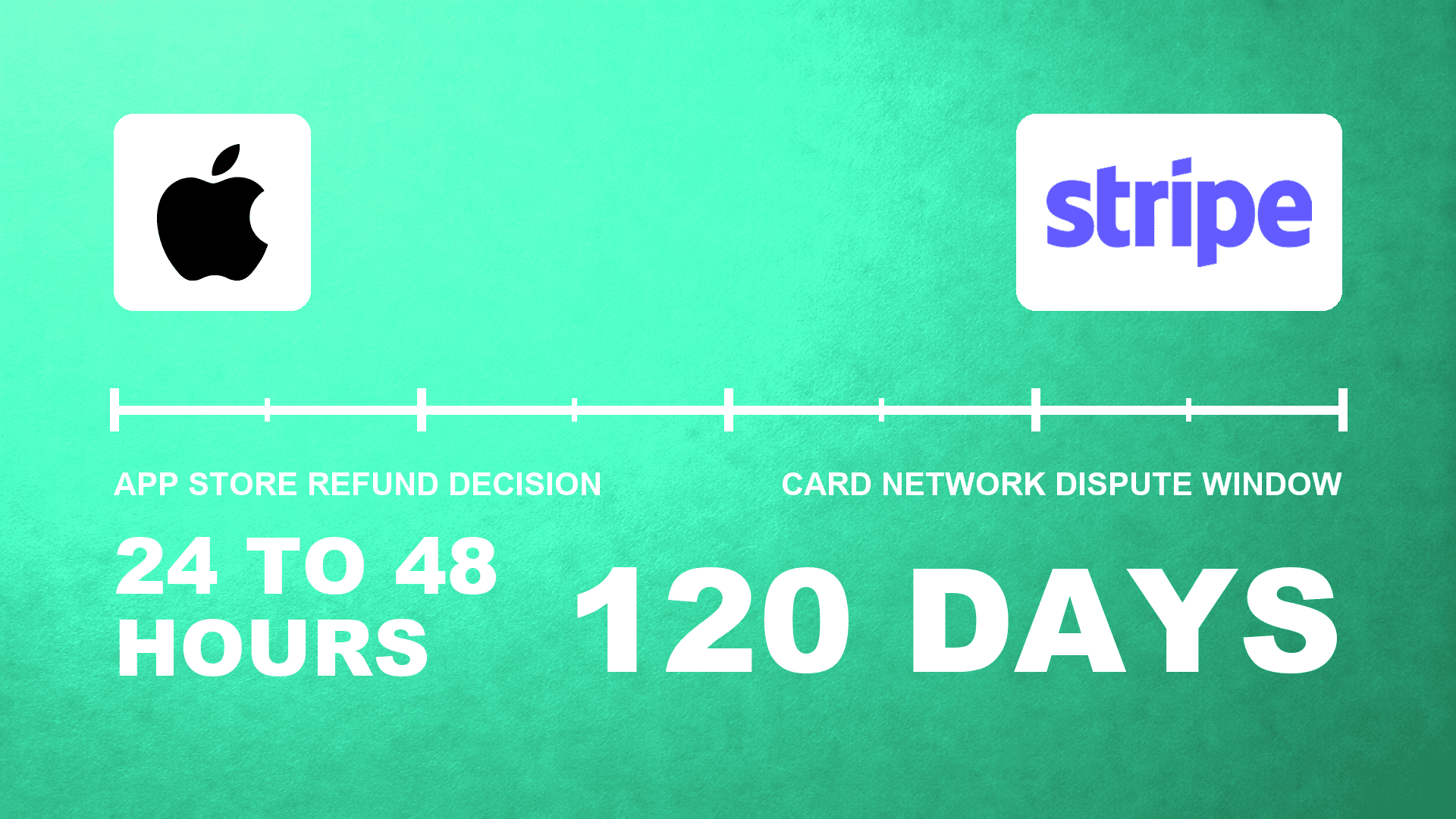
  • The window is not two weeks. Stripe's disputes documentation says "card networks typically allow cardholders to initiate disputes within 120 days of the original payment," and that local payment methods "typically allow customers up to 180 days"
  • Refunding costs you the processing fee. Stripe's pricing page states "the payment processing, Connect and currency conversion fees from the original transaction are not returned," and PayPal states "the fees you originally paid to receive the payment are not returned to you"
  • A US dispute costs $15 to receive and another $15 to fight, and Stripe writes that "unless otherwise stated in your Stripe contract, we never return the dispute received fee"
  • One $49 sale, countered and lost, leaves you $31.72 worse off than if you had never made it
  • Google Play publishes the opposite arrangement for developer-issued refunds: "Google will return the service fee to you"
  • Only one rail tells you why. Apple sends the customer's stated refund reason to your server and gives you 12 hours to answer, and it is the only place in this list where you are told anything about the person reversing the charge
You can lose a sale you made four months ago. Not a subscription that lapsed, not a customer who churned. A completed, settled, spent sale, pulled back out of your balance by a bank you have never spoken to, with a fee attached for the privilege of being told. Every creator selling a $49 template or a $199 course is carrying this exposure, and almost none of them have read the published number that says how long it lasts. Here is that number, on five rails, from the companies' own pages. A refund is money you send back because you decided to. A chargeback is money a card issuer takes back because your customer complained to their bank instead of to you. The customer ends up whole either way. You do not. Stripe's own glossary is blunt about the mechanics: "A dispute (also known as a chargeback) occurs when a cardholder questions your payment with their card issuer." The issuer then "creates a formal dispute on the card network, which immediately reverses the payment." Note the word immediately. The money leaves before anyone reviews anything, and it leaves with a fee. Shopify says the same thing to its merchants in plainer words: "The bank takes the disputed amount from you right away," and if you are on Shopify Payments, "the amount is deducted from your next available payout." The difference matters because creators budget for one and not the other. A refund rate is a product-quality number you can improve. A chargeback rate is a fraud-and-confusion number set partly by strangers, and it comes with a bill. On cards, 120 days from the payment. On buy-now-pay-later and wallet rails, up to 180 days. On the App Store and Google Play, the store decides on its own timetable and you never face a bank at all.
RailWho starts the reversalPublished windowWhat you pay to receive it
Stripe, your own checkoutCardholder, through their bank"Within 120 days of the original payment"$15 dispute received fee (US)
Local payment methods on Stripe (Klarna, PayPal)The provider"Up to 180 days"Varies by provider, plus Stripe's fee
PayPal, directBuyer, as dispute or chargebackPer PayPal's user agreement$15 dispute fee, $20 chargeback fee (US)
Shopify PaymentsCardholder, through their bankCard network rules"The cardholder's bank also takes a chargeback fee from you"
App StoreCustomer, at reportaproblem.apple.comApple publishes a process, not a deadlineNo developer dispute fee published
Google PlayCustomer, or you, from Play ConsoleTwo hours self-service on paid apps"Google will return the service fee to you"
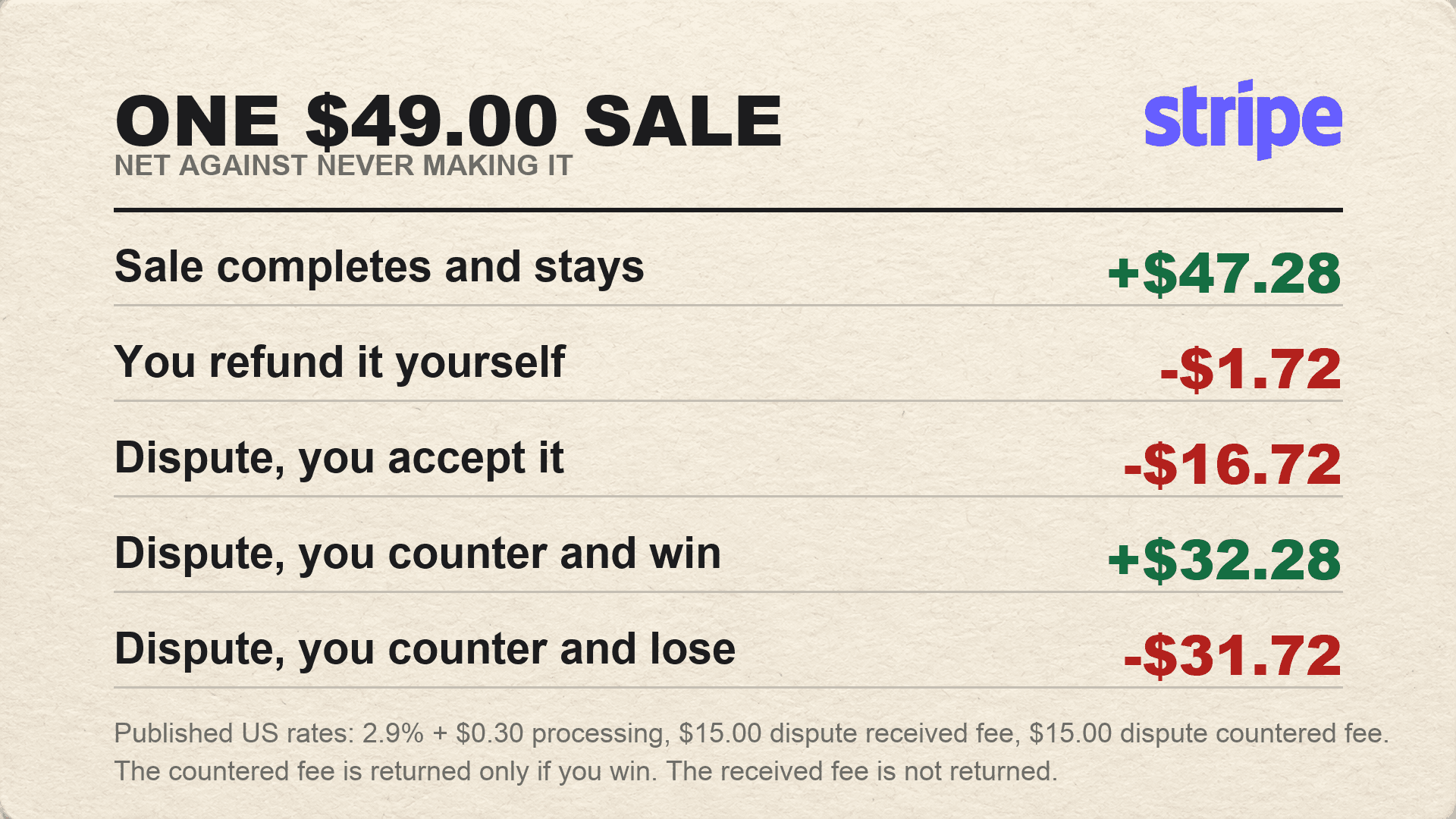
Two rows deserve a second read. The 120 days is not a worst case. Stripe adds that network "rules allow more time in some situations," and that "when a customer pays for a future event or service (like a vacation reservation, professional services appointment, or event ticket), the dispute window starts on the event date, not the payment date." If you sell a cohort course in March that starts in September, your clock has not started yet. That is the same structural problem behind the fee stacks on a $20,000 event night, arriving from a different direction. And Google Play's two hours is the customer's self-service button, not the outer limit. Google's developer help states that "after purchasing a paid app, a user has up to two hours to return it for a full refund," while you retain the ability to "issue full or partial refunds for items your users have purchased" from Play Console. You do not. That is the finding, and every company in this list says so in its own documentation rather than making you infer it. Stripe: "Throughout this process, Stripe facilitates your case, but doesn't have influence over the outcome, which is at the sole discretion of the account owner's bank." Shopify: "The company that issued the cardholder's credit card reviews any evidence, and then resolves the chargeback in either your favor or the cardholder's favor." And then, unambiguously: "Shopify isn't involved in the decision making of chargeback outcomes." Apple, on the other side of the line: "The App Store uses a variety of factors to determine if a refund request is approved or denied." Apple decides. Not a bank, not you. Apple's customer-facing page tells the buyer to request at reportaproblem.apple.com and then "wait 24 to 48 hours for an update on your request." The difference is not who says no to your customer. It is who you are arguing with. On a card dispute you are submitting evidence to an institution that has no relationship with you, on a deadline of "usually 7-21 days," for a decision that "can take 2-3 months to complete." On the App Store you are answering a documented API call in 12 hours. Price it once, on published US rates, and the arithmetic settles the argument. Stripe's standard online card rate is 2.9% plus 30 cents, so a $49.00 charge nets $47.28. Stripe's dispute received fee is $15.00 and its dispute countered fee is another $15.00.
OutcomeWhat movesNet against never making the sale
Sale completes and stays$49.00 in, $1.72 in fees+$47.28
You refund it yourself$49.00 out, original fee not returned-$1.72
Dispute, you accept it$49.00 out, $15.00 dispute fee out-$16.72
Dispute, you counter and win$15.00 received fee out, countered fee returned+$32.28
Dispute, you counter and lose$49.00 out, $15.00 out, $15.00 out-$31.72
Read the last two rows together, because they are the whole reason this article exists. Winning a dispute on a $49 product still costs you $15.00, and losing one you chose to fight costs $79.00 on a $49.00 sale. Stripe returns the countered fee if you win and states plainly that "unless otherwise stated in your Stripe contract, we never return the dispute received fee." PayPal charges on the same shape: $15 for a dispute filed through a PayPal account, $20 for a card chargeback, and "if you refund a Commercial Transaction or an Invoicing Transaction payment, there are no fees to make the refund, but the fees you originally paid to receive the payment are not returned to you." Now compare the same $49 sold through an app you own, under Apple's Small Business Program. The 15% rate leaves $41.65, which is a worse gross outcome than Stripe's $47.28 and is the number every fee comparison stops at. It is also the only column in this article where a reversal cannot cost you more than the sale was worth. If you have been sizing this decision on the headline rate alone, the fuller picture is in what it actually costs to run a subscription app and in the six link-out rates for 2026, which prices the opposite trade.
A ledger card pricing one $49 sale across five reversal outcomes, from plus $47.28 down to minus $31.72
Here is the part nobody writes about, and it is the most valuable thing on this page. When a customer asks Apple for a refund, Apple sends your server a CONSUMPTION_REQUEST notification carrying a consumptionRequestReason. Apple's documentation enumerates exactly five values, and they are the customer's own stated reason:
  • The customer didn't intend to make the in-app purchase
  • The customer had issues with receiving or using the in-app purchase
  • The customer wasn't satisfied with the in-app purchase
  • The customer requested a refund based on a legal reason
  • The customer requested a refund for other reasons
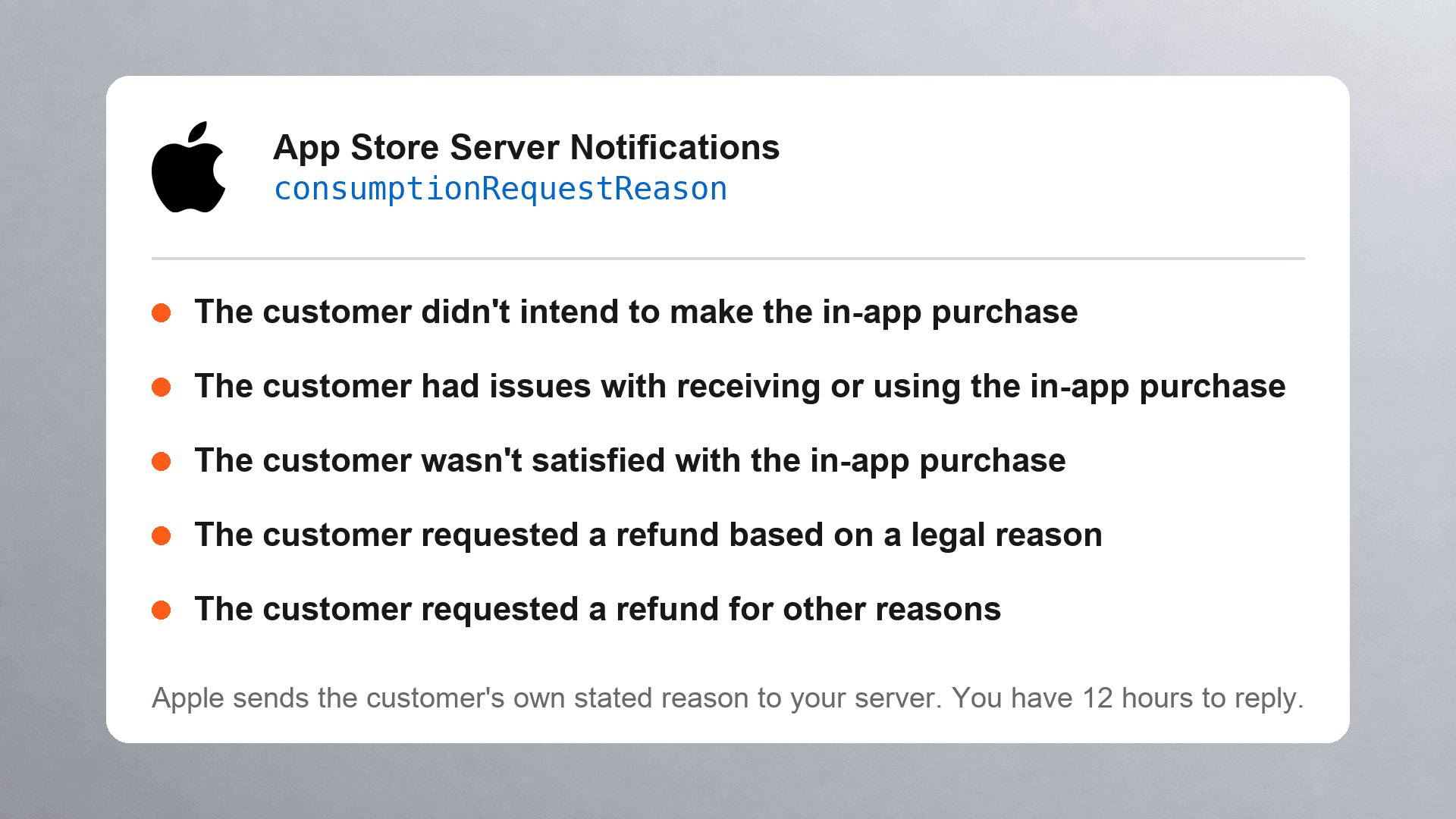
Apple's five documented consumptionRequestReason values, the customer's own stated reason for a refund request, delivered to the developer's server
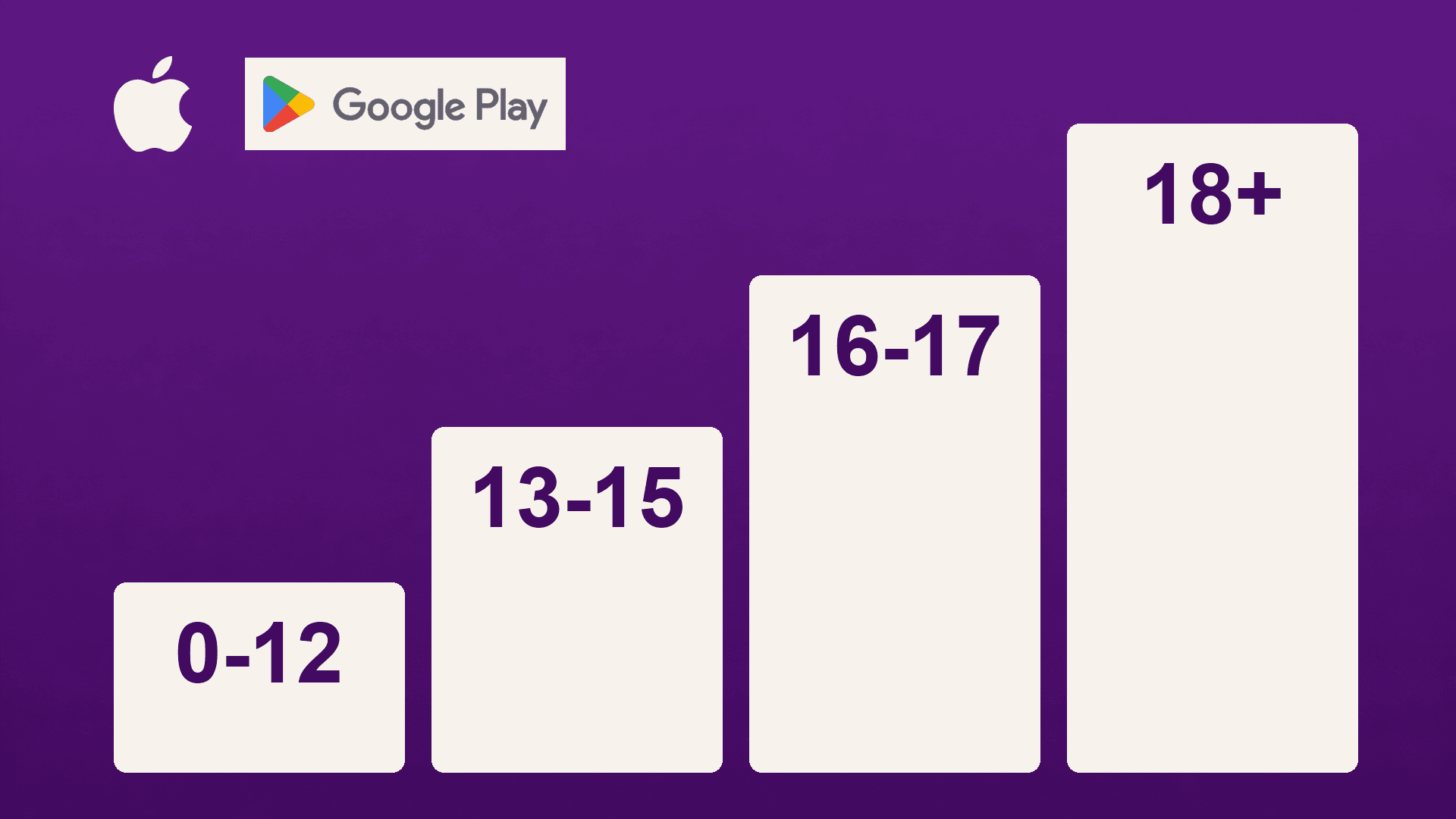
You then have a documented reply. Apple writes: "Respond within 12 hours of receiving the notification," and "the App Store uses the consumption information you provide to inform its refund decisions." Apple also sends a REFUND notification when one is issued and a REFUND_DECLINED notification when one is refused. Stop and count what that is. It is a verified, per-customer, per-transaction statement of why someone wanted their money back, delivered to your server, with a mechanism for you to answer. A card chargeback gives you a reason code written by a bank about a transaction description. This gives you a product signal. That is the same pattern as the age brackets the app stores now pass through to developers, which we covered in the three state laws and four age brackets: a rule that looks like a burden turns out to hand you the only verified fact about an individual customer you have ever been given. Ten years of follower counts never told you why one person left. Creators write "all sales final" into a checkout page and believe the matter is closed. It is not, and the reason is structural rather than legal. A chargeback does not go through your terms. It goes through the card network, and the network's rules bind your acquirer, not your customer's expectations. Your refund policy is evidence you can submit. It is not a bar to filing. The practical consequence is counterintuitive: a generous refund policy is a chargeback-reduction strategy, because every refund you grant is a dispute that never gets filed. Stripe puts a number on the trade for fraud warnings specifically, advising that "the optimal point for issuing a refund on early fraud warnings is on charges that are roughly less than or equal to your dispute fee," and that it is "likely not worthwhile to refund" charges more than 35 percent above it. At a $15 fee, that is a live threshold you can act on today: below about $20, refunding a flagged charge is simply cheaper than being disputed. If you are a creator selling a $49 template pack, a $79 preset bundle or a $199 course to a few hundred people a month through your own checkout, run this in five minutes. Open your processor's dashboard. Count disputes in the last twelve months. Multiply by $15, add the disputed amounts you lost, and add $15 again for each one you contested and lost. That is your annual cost of being reversible, and it is a line item you have almost certainly never seen written down because it is scattered across twelve monthly statements as small negative adjustments. Then do the second half, which is the part that changes decisions. Count how many of those disputes you could explain. On a card dispute, the answer is usually none, because the reason code says "product not received" about a file that was downloaded. You are paying $15 a time to lose arguments about facts you already have. A creator selling one-time products has no repeat-purchase memory to begin with, which means each reversal is also the end of the relationship. A subscription that gets refunded in month three has already been paid for twice. Four things, in order of how fast they pay off.
  • Put your business name in the card statement descriptor. The single most common dispute reason is a customer not recognizing the charge. If your descriptor is your LLC's registered name and your product is sold under a channel name, you are manufacturing disputes.
  • Refund anything flagged and cheap without arguing. Below roughly your dispute fee, the math is not close.
  • Write down your reversal window per rail. If you sell through three places, you have three different clocks and you probably think you have one.
  • Ask what a store-owned rail would change. Not because the commission is lower, because it is not. Because on that rail the platform makes the decision, absorbs the bank, tells you the customer's stated reason, and gives you 12 hours to reply.
BUILT BY FOUNDRY builds the product your audience is already asking you for in about three weeks, at $0 upfront, on a revenue share. You own the business and you own the revenue. We keep running it after launch, including the billing surface, the store relationship and the refund notifications that most creators never even know are being sent. The fee comparison that matters is not 15% against 2.9%. It is whether the money you earned in May can still be taken out of your account in September by somebody who will never tell you why. Stripe's disputes documentation states that "card networks typically allow cardholders to initiate disputes within 120 days of the original payment, but their rules allow more time in some situations." For local payment methods such as Klarna and PayPal, Stripe states that providers "typically allow customers up to 180 days to file a dispute." Where a customer paid for a future event or service, Stripe notes that "the dispute window starts on the event date, not the payment date," so a course sold months before it begins has a clock that has not started. No, on the two largest independent rails. Stripe's pricing page states that "the payment processing, Connect and currency conversion fees from the original transaction are not returned," although there is no fee for issuing the refund itself on most payment methods. PayPal states that "the fees you originally paid to receive the payment are not returned to you." Google Play is the exception in this comparison: its developer help states that when you issue a refund, "Google will return the service fee to you." Stripe's published US fee is $15.00 to receive a dispute and a further $15.00 dispute countered fee if you submit evidence. Stripe returns the countered fee if you win and states that "unless otherwise stated in your Stripe contract, we never return the dispute received fee." On a $49.00 sale that means winning costs $15.00 and losing a contested dispute costs $79.00 in total outflow. PayPal's published US figures are a $15 dispute fee and a $20 chargeback fee. No. A chargeback is filed with the customer's card issuer under card network rules, not under your terms of service, so your policy is evidence you can submit rather than a bar to filing. Because a granted refund is a dispute that never happens, a clear and fast refund policy usually lowers total cost, especially below the level of the dispute fee itself. Yes, which is unusual. Apple sends a CONSUMPTION_REQUEST notification to your server carrying a consumptionRequestReason with five documented values covering unintended purchase, a fulfillment issue, dissatisfaction, a legal reason and other. Apple's App Store Server API documentation instructs developers to "respond within 12 hours of receiving the notification" and states that "the App Store uses the consumption information you provide to inform its refund decisions." Apple also sends separate REFUND and REFUND_DECLINED notifications for the outcome. The customer's card issuer, and every party in the chain says so in writing. Stripe states that it "doesn't have influence over the outcome, which is at the sole discretion of the account owner's bank." Shopify states that "Shopify isn't involved in the decision making of chargeback outcomes." Stripe adds that the full lifecycle "can take 2-3 months to complete" and that you have "usually 7-21 days" to respond once a chargeback is created. Every figure above is a live published page and can change without notice. Verify against the source before you make a decision on it.
Our work

Creators who already did this

These are apps we designed, built, shipped, and still run today, with the creator keeping the code and the audience.

Brandon Whiteleather

Brandon Whiteleather

Founder & CEO of Freeze Dry Buddy

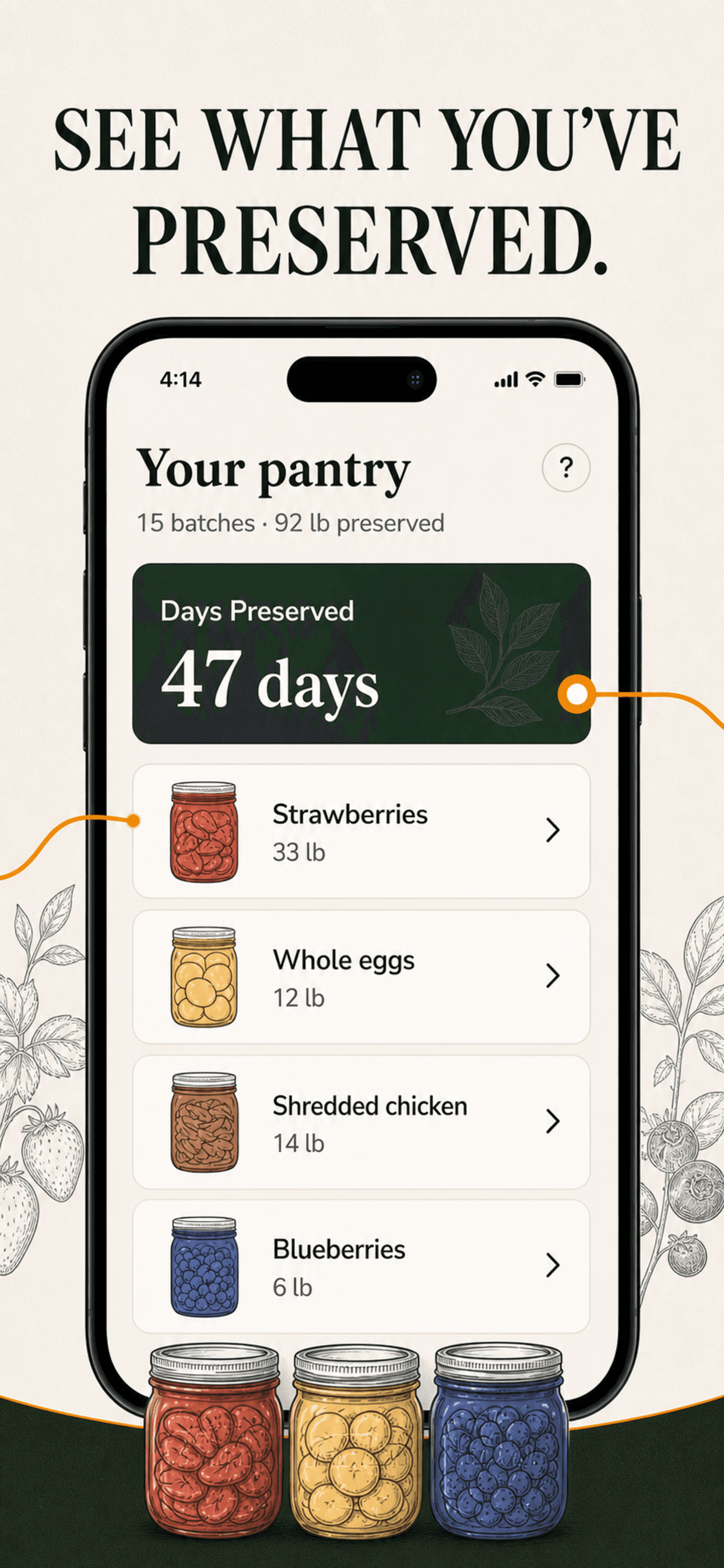
Freeze drying made foolproof, from a homesteader who's done it 1,000 times.

Top Food App1.4M+ followers
Read the case study
Kristen Donathan

Kristen Donathan

Founder & CEO of Stain Fix

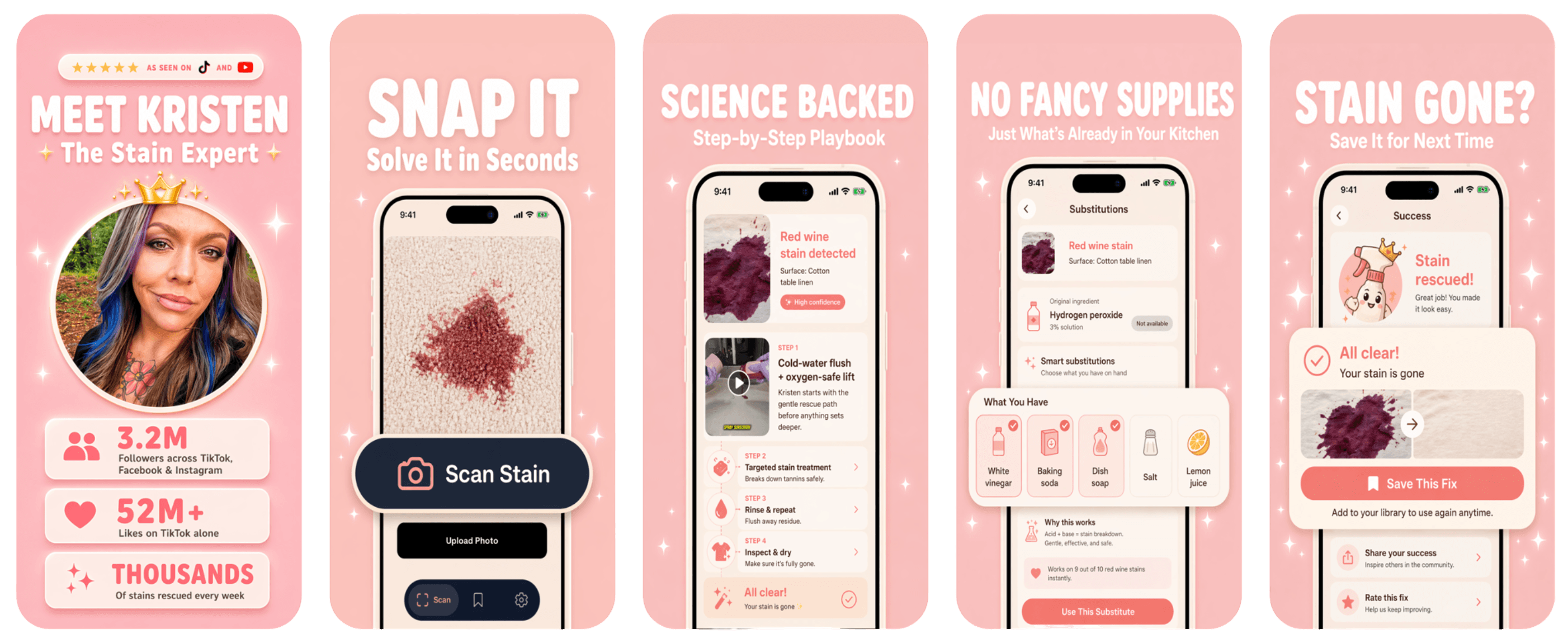
Snap a stain. Get the fix in seconds.

Top Lifestyle App1.5M+ followers
Read the case study
Stain Fix screenshots
Ellie Fausett

Ellie Fausett

Founder & CEO of Vector Guard

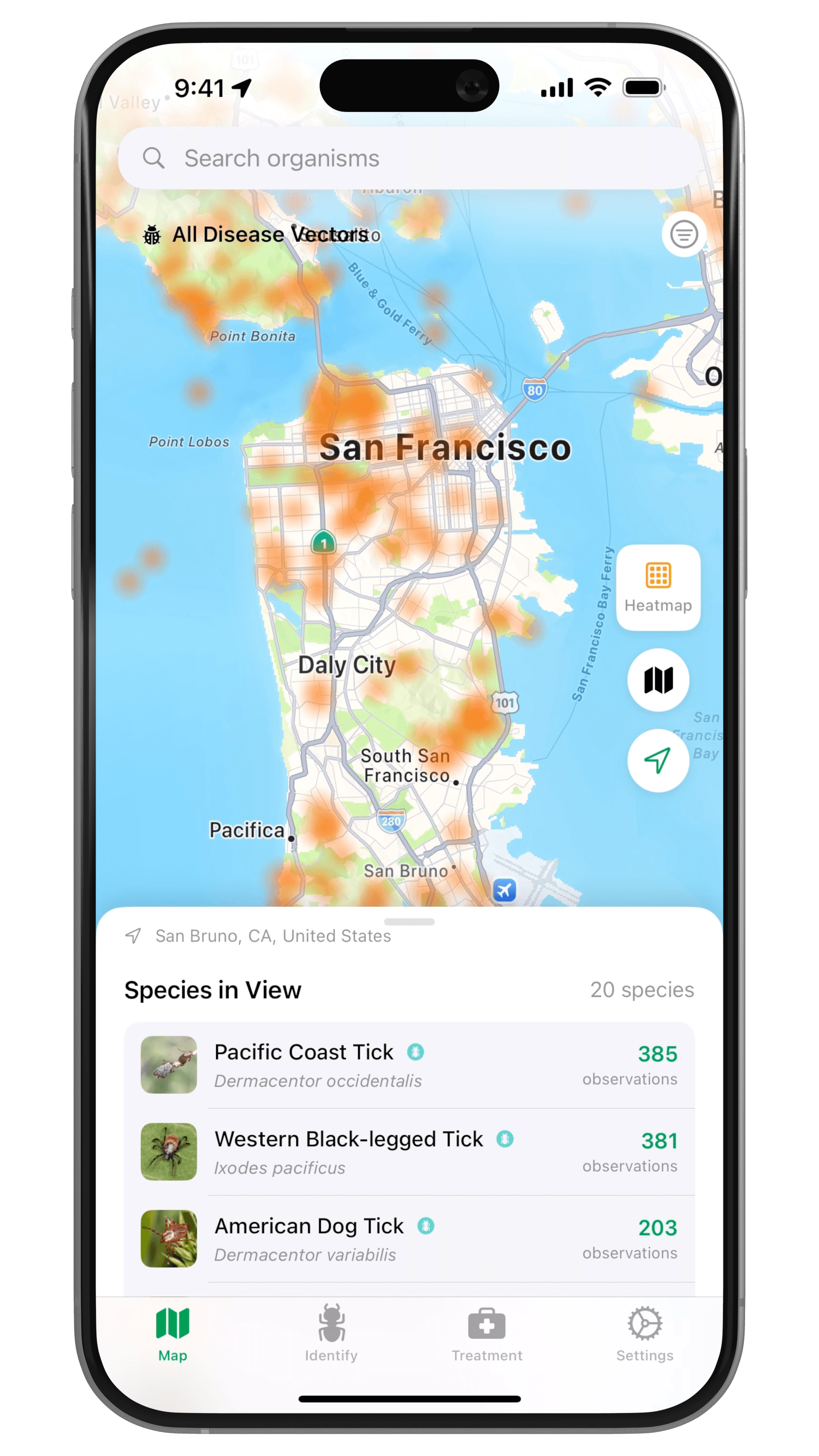
Spot disease-carrying pests before they reach your family.

Top Health App
Read the case study
Vector Guard screenshots

Creator app strategy

Curious what your app could be?

Enter your handle and BUILT BY FOUNDRY will research your audience and present custom app concepts. Free.

Creator Refunds and Chargebacks in 2026: 5 Rails, 3 Windows, and a $15 Fee