
Platform Reviews

Buy Me a Coffee Review 2026: Is the 5% Fee Worth It?

August 9, 2026
Share
Buy Me a Coffee Review 2026: Is the 5% Fee Worth It?

Get Creator Revenue Insights

How creators are turning audiences into subscription businesses
Share
Key Takeaways:
  • Buy Me a Coffee charges no monthly fee and takes a 5% platform fee, so the headline number is one of the lowest in the creator economy.
  • Stripe fees sit on top: 2.9% plus $0.30 per transaction, 0.5% for payout processing, an extra 1% on international payments, and an extra 0.5% on subscriptions.
  • That $0.30 is the part creators miss. On a $5 coffee it costs 6% by itself, which pushes the real rate past 14%.
  • The platform is genuinely creator-friendly where it counts: supporters belong to you, the list exports, and every feature is free.
  • Rating: 3.5 out of 5. Buy Me a Coffee is the best tip jar available. A tip jar is still the ceiling.
Verdict: Buy Me a Coffee is worth it for creators who want to accept support in ten minutes with zero fixed cost and zero lock-in. The 5% platform fee is fair, the product is pleasant, and the supporter list is yours to export. What it will not do is build recurring revenue that compounds. Tips do not renew, small transactions get eaten by per-transaction processing, and nobody browses the platform looking for you. Use it to prove your audience will pay. Do not mistake it for the business. Buy Me a Coffee is a creator payments platform where fans send one-time tips, buy memberships, or purchase digital extras through a single hosted page, with no monthly subscription for the creator. Brothers Jijo Sunny and Joseph Sunny started designing it in 2017 after living on unreliable AdSense income, and they built the product around removing friction rather than adding features. The metaphor does the selling. A supporter buys "a coffee," usually $3 or $5, in one tap with no account signup. That single design decision is why the platform has, by its own count, more than 2 million creators and supporters using it across 44 countries. The company went through Y Combinator and remains small relative to the platforms it competes with. Since launch it has grown three ways to get paid: one-time support, monthly memberships, and a shop for digital products such as ebooks, presets, and templates. There is also a consumer iPhone app holding a 4.4-star average across roughly 1,790 ratings, which fans use to follow creators and see new posts. Buy Me a Coffee charges creators no monthly fee and takes a 5% platform fee, but Stripe's processing charges are separate and land on top of it. We verified this against the live fee documentation on August 9, 2026. The FAQ states plainly: "We do not charge a monthly fee. All features including publishing and emails are free for everyone. We charge a 5% transaction fee, and creators keep 95% of the earnings." The help center is more complete. Its fee breakdown lists a 5% platform fee per transaction, plus Stripe at 2.9% and $0.30 per successful transaction, plus 0.5% for payout processing, plus 1% more on international transactions and 0.5% more on subscription payments. Here is what that stack does to a single transaction, assuming a domestic card and a creator who absorbs the processing fee rather than passing it to the supporter.
Support AmountPlatform Fee (5%)Stripe (2.9% + $0.30)Payout (0.5%)Effective Rate
$3$0.15$0.39$0.0218.7%
$5$0.25$0.45$0.0314.6%
$10$0.50$0.59$0.0511.4%
$25$1.25$1.03$0.139.6%
$50$2.50$1.75$0.259.0%
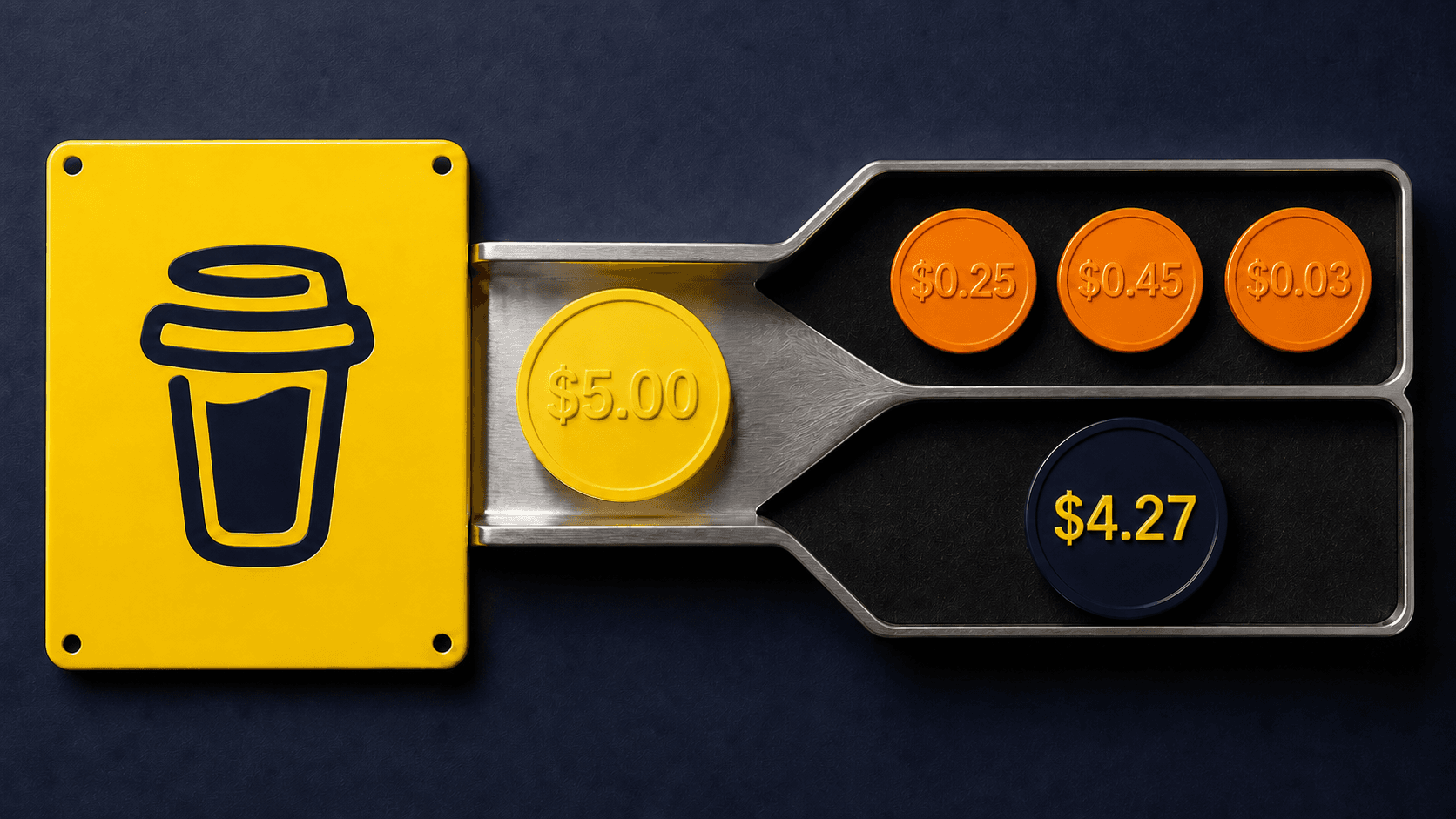
The 5% is honest. The $0.30 is the one that hurts. On a $3 coffee it is 10% of the transaction by itself, which is why a platform advertising a 5% fee can quietly cost a creator closer to 19%. The default $5 coffee, the exact amount the product's own metaphor encourages, lands near 14.6%. Run it at scale. A creator taking $1,000 a month in $5 coffees processes 200 transactions and keeps roughly $854. The same $1,000 arriving as forty $25 payments keeps roughly $904. Same gross. Fifty dollars a month of difference, created entirely by transaction count. Payouts require a $10 minimum balance, and the first one takes 7 to 14 days while the account is reviewed. After that, money moves to Stripe and reaches a bank in 3 to 5 business days.
A five-dollar Buy Me a Coffee support token splitting into three exact fees and $4.27 for the creator
Buy Me a Coffee wins on three things most creator platforms get wrong: zero fixed cost, real supporter ownership, and a checkout that does not ask the supporter to sign up. No monthly bill means no losing months. Every feature, including publishing and email to supporters, is free. A creator with a bad month pays nothing. Compare that to a $30 or $60 monthly platform subscription that bills whether anyone bought anything, and the model looks generous rather than clever. The supporter list is genuinely yours. The FAQ commits to it directly: "your supporters are strictly yours. We do not email them. You can export their list any time you like." That is a stronger promise than most platforms make, and it is the single most valuable thing a creator can extract when they outgrow the tool. Ask for the export early, before you need it, and check that emails and payment history come with it. One tap, no account. A supporter can pay with a card, Apple Pay, Google Pay, or Cash App without creating anything. Every signup screen between a fan and a payment costs conversions, and the platform removed all of them. This is the reason casual audiences convert here and stall on heavier platforms. The shop and memberships are competent. Digital products sell without a separate storefront, and monthly memberships bill on the same rails. Neither is deep, but both work, and a creator can test whether an audience will pay recurring money before committing to something larger. NineLives by Samantha Mae
Our work

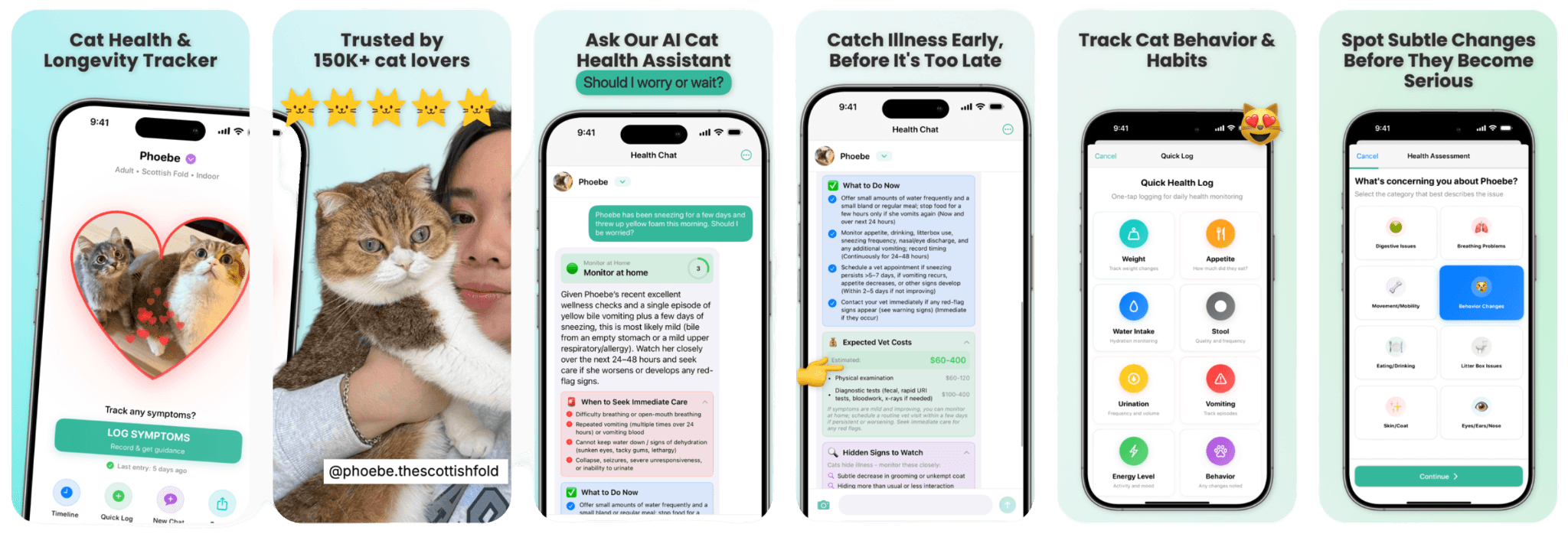
How Samantha Mae Turned a Cat Community Into the NineLives Health App

Samantha Mae's community shared cat-care questions that vanished into comment threads. We built NineLives with her — an iOS app that keeps every cat's health history in one place.

Read the case study → (opens in a new tab)
The limits are structural, not fixable with a feature release: tips do not renew, small transactions get taxed hardest, and the platform sends you no traffic. Tips are one-time payments wearing a subscription costume. A $5 coffee is $5. There is no second month unless you go earn it again by posting again. This is the same treadmill described in why your income resets to zero every month, and the tip jar does nothing to stop it. The dashboard number goes up on the days you publish and flat on the days you do not. The fee structure punishes exactly the behavior the product encourages. The metaphor pushes fans toward $3 and $5, which is where the per-transaction fee does the most damage. A platform optimized around micro-payments is a platform optimized around its own worst pricing tier for you. There is no discovery. Nobody opens Buy Me a Coffee to find a creator they have never heard of. Every dollar comes from traffic you brought. An App Store listing, by contrast, keeps working while you sleep, because people search for the thing before they know who made it. That difference is covered in why your next 10,000 fans will not come from social media. Memberships are a feature, not a product. A member pays for access to posts. Nothing in the product tracks their progress, adapts to their goals, remembers what they did last week, or gives them a reason to open it on a Tuesday when you have posted nothing. Support-based memberships churn fast because the pitch is "support me" rather than "use this." Your page is a page, not a brand. It lives on a shared domain, next to millions of other pages, in a layout you do not control. It never becomes an install on a phone, a review history, a search ranking, or an asset with a valuation.
A Buy Me a Coffee tip jar releasing one payment beside the Built by Foundry mark surrounded by renewals
Buy Me a Coffee fits creators who want zero fixed cost, fast setup, and a low-stakes way to find out whether an audience will pay at all.
  • Writers, illustrators, and open-source maintainers: Work that people appreciate but nobody expects to buy. The tip jar converts gratitude that would otherwise evaporate.
  • Creators under 50,000 followers: Fixed monthly platform costs eat small audiences alive. A percentage-only fee does not.
  • Anyone validating in week one: Set it up in ten minutes, see whether twenty people send $5, and learn something real about your audience before building anything.
  • Podcasters and streamers with episodic spikes: Support tracks releases, and there is no monthly bill on quiet weeks.
If you are a fitness creator with 50,000 engaged followers, a coaching method people already ask you to formalize, and a DM folder full of "do you have a plan for this," you have outgrown this category entirely. Your audience is not offering you a coffee. They are asking to buy a product, and the tip jar has no way to sell them one.
Live every Thursday

Watch us tear down a creator business, live

Every Thursday at 11 AM PT we take a real creator business and show the app hiding inside it: the wedge, the paid loop, the pricing, and what would sink it. Free, and the replay goes to everyone who registers.

Save your seat → (opens in a new tab)
The tip-jar category is crowded and the differences are narrow. The gap that matters is the one between all of them and owning software.
OptionCore CostRecurring RevenueDiscoveryWhat You Own
Buy Me a Coffee5% plus processingMemberships, lightweightNoneSupporter list
Ko-fi0% on free tier, monthly plan for extrasMemberships, lightweightNoneSupporter list
Patreon10% standard fee for new creatorsCore productMinimalPatron list
Owned creator app$0 upfront on revenue shareCore productApp Store searchProduct, ratings, subscribers
Ko-fi undercuts the headline fee with a 0% option and charges for its upgrade tier instead, which makes the two nearly interchangeable at low volume. Patreon charges a 10% standard platform fee for new creators and gives more in return: a real membership product, tiers fans understand, and a recognizable consumer brand. If you want a fuller list of exits from the tip jar, we compared five Buy Me a Coffee alternatives built for recurring revenue. Pick by what the fan is actually buying. If they are buying a feeling, Buy Me a Coffee is the cheapest and most pleasant way to sell it. If they are buying a result, none of the first three rows can deliver it. Buy Me a Coffee builds a payment habit and a portable supporter list, which is real value, but it does not build a company. That is why this review lands at 3.5 out of 5. Ask the question a buyer would ask. If someone wanted to acquire your creator business tomorrow, what are they buying? A tip jar has no contracted revenue, no install base, no retention curve, no store ranking, and no product anyone would miss. A subscription app has all five. One is income. The other is equity. The creators who make this leap tend to have the same evidence sitting in front of them: the same question asked fifty times, a spreadsheet or PDF people keep requesting, a routine fans try to copy badly. That is a product specification written by your audience, and no tip jar can execute it. Built by Foundry builds subscription apps with creators for $0 upfront on a revenue share, usually in about three weeks. After launch, our App Care team runs the updates, reliability work, and growth so the creator keeps creating. You bring the audience and the method. We build and run the software you own. Buy Me a Coffee earns 3.5 out of 5. As a tip jar it is close to perfect: no monthly fee, a friendly checkout, a 5% platform cut, and a supporter list the company explicitly says belongs to you. Very few creator platforms are this honest about the exit. The math deserves your attention anyway. The advertised 5% behaves like 14.6% on the $5 payments the product is designed to produce, and closer to 19% on a $3 coffee. Nudge your default support amount upward and you keep an extra $50 on every $1,000, without asking anyone for more money. The harder truth is the ceiling. A tip is a thank-you note with a payment attached, and thank-you notes do not compound. If your audience keeps asking for your plan, your system, your tracker, or your method in a form they can use every day, they have stopped offering to buy you a coffee. They are asking you to build the company. Buy Me a Coffee charges a 5% platform fee per transaction and no monthly subscription. Stripe processing is separate at 2.9% plus $0.30 per transaction, 0.5% for payout processing, an additional 1% on international transactions, and an additional 0.5% on subscription payments. There is no monthly cost. All features, including publishing posts and emailing supporters, are free for every creator. The platform earns only when a supporter pays, through the 5% transaction fee. Because Stripe's fees apply on top of the platform's 5%. The $0.30 flat charge per transaction is the largest factor on small amounts, costing 10% of a $3 payment and 6% of a $5 payment before any percentage-based fee is applied. Yes. The company states that supporters belong to the creator, that it does not email them, and that the list can be exported at any time. Creators should run a test export early to confirm which fields are included. Buy Me a Coffee is better for one-time support, fast setup, and creators who want no fixed monthly cost. Patreon is better for creators building a membership as their primary product, with tiers, a familiar consumer brand, and a stronger recurring billing experience.

Creator app strategy

Curious what your app could be?

Enter your handle and Built by Foundry will research your audience and present custom app concepts. Free.

Buy Me a Coffee Review 2026: Is the 5% Fee Worth It?