
Platform Reviews

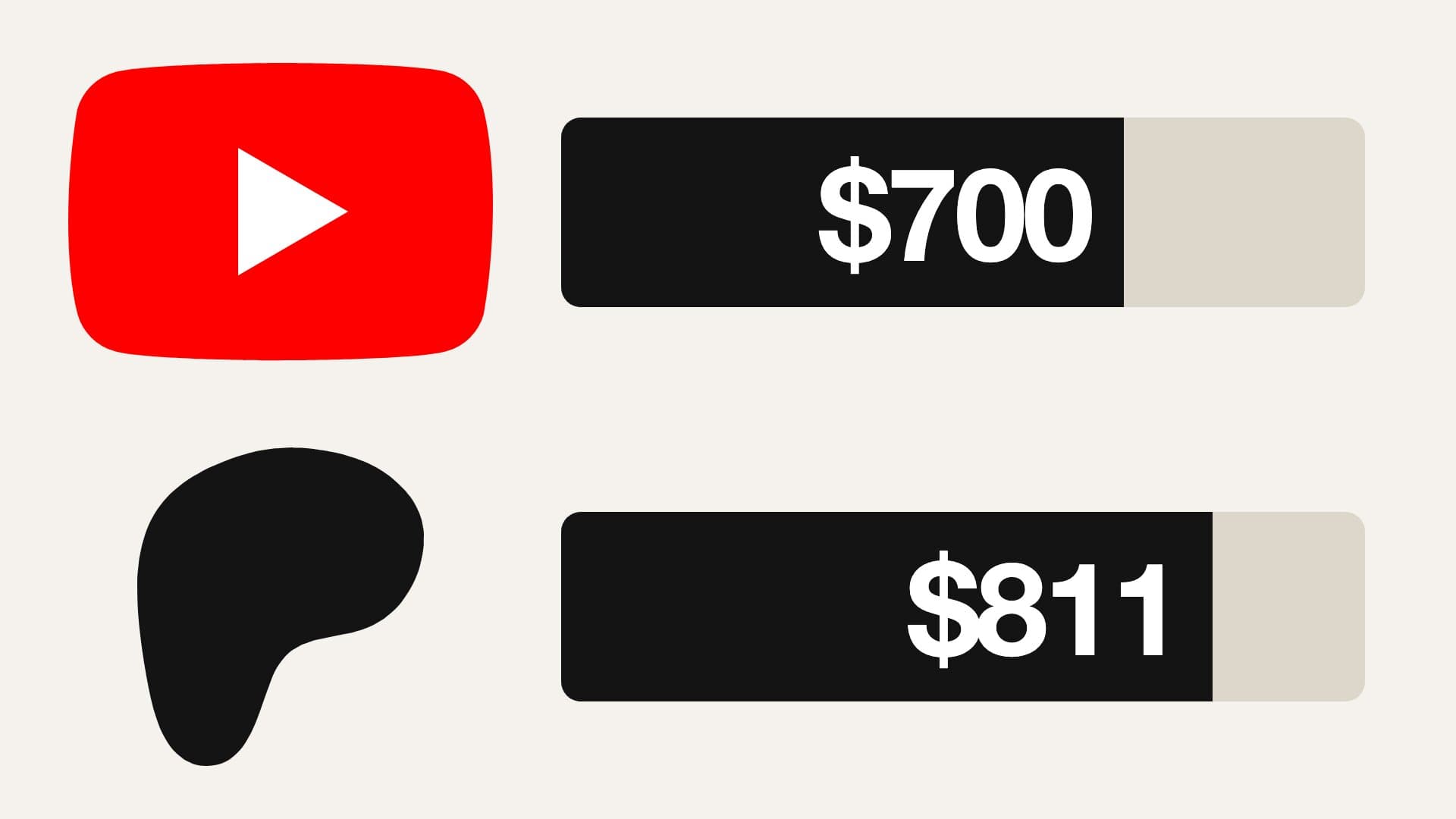
YouTube Memberships vs Patreon in 2026: $700 or $811 From the Same $1,000, and the Export Test

October 15, 2026
Share
YouTube Memberships vs Patreon in 2026: $700 or $811 From the Same $1,000, and the Export Test

Get Creator Revenue Insights

How creators are turning audiences into subscription businesses
Share
Key Takeaways:
  • YouTube pays creators 70% of channel membership revenue after applicable taxes and fees, and says all transaction costs, card fees included, "are currently covered by YouTube," per its memberships page for creators
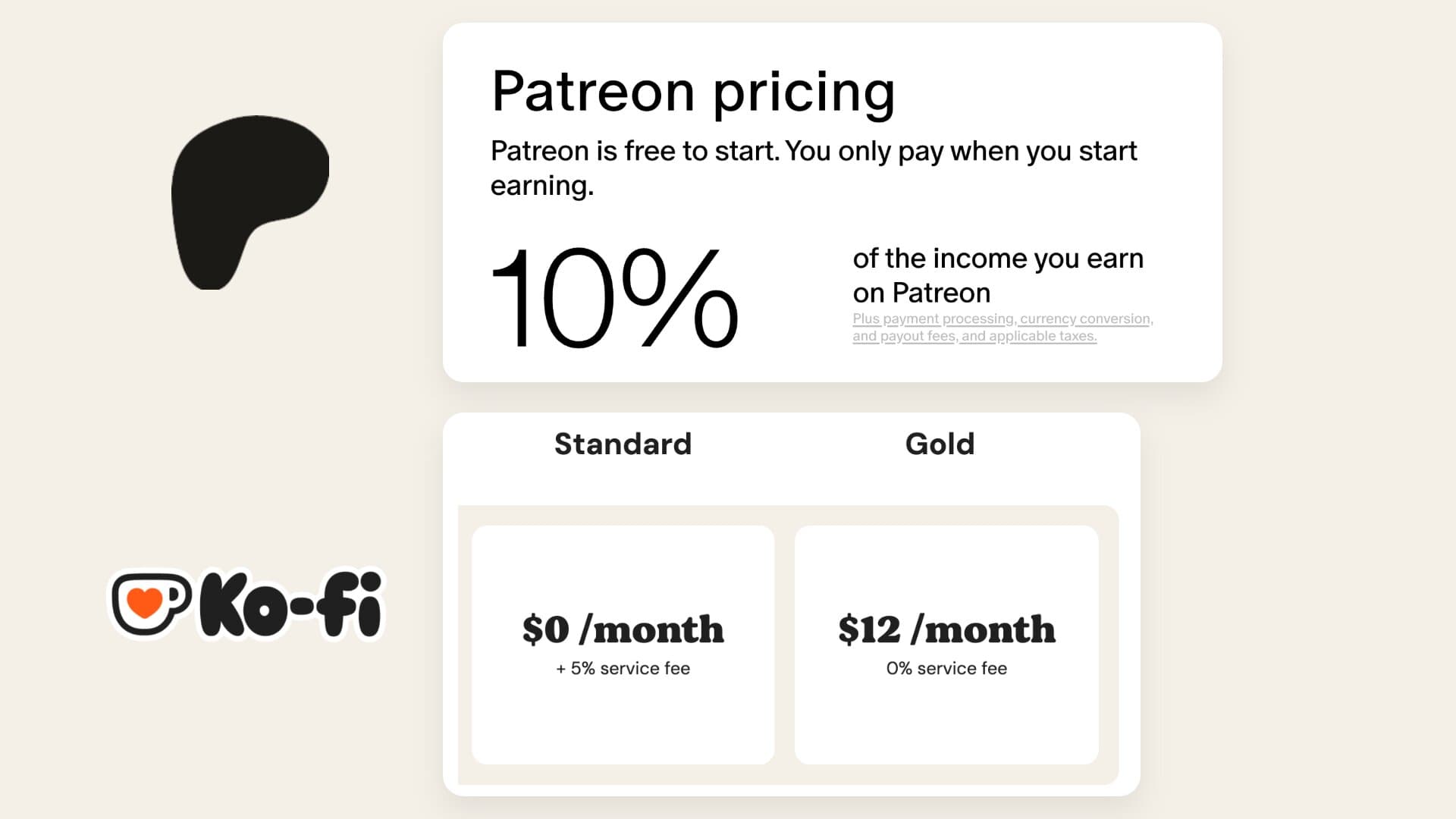
  • Patreon charges pages published after August 4, 2025 a 10% platform fee plus 2.9% and $0.30 per card payment, and $0.25 per direct-deposit payout, per its creator fees overview (updated October 13, 2026)
  • Take 200 members paying $5 by card. YouTube pays you up to $700. Patreon pays you $810.75. The two only meet at a price of about $1.75 a month, because of Patreon's fixed 30 cents
  • Memberships stay open at 500 subscribers on YouTube even after ad entry doubles on February 1, 2027, per YouTube's Partner Program update
  • The export test: Patreon's member CSV includes names and emails. The fields YouTube lists for its member export are tenure and last change, with no contact details. One list is a customer list. The other is a seating chart
A creator with a YouTube channel and a few hundred loyal viewers usually asks this question in one of two ways. "Should I turn on the Join button or start a Patreon?" Or, from someone already running both, "Why does my Patreon pay more for the same people?" Both platforms sell the same thing, a monthly payment for extra access, and both publish their terms in plain language. We read the current help-center pages for each on October 15, 2026 and priced the same membership on both. The money gap is real but modest. The bigger difference is what you hold if you ever leave. We have reviewed Patreon on its own in our Patreon review, and compared it with Ko-fi in Patreon vs Ko-fi. This piece puts it next to the payment option already built into your channel. Every row below comes from YouTube Help and Patreon's help center, read on October 15, 2026. Patreon figures are for its standard plan and a US creator paid in dollars.
YouTube channel membershipsPatreon (standard plan)
Who can turn it onPartner Program channels; fan funding opens at 500 subscribersAnyone who publishes a page
Creator's share70% after applicable taxes and fees90% before processing
Card processing"Currently covered by YouTube"2.9% + $0.30 per payment
Payout feePaid through AdSense for YouTube$0.25 per US direct deposit
Price levelsUp to 6, each with 1 to 5 perksTiers set by the creator
Free trialOne month, on by default unless you opt out7 days, if the creator offers one
Member exportCSV of tenure and last changeCSV from the Relationship Manager, with emails
YouTube's level rules come from its levels and perks article. The trial is worth reading twice: "Channel membership trials allow viewers to become a channel member free of charge for one month. Each viewer can redeem one trial across all creators on YouTube." It is on by default. You switch it off in the Memberships tab. Patreon's free trials FAQ describes a 7-day trial that the creator chooses to offer, and only on subscription billing. On a $1,000 month from 200 members paying $5 by card, YouTube channel memberships pay the creator up to $700 and Patreon's standard plan pays $810.75. YouTube keeps a flat 30% and covers card fees. Patreon takes 10%, then 2.9% plus $0.30 per payment, then $0.25 per payout.
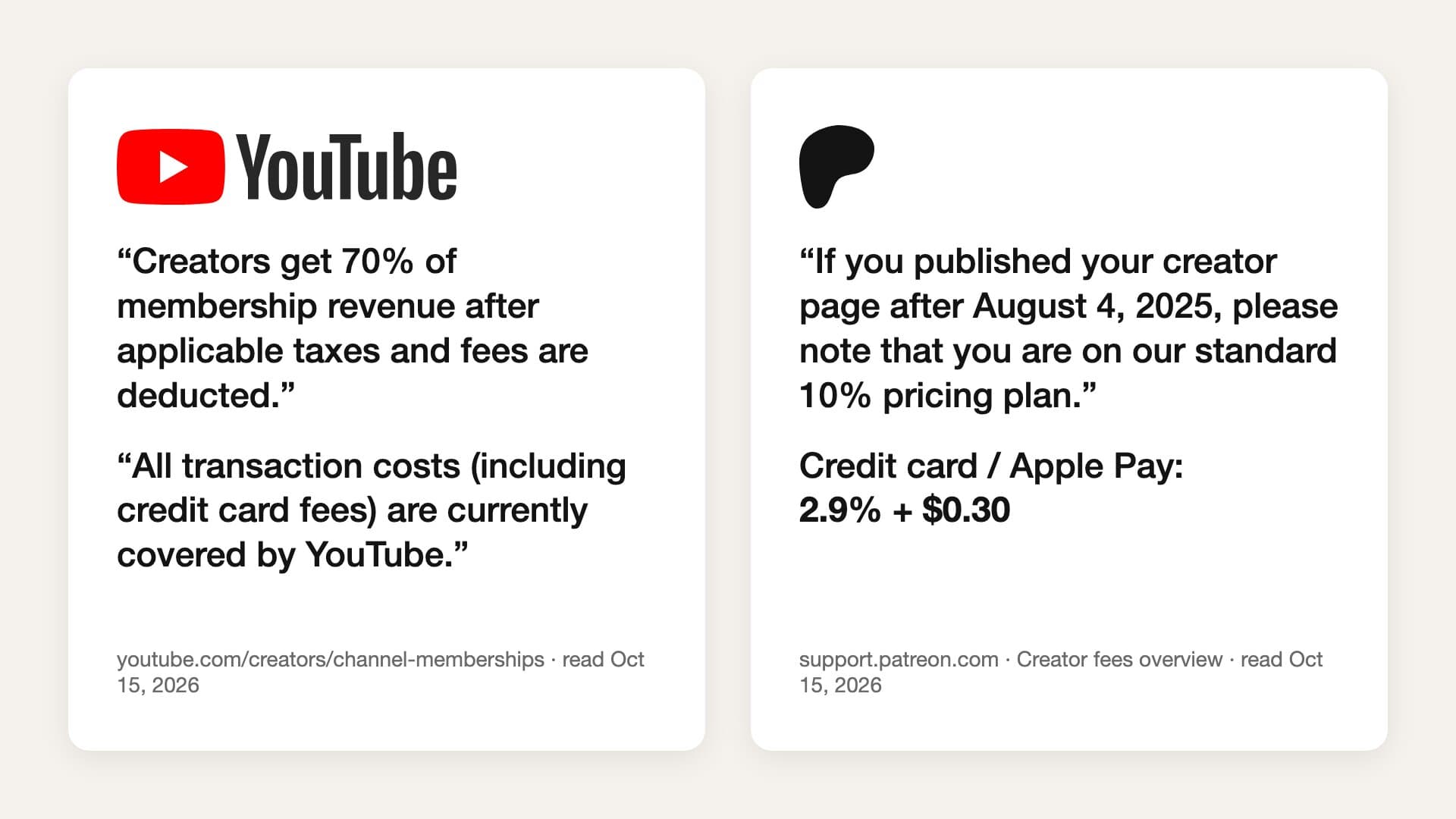
YouTube's help text stating creators get 70% of membership revenue after applicable taxes and fees with transaction costs covered by YouTube, beside Patreon's help text stating the standard 10% plan and the 2.9% plus $0.30 card rate
Here is the arithmetic for the same 200 members on each platform, all paying by card on the web.
LineYouTube membershipsPatreon (standard plan)
Members paying $5$1,000.00$1,000.00
Platform share$300.00$100.00
Card processing$0.00$89.00
Payout fee$0.00$0.25
You keepup to $700.00$810.75
The Patreon processing line is 2.9% of $1,000 ($29) plus 200 payments at 30 cents ($60). That fixed 30 cents is the whole story at low prices. On a $2 tier, Patreon keeps 10% plus 5.8 cents plus 30 cents, which leaves you about 72% of the price. On a $1.75 tier, both platforms leave you about $1.22. Below that, YouTube's flat 70% pays more. Patreon's own fee article confirms that on the standard plan, the same processing rate applies "regardless of amount." YouTube's "up to" is honest rather than cautious. Its help page says the 70% is calculated "after applicable taxes and fees are deducted," so the exact figure depends on where your members live. Patreon calculates its platform fee on the payment excluding sales tax, so its line is easier to predict. Lower fees are not the same thing as a better business, and a Patreon fee you pay for retries, fraud monitoring and video hosting can be good value. We covered how long each platform keeps retrying a declined card in our guide to failed subscription payments. On Patreon, Apple's in-app purchase system takes a 30% App Store fee on eligible purchases made in Patreon's iOS app; Patreon waives its processing fee on those purchases but still charges its platform fee. By default, Patreon raises iOS prices by about 43% so the creator earns at least the web amount. US fans can choose Patreon's mobile web checkout instead. That comes from Patreon's iOS in-app purchase guide, updated October 8, 2026. The 43% is arithmetic: to keep $5 after Apple takes 30%, the price has to be $5 divided by 0.7. Apple's cut drops to 15% after a member's first year of continuous billing, and Patreon says it passes that saving to the creator. You can switch the uplift off and absorb Apple's fee instead. The practical effect is that an iPhone fan sees a higher price for the same tier than a fan on the web or Android. Some creators are fine with that. Others would rather not explain it. YouTube does not split the iPhone case out in its help pages. Members join inside YouTube's own apps, and the creator-facing statement is the same 70% "after taxes and fees." From the creator's side, the share on the help page does not change by device. What does change by device is cancellation, as the next section shows. Here is the test we would run before choosing either one. Imagine the platform turns your membership off tomorrow. What do you still have?
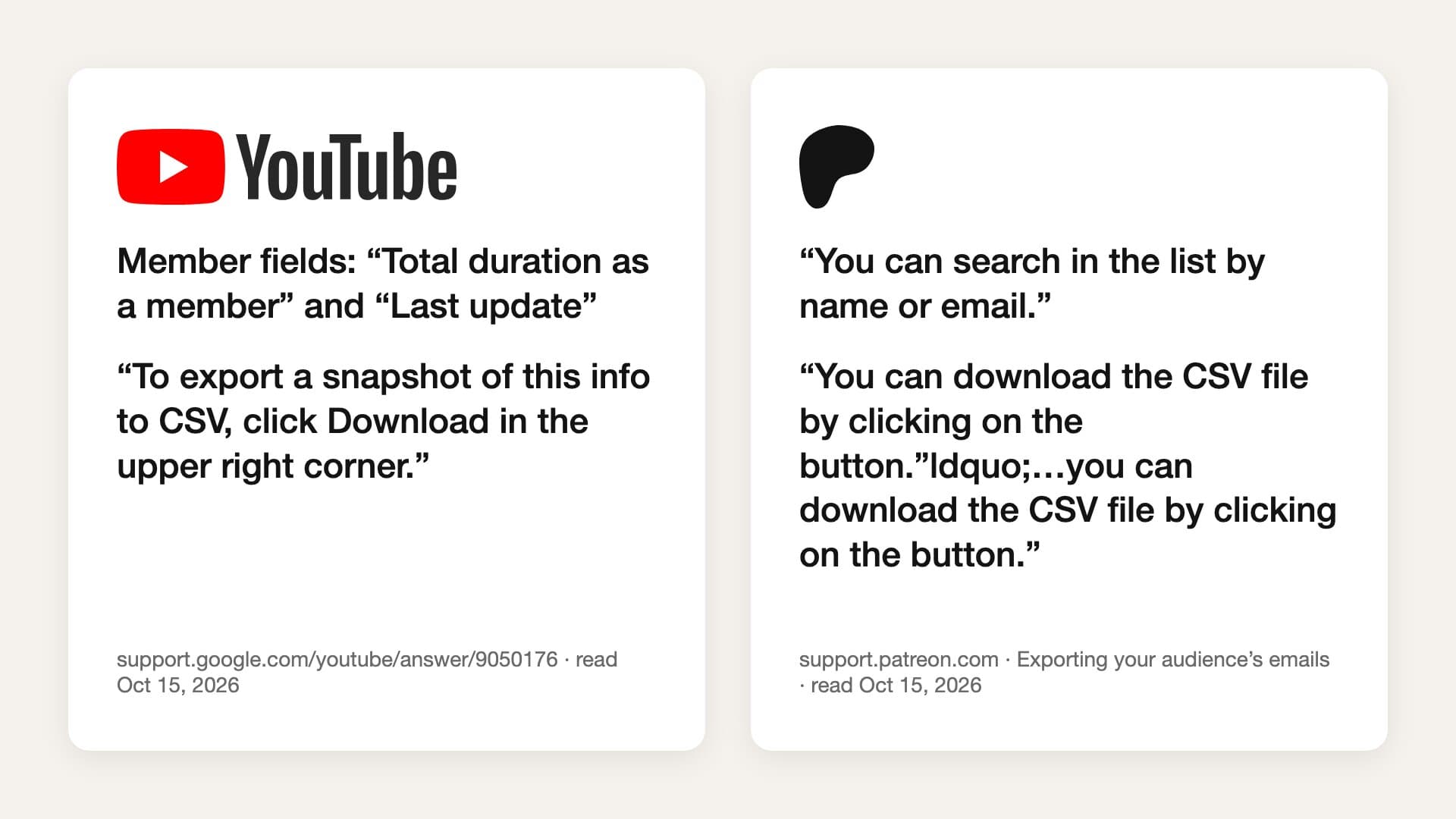
YouTube's help text listing member tenure and last update as the fields in its member CSV export, beside Patreon's help text describing a Relationship Manager CSV that can be searched by name or email
Patreon's answer is in its article on exporting your audience's emails. The Relationship Manager can be searched "by name or email," filtered by paid, free, active, canceled and declined, and downloaded as a CSV. Patreon suggests uploading that file to an email tool. If you leave, the list comes with you. YouTube's answer is in its article on managing your memberships program. The Memberships tab shows each member's "Total duration as a member" and "Last update," and "to export a snapshot of this info to CSV, click Download." The fields it lists include no contact details. You can reach members on the channel, in members-only posts and in live chat. Nothing in YouTube's help pages describes a way to email them. YouTube's memberships policy page also spells out what happens if your channel loses monetization. Memberships enter "paused mode." Members who joined in the Android or iOS apps are canceled when their billing period ends. Members who joined on YouTube.com are canceled if the channel is still paused after 120 days. If the program is terminated, YouTube refunds every active member's last payment out of your share. None of that is unreasonable. It is simply YouTube's relationship, and your memberships live inside it. YouTube channel memberships win when convenience matters more than margin: the Join button sits under every video, members never leave YouTube, card fees are covered, and the feature opens at 500 subscribers. A creator testing whether anyone will pay at all gets an answer faster on YouTube than by sending viewers to a second site. The threshold is the timely part. YouTube's Partner Program update doubles ad-revenue entry for new channels on February 1, 2027, to 8,000 watch hours or 20 million Shorts views. It also says there are "no changes to the eligibility requirements for fan funding," which stays at 500 subscribers and either 3,000 watch hours in a year or 3 million Shorts views in 90 days. For a smaller channel, memberships will soon be reachable well before ad revenue is. We broke down the ad side in YouTube's 2027 monetization rules. Patreon wins on margin above about $1.75 a month, on owning the member list, and on anything a channel membership cannot sell. YouTube's policies forbid downloads of content available on YouTube, in-person 1:1 meetings and any perk given to members at random. Turn on YouTube memberships first if you have never asked your audience for money. It costs nothing, takes an afternoon, and tells you how many people will pay. Keep the free trial on while you learn and watch how many trial members renew. Then look at who joined. If a few hundred people pay you every month, you have learned something worth more than the 30%: there is a group of viewers who want more from you than videos. That group is a customer base, and it deserves a home where you can reach it by email, price it how you like, and keep it if a policy changes. Two dates matter. Patreon creators still on legacy billing must switch to subscription billing by November 1, 2026, or Patreon will pause their billing and migrate them with a default price multiplier. YouTube creators must accept updated Partner Program terms by January 31, 2027, and fan-funding creators on the older Commerce Product Addendum move to the current Commerce Product Module. Patreon states its deadline at the top of its iOS guide. YouTube's update page says the fan-funding terms change involves "no changes to eligibility thresholds, how the products work, or revenue share." Neither date changes the comparison above, but missing Patreon's could pause your income for a while. Patreon's legacy rates are still worth protecting if you have them: 5% on Founders, 8% on Pro and 11% on Pro plus Merch, kept only while your page stays continuously published. Patreon recommends its pause tool instead of unpublishing. Choose YouTube channel memberships to test demand inside the channel your viewers already watch, at 500 subscribers, with card fees covered. Choose Patreon once members are paying at a price above $1.75 a month and you want the larger share and an exportable list of names and emails. Many creators run both: YouTube for the badge and emoji crowd, Patreon for the members who want more. The money difference on a $1,000 month is about $111. The difference on the export test is everything. If your members are a customer list, you can take them anywhere. If they are a seating chart, they belong to the venue. Both platforms sell access to more of you. A member pays to unlock posts, videos or a badge, and the product is still a feed that has to be refilled every week. When you take a month off, members start to wonder what they are paying for. The creators who keep members longest sell something people use whether or not a new post went up today: a plan, a tool, a daily practice. We wrote about why that matters for a channel's value in why you can't sell a YouTube channel. Built by Foundry builds that kind of business with creators: a subscription product, usually an app people open every day, built in about three weeks for $0 upfront on a revenue share. The creator owns the business, the revenue and the customer list, and App Store search brings in people who have never seen the channel. After launch, we keep running and improving it, because our share only works when the product keeps earning. Yes. YouTube's help center says creators get 70% of membership revenue after applicable taxes and fees are deducted, and that transaction costs including credit card fees are currently covered by YouTube. Creators in a multi-channel network may receive less if the network takes its own share. Patreon's standard plan, for pages published after August 4, 2025, takes 10% of successful payments plus processing of 2.9% and $0.30 per US card payment and $0.25 per direct-deposit payout. Older pages that stayed continuously published keep legacy rates of 5%, 8% or 11%. YouTube's fan-funding features, including memberships, open at 500 subscribers plus either 3,000 qualified watch hours in the last year or 3 million qualified Shorts views in the last 90 days. YouTube says this will not change on February 1, 2027, when ad-revenue entry rises. No. YouTube's Memberships tab and CSV export show member tenure and when each person last joined, upgraded or downgraded. The fields YouTube lists include no email address. Patreon's Relationship Manager export does include member emails. Yes. Nothing in either platform's help pages reviewed here prevents it. YouTube's membership policies do restrict the perks offered inside YouTube memberships, including downloads of content available on YouTube and in-person 1:1 meetings.
Our work

Creators who already did this

These are apps we designed, built, shipped, and still run today, with the creator keeping the code and the audience.

Brandon Whiteleather

Brandon Whiteleather

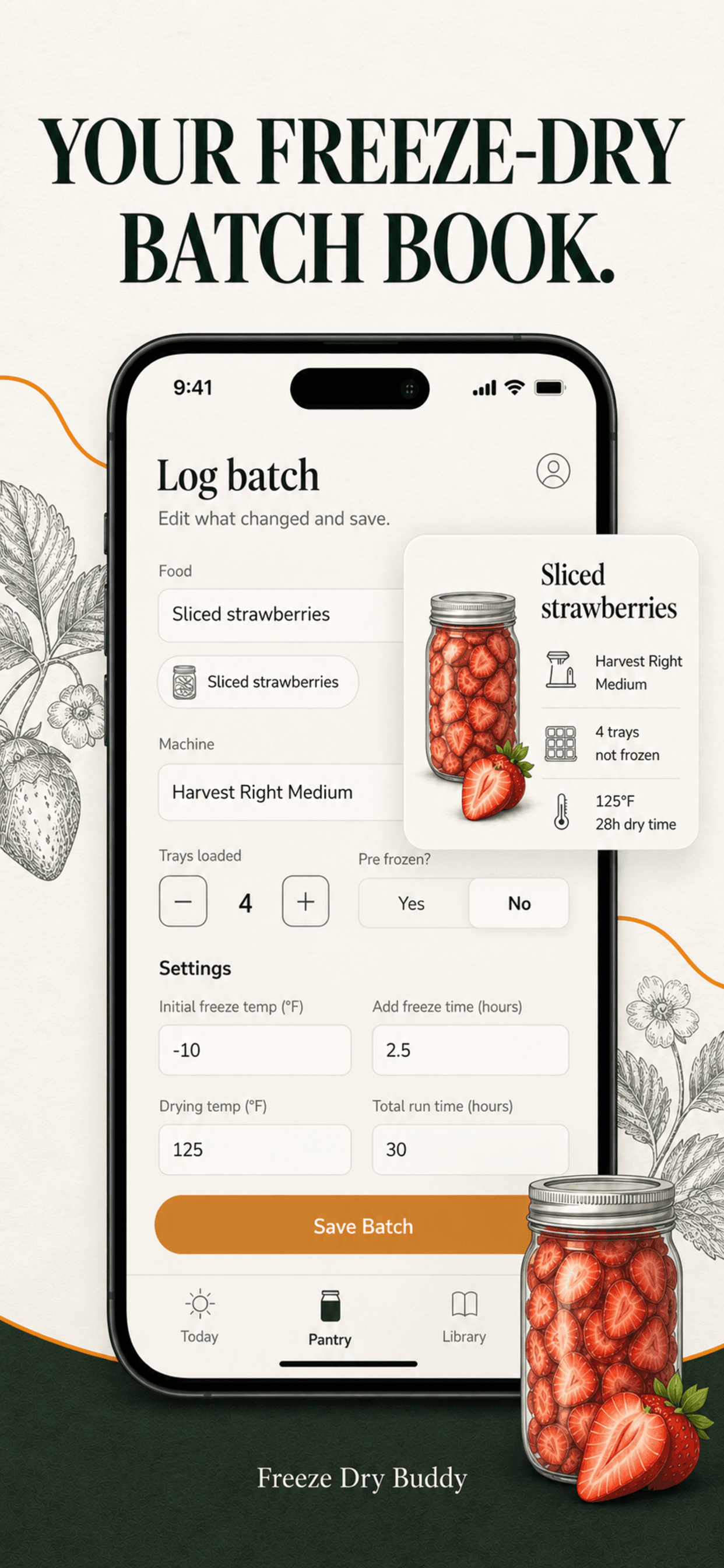
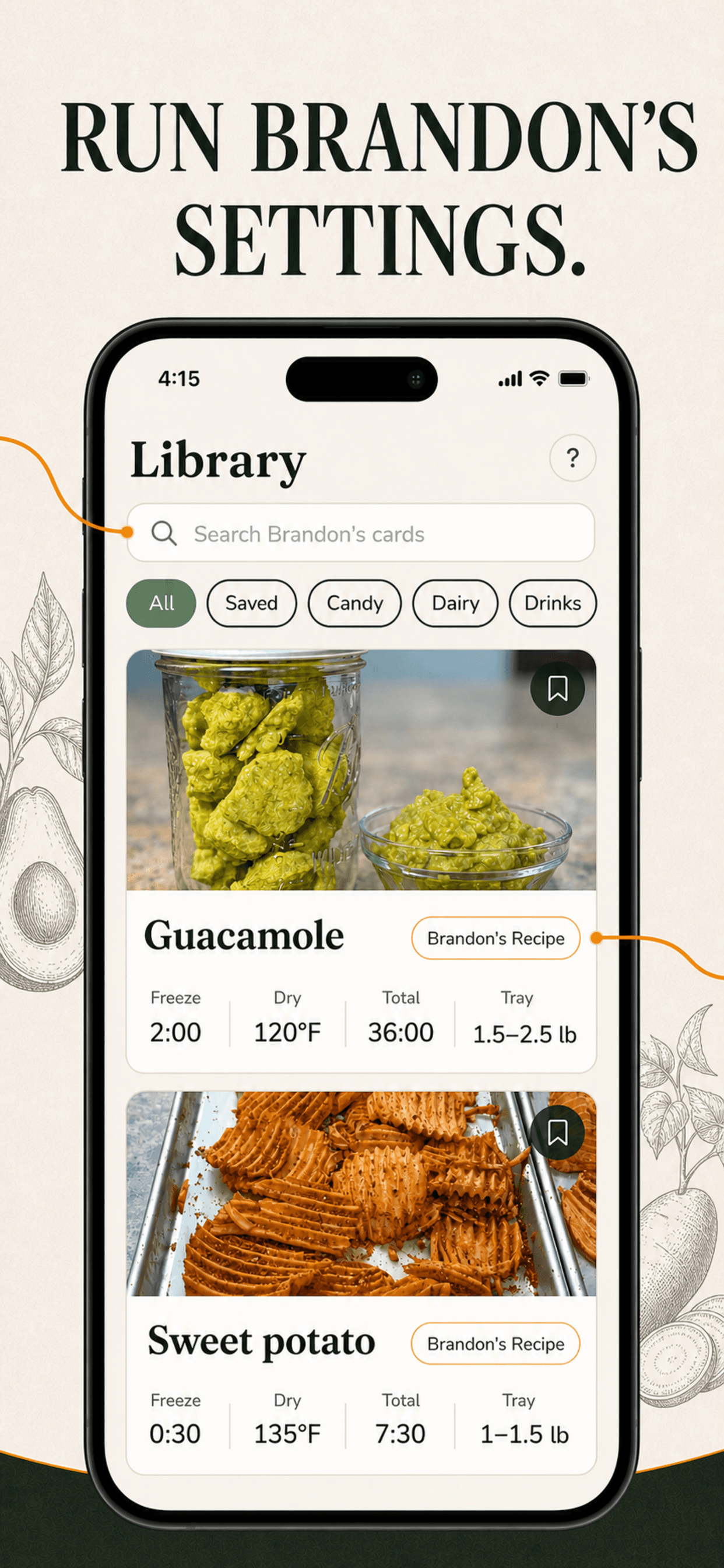
Founder & CEO of Freeze Dry Buddy

Freeze drying made foolproof, from a homesteader who's done it 1,000 times.

Top Food App1.4M+ followers
Read the case study
Kristen Donathan

Kristen Donathan

Founder & CEO of Stain Fix

Snap a stain. Get the fix in seconds.

Top Lifestyle App1.5M+ followers
Read the case study
Stain Fix screenshots
Ellie Fausett

Ellie Fausett

Founder & CEO of Vector Guard

Spot disease-carrying pests before they reach your family.

Top Health App
Read the case study
Vector Guard screenshots

Creator app strategy

Curious what your app could be?

Enter your handle and BUILT BY FOUNDRY will research your audience and present custom app concepts. Free.

YouTube Memberships vs Patreon in 2026: $700 or $811 From the Same $1,000, and the Export Test