
Why the App Store Is Creators' New Growth Channel

Why the App Store Is Creators' New Growth Channel

Foundry
May 3, 2026
The biggest shift in the creator economy in 2026 isn't a new platform. It's a new channel: the App Store. Creators who used to rely entirely on TikTok and Instagram for new fans are now getting a meaningful share of their downloads from search inside Apple's App Store and Google Play, often from people who have never seen a single piece of their content. That changes the math on what a creator's "audience" actually is, and it changes what an app is for. Key Takeaways:
  • The Apple App Store reaches roughly 650 million weekly visitors and drives more than 70% of app downloads through search and browse, according to Apple.
  • Creator app categories (fitness, journaling, language, finance, faith) consistently rank in the top 10 of paid charts in 2026, even when the creator behind them has fewer than 500K social followers.
  • App Store search now functions like an evergreen growth channel: ranking for one strong keyword can deliver new subscribers every day with no new content posted.
  • Creators with their own apps no longer compete only for follows. They compete for downloads from people Googling their problem.
  • The shift rewards creators who own a product, not creators who only own a posting schedule.
A few changes hit at once. Social platforms cooled their organic reach. The TikTok and Instagram algorithms in 2026 distribute most views to a small slice of any given creator's followers, and platform-led commerce surfaces (TikTok Shop, Instagram Shop) keep most of the upside for the platform. Creator income that depends on weekly virality has been getting flatter for two years. At the same time, App Store discovery is doing the opposite. Apple's own data says search drives roughly 65 to 70% of all App Store downloads, and the company has been investing aggressively in editorial features, personalized "today" stories, and category browsing. The store has also been folding in AI-powered search that surfaces apps by intent ("track my macros," "learn Spanish 15 minutes a day") rather than just brand name. Layer in subscriptions. App Store subscription revenue is growing while one-time purchase revenue is flat, per Sensor Tower's 2024 State of Mobile report. The audience inside the App Store is not browsing for free novelty. It is browsing for a recurring tool. For a creator with real expertise in one niche, that combination is generous. Their content can drive the first wave of downloads. After that, the App Store keeps feeding them new users who searched for their topic. App Store search is keyword-based and intent-driven. A user types "ab workout 10 minutes" or "calorie tracker macros" or "yoga for beginners," and Apple ranks apps by a mix of:
  • App name and subtitle keywords
  • In-app keyword field set at submission
  • Title and category relevance
  • Ratings and reviews (volume and recency)
  • Download velocity and retention
  • Apple editorial signals
It looks more like Google search than a social feed. The implication for creators is huge. A correctly optimized app can rank for a high-intent search query, deliver new subscribers daily, and never depend on the creator posting again that week. That is the inverse of how a social account behaves. Creators who understand this treat the App Store like a second SEO surface. We covered the mechanics in detail in What Is ASO? App Store Optimization for Creators, which is the closest thing to a creator-side playbook for ranking inside Apple's search results.
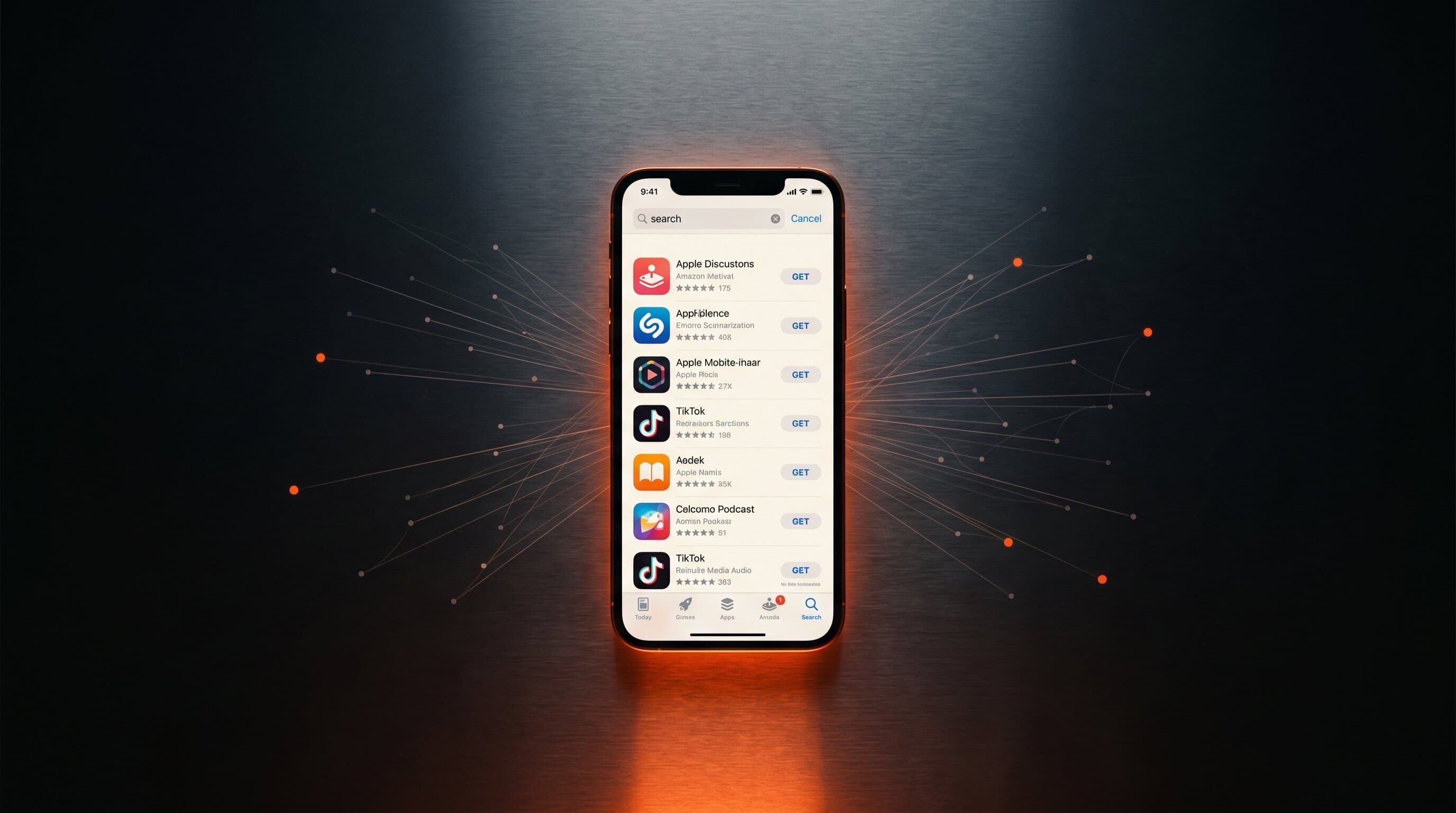
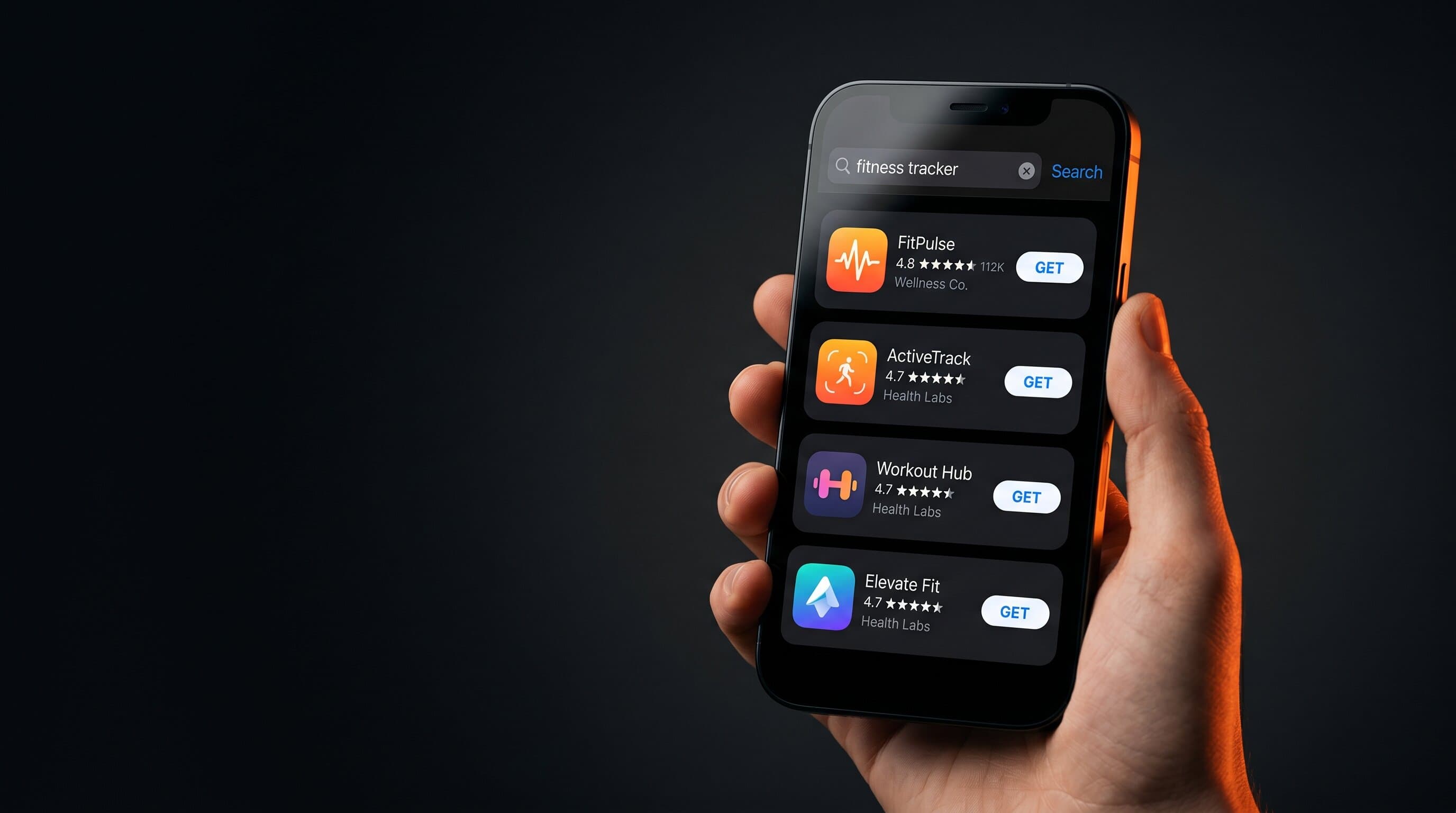
Smartphone with App Store search results showing creator apps with orange accent lighting
A social funnel is rented and rate-limited. A creator posts, the algorithm decides who sees it, a fraction click through to a link in bio, and a fraction of that fraction converts. Each stage shrinks. If the creator stops posting, the funnel stops feeding. App Store discovery flips that. The funnel runs even when the creator is on vacation. New users arrive via search, see the app, install it, and a real subscription kicks in. The creator's content becomes one of several inputs to growth, not the only one. Concretely, here is what the channel mix looks like in 2026 for creators with their own product:
ChannelTypeCompoundingCost per new fanCeiling
Social organicBorrowed audienceEpisodicTime + contentAlgorithm-capped
Paid social adsRented attentionLinear$4 to $12 per installBudget-capped
Email/newsletterOwnedCompoundingTime + toolingList-capped
App Store searchOwned listing on rented storeCompoundingOne-time ASO workCategory-capped
Word of mouthOwnedCompoundingNoneProduct-capped
The App Store sits in a useful spot. The creator does not own Apple, but they do own the listing, the ratings, and the subscription relationship inside the app. Once a user downloads, the creator's product talks to them every day inside iOS, not through a feed someone else controls. The winners are usually niche specialists with one clear product promise. A few patterns from real 2026 charts: Fitness and nutrition. Jeff Nippard's role as co-owner of MacroFactor, the science-based macro tracker, is a textbook case. The app ranks for nutrition keywords ("macro tracker," "calorie counter," "TDEE"), pulls in users who never watched a Jeff video, then his content layer turns them into long-term subscribers. The app reportedly generates an estimated $30M+ annually. Workouts. Cassey Ho's Blogilates and POPFLEX brand has paired its YouTube and Instagram following with apps that rank for "pilates at home" and "wall pilates" inside the App Store, capturing search demand created by the broader pilates trend. Language and learning. Independent creators in language learning, faith, and habit tracking are routinely showing up in the App Store top 50 paid lists with apps that started as simple companions to a YouTube channel or newsletter. The common thread isn't follower count. It is a product that one type of person searches for and pays monthly to keep using. We dug into eight of those categories in 8 Niches Where Creator Apps Hit $1M+ ARR. Realistic numbers, not Apple's keynote slides:
  • A well-optimized app in a strong creator niche can pull 50 to 500 new organic installs per day from App Store search alone within 6 to 12 months of launch, with no paid acquisition.
  • Conversion from store listing impression to install runs 2 to 5% for category-relevant apps with strong screenshots and ratings. Featured placements push that higher.
  • Trial-to-paid conversion for creator-led apps with a clear promise is typically 25 to 45%, well above the 10 to 20% benchmark for generic utility apps.
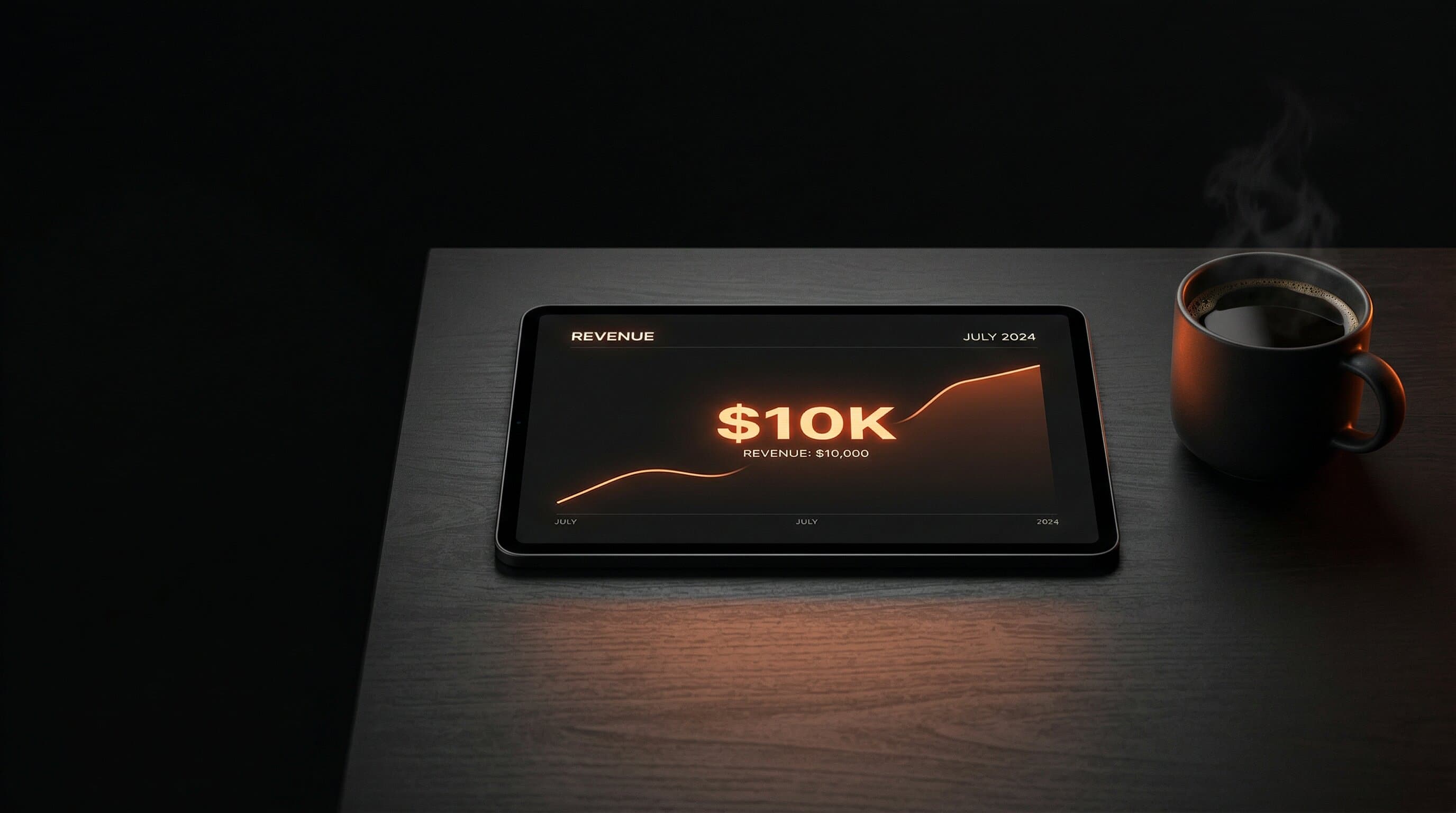
  • A creator-led subscription priced at $7 to $15 per month with 1,000 active paying subscribers is a $7K to $15K monthly recurring revenue business that grows even if the creator's social posting slows down.
Stack those over 18 months and a creator-led app becomes the most stable line on the income statement. We broke the math down further in How 500 App Subscribers Can Make $10K a Month. Creators have spent the last decade trying to grow follower counts. The implicit assumption was that audience size equals income. The App Store breaks that assumption. A creator with 80,000 highly relevant followers and a well-positioned app can out-earn a creator with 8 million passive followers and only brand deals. Why: their app earns from people the algorithm never sent them. That is the version of "audience" worth measuring in 2026. Not followers. Subscribers, downloads, paying users, App Store rank. If you want the founding philosophy behind it, About Foundry explains how we think about building creator apps as standalone businesses, not marketing assets. Three concrete moves, in order. 1. Pick the keyword you want to own. Not your name. The problem you solve. "Macro tracker." "Daily devotional." "Wall pilates." "Spanish in 15 minutes." If you can name the search query a stranger types, you can build the app that owns it. 2. Make the app, not the funnel. Link-in-bio tools and course platforms do not put you in the App Store. They put you in someone else's checkout. To compete in this new channel, the creator needs an actual product on iOS and Android with a paid subscription. There is no shortcut. Vibe coding tools will not get you through review. 3. Treat the App Store listing like a landing page. Title, subtitle, screenshots, keywords, ratings. Every element is a search ranking signal and a conversion lever. The creator's content can spike installs, but the listing decides whether those installs convert. A real product partner handles all of this in parallel with your content. We cover what an app actually needs after launch in App Care. Yes. App Store search rewards relevance and retention more than brand size. A creator with 50,000 highly engaged followers in a specific niche can rank for high-intent search terms and pull in new users daily, often more efficiently than a creator with millions of passive followers. Most well-optimized creator apps start ranking for long-tail keywords within 4 to 8 weeks of launch, with stronger head-term rankings building over 6 to 12 months as ratings, downloads, and retention compound. No. Social is helpful for the initial launch wave, but creators with apps in established categories (fitness, language, finance, faith, journaling) routinely grow on App Store search alone after the first 90 days. Social traffic is borrowed and episodic, tied to whatever the algorithm decides to surface. App Store traffic is intent-driven and compounding: a user who searches "macro tracker" is ready to buy, and your ranking for that term keeps delivering users every day. Most agencies charge $50K to $200K and ship in 6 to 12 months. Built by Foundry builds, launches, and runs your app for $0 upfront on a revenue-share model, with App Store optimization built into the launch process. Three weeks to App Store, no upfront cost, we earn when you earn. Your audience is bigger than your follower count. Build the product that finds the rest of it.
Let's Build →

Get Creator Revenue Insights

How creators are turning audiences into subscription businesses

You might also enjoy...

Why the App Store Is Creators' New Growth Channel