

What Is Product-Market Fit? A Creator's Guide

What Is Product-Market Fit? A Creator's Guide

Foundry
March 26, 2026
Product-market fit is when you've built a product that your target audience needs badly enough to pay for, use regularly, and recommend to others. For creators, it's the gap between "I launched an app" and "my subscribers can't imagine life without it." Key Takeaways:
  • Product-market fit means your product solves a real, recurring problem for a specific audience
  • 42% of startups fail because there was no market need for what they built (CB Insights, 2024)
  • Creators have a built-in advantage: they already know what their audience struggles with daily
  • The fastest signal of product-market fit is organic retention, people keep using your app without being reminded
  • You find product-market fit by shipping fast and listening, not by perfecting features in isolation
Product-market fit is the point where demand for your product exceeds your ability to supply it. Marc Andreessen, who coined the popular definition, put it bluntly: "The customers are buying the product just as fast as you can make it." For creators, it looks like this: your app's subscribers stick around month after month. They DM you about features they want. They tell their friends to download it. Churn is low. Reviews are strong. You stop spending energy convincing people to try it and start spending energy keeping up with demand. That's product-market fit. And most creators skip the work required to find it. They build what sounds cool to them, not what their audience actually needs on a Tuesday afternoon. They overbuild before testing. They confuse "people like my content" with "people will pay monthly for a product." These are different questions. Product-market fit answers the second one.
The number one reason startups fail is building something nobody needs. CB Insights has tracked this for a decade: 42% of failed startups cite "no market need" as the primary cause. Creator products are no exception. A fitness creator launches a meal planning app when what their audience really wants is workout accountability. A finance creator builds a budgeting tool when their followers actually need help automating savings. The ideas sound logical from the outside. But the audience didn't ask for them, and they don't stick. The failure pattern usually looks the same:
StageWhat HappensWhy It Fails
IdeaCreator picks a product based on personal interestNo validation with actual audience
Build6+ months of development in isolationFeatures designed around assumptions
LaunchBig push to followers, initial downloads spikeDownloads without retention
Month 3Usage drops, subscribers cancelProduct didn't solve a real recurring problem
The fix isn't better marketing. It's building the right thing in the first place.
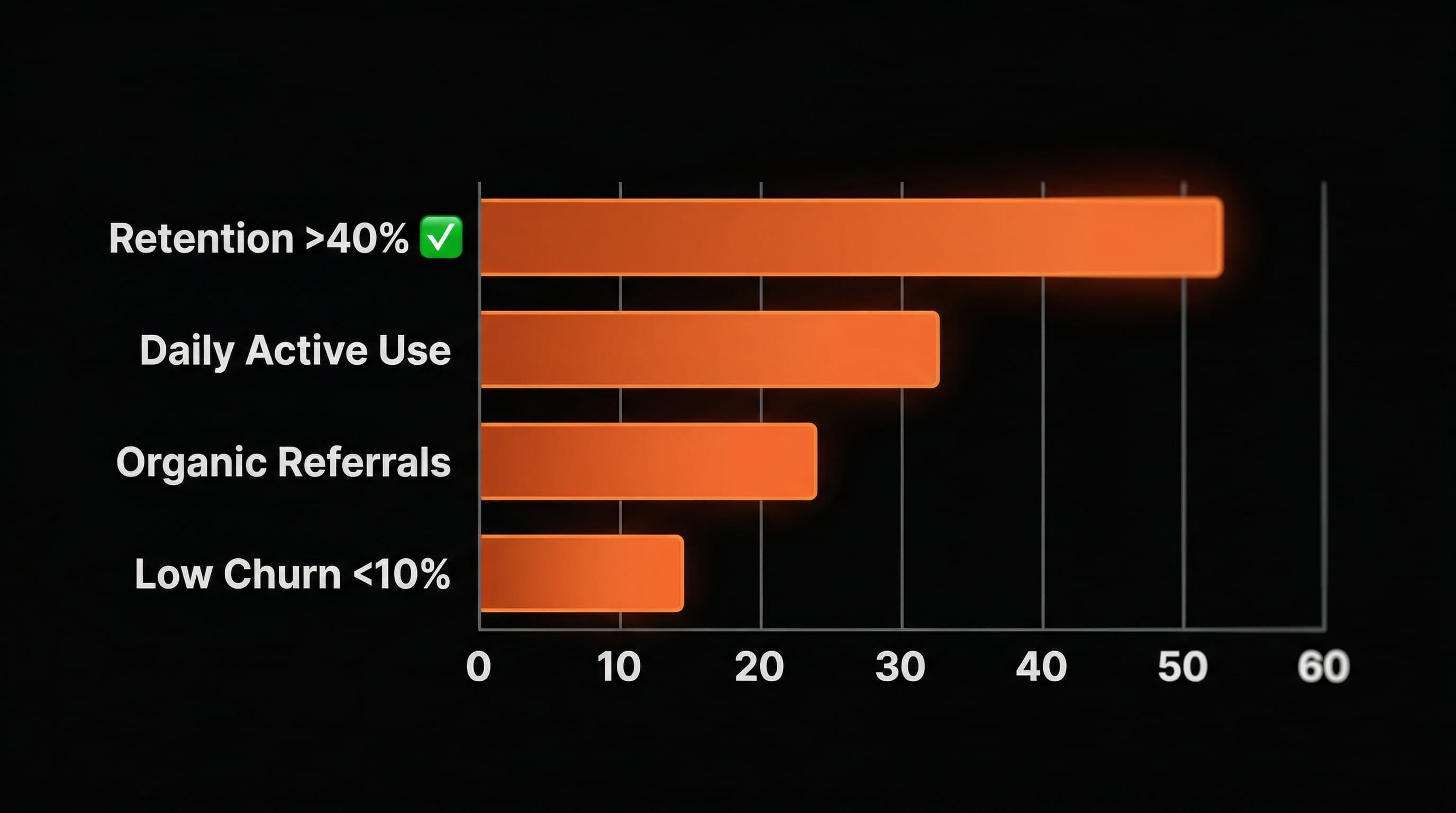
Creators have an unfair advantage over traditional startups: they already talk to their customers every day. Comments, DMs, emails, polls, live streams. Your audience tells you what they struggle with. Most creators just aren't listening with the right filter. Here's the process that works: Step 1: Identify the recurring problem. Not the aspirational goal ("I want to get fit"). The recurring friction ("I don't know what to eat for lunch that fits my macros"). Recurring problems create recurring usage, which creates recurring revenue. Look through your DMs and comments. What questions come up every single week? What do people ask that you're tired of answering? That's your product. Step 2: Validate before you build. Run a poll. Pre-sell access. Ask 50 followers directly: "Would you pay $10/month for an app that does X?" Not "would you use" it. Would they pay. The difference matters. We cover this in depth in 5 Ways to Validate Your App Idea Before Building. The core insight: spend two weeks validating before spending months building. Step 3: Ship a version 1 fast. Product-market fit isn't found in a spreadsheet. It's found by putting a real product in front of real users and watching what happens. Do they open it daily? Do they complete the core action? Do they tell friends? This is why speed matters. At Built by Foundry, we ship creator apps in three weeks, not because we cut corners, but because finding product-market fit requires a live product and real users. Every week spent building without feedback is a week spent guessing. Step 4: Measure retention, not downloads. Downloads are vanity. Retention is product-market fit. If 40%+ of your users are still active after 30 days, you're onto something. If that number is under 20%, the product doesn't solve a problem people feel every day.
The best way to understand product-market fit is to see it. Kayla Itsines and the Sweat app. Kayla had millions of Instagram followers doing her BBG workouts from a PDF. The recurring problem: followers wanted structured programs they could follow daily, with new content each week. The Sweat app solved that. It reached 450,000+ paying subscribers and sold for $400 million. The product-market fit signal was obvious: retention was high, users completed workouts daily, and growth came from word of mouth. MacroFactor (Jeff Nippard). Fitness audiences constantly ask: "What should I eat?" Calorie tracking apps existed, but none were built by someone their audience trusted. MacroFactor combined evidence-based nutrition tracking with credibility from Jeff Nippard and Dr. Eric Helms. Over 75,000 paying subscribers now generate an estimated $2.6 million in monthly revenue. The fit was so strong that users from outside the creator's audience found the app through the App Store, showing that the product had standalone demand. What these have in common: the creators didn't guess. They listened. The product matched a problem their audience already had, and the solution was specific enough that no generic tool could replace it.
Product-market fit signals for creator apps
Product-market fit isn't a binary switch. It's a spectrum. But there are clear signals: You've found it when:
  • 40%+ of users would be "very disappointed" if the product went away (the Sean Ellis test)
  • Month-over-month retention stays above 40% after 90 days
  • You get inbound messages asking for features, not asking what the app does
  • Users refer friends without being incentivized
  • Your App Store rating stabilizes above 4.5 with detailed reviews (not just "great app")
You haven't found it when:
  • You need to constantly remind people to use the app
  • Churn exceeds 15% monthly in the first 90 days
  • Most reviews say "nice idea" but not "I use this every day"
  • Growth depends entirely on your social media posts about the app
The gap between these two states is where the real work happens. And it's work most creators skip because building feels more productive than listening.
Having a large audience doesn't mean you have product-market fit. It means you have distribution. Audience demand says: "People like my content and would probably try something I recommend." Product-market fit says: "People use this product daily because it solves a problem they can't solve any other way." MKBHD had one of the largest tech audiences on YouTube when he launched the Panels wallpaper app. Initial downloads were massive. But the product didn't solve a recurring problem. Wallpapers aren't a daily-use category. Retention dropped. Reviews went negative. Distribution without product-market fit is a spike, not a business. Compare that to the creator apps generating real subscription revenue: they work because the product does something the audience needs regularly, not occasionally. This is why 9 signs you're ready to launch your own app starts with audience signals, not audience size. 50,000 engaged followers who need your product weekly beat 5 million passive followers who might try it once.
Before you build (or while you're building), run through this:
QuestionStrong SignalWeak Signal
Do followers ask for this weekly?Yes, same question repeatedlyNo, you thought of it yourself
Would 50 people pre-pay $10/month?25+ said yes when asked directly"Sounds cool" but no commitment
Does the product require daily or weekly use?Yes, solves a recurring frictionNo, it's a one-time solution
Can generic tools replace it?No, your expertise is the differentiatorYes, existing apps do this fine
Will users outside your audience find value?Yes, the App Store is a growth channelNo, only your followers would care
If you answer "strong signal" on 4 out of 5, you're close to product-market fit. If most answers are weak signals, keep validating before you invest in building. A creator app built on strong signals generates recurring revenue that compounds monthly. One built on weak signals generates a launch spike and a slow decline.
Product-market fit isn't luck. It's listening to your audience, shipping fast, and measuring what sticks. The creators who build real subscription businesses do the validation work first. Everyone else builds something cool that nobody uses. Your audience has been telling you what to build. The question is whether you're ready to listen.
Let's Build →
Most creator apps that find product-market fit do so within 2-4 months of launch. The key variable isn't time; it's iteration speed. Creators who ship a version 1 quickly, measure retention, and adjust fast find fit sooner than those who build in isolation for 6+ months. Yes. Pre-selling access, running surveys, and testing concepts through your existing content are all ways to validate demand before development begins. The goal is to confirm that people will pay for a solution to a specific problem, not just express interest. That's normal. Most products don't have fit at launch. The answer is to talk to your active users, identify what's keeping others from returning, and iterate on the core value proposition. Some of the biggest creator apps pivoted features significantly in their first 90 days. The concept is the same, but creators have a structural advantage: direct access to their target audience. Traditional startups spend months finding customers to interview. Creators can poll 100,000 followers in 24 hours. That feedback loop is the biggest edge in finding fit fast. Yes. Growth without product-market fit is a leaky bucket. Every new user you acquire churns out because the product doesn't solve their problem well enough. Fix retention first, then invest in growth. The math is simple: acquiring users who stay is always cheaper than acquiring users who leave.

Get Creator Revenue Insights

How creators are turning audiences into subscription businesses

You might also enjoy...