

Turning Knowledge into Products

What Is a Paywall? Creator App Conversion Explained

Foundry
May 28, 2026
Share
What Is a Paywall? Creator App Conversion Explained

Get Creator Revenue Insights

How creators are turning audiences into subscription businesses
Share
A paywall is the in-app screen that asks a user to subscribe or pay before unlocking content, features, or full access to a product. For creator apps, it is the single screen that decides whether a fan stays a follower or becomes a paying customer. Key Takeaways:
  • A paywall is the conversion moment in any subscription app. It is where attention turns into MRR.
  • Creator app paywalls typically convert 2 to 8% of installs into paying subscribers, depending on traffic source and offer design.
  • Four main paywall types exist: hard, soft (freemium), free trial, and metered. Each fits a different audience.
  • Free trial paywalls win for creators with warm audiences. Hard paywalls win for cold App Store traffic to a niche utility.
  • A bad paywall costs more than a bad icon, a bad name, or a bad onboarding. It is the highest leverage screen in the entire app.
A single brass key resting on a dark surface lit by warm orange light, representing the paywall as the gate between a free user and a paying subscriber
A paywall is a digital gate that requires payment, a free trial signup, or a subscription before a user can access content or features inside an app. The term started in journalism (the New York Times paywall) and moved into mobile apps once Apple and Google built recurring subscription billing into the App Store and Play Store. In a creator app, the paywall is the screen the user sees after onboarding, after hitting a locked feature, or after a free article ends. It usually shows three things: a list of benefits, a price (often with a monthly and annual option), and a button that triggers Apple or Google's native purchase sheet. The paywall is not the pricing. It is the presentation of the pricing. Two apps with the same $14.99 price can have a 4x gap in conversion based on how the paywall is built. Because the paywall is where your audience becomes your business. Most creators think the hard part is getting installs. It is not. The hard part is converting those installs into paying users at a high enough rate to make the business work. A 50,000-follower creator who drives 5,000 installs and converts at 2% earns 100 subscribers. The same launch at 6% converts 300. At $14.99/month, that is the difference between $1,499 MRR and $4,497 MRR. Same audience. Same install count. Three different businesses. This is the math we walk through in Annual vs Monthly App Subscriptions for Creators, and it is why paywall design gets more attention from us than almost any other screen. The paywall is also the screen that compounds. Every install that converts becomes MRR that renews. A 1% lift on the paywall, sustained over a year of installs, can mean tens of thousands of dollars in recurring revenue. Every creator app paywall is a variation of one of these four patterns.
TypeHow It WorksTypical Install-to-Paid RateBest For
Hard paywallBlocks the app behind a purchase screen at first launch1 to 5%Niche utilities, cold App Store traffic
Free trial3 or 7 days of full access, then auto-renews2 to 8%Creator apps with a warm, trusting audience
Soft paywall (freemium)A free tier forever, premium features locked0.5 to 2%Apps where free use creates word of mouth
Metered paywallFree for N actions or days, then locks1 to 4%Content apps, podcast apps, recipe apps
Most creator apps end up using a free trial wrapped around what is effectively a hard paywall: the user signs up, sees a trial offer, and either commits or churns within the first session. That is the model we break down in Free Trial vs Paywall for Creator Apps. The answer depends on where the traffic is coming from. For warm traffic (the creator's own audience): A 7-day free trial with a single, prominent annual offer typically converts best. The audience already trusts the creator, so the friction of "paying right now" is the only thing blocking the install-to-subscriber path. The trial removes that friction. Conversion lifts of 2 to 3x over a hard paywall are common. For cold App Store traffic: A hard paywall with a low entry price (often a discounted weekly or quarterly plan) tends to outperform. The user has no relationship with the brand, so a trial often just delays an inevitable churn. Charging early filters for intent. RevenueCat's State of Subscription Apps consistently shows free-trial apps outperforming hard-paywall apps in median revenue per install for the health and fitness category, while utility apps trend the opposite direction. Match the paywall to the traffic, not to your favorite pattern.
A heavy steel bank vault door cracked open with warm orange light spilling out from inside, set against pure darkness, representing the conversion moment when a free user becomes a paying subscriber
A paywall is not just one screen. It is a sequence of moments.
  • Onboarding paywall. The first paywall, shown after a short setup flow. This is where the highest-intent users convert. Most revenue comes from this screen.
  • Feature paywall. Shown when a user taps a locked feature. Lower volume, but very high intent because the user just tried to do something specific.
  • Hard reset paywall. Shown when a free trial ends or a session limit is hit. Captures users who would have churned silently.
  • Win-back paywall. Shown to canceled subscribers with a discounted offer. The cheapest revenue in the app.
The onboarding paywall does the bulk of the work, but the other three account for 20 to 40% of MRR in mature creator apps. Most builds we see have the first one and skip the rest, leaving real money on the table. The same five problems show up over and over.
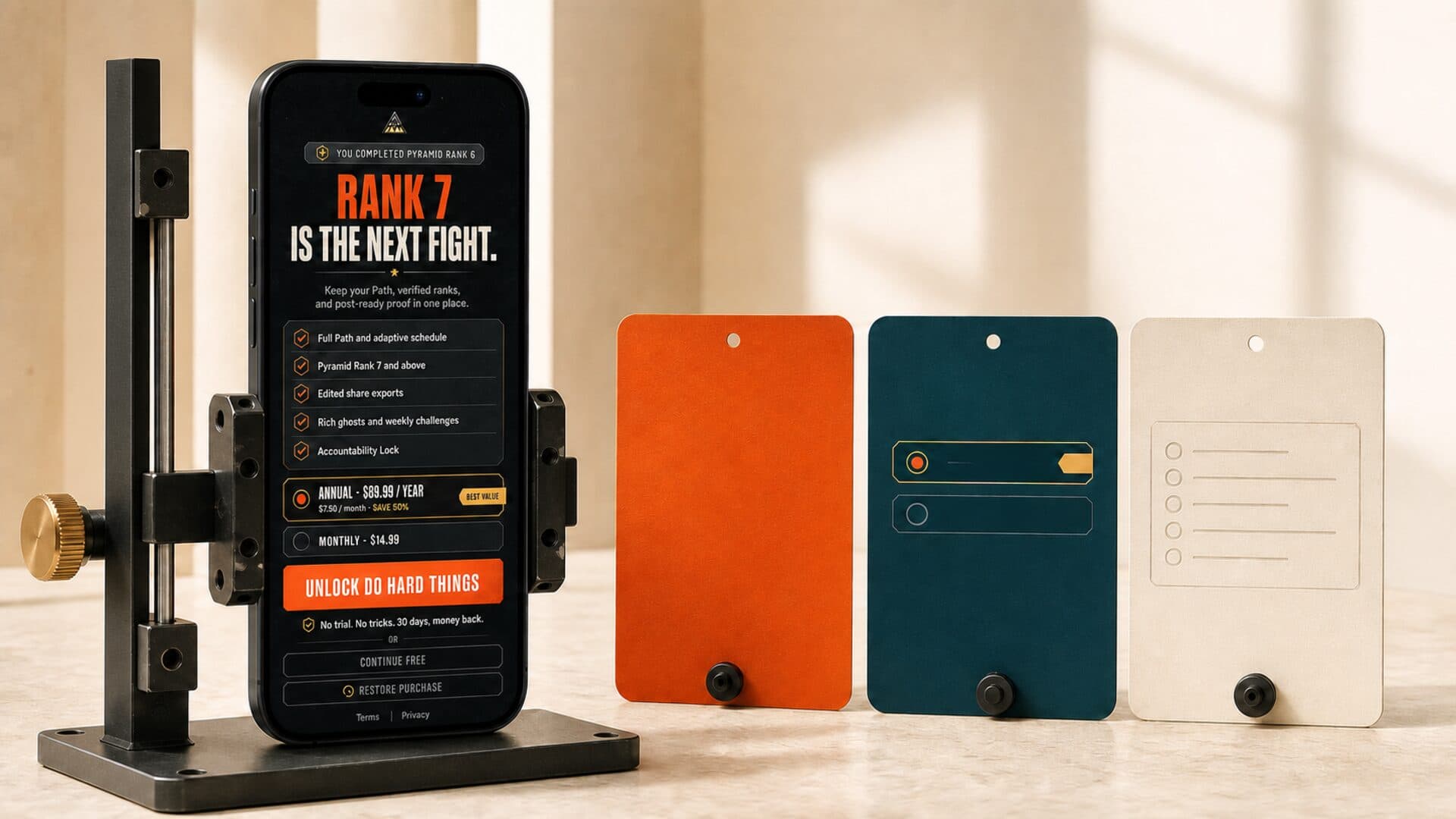
  • Too many plans. Three plans is the ceiling. Four or more, conversion drops. Two plans (monthly + annual) is often the sweet spot.
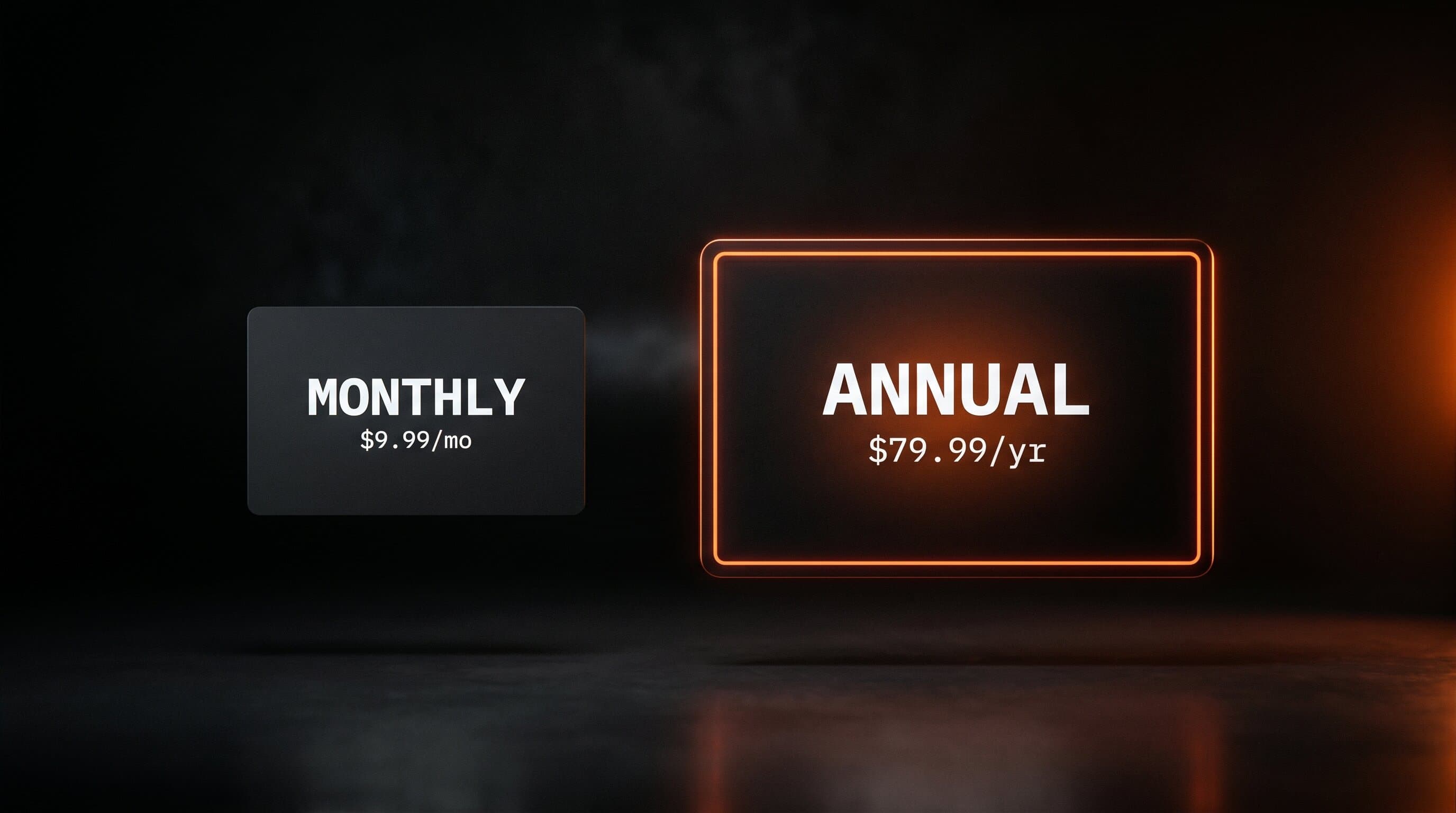
  • Hidden annual savings. If you do not say "Save 40%" next to the annual plan, fewer people pick it. Annual subscribers churn less and pay upfront, so this is the single most important callout.
  • No social proof. A creator app paywall without a review screenshot, a "10,000 members" callout, or a quote is missing free conversion lift. The audience needs to see other people already inside.
  • Vague benefit copy. "Unlock premium features" converts worse than "Daily workouts, meal plans, and your training plan, updated weekly." Tell them what they get.
  • No restore purchases button. This is an Apple App Store requirement, and missing it can get the app rejected. It is also a trust signal.
Every one of these is fixable. None of them are about the price. They are about the screen. You can ship a beautiful onboarding, a sticky daily habit loop, and a killer push notification strategy, and still have a broken business if the paywall converts at 1.5%. You can also ship a janky-looking app with a great paywall and still print meaningful MRR. The paywall is the only screen in your app that touches the bank account directly. Every other screen is a setup for this one. That is why, at Built by Foundry, we treat paywall design and ongoing paywall optimization as a core part of app care, not a one-time deliverable. The work continues for as long as the app does. A pricing page lives on a website and lists plans for someone who is researching. A paywall lives inside the app and asks for a purchase decision right now. The paywall has a much higher conversion expectation because the user already installed the app. Yes. Even freemium apps have a paywall, it just shows up later. If the app earns subscription revenue, there is a paywall screen behind it. The only question is when it appears in the user journey. For creator apps with a warm audience, a well-built free-trial paywall typically converts 4 to 8% of installs into paying trials, with 50 to 70% of those trials converting into paid subscribers. That works out to roughly 2 to 5% install-to-paid conversion. Anything below 2% is a screen problem, not a product problem. Yes, and you should. The best subscription apps run a new paywall test every two to four weeks. Pricing, copy, layout, image, social proof, and offer order all get tested. Most of the MRR lift in mature apps comes from paywall iteration, not feature additions. This is why ongoing trial-to-paid optimization is part of every build we run. Yes. A creator app paywall can lean on creator trust (testimonials, the creator's face, a personal message) in a way a generic utility cannot. That earns 1.5 to 3x the conversion of a standard paywall, which is the single biggest reason creator apps outperform comparable apps in the same category.
Your paywall is the line between a fan and a customer. Most creators never draw it well.
Let's Build Your Paywall →

Creator app strategy

Want us to review your creator business?

Apply for a Foundry Creator App Review. We'll tell you whether there is a real app opportunity hiding in your audience.

What Is a Paywall? Creator App Conversion Explained