
Case Studies & Success Stories

Fitness Blender: 6.6M Subscribers, $0 Investors

Built by Foundry
July 13, 2026
Share
Fitness Blender: 6.6M Subscribers, $0 Investors

Get Creator Revenue Insights

How creators are turning audiences into subscription businesses
Share
Key Takeaways:
  • Kelli and Daniel Segars started Fitness Blender in 2009, after losing most of their income in the 2008 recession
  • They gave away full length workouts free on YouTube and grew to 6.6M+ subscribers, the most watched fitness channel on YouTube by 2017
  • Their paid tier, FB Plus, runs $8.99/month or $79.99/year and funds a library of 1,174 workout videos, 123 programs, and 128 recipes
  • They took zero venture capital and zero outside investors, running the whole thing direct to consumer from the Seattle area
  • The model is the clearest proof that free content is the funnel and the subscription is the business
Kelli and Daniel Segars are a married pair of certified personal trainers who built Fitness Blender, one of the largest free workout libraries on YouTube, into a bootstrapped subscription business with 6.6M+ subscribers and no outside investors. They film at home, talk like people you know, and have spent 17 years refusing to interrupt a free workout with a sales pitch. They are not influencers in the modern sense. There is no aspirational lifestyle content, no supplement brand, no six pack thirst trap. There is a man and a woman in a normal room telling you to do ten more squats. That plainness is the whole strategy, and it built a company. The origin is not a viral moment. It is a layoff. When the 2008 recession hit, the Segars lost most of their income. Daniel apprenticed as a plumber to pay bills. Kelli wrote how-to fitness articles online for pennies. In 2009 they pointed a camera at themselves, filmed a workout, and put it on YouTube for free because it cost nothing to publish and might send a few people to those articles. For three years it was a side project. They kept filming, kept posting, and started selling structured workout programs off their own website. By 2012 the program sales were big enough that they quit everything else and went full time on Fitness Blender. No loan, no investor, no accelerator. Just enough recurring demand to justify the leap. The mechanic was volume plus trust. Most fitness creators post a workout, then spend the next 60 seconds telling you where to buy the program that has the real content. Fitness Blender posted the real content. Full length, follow along, start to finish, free. Three things compounded off that decision:
  • Watch time: Follow along workouts are among the highest watch time content on YouTube per minute uploaded. People press play and stay for 40 minutes. The algorithm rewards nothing harder than that.
  • Trust: No mid-roll pitch means no reason to distrust the free thing. A viewer who finishes a free 40 minute workout has already decided you are on their side.
  • Search gravity: "20 minute HIIT no equipment" is a search query with infinite demand. A deep library of free, well titled workouts becomes a permanent front door.
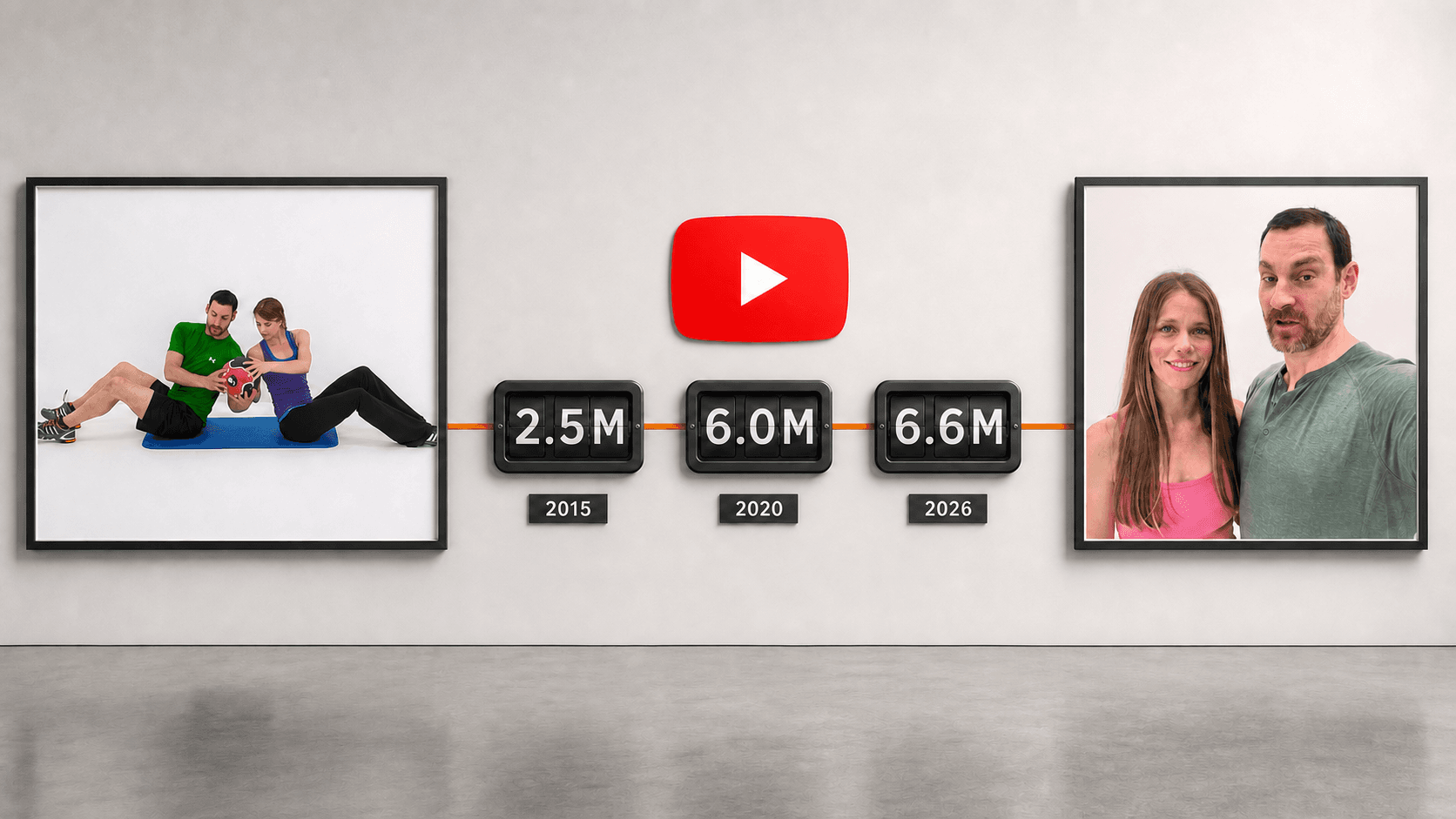
By October 2015 the channel passed 2.5 million subscribers. By 2017 it was the most watched fitness channel on YouTube, according to Wikipedia's record of the brand. It crossed 6 million by early 2020 and sits above 6.6 million in 2026, with roughly 1,900 videos in the free library.
Bar chart showing Fitness Blender YouTube subscriber growth from 2.5M in 2015 to 6.6M in 2026 on a dark background with orange bars
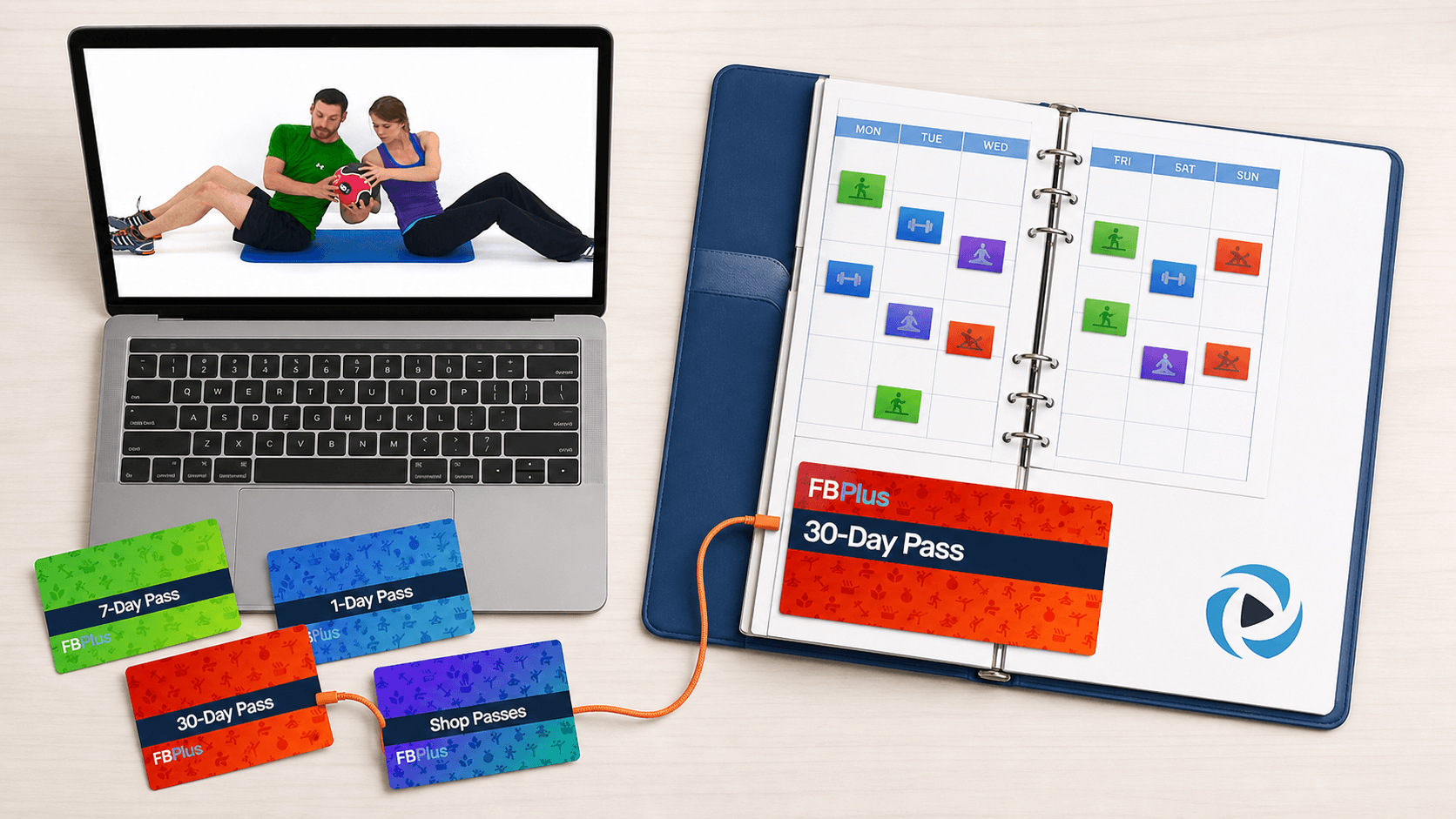
FB Plus is Fitness Blender's paid membership, priced at $8.99/month or $79.99/year, that turns the free audience into recurring revenue. It does not lock away the free workouts. It adds the layer people pay for once they trust the free product: structure, planning, and progress tracking. The FB Plus tier includes 1,174 exclusive workout videos, 123 structured programs and challenges, 128 recipes from registered dietitians, an ad-free interface, and personalized planning tools. New members get a one week free trial. The company still says on its own site that "free membership is still the core of our business." That sentence is the entire model. Free content is not a loss leader they tolerate. It is the product that fills the top of the funnel forever.
PlanPriceEffective Monthly
Monthly$8.99/month$8.99
Annual (upfront)$79.99/year$6.67
Free trial7 days$0
The annual plan lands near $6.67 a month, a real discount that front loads cash and locks in retention. It is the same annual-versus-monthly logic we break down in our guide to pricing a creator subscription app, applied by operators who have run it for over a decade. Here is the comparison most creators never run. A giant free audience is not the business. What you attach to it is.
MonetizationWhat it earnsOwnership
YouTube ads (fitness CPM ~$7)~$3 per 1,000 viewsPlatform controls the payout
One time program sale$3.99 to $15, onceFounder owned, no recurrence
FB Plus subscription$6.67 to $8.99/mo, recurringFounder owned, compounding
Ad revenue on 6.6M subscribers is real, but it has a ceiling, and YouTube sets it. One time program sales are better because the Segars own them, but every sale resets to zero the next day. The subscription is the only line on that table that compounds and that the founders fully control. This is why fitness keeps producing this exact outcome. We mapped the pattern across the category in why fitness creators dominate the app economy, and you can see it in Heather Robertson's move from free YouTube workouts to a paid app and in Kayla Itsines building Sweat into a $400M exit. Free channel, paid product, founder owned. Fitness Blender just ran the play earlier and more stubbornly than almost anyone. Because paywalling the free workouts would have killed the funnel that feeds the subscription. Most creators get this backwards. They build a small audience, panic, and lock the good stuff behind a wall at 50K followers. The audience was never a market yet, so the wall just stops the growth. Fitness Blender did the opposite. They gave away the individual workouts and sold the system that organizes them, the programs, the recipes, the tracking, the planning. The free library also does something no ad campaign can. Every new "no equipment" workout they post is discoverable in search by someone who has never heard of them. The app store version of that is the same insight, which is why we keep telling creators that your next 10K fans won't come from social media. Fitness Blender's growth channel is its own back catalog.
A minimal dark home living room set up for an at-home workout with a laptop and exercise mat, lit with a warm orange accent
1. Give away the product. Sell the system. The workouts are free. The structure that turns 1,900 loose videos into a plan you can actually follow is the paid product. Those are different things. Most creators try to charge for the first when the money is in the second. 2. Patience beats hype. Three years as a side project before going full time. Seventeen years before the brand looks like an overnight success. The Segars built a funnel too big to ignore before they leaned on the paid tier, which is the opposite of the launch-a-course-at-10K-followers reflex. 3. Ownership is the whole point. No investors means no one to answer to and no equity to give away. The subscription runs on their terms. If YouTube changes the algorithm tomorrow, FB Plus keeps charging. That independence is the difference between a creator and a founder, and it is the logic behind how we build at Built by Foundry: the free content stays free, the app becomes the recurring revenue layer, and we run the tech forever so the creator never has to hire a dev team. When you are ready to keep it running, our app care team handles the same backend the Segars had to build themselves. Fitness Blender did it the hard way, with no capital and no shortcuts, and proved the thesis anyway. A creator chases views. A founder owns a subscription. The Segars have owned theirs for over a decade. Fitness Blender has 6.6M+ YouTube subscribers as of 2026, with roughly 1,900 free workout videos on the channel. It was the most watched fitness channel on YouTube in 2017. FB Plus costs $8.99/month or $79.99/year (about $6.67/month on the annual plan), with a one week free trial. Free workouts remain available without a subscription. Married certified personal trainers Kelli and Daniel Segars founded Fitness Blender in 2009 as a YouTube channel, and went full time on it in 2012. No. Fitness Blender is bootstrapped and direct to consumer, with no outside investors. The founders own the business outright. Yes. The model scales with the funnel. A creator giving away genuinely useful content and selling the system that organizes it can start converting a subscription audience long before hitting millions of subscribers. Want to turn your free audience into a subscription business? We build custom apps for creators. $0 upfront, three weeks to the App Store, and we run the tech forever.
Let's Build →

Creator app strategy

Want us to review your creator business?

Apply for a Foundry Creator App Review. We'll tell you whether there is a real app opportunity hiding in your audience.

Fitness Blender: 6.6M Subscribers, $0 Investors