
Creator Economy Trends

Social Media Age Checks: 5 Moves Creators Should Make

August 4, 2026
Share
Social Media Age Checks: 5 Moves Creators Should Make

Get Creator Revenue Insights

How creators are turning audiences into subscription businesses
Share
Key Takeaways:
  • Australia now requires major social platforms to stop under-16s from holding accounts. The regulator says platforms removed or restricted access to 4.7 million accounts by mid-December 2025.
  • YouTube and Meta use age-estimation systems even when an account lists an adult birthday. The result can change recommendations, ads, account settings, and creator features.
  • Creators should measure exposure by age and country, build an adult buyer path, publish useful pages outside logged-in feeds, and reduce dependence on any single platform.
  • An owned app adds recurring revenue, direct product use, and App Store discovery. It still needs the privacy and child-safety controls that apply to its users.
Social media age checks now affect who can hold an account, what they can see, and how platforms monetize their attention. Creators with teen audiences should treat that as a business input today. Stain Fix by Kristen Donathan
Our work

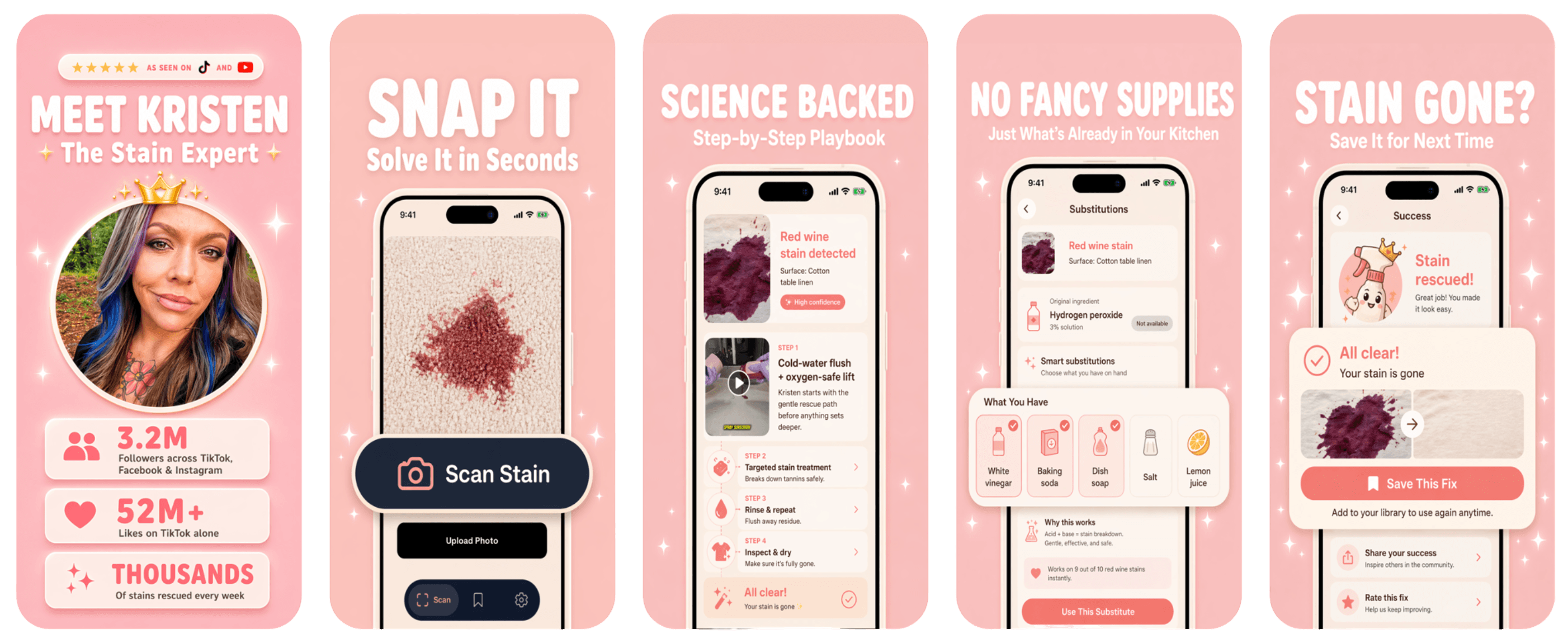
How Kristen Donathan Turned Stain-Removal Content Into Stain Fix

Kristen Donathan gets the same stain questions on repeat. So she and Built by Foundry made Stain Fix: photograph the spill, get her step-by-step plan for that exact surface.

Read the case study → (opens in a new tab)
Social media age checks are systems that verify or estimate a user's age so a platform can block an account, limit content, or apply age-specific settings. Methods include account signals, facial age estimation, identity documents, payment cards, and privacy-preserving proof-of-age tools. The rules differ by country. Since December 10, 2025, ten major platforms must take reasonable steps to stop Australians under 16 from holding accounts. Australia's eSafety Commissioner says platforms removed or restricted access to 4.7 million accounts by mid-December. The UK's Online Safety Act guidance requires stronger age assurance where children risk harmful content. The European Commission made its privacy-preserving age-verification blueprint feature-ready in April 2026 and asked member states to prepare rollouts by year-end. Age assurance has moved from a birthday field to active classification. Platforms infer age from behavior and change the experience without waiting for a declared birth date. YouTube's age-estimation help page says its model applies in the United States, United Kingdom, Australia, Brazil, Singapore, Switzerland, and the European Economic Area. When YouTube classifies a viewer as under 18, it turns off personalized ads, changes some recommendations and search results, and blocks age-restricted content. If it classifies a creator as under 18, new uploads default to private and gifts on vertical livestreams become unavailable. Meta uses profile context and visual clues to detect users who may be underage, then places suspected teens into protected settings. Meta's May 2026 update describes expansion across Instagram in the EU and Brazil and Facebook in the United States.
Market or PlatformActive ChangeBusiness Exposure for Creators
AustraliaUnder-16 account restrictions on major social platformsFewer logged-in teen followers and account holders
United KingdomStrong age assurance for services carrying harmful contentMore viewers can enter restricted experiences
European UnionShared proof-of-age system preparing for wider rolloutAge checks can become consistent across more services
YouTube and MetaMachine-learning age estimates and teen settingsRecommendations, ads, settings, and features can change by age
This does not prove every creator will lose reach. It proves age classification controls more of the path between creator and fan. Our analysis of social media becoming less social showed how much distribution already depends on recommended feeds. Export the age and country reports available in YouTube Studio, Instagram Insights, TikTok Analytics, your email platform, and your payment system. Measure the share of views from people under 18, the countries producing reach and revenue, and the income tied to ads, gifts, or logged-in teen accounts. Treat platform age data as directional. YouTube says audience reports use the age entered at account creation and do not yet reflect every user its model later classifies as under 18. A teen can love the content while a parent buys the product. Use public pages that explain the outcome, price, privacy terms, and who the product serves. When parental consent is required, make it a product step rather than a line buried in legal copy. Do not move minors into an email list or customer database without the consent your jurisdiction requires. For the revenue side, revisit seven ways to monetize Instagram. Native gifts and ads depend on platform eligibility. A paid product can serve the right customer through a clearer transaction. Publish answers where people can find them without a social account. Turn recurring questions into useful pages on your domain, and keep an email channel for adults who have opted in. Australia's eSafety guidance says under-16s can still view public social content that does not require an account. That makes public, search-friendly material more valuable. A useful article, video page, podcast transcript, or App Store listing can keep working when a logged-in feed becomes unavailable. This is the same shift behind App Store discovery as a creator growth channel. Social content creates awareness. Search captures intent. A product converts that intent into a customer relationship.
A key built from the Built by Foundry mark opening a glass door, representing creator-owned customer access
Move 4 is to give qualified customers a product they can find and use beyond a social feed. An app creates recurring subscription revenue, direct product behavior, and an App Store listing that can attract people who have never followed the creator. It also gives fans something to do. A workout streak, lesson, challenge result, or saved recipe becomes progress and material for the creator's next post. An app does not create a legal bypass. If children can access it, the business still needs age-appropriate design, consent, privacy, content, and payment controls. The creator and product team can design those controls around the service instead of waiting for a social platform to decide what changes next.
An app in a quality-assurance rig beside identity, parental-consent, and payment controls
Live every Thursday

Watch us tear down a creator business, live

Every Thursday at 11 AM PT we take a real creator business and show the app hiding inside it: the wedge, the paid loop, the pricing, and what would sink it. Free, and the replay goes to everyone who registers.

Save your seat → (opens in a new tab)
Add a quarterly age-policy review to the business. Track the countries that matter, the platform settings that affect your formats, and the customer flows that collect personal data or payment. Assign one owner. Record regulator and platform sources. Test a teen account, an adult account, and a signed-out visit. Update onboarding and support when rules change. Built by Foundry's App Care model covers the ongoing work that keeps a creator app current after launch, including policy and operating-system changes. A creator should spend one hour mapping where age classification can interrupt discovery, contact, purchase, or product access. Then pick the largest single dependency and reduce it. If 35 percent of views come from teens in affected markets, build the adult buyer page. If discovery comes from one logged-in feed, publish the first search page. If a paid offer lives inside one platform, map a path to a product you control. Creators with 50K engaged followers already have enough distribution to start. The next step is to convert attention into a business that can keep serving customers as access rules change. No. Age assurance covers several tools and outcomes. Australia restricts under-16 accounts on specified platforms. The UK, EU, YouTube, and Meta use age checks to apply protections, restrict certain content, or change settings for younger users. It can reduce logged-in access for affected age groups or change how content reaches them. The impact depends on audience age, country, content category, and platform. Audit those four inputs before changing strategy. Creators should only collect and use personal data under the consent and privacy rules that apply to their audience and location. Build an adult or parent buyer path when that is the correct customer relationship. No. An owned app gives the creator control over product design, customer experience, and revenue. It must still meet applicable child-safety, privacy, consent, and payment requirements.

Creator app strategy

Curious what your app could be?

Enter your handle and Built by Foundry will research your audience and present custom app concepts. Free.

Social Media Age Checks: 5 Moves Creators Should Make