
Turning Knowledge into Products

How to Monetize Instagram in 2026: 7 Ways Ranked

July 16, 2026
Share
How to Monetize Instagram in 2026: 7 Ways Ranked

Get Creator Revenue Insights

How creators are turning audiences into subscription businesses
Share
Key Takeaways:
  • Instagram has no creator fund. Gifts pay a flat $0.01 per Star, and bonus programs are invite-only with payouts that change without notice
  • Instagram Subscriptions require 10,000 followers and cap at preset price tiers; Apple and Google take roughly 30% when fans subscribe in-app
  • Micro influencers (10K to 100K followers) typically charge $100 to $500 per sponsored feed post, according to Influencer Marketing Hub
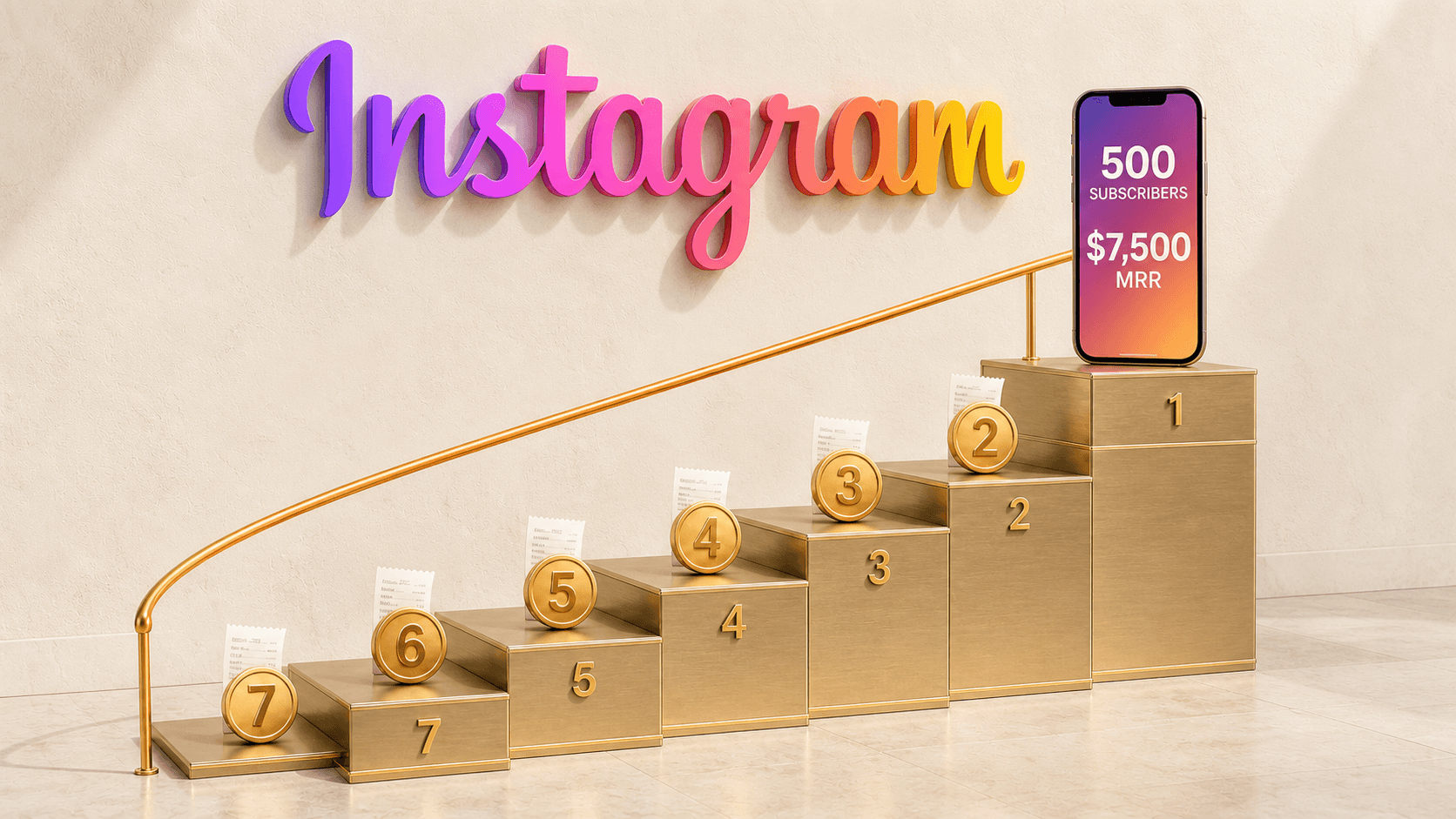
  • Converting just 0.5% of a 100K following into a $15/month subscription app generates $7,500 in monthly recurring revenue
  • Kayla Itsines started with Instagram workout posts and built Sweat, an app business that sold for $400M
What is Instagram monetization? Instagram monetization refers to the ways creators earn money from their Instagram audience, including native tools like Gifts, bonuses, and Subscriptions, plus off-platform income like brand deals, affiliate links, digital products, and owned subscription apps. Here's the uncomfortable fact about monetizing Instagram: the platform where creators build the most valuable audiences pays them almost nothing directly. YouTube shares ad revenue. TikTok has the Creativity Program. Instagram gives you $0.01 per Star and an invite-only bonus program that can vanish next quarter. That's not a reason to leave. It's a reason to treat Instagram as what it actually is: the best top-of-funnel in the creator economy, feeding a business you own. Goldman Sachs projects the creator economy will reach $480 billion by 2027, and the creators capturing that money are the ones selling something of their own. Here are the seven ways to monetize Instagram in 2026, ranked from worst to best by one standard: does the income compound, or does it reset to zero? The short answer: owned products beat rented income, and recurring revenue beats one-time payouts. Here's the full ranking for a creator with around 100K followers:
RankMethodTypical Monthly RangeRecurring?You Own It?
7Gifts and bonuses$50 to $300NoNo
6Instagram Subscriptions$300 to $1,500YesNo
5Affiliate links$200 to $1,500NoNo
4Merch$500 to $2,500NoPartly
3Brand deals$1,000 to $10,000NoNo
2Digital products$1,000 to $5,000NoYes
1Subscription app$3,000 to $15,000+YesYes
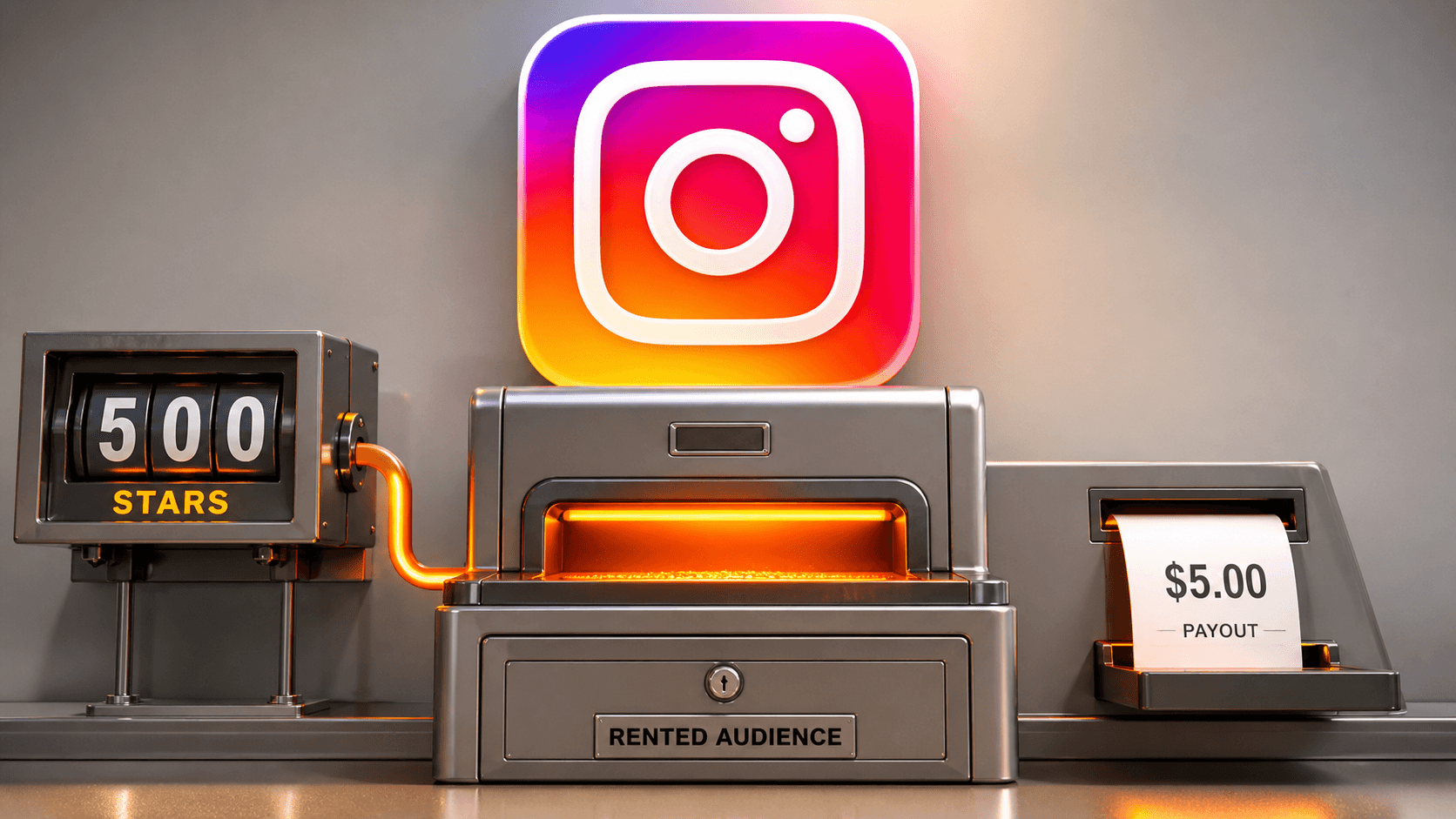
The ranges are directional, based on published rate benchmarks and what we see working with creators. The pattern is not. Everything above the bottom row either pays pennies, resets to zero each month, or lives on land you don't own. Instagram's native payouts are the weakest monetization option on this list. There are three tools: Gifts. Fans buy Stars and attach them to your Reels. Creators earn a flat $0.01 per Star, according to Influencer Marketing Hub. A Reel that pulls 500 Stars, which takes real fan generosity, pays you $5. Bonuses. Instagram's bonus programs pay for Reels performance, but they're invite-only. Instagram picks who gets in, sets the terms, and changes them whenever it wants. You can't build a business on an invitation. Subscriptions. This is the most interesting native tool. You need a professional account, 10,000 followers, and you must pick from preset price tiers that run from $0.99 to $99.99 per month. Instagram takes 0% right now, but when fans subscribe inside the iOS or Android app, Apple and Google take roughly 30% first. Subscriptions at least get the model right: recurring revenue from your biggest fans. But the product is thin (subscriber-only Stories, Lives, and a badge), the pricing is capped at Instagram's menu, and the subscriber relationship belongs to Meta. If your account gets suspended or reach drops, your "subscribers" go with it. That's the platform trap in its purest form: even your recurring revenue is rented. Brand deals are where most Instagram creators make their first real money, and the rates are meaningful. According to Influencer Marketing Hub's 2026 rate guide, nano influencers (1K to 10K followers) charge $100 to $500 per post, while micro influencers (10K to 100K) typically charge $500 to $5,000. Reels command 2 to 3x the rate of a static post. A creator with 100K engaged followers booking two solid deals a month can clear $3,000 to $8,000. Real money. But brand deal income has a structural problem: it doesn't stack. Every deal is a fresh negotiation, a fresh brief, and a fresh invoice. Finish a $4,000 campaign and your income is $0 until the next one closes. Ad budgets tighten, niches fall out of favor, and the brand owns the timeline. We ran the full numbers in brand deals vs. subscription apps, and the conclusion is blunt: a one-time $4,000 deal loses to 300 subscribers paying $15/month within the first quarter. Affiliate links, merch, and digital products all move you up the ownership ladder. Affiliate income (LTK, Amazon storefronts, brand programs) pays 5% to 20% commissions, but you're monetizing someone else's product and the income tracks your reach post by post. Merch has physical margins and inventory headaches. Digital products, courses, presets, meal plans, and ebooks, are the strongest of the three because you keep most of the revenue and the product is yours. The catch is the sales curve. Digital products sell in launch spikes. You promote hard, revenue jumps, then it decays until the next launch. Each sale is one-time, so you start every month at zero and buy it back with content. We broke down the full app vs. course revenue math, and the pattern holds across niches: one-time products cap out because they don't compound. Cassey Ho is the instructive case here. She built Blogilates into a product empire spanning apparel and app subscriptions, and the recurring pieces are what turned audience spikes into a durable business. Because it's the only option on this list where the income compounds, the customer relationship is yours, and the product grows without new followers. The math first. Take a creator with 100K Instagram followers:
StrategyMonth 1Month 1212-Month Total
Gifts and bonuses$150$150$1,800
Instagram Subscriptions (300 subs at $4.99, in-app)$1,050$1,050$12,600
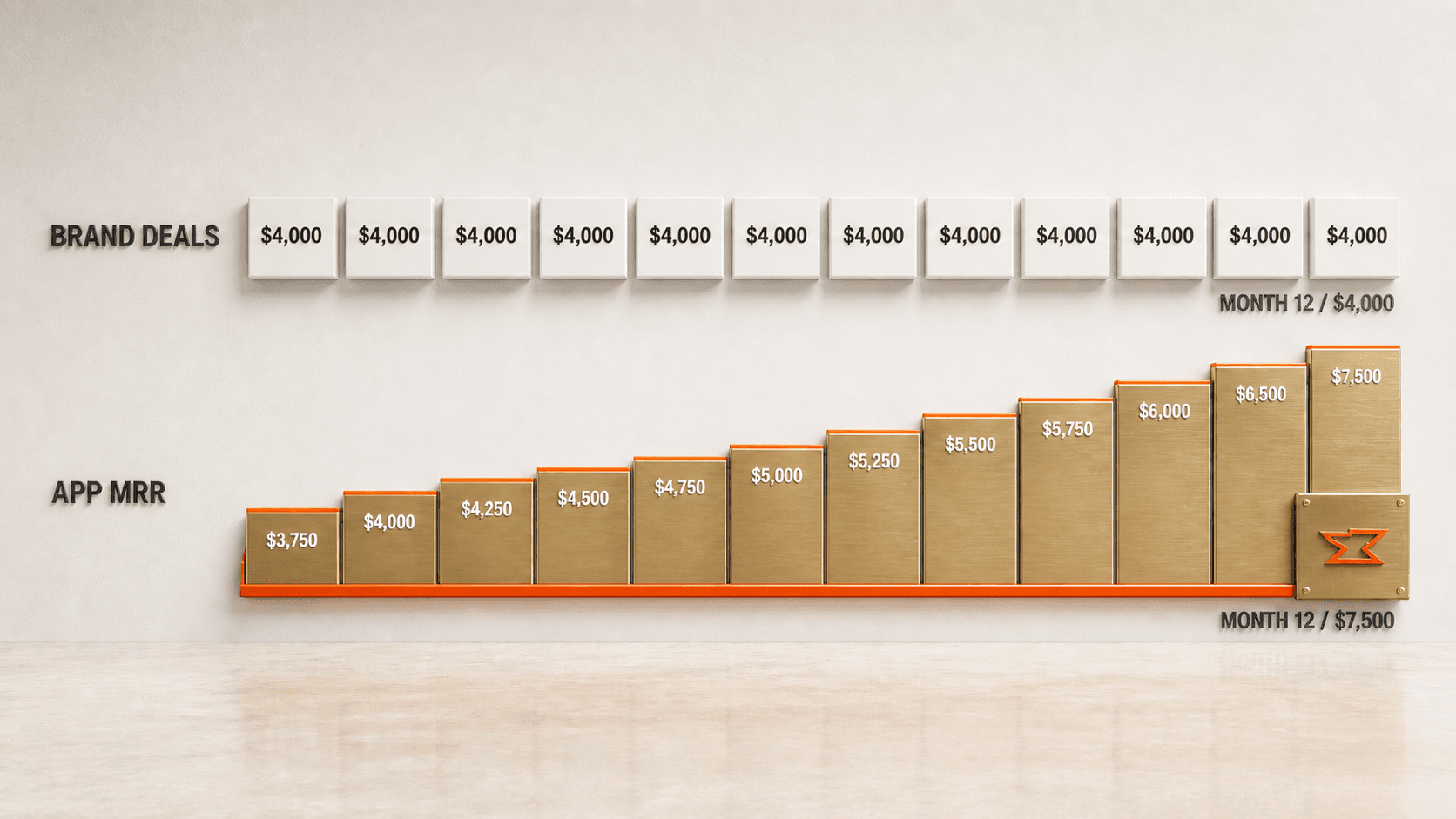
Brand deals (2/month at $2,000)$4,000$4,000$48,000
Digital product launches$5,000$900$18,000
Subscription app (250 subs growing to 500 at $15)$3,750$7,500$67,500+
The app row assumes 0.25% to 0.5% of your following converts to paid. That's a conservative rate for an engaged audience, and it's how 500 subscribers turn into $10K months once pricing and annual plans are tuned. Three things make the app column different from every other column: It compounds. Monthly recurring revenue stacks. Month 12 includes subscribers you earned in month one. Brand deals and launches restart from zero. It recruits its own customers. Your app lives on the App Store, where people searching "pilates workouts" or "budget tracker" find it without ever seeing your content. Instagram Subscriptions can only ever monetize people Instagram shows you to. It writes your content. Every subscriber result, leaderboard, and challenge inside the app is a post you didn't have to brainstorm. The product feeds the feed.
Chart comparing flat brand deal income to compounding subscription app revenue over 12 months
Kayla Itsines is the canonical proof. She posted workouts on Instagram, sold PDF guides, then moved her audience into the Sweat app. Sweat sold for $400M in 2021. The Instagram following was the launchpad. The app was the business. You don't have to abandon the other six methods. You have to stop treating them as the destination. Here's the shift: 1. Keep the deals, redirect the attention. Brand deals fund the transition. But your bio link, pinned posts, and Story highlights should point at your own product, not a brand's. 2. Find your product in your saves. Look at which posts get saved and shared, and what your DMs ask for repeatedly. That's the daily problem your app should solve. 3. Ship a subscription app, not another PDF. One-time products spike and decay. An app charges monthly, updates continuously, and gives fans a reason to open it every day. Built by Foundry handles the entire build: design, development, App Store submission, and everything after, for $49/month to start. 4. Convert 0.5%, not 50%. You don't need your whole audience. Five hundred true fans out of 100K followers is a $7,500/month business at $15 a month. 5. Let the App Store compound it. Once live, App Store search brings in subscribers who have never seen your content. Your follower count stops being your revenue ceiling. Every month you monetize Instagram with rented tools is a month your most engaged fans have nowhere to pay you properly. The audience is already there. The product is the missing piece. Ready to turn your Instagram following into recurring revenue? Built by Foundry builds, launches, and runs custom subscription apps for creators. Plans start at $49/month. Three weeks to the App Store. We handle the tech so you keep creating.
Let's Build →
Instagram Subscriptions require 10,000 followers and a professional account. Brand deals typically start around 10,000 followers as well. But owned products have no threshold: creators with 20K to 50K engaged followers routinely support subscription businesses, because conversion quality matters more than audience size. Creators earn a flat $0.01 per Star when fans send Gifts on Reels. There is no view-based creator fund on Instagram; bonus programs exist but are invite-only and their terms change frequently. Creators pick from preset tiers between $0.99 and $99.99 per month. Instagram currently takes no fee, but subscriptions purchased inside the iOS or Android app lose roughly 30% to Apple or Google first. A creator with 300 subscribers at $4.99 nets around $1,050 a month after store fees. Brand deals produce the fastest cash, but a subscription app produces the most durable income. Recurring revenue compounds month over month, the subscriber relationship belongs to the creator, and App Store discovery adds customers who never saw the creator's content. Nano influencers (1K to 10K followers) charge $100 to $500 per post, micro influencers (10K to 100K) charge $500 to $5,000, and Reels typically cost 2 to 3x more than static posts, according to Influencer Marketing Hub's 2026 rate benchmarks.

Creator app strategy

Want us to review your creator business?

Apply for a Foundry Creator App Review. We'll tell you whether there is a real app opportunity hiding in your audience.