
Case Studies & Success Stories

J. Kenji López-Alt: 862 Videos, a $10 Cookbook Club, and the Unfinished Test

October 18, 2026
Share
J. Kenji López-Alt: 862 Videos, a $10 Cookbook Club, and the Unfinished Test

Get Creator Revenue Insights

How creators are turning audiences into subscription businesses
Share
Key Takeaways:
  • J. Kenji López-Alt's YouTube channel showed 1.76 million subscribers, 862 videos and 300,046,489 views on October 18, 2026
  • His Patreon membership page has a free tier, a $5 Super Frienji tier and a $10 Cookbook Club, with an option to pay annually and save 30%
  • Cookbook Club members test recipes for his next book. The club posted Recipe #12 on October 9, marking twelve months, and annual members get their names in the book's dedications
  • Everything else he sells is finished and sold once: two James Beard Award-winning books, $3 single posts, and three cookware collaborations with Our Place priced from $139 to $245
Most food creators charge for the finished recipe. Kenji gives the finished recipe away and charges for the one he hasn't finished yet. That choice is worth studying, because it answers a question many creators get wrong: which part of your work can people pay for every month? J. Kenji López-Alt is an American chef and food writer known for applying the scientific method to home cooking. He wrote The Food Lab: Better Home Cooking Through Science and The Wok: Recipes and Techniques, both James Beard Foundation Award winners, and he is a New York Times columnist. He studied architecture at MIT, worked as a test cook and editor at Cook's Illustrated and America's Test Kitchen, then ran culinary work at Serious Eats, where his Food Lab column began. Wikipedia's summary notes the column became a book in 2015 that won the 2016 James Beard award for general cooking. Open Library lists The Food Lab at 958 pages; The Wok runs 658 and won a second James Beard award in 2023. He now lives in Seattle. He films POV cooking videos in his home kitchen, co-hosts The Recipe with Kenji and Deb with Deb Perelman of Smitten Kitchen, and posts on Instagram and TikTok. Kenji gives away his finished work. Free members of his Patreon get a weekly ad-free video with an accompanying article or recipe, and his YouTube channel holds 862 videos. The "Recipes" link in his website's header sends readers to that Patreon page. His YouTube description says it plainly: "Join my free Patreon to get full recipes and articles." Patreon's public search API counted 379 posts on the page. Even the paid perks are mostly about access to him and to other cooks, not access to recipes. That's unusual. Compare Alison Roman, who moved 199 cookbook recipes behind a $5 paywall. Both are sensible businesses. They just put the price on different things. The Cookbook Club is Kenji's $10-a-month Patreon tier. Members cook recipes he is still developing for his next book, share their results and feedback in a dedicated chat, and get behind-the-scenes updates on recipe testing. The book will include several recipes inspired by members, and annual members get their names in the dedications.
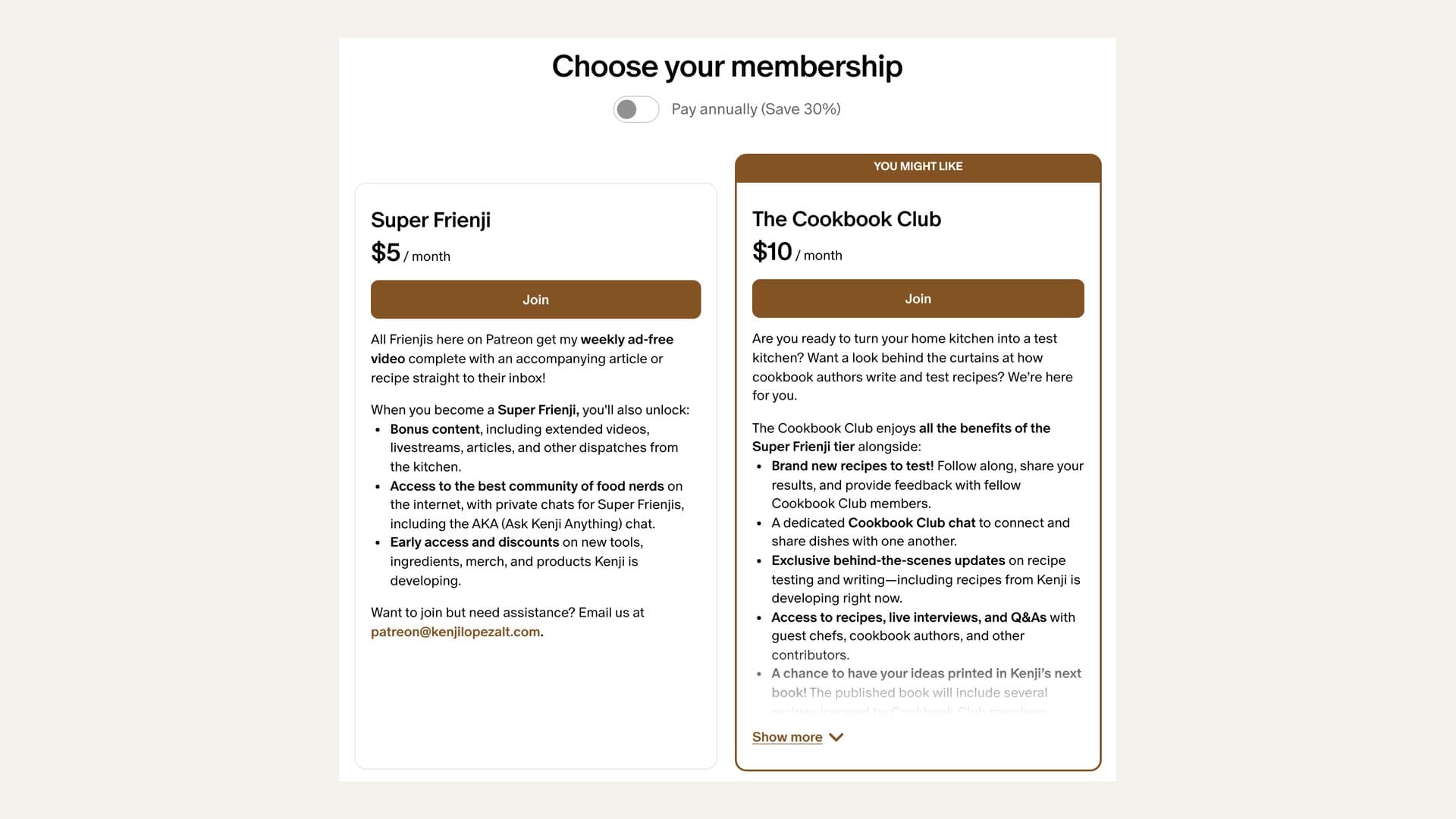
Kenji López-Alt's Patreon membership page showing two paid tiers: Super Frienji at $5 a month, with bonus content, community chats and the Ask Kenji Anything chat, and The Cookbook Club at $10 a month, which invites members to turn their home kitchen into a test kitchen
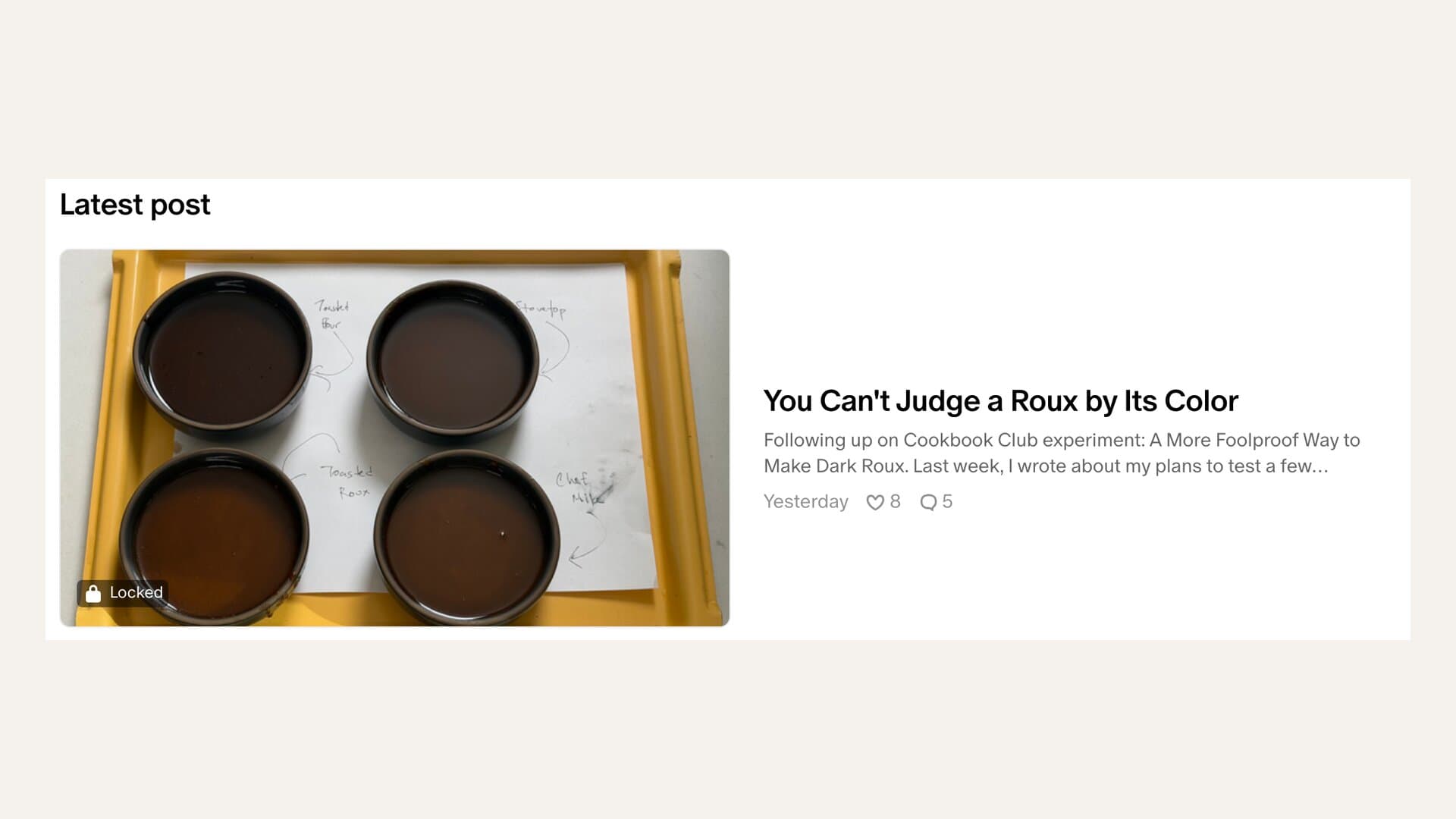
The page pitches it this way: "Are you ready to turn your home kitchen into a test kitchen?" Kenji spent years at a professional test kitchen. Now his members do that job, and they pay $10 a month for it. The club runs on a monthly rhythm. Its twelfth recipe went up on October 9, 2026, as four variations built on one jar-soup blueprint, and the post marked twelve months of the club. Three days before we checked, a post celebrated the paid community turning one. The latest post shows what members are paying for. It follows up on a dark roux experiment and compares four methods side by side.
The latest post on Kenji López-Alt's Patreon, marked Locked: four bowls of dark roux on a yellow tray with handwritten labels for toasted flour, stovetop, toasted roux and a chef's method, under the title You Can't Judge a Roux by Its Color
Four bowls, handwritten labels, no conclusion yet. That's the unfinished work, and it's the part behind the lock. The rest of the catalog is sold once. His Patreon shop listed seven items, mostly single posts at $3 and a Thanksgiving collection at $5. Signed books ship through Book Larder, a Seattle bookstore. His site calls three Our Place products his "dream" tools. We read Our Place's public product feed on October 18:
ProductOur Place priceHow often a customer buys it
Carbon Steel Wok$189Once
Rice Cooker$139Once
Titanium Braiser Pro 11.5"$225 to $245Once
Cookbook Club$10 a monthEvery month
The books and pans are made to last, so a customer only needs them once. Only the club is designed to repeat. The unfinished test sorts everything a creator sells into two piles: finished work, which a customer needs once, and unfinished work, which keeps changing. Recurring revenue comes from the unfinished pile. Kenji passes the test because the only thing he charges for monthly is the recipe he hasn't finished yet. Run it on your own catalog. A course, an ebook, a preset pack and a hoodie are finished. Once someone has them, there is nothing new to pay for next month. What stays unfinished is anything that keeps moving: the next book in development, a question a customer has today, a season, a training block, a skill that gets better week by week. It also explains why so many creator subscriptions churn. If the membership is a library of finished work, a subscriber can download what they want and leave. Kenji's free tier already hands out the finished work, so his paid tier has to sell something that changes.
See What We’d Build You →
There's one weakness in the model, and it comes from the same strength. A cookbook is a project with an end date. When the book ships, the club's unfinished work becomes finished work, and members will need a reason to stay until the next book. Kenji may already have one: the $5 tier and the community both outlast any single book. But the twelve months of testing are tied to one manuscript. The other unfinished thing on his page is the AKA, the "Ask Kenji Anything" chat for Super Frienjis. Every home cook has a question at the stove, like why their roux tastes burnt before it turns dark. That question is always new to the person asking it. Today the answer depends on Kenji having time to reply. Here's our sketch, not anything he has announced: an app that answers from 958 plus 658 pages of books and 862 videos, tied to the dish the cook is making right now, would be unfinished work that never runs out. It's the same idea behind Emily Oster's lifetime-plan math: the price should follow how long the customer's need actually lasts. Patreon hides Kenji's member count, so we don't know how many people pay $5 or $10, how many pay annually, or what the club earns. We don't know his book royalties or his Our Place terms. Our Place prices change with sales, and the braiser price varies by color. YouTube views measure reach, not revenue. If you're weighing the platform itself, our Patreon review covers the fees, and our YouTube Memberships vs Patreon comparison covers what you keep if you leave. If you're a cooking, baking, or how-to creator with 50K or more followers and hundreds of finished videos, try this: list everything you sell and mark each item finished or unfinished. If the unfinished column is empty, your audience has nothing new to pay for next month, however much they love the archive. Kenji filled that column with a test kitchen. The other option is a product that answers your audience's questions while they cook. Building that product is what Built by Foundry does, and running it after launch is how we keep products growing.
See What We’d Build You →
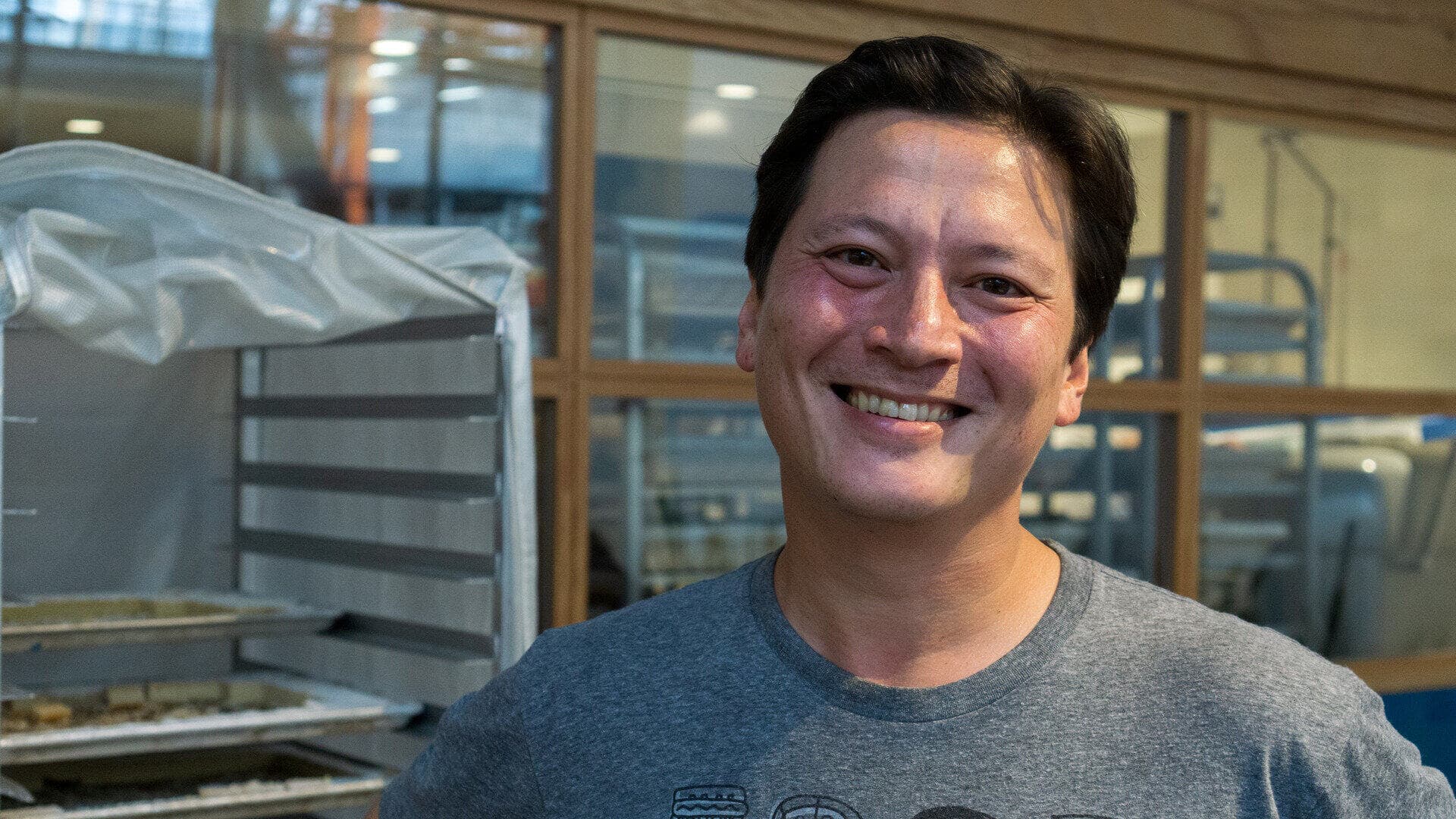
Hero photograph of J. Kenji López-Alt at Tartine Manufactory, November 2019, by Jami430, CC BY-SA 4.0, via Wikimedia Commons, cropped to 16:9. Channel figures read from YouTube on October 18, 2026. Membership tiers, posts and shop items read from his public Patreon page the same day; post count from Patreon's public search API. Cookware prices read from Our Place's public product feed on October 18, 2026. Page counts from Open Library and Wikipedia.
Our work

Creators who already did this

These are apps we designed, built, shipped, and still run today, with the creator keeping the code and the audience.

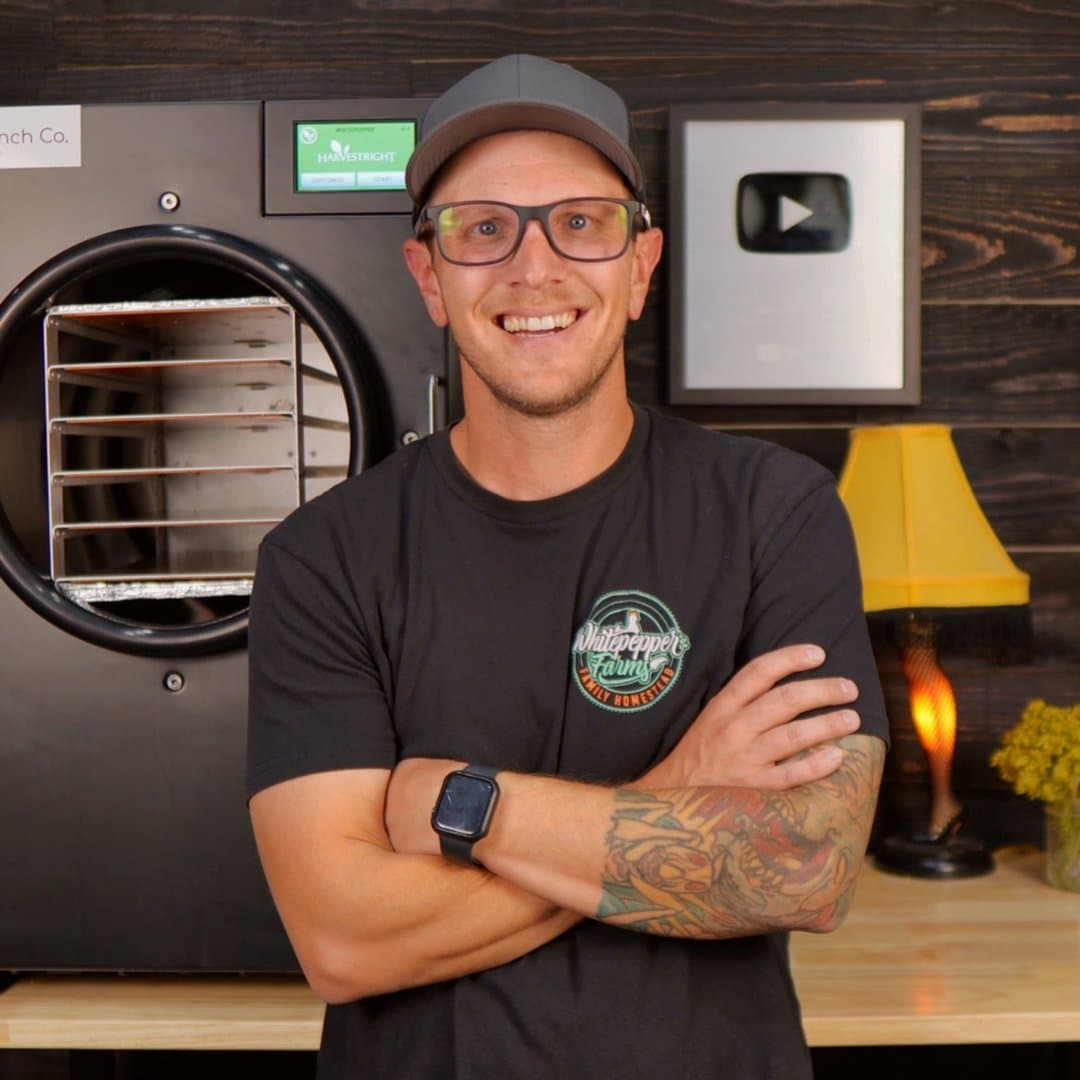
Brandon Whiteleather

Brandon Whiteleather

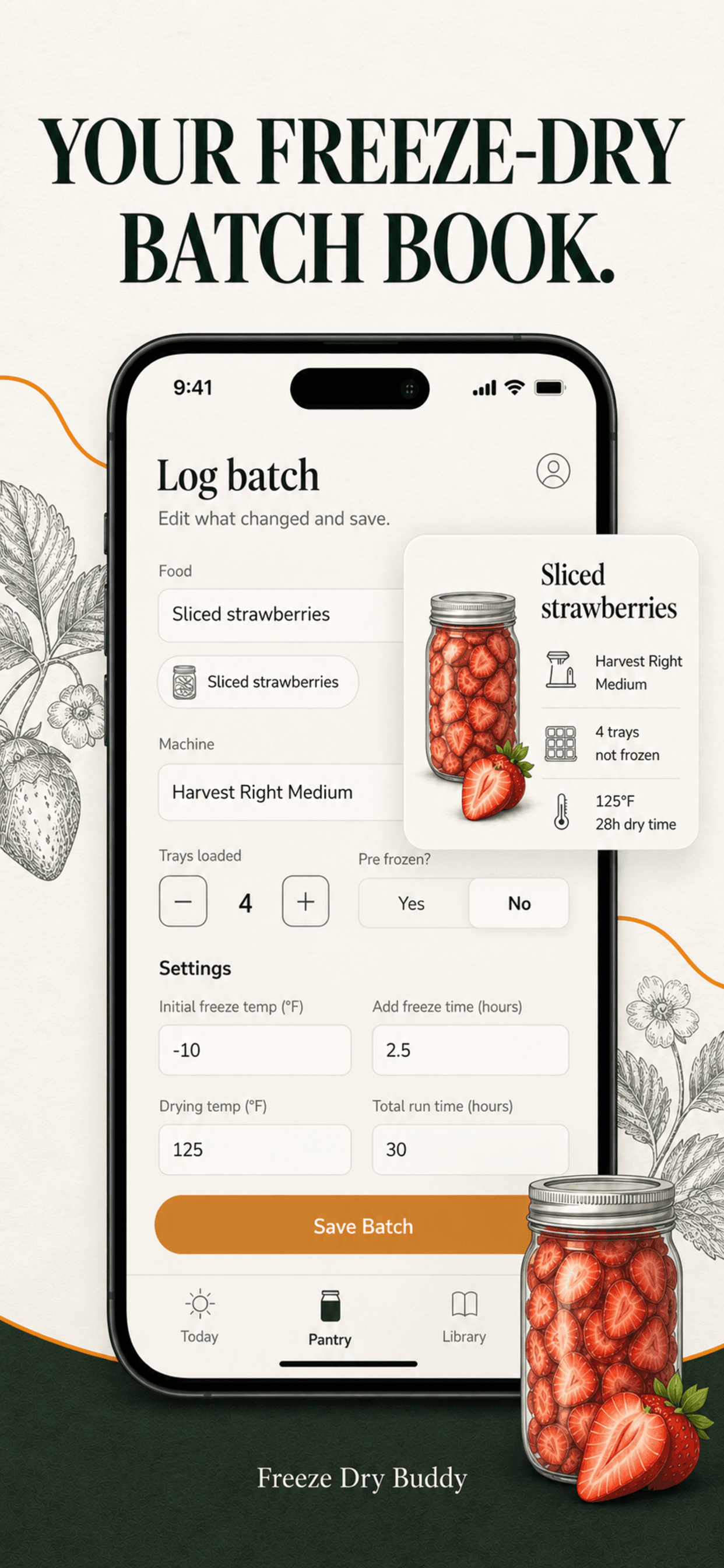
Founder & CEO of Freeze Dry Buddy

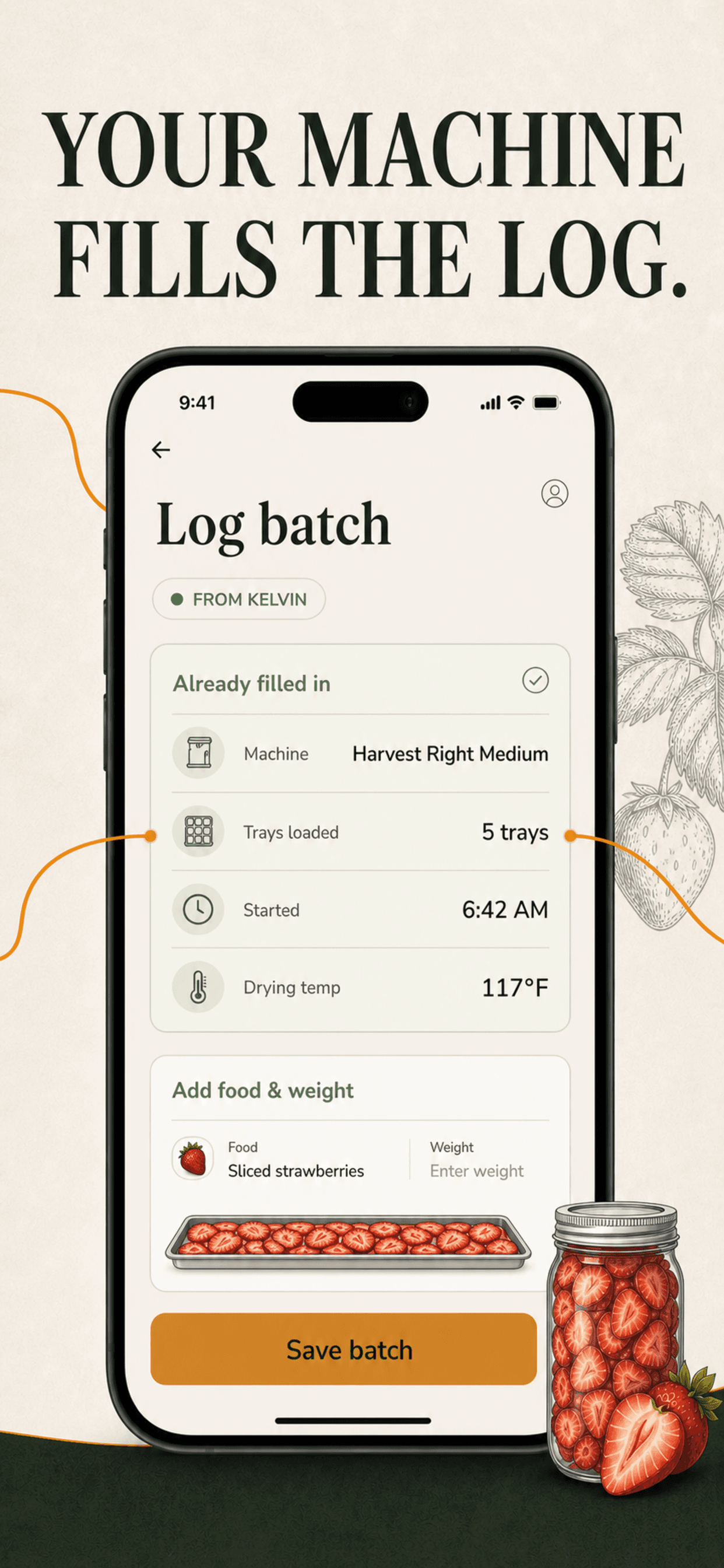
Freeze drying made foolproof, from a homesteader who's done it 1,000 times.

Top Food App1.4M+ followers
Read the case study
Kristen Donathan

Kristen Donathan

Founder & CEO of Stain Fix

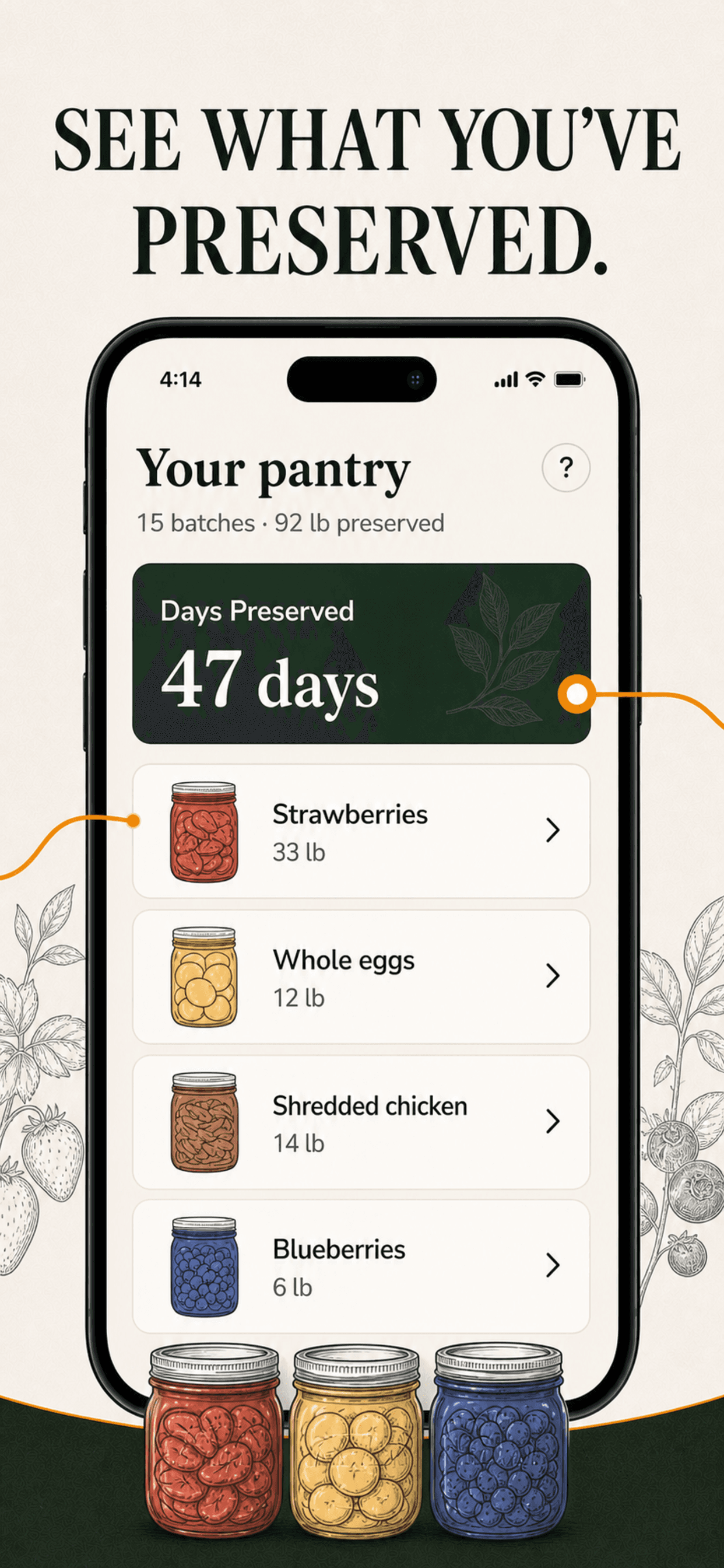
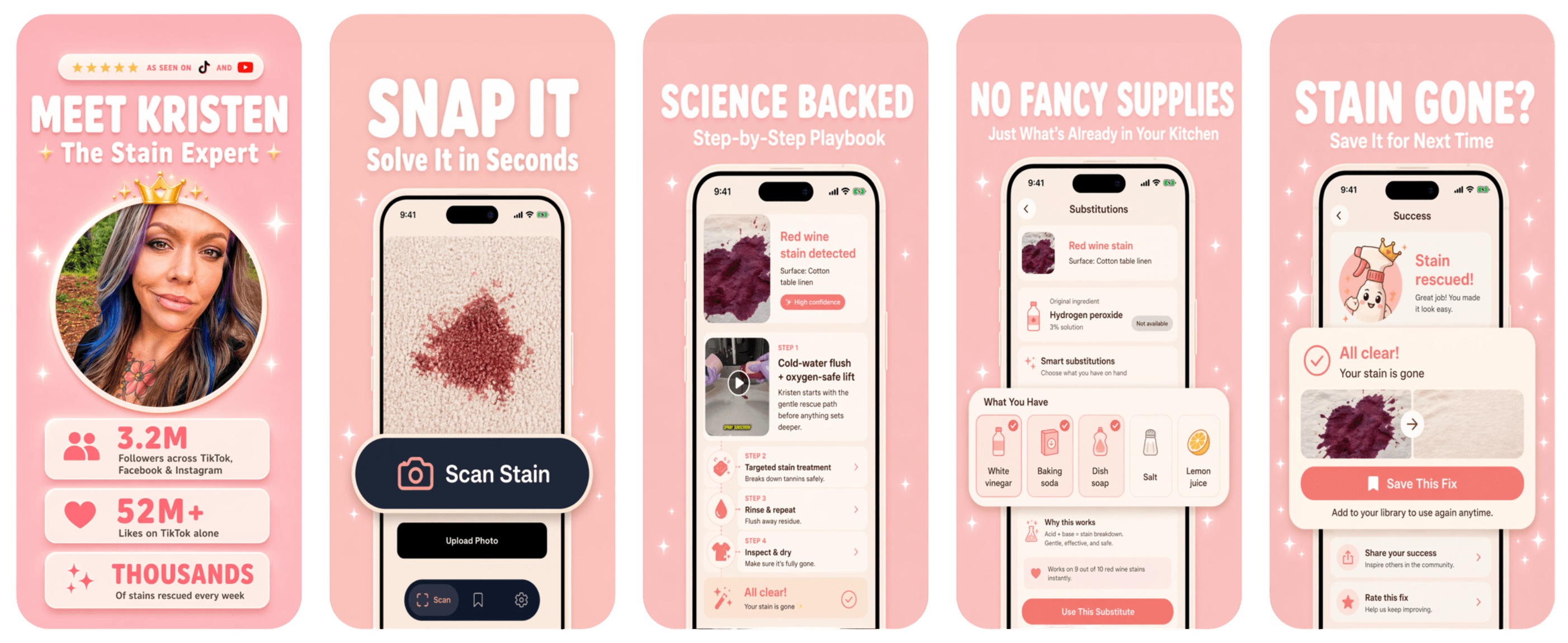
Snap a stain. Get the fix in seconds.

Top Lifestyle App1.5M+ followers
Read the case study
Stain Fix screenshots
Ellie Fausett

Ellie Fausett

Founder & CEO of Vector Guard

Spot disease-carrying pests before they reach your family.

Top Health App
Read the case study
Vector Guard screenshots

Creator app strategy

Curious what your app could be?

Enter your handle and BUILT BY FOUNDRY will research your audience and present custom app concepts. Free.

J. Kenji López-Alt: 862 Videos, a $10 Cookbook Club, and the Unfinished Test