
Case Studies & Success Stories

Emily Oster's ParentData: 1,300 Articles, a $500 Lifetime Plan, and the Lifetime Test

October 16, 2026
Share
Emily Oster's ParentData: 1,300 Articles, a $500 Lifetime Plan, and the Lifetime Test

Get Creator Revenue Insights

How creators are turning audiences into subscription businesses
Share
Key Takeaways:
  • Emily Oster is a Brown University economist and the founder and CEO of ParentData, a paid guide to pregnancy and parenting with over 1,300 articles
  • ParentData's plans page listed three prices on October 16, 2026: $12 a month, $120 a year, or $500 once for lifetime access
  • Archived copies show the page looked different until at least April 6, 2026: an $8 Web Access plan, the $12 Plus plan and a $250-a-year Premium plan, with no lifetime option
  • Her dated newsletters follow a family from the due date to the child's third birthday, roughly 45 months. The $500 lifetime price lands almost exactly at the end of that run
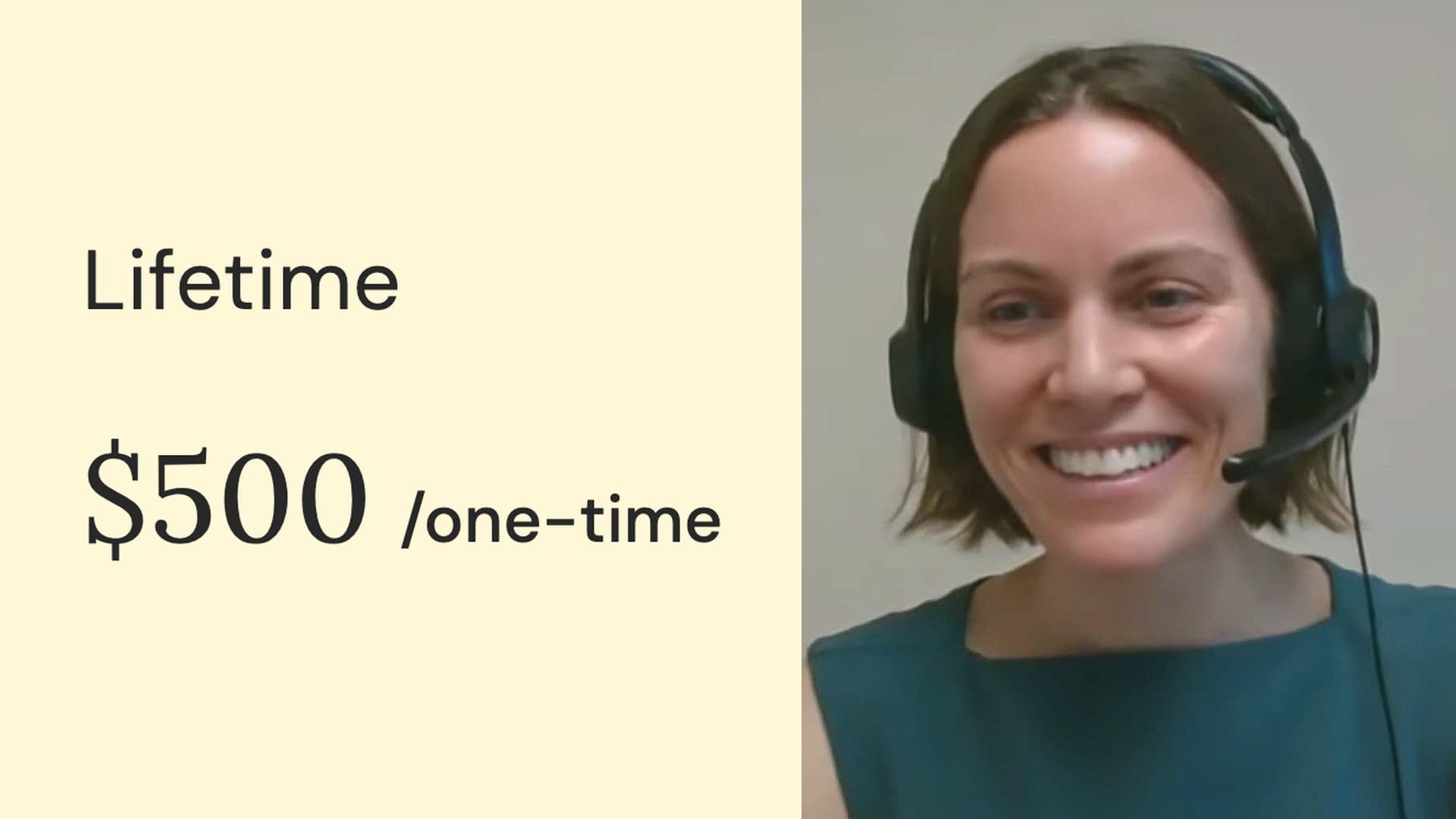
Most subscription sellers never write down how long they expect a customer to stay. Emily Oster's company did, in public, when it added a lifetime price. Emily Oster is an American economist who writes about pregnancy and parenting through data. She is the Esposito Family Goldman Sachs University Professor of Economics at Brown University, the author of four books including Expecting Better and Cribsheet, and the founder and CEO of ParentData. Her Brown faculty page lists health economics and development economics as her research fields. ParentData's about page says she earned her PhD in economics at Harvard, is a mom of two, and started writing about pregnancy after finding little clear information during her own. Her books are Expecting Better, Cribsheet, The Family Firm and The Unexpected. She reaches parents on Instagram, TikTok and X, but the business lives on ParentData: more than 1,300 articles, a dozen named contributors, and an AI search tool called Petey. On October 16, 2026, ParentData offered three paid options: Plus Monthly at $12 a month, Plus Annual at $10 a month billed as $120 a year, and Lifetime at $500 as a single payment. All three include full site access and a choice of weekly newsletters, and a free plan gives limited article reads.
PlanPriceNotes from ParentData's own pages
Free$0Limited articles, occasional newsletters
Plus Monthly$12 a monthFull access, choice of newsletters
Plus Annual$120 a year30-day full refund window
Lifetime$500 once"Pay once, stay a member forever"
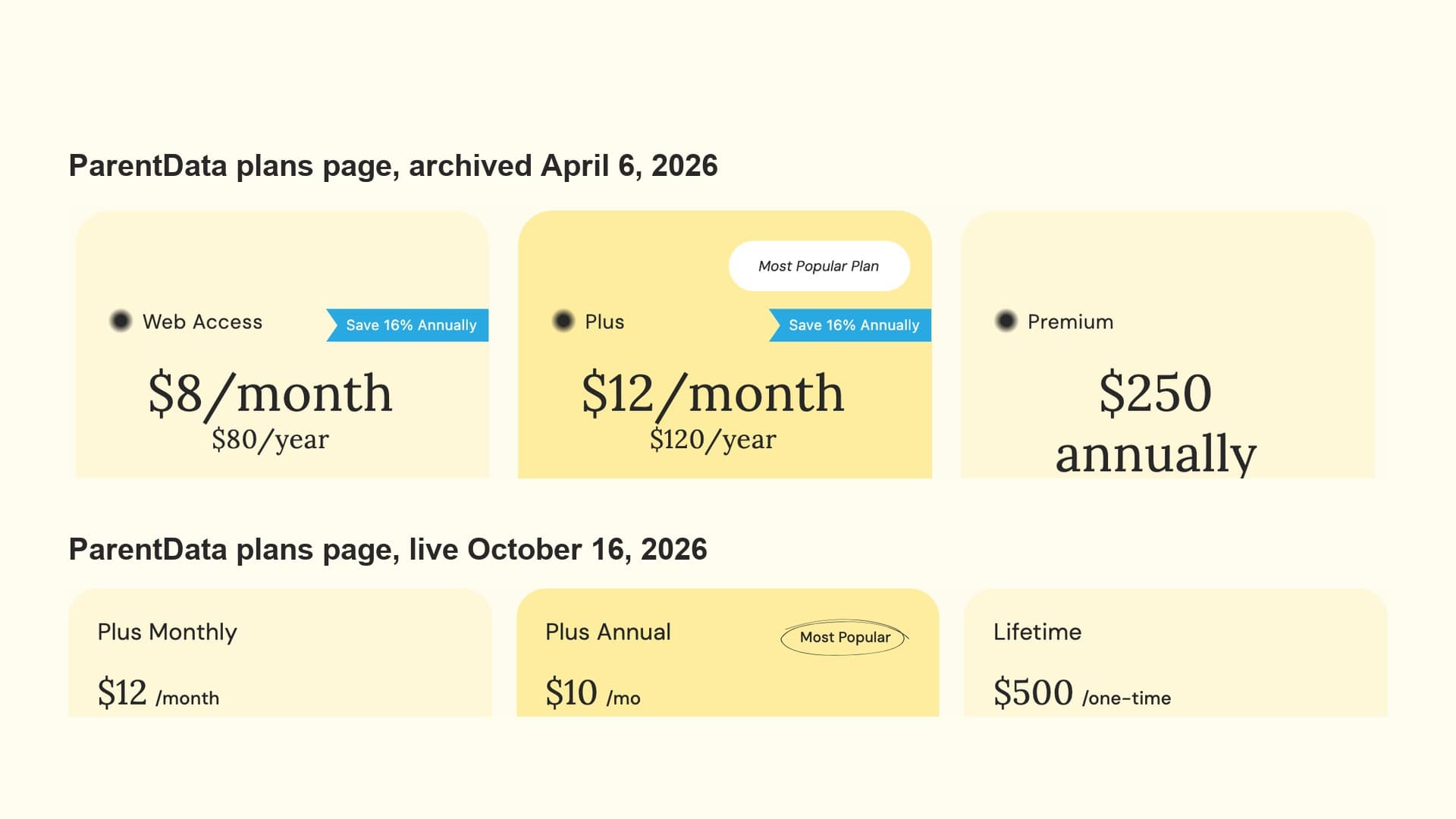
New readers also get a 14-day free trial with no credit card. The page used to sell something else. Wayback Machine captures from July 2024 through April 6, 2026 show three subscriptions: Web Access at $8 a month or $80 a year, Plus at $12 a month or $120 a year, and Premium at $250 a year. By the May 11, 2026 capture, the cheap plan and the premium plan were both gone and the lifetime plan had taken the third card.
ParentData's plans page archived on April 6, 2026, showing Web Access at $8 a month, Plus at $12 a month and Premium at $250 annually, above the live page on October 16, 2026, showing Plus Monthly at $12, Plus Annual at $10 a month and Lifetime at $500 one-time
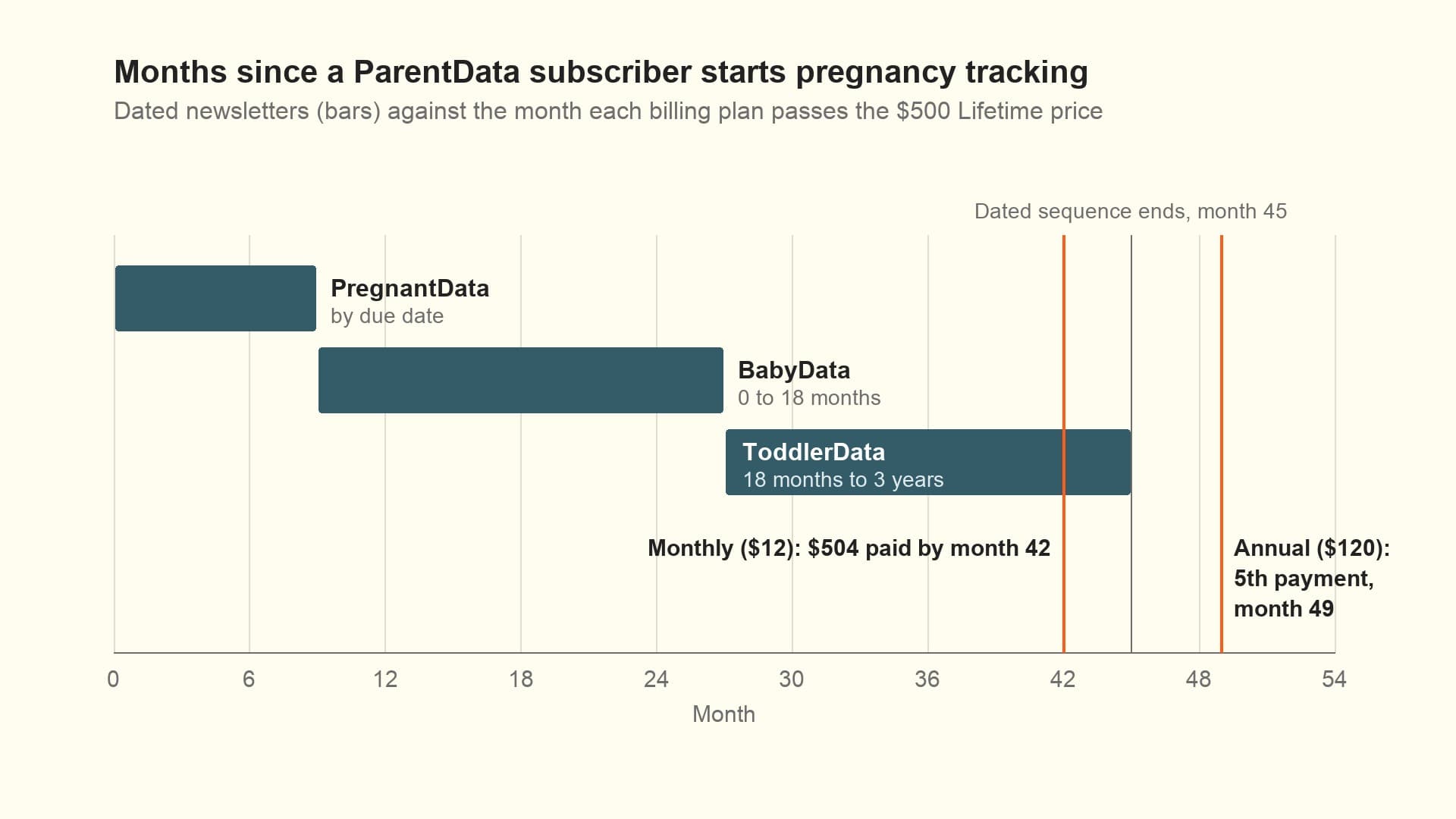
Two things changed at once. The entry price rose from $8 to $12 a month. And the top plan changed from a bigger yearly bill to a one-time bill: the $250 Premium plan asked committed readers to pay more every year, while the $500 plan asks them to pay once. A subscription sells a lifetime plan when the seller expects most customers to leave before the lifetime price would have been paid in renewals. The price works out to a bet about how long a customer would have stayed, and ParentData's bet is about four years. Divide $500 by $120 and you get 4.17 years of annual billing. On the monthly plan, a reader passes $500 with the 42nd payment, at $504. On the annual plan, four payments total $480 and cover 48 months, so the lifetime plan only saves money for someone who would have paid a fifth time. Now look at what ParentData sends on a schedule. Its FAQ lists PregnantData, "based on the due date," BabyData from 0 to 18 months and ToddlerData from 18 months to 3 years, both "based on your child's birthday." Sign-up asks for a due date or a child between 0 and 5. A parent who joins early in pregnancy runs through that dated sequence in about 45 months.
Timeline chart: PregnantData covers months 0 to 9, BabyData months 9 to 27 and ToddlerData months 27 to 45; the monthly plan passes $500 at month 42 and the annual plan's fifth payment falls at month 49
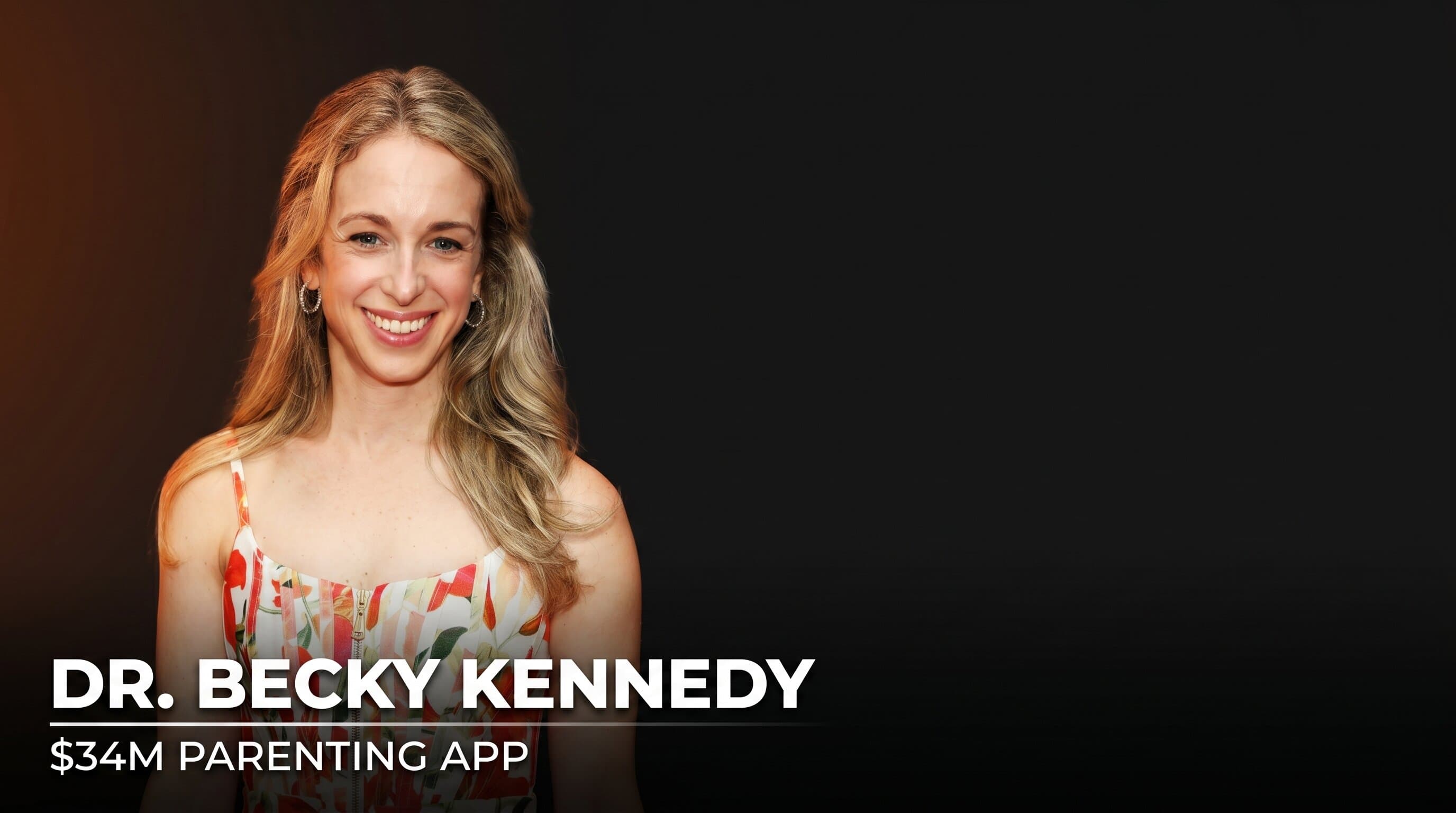
The lifetime price sits right between the end of the dated sequence and the next annual renewal. A parent with one child who reads through toddlerhood pays about the same either way. The parent who returns for a second pregnancy gets the discount. ParentData gets $500 up front and gives up the renewals that parent would have paid later. ParentData lives on the web and in email. A search of the US App Store for "ParentData" and for "Emily Oster" on October 16, 2026 returned no app from her company. The phone is where the category's daily habit sits. The top pregnancy result, What to Expect, had 380,223 ratings. Its listing says its content aligns with "Heidi Murkoff's trusted books," and its seller is Everyday Health, which also publishes BabyCenter at 298,099 ratings. The best-known pregnancy book became the category's biggest free app, and a media company runs it. Oster has already built the part those apps sell: a guide that knows the due date and changes each week. Our profile of Zak George found the same kind of demand in dog training, and Dr. Becky Kennedy's Good Inside shows a parenting expert who did take the guide onto the phone.
See What We’d Build You →
The lifetime test divides a lifetime price by the annual price. The result is the number of years the seller is betting a typical customer would otherwise keep paying. If the product has a natural end, such as a child's third birthday, the bet should land just past that end. Run it on your own catalog even if you've never offered a lifetime plan. Ask how many years a customer would pay you, then ask what in your product changes on the day they would leave. ParentData's answer is clear: the dated newsletters stop at age 3, and the price is set just past that. Our guides to annual versus monthly pricing and lifetime value cover the math underneath. The test also shows when a lifetime plan is a mistake: if customers would happily renew for ten years, a four-year price leaves money on the table. ParentData doesn't publish subscriber counts, revenue, or how many readers pick each plan. We don't know why the $8 and $250 plans were removed, or whether lifetime buyers are mostly new parents or long-time readers. The 45-month sequence assumes a parent joins at the start of pregnancy. The break-even months are our arithmetic from the published prices. App Store rating counts measure reach, not revenue. If you're a parenting, pregnancy, fertility, or family health creator with 50K or more followers, your audience arrives on a schedule nobody had to invent. They know their due date, and every week they want to know what's next. The product that delivers it each morning on the phone is the piece most creators in this space still don't own. Building it is what Built by Foundry does, and running it after launch, from pricing to the next release, is why we keep running products long after launch.
See What We’d Build You →
Hero photograph of Emily Oster from a European Central Bank webinar, CC BY 3.0, via Wikimedia Commons. Plan cards captured from parentdata.org on October 16, 2026, and from the Internet Archive's April 6, 2026 capture. Newsletter schedule and company details from ParentData's about page and FAQ, read October 16, 2026. Rating counts retrieved from the Apple iTunes Search API the same day.

Our work

Creators who already did this

These are apps we designed, built, shipped, and still run today, with the creator keeping the code and the audience.

Samantha Mae

Samantha Mae

Founder & CEO of NineLives

Cat health tracking from the world's most beloved Scottish Fold.

Top Health App150K+ followers
Read the case study
NineLives screenshots
Liv Merima

Liv Merima

Founder & CEO of Claim It

Custom affirmations that help millions choose themselves.

Top Lifestyle App150K+ followers
Read the case study
Claim It screenshots
Brandon Whiteleather

Brandon Whiteleather

Founder & CEO of Freeze Dry Buddy

Freeze drying made foolproof, from a homesteader who's done it 1,000 times.

Top Food App1.4M+ followers
Read the case study

Creator app strategy

Curious what your app could be?

Enter your handle and BUILT BY FOUNDRY will research your audience and present custom app concepts. Free.

Emily Oster's ParentData: 1,300 Articles, a $500 Lifetime Plan, and the Lifetime Test