
Platform Reviews

James Smith Academy Review: Is $70/Month Worth It?

August 5, 2026
Share
James Smith Academy Review: Is $70/Month Worth It?

Get Creator Revenue Insights

How creators are turning audiences into subscription businesses
Share
Key Takeaways:
  • James Smith Academy charges $70 per month for its Training Plan, with a seven-day free trial and no credit card required
  • The free Pay-As-You-Go plan keeps your saved programs, workout logs, progress history, and Momentum Score after coaching ends
  • The paid plan adds personalized programs, direct coach support, check-ins, and program adjustments
  • The US App Store shows a 4.8 rating from 93 ratings, while recent releases show the product is still being maintained
  • Rating: 4.2 out of 5. The app is a strong coaching product for people who want accountability, but $70 per month is hard to justify for self-directed lifters
Verdict: James Smith Academy is worth $70 per month for people who will use the coaches, request program changes, and need accountability. The free plan is the sharper choice for experienced lifters who mainly need workout logging. For creators, the bigger lesson is the business itself: James Smith turned advice into a product that earns beyond the reach of his next post. Vector Guard by Ellie Fausett

Our work

How Ellie Fausett Turned Her Public-Health Research Into the Vector Guard App

Epidemiologist Ellie Fausett and Built by Foundry turned years of field research into Vector Guard, an iOS app for identifying ticks and mosquitoes and staying safe outdoors.

Read the case study → (opens in a new tab)
James Smith Academy is a fitness coaching app that combines personalized training programs, workout tracking, progress data, and access to human coaches. James Smith, the fitness creator behind @jamessmithpt on Instagram, founded the company after working as an in-person personal trainer. The current James Smith Academy website positions the app around two jobs. It tracks workouts for free, and it sells ongoing coaching to members who want a person to adjust their plan. Members can use the product on iOS, Android, and the web. That distinction gives the app more staying power than a video library. A customer brings a program from a personal trainer, ChatGPT, or the Academy, then logs sets and reps inside the same product. The paid offer adds judgment when a shoulder hurts, equipment changes, or progress stalls. The US App Store listing gives the app 4.8 out of 5 from 93 ratings. It also shows repeated updates through July 2026. The UK listing has more than 700 ratings at the same 4.8 score. Those are healthy trust signals, although review counts remain modest beside mass-market fitness apps. James Smith Academy earns 4.2 out of 5. Its best decision is the free Pay-As-You-Go tier. Members keep the programs they received, along with workout logs, progress history, analytics, and the Momentum Score. That makes the paid subscription feel like a service layer over a useful product instead of a gate that locks every screen when billing stops. The paid plan earns its price through human coaching. The Academy's coach page presents a team with strength, hypertrophy, nutrition, and pre-natal specialties. Program requests and direct feedback can save a member from buying another generic workout plan every six weeks. The tradeoff is focus. People seeking classes, live video, a broad social feed, or automated meal logging will find fuller fitness suites elsewhere. James Smith Academy is strongest when a customer already wants structured resistance training and a coach who can change the plan. James Smith Academy costs $70 per month for the Training Plan in US dollars. The Pay-As-You-Go tier is free, and a new personalized program costs $40 as a one-time purchase. We verified these prices on the live James Smith Academy pricing page on August 5, 2026.
OptionUS PriceWhat It Includes
Seven-day trialFreeApp access and an initial personalized program, with no card required
Pay-As-You-GoFreeSaved programs, workout logging, progress history, analytics, and Momentum Score
New personalized program$40 onceA new program without an ongoing coaching subscription
Training Plan$70/monthUnlimited program requests, coach support, check-ins, adjustments, and private community
Three months of the Training Plan costs $210. Twelve months costs $840. A member who only wants four new programs in a year would spend $160 through one-time purchases, while someone who needs weekly feedback gets far more value from the subscription.
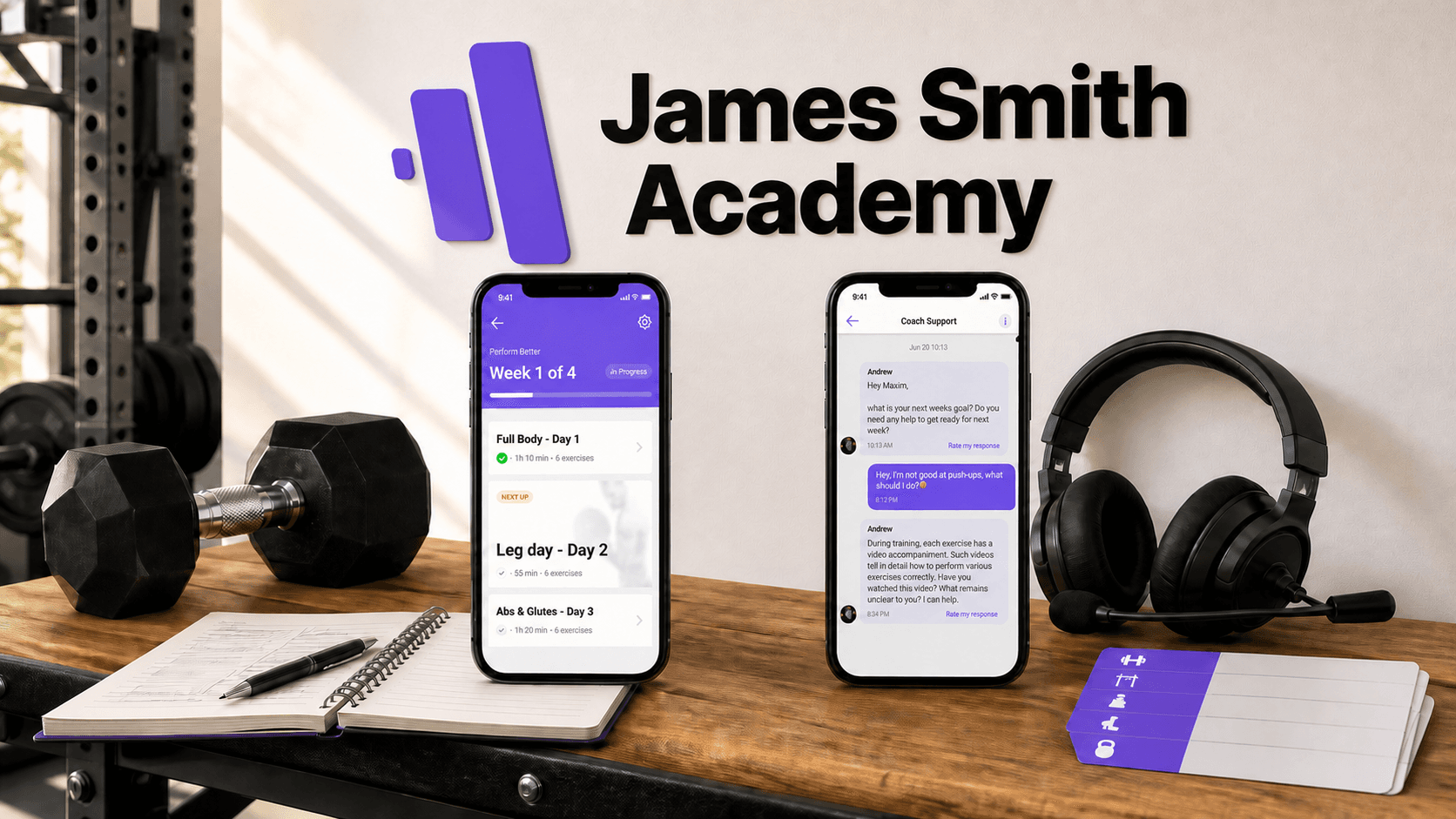
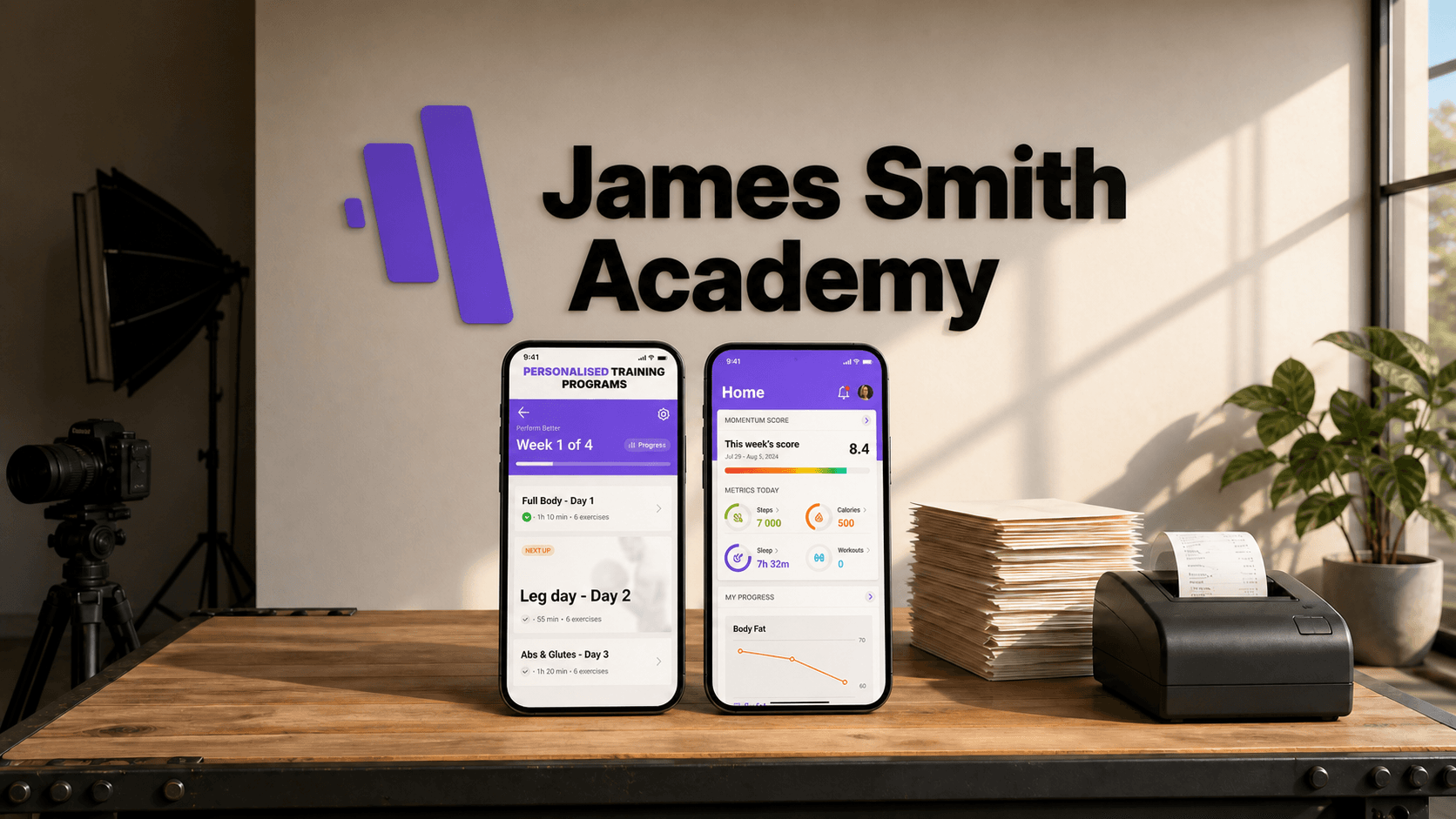
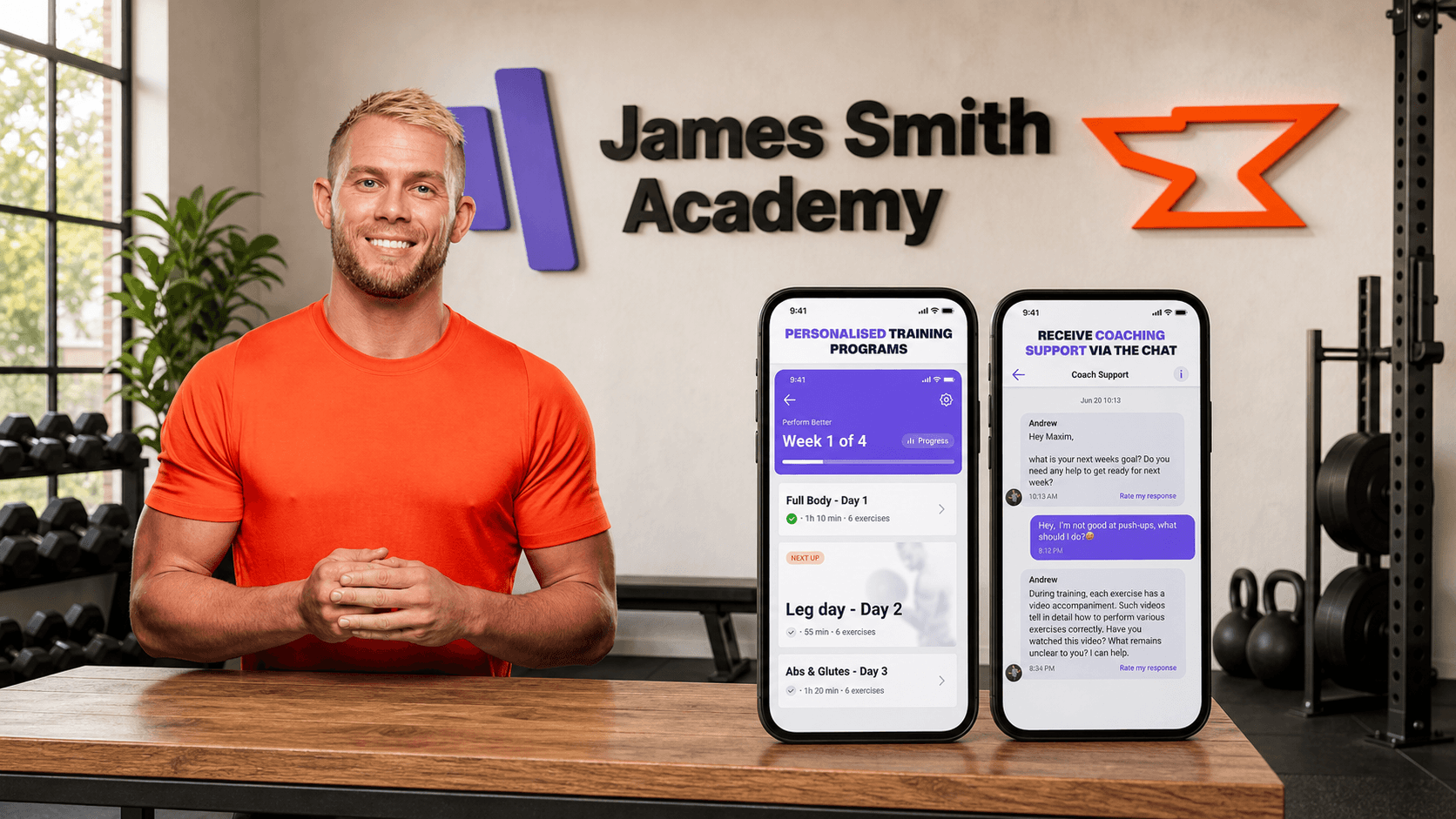
James Smith Academy workout plan and coach support screens beneath the Academy and Built by Foundry marks
The $70 Training Plan adds ongoing human coaching, unlimited personalized program requests, progress adjustments, and direct feedback to the free tracking app. The product is selling a coach's attention, not another stack of recorded workouts. That model addresses the reason many fitness plans fail. A template cannot see that a member stopped logging, changed gyms, or needs to replace one painful movement. The Academy says coaches check in, retain the member's history, and adjust programs around schedule, equipment, goals, and injuries. The free app handles the repeatable work. Workout logging records sets and reps. Progress history makes improvement visible. The Momentum Score gives consistency a simple signal. Suggested weights use prior training history. Those actions create a daily habit and give the coaching team better context when the member asks for help. The App Store privacy disclosure deserves attention. The developer says purchases may track users across apps and websites. Health and fitness data, contact information, user content, and identifiers may be linked to identity. That collection fits a personalized coaching product, but customers should read the Academy's privacy policy before uploading health data or progress photos. The app's weaknesses are its $840 annual coaching cost, limited value for self-directed users, small US review base, and the amount of personal data required for tailored coaching. First, $70 per month only works when the member uses the humans. A person who follows a stable program and knows how to adjust exercises can stay on the free tier or pay $40 when a new program is needed. Paying every month for unused access turns accountability into expensive shelfware. Second, the experience centers on resistance training and personalized programs. Customers who want instructor-led classes, real-time group sessions, or a large catalog organized by music and mood should compare a class-first product. The narrow promise is a strength when it matches the goal and a limit when it does not. Third, the public ratings are positive but regionally scattered. The US App Store has 93 ratings. The UK has more than 700. Google Play shows a 4.5 rating on the developer listing. A buyer should use the free trial to judge coach responsiveness, program quality, and device syncing instead of treating one storefront score as the whole record. Finally, personalized fitness products handle sensitive information. The app may collect health data, photos, contact details, identifiers, and purchase history. The convenience is substantial. The privacy cost is worth reading before joining. James Smith Academy fits gym members who want personalized resistance-training plans and human accountability without paying for weekly one-to-one personal training.
  • Beginners who need a plan: The coach can match training to equipment, experience, and schedule.
  • Intermediate lifters who stall: Program adjustments and suggested weights can restore progress without another round of random workouts.
  • Busy members who lose momentum: Check-ins and the Momentum Score make missed weeks visible.
  • People leaving expensive personal training: $70 per month can cost less than one in-person session in many cities.
Self-directed lifters should start with the trial, save their program, and test the free tier. Class-focused customers should choose a class library. Anyone managing a medical condition should use an appropriate health professional rather than treating app coaching as medical care. If you are a fitness creator with 50,000 engaged followers, study the product from the other side of the screen. The Academy turns public advice into personalized action. It gives customers a reason to open the app between posts, then turns their questions and training patterns into ideas for future content. Our analysis of 1,800 creator apps found that narrow utility drives stronger engagement than a generic content feed.
Live every Thursday

Watch us tear down a creator business, live

Every Thursday at 11 AM PT we take a real creator business and show the app hiding inside it: the wedge, the paid loop, the pricing, and what would sink it. Free, and the replay goes to everyone who registers.

Save your seat → (opens in a new tab)
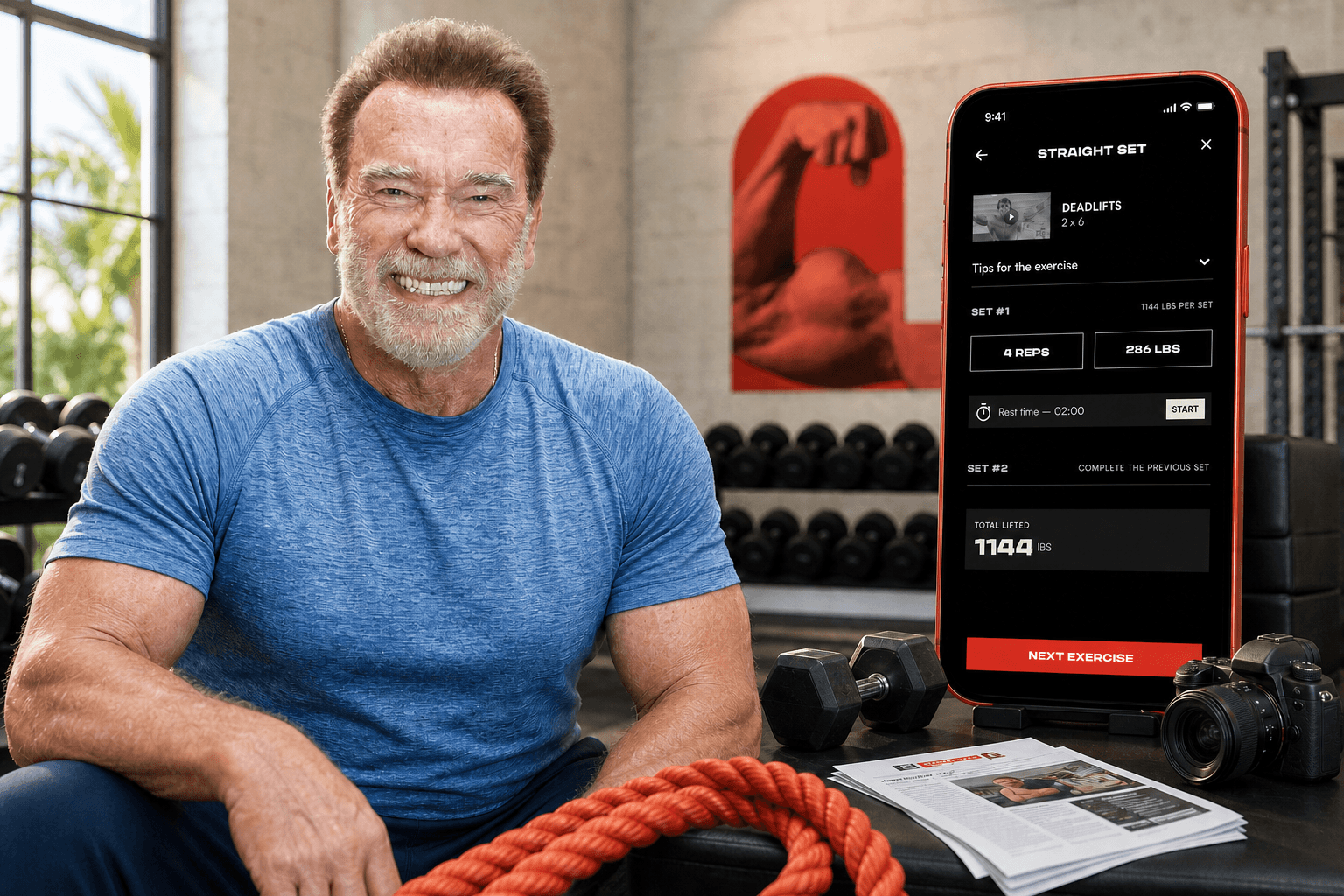
James Smith built a business that can keep moving when his posting slows. In a public LinkedIn post, he said the coaching business was doing better after he stopped posting fitness content. He credited a custom app, built from scratch in 2017, and an email list of 388,000 people. That is the commercial lesson. Social content created demand. Email preserved direct reach. Software delivered the result and collected recurring revenue. The app also gave Smith something his videos could not: a record of member behavior, progress, and support needs. The model matches the pattern behind Arnold Schwarzenegger's Pump app and Senada Greca's WeRise app. Each creator packages a known method into a program people can use. The customer relationship becomes deeper than a view, and the product can attract a new customer before that person follows the creator. Built by Foundry builds this kind of software business with creators for $0 upfront through a revenue share. Our model covers product strategy, design, engineering, App Store launch, and growth. App Care covers the updates, reliability, and iteration that keep a subscription worth renewing.
James Smith Academy app screens operating in daylight while a camera and studio light rest in shadow
James Smith Academy earns 4.2 out of 5. The free tracking plan is generous, the $40 program option gives self-directed members a clear middle path, and the $70 subscription can beat the cost of regular personal training for people who use the coaches. The purchase decision is simple. Pay for the Training Plan when feedback changes what you do each week. Use the free plan when you already know what to do and only need to track it. For creators, the decision is bigger. James Smith built an asset that keeps serving customers after a post stops circulating. His audience became distribution for a product, and the product became a source of revenue, engagement, and future content. James Smith Academy is worth $70 per month for members who use direct coach feedback, request program changes, and need accountability. Self-directed lifters can get better value from the free Pay-As-You-Go tier and occasional $40 personalized programs. Yes. James Smith Academy offers a seven-day free trial with no credit card required. The company says members can then keep their program and workout history on the free Pay-As-You-Go plan. The current pricing page says members can switch to Pay-As-You-Go and keep all programs received during membership. Workout logging, progress history, analytics, and the Momentum Score remain available for free. Yes. James Smith Academy is available on iOS, Android, and the web. The official site links to both app stores, and Google Play lists the developer's Android app. Yes. James Smith has publicly described rebranding the coaching business to Affordable Online Coaching, while the consumer app and App Store listing still use the James Smith Academy name.
Our work

Creators who already did this

These are apps we designed, built, shipped, and still run today, with the creator keeping the code and the audience.

Creator app strategy

Curious what your app could be?

Enter your handle and Built by Foundry will research your audience and present custom app concepts. Free.

James Smith Academy Review: Is $70/Month Worth It?