
Platform Reviews

Adalo vs Glide 2026: 7 Costs Compared for Creators

August 17, 2026
Share
Adalo vs Glide 2026: 7 Costs Compared for Creators

Get Creator Revenue Insights

How creators are turning audiences into subscription businesses
Share
Key Takeaways:
  • Adalo's Starter plan is $36 a month billed annually and its pricing page lists "Publish to Apple App Store" and "Publish to Google Play Store" on that plan and above
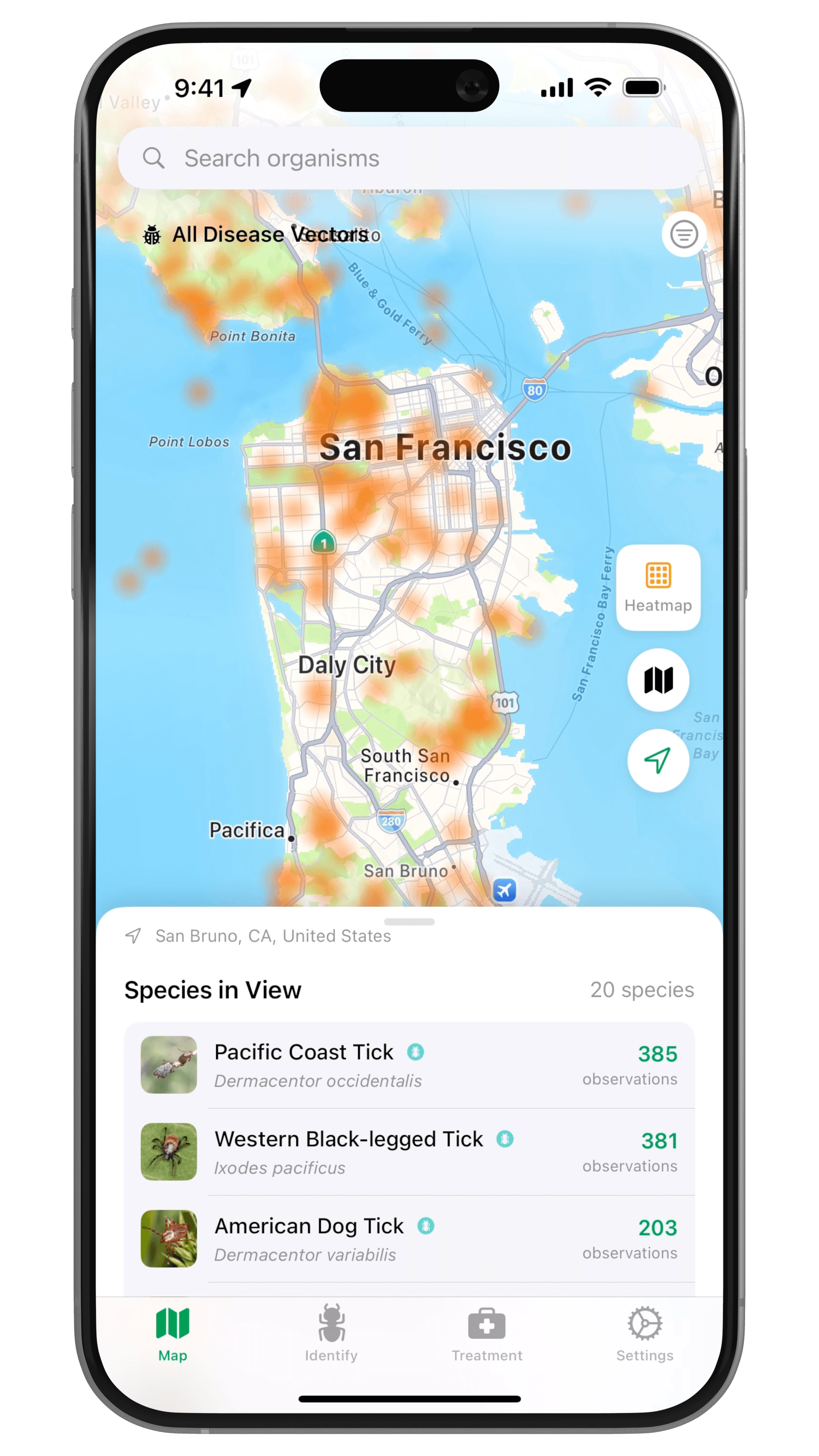
  • Glide's pricing page now sells GlideOS: Free at $0 with 1 project, Solo at $25 a month with 5 projects, Team at $125 a month starting at 5 members
  • Glide states on its own pricing page that GlideOS is "a standalone product, completely separate from the original Glide platform (Glide Classic)" and "will require a separate subscription to use"
  • Neither price covers the developer accounts. Apple charges 99 USD per membership year and Google charges a US$25 one-time registration fee
  • Adalo advertises "No usage or token-based charges." Glide sells credits, which means your bill moves with how much the app gets used
  • Glide's homepage headline is "Turn your spreadsheets into apps that run your business." That is a sentence about operations teams, not about a creator's audience
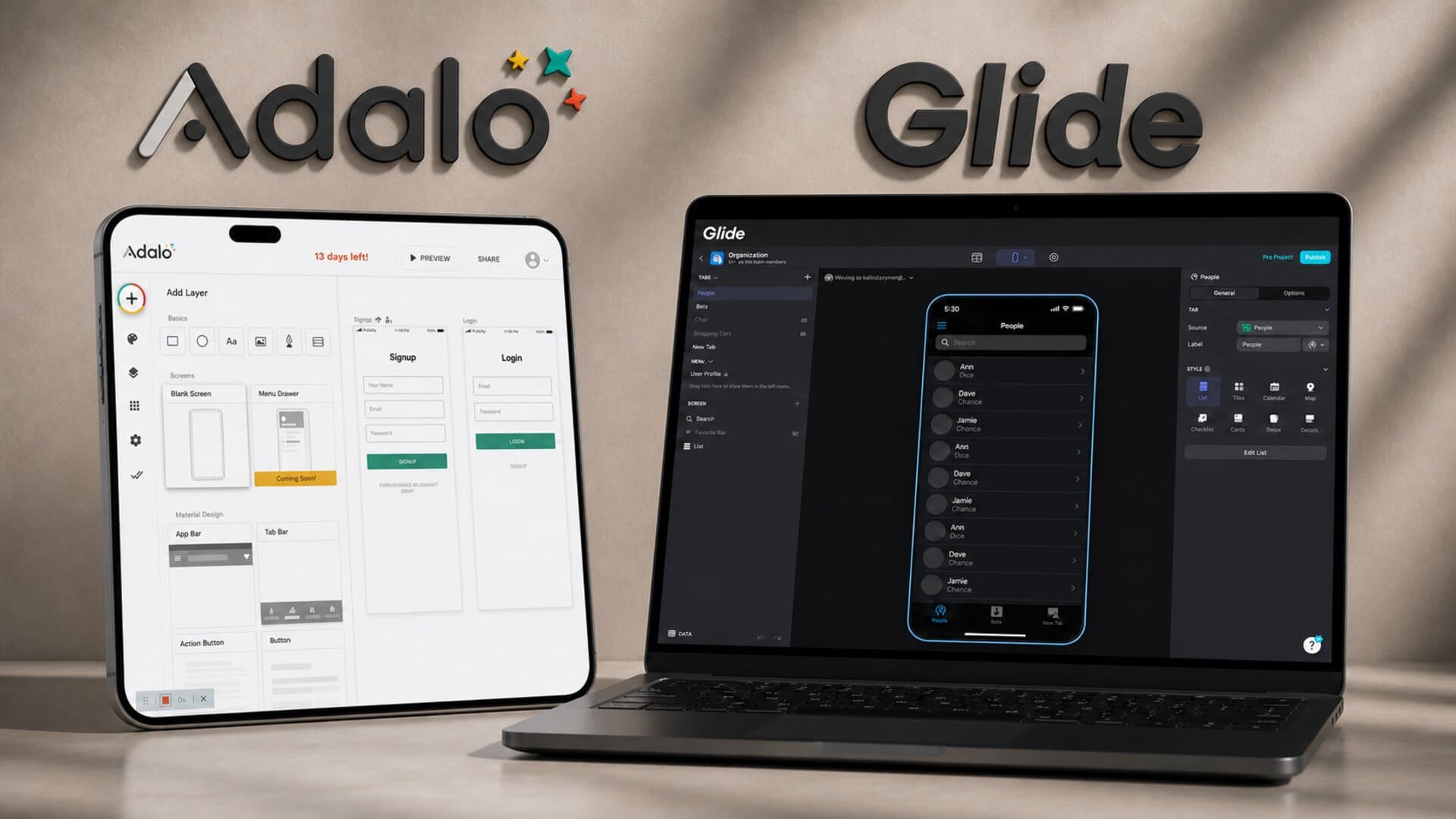
Search "build an app without code" and two names survive from the last decade of no-code: Adalo and Glide. The pitch is the same in both cases. You have an audience, a spreadsheet full of workouts or recipes or trade setups, and a weekend. They are not the same kind of tool, and the pricing pages will not tell you that. One of them will publish a native app to the App Store on a $36 plan. The other has spent 2026 rebuilding itself around internal business software. If you pick by the monthly number you will pick wrong. We have already reviewed the AI builders creators ask about, including FlutterFlow and Lovable. This piece puts the two classic no-code platforms side by side on the seven costs that actually land on your card, and then asks the question neither pricing page asks.
CategoryAdaloGlide (GlideOS)
Entry paid plan$36 a month, billed annually$25 a month
Free plan$0, 0 published apps$0, 1 project, limited credits
Apple App Store publishing on entry planListed on Starter and aboveNot listed on the pricing page
Google Play publishing on entry planListed on Starter and aboveNot listed on the pricing page
Usage metering"No usage or token-based charges"Credits, starting at 100 on Solo
Apps or projects on entry plan1 published app5 projects
Editors or seats on entry plan1 App EditorNot listed; Team starts at 5 members
Stated audience"Founders & entrepreneurs" on StarterApps "that run your business"
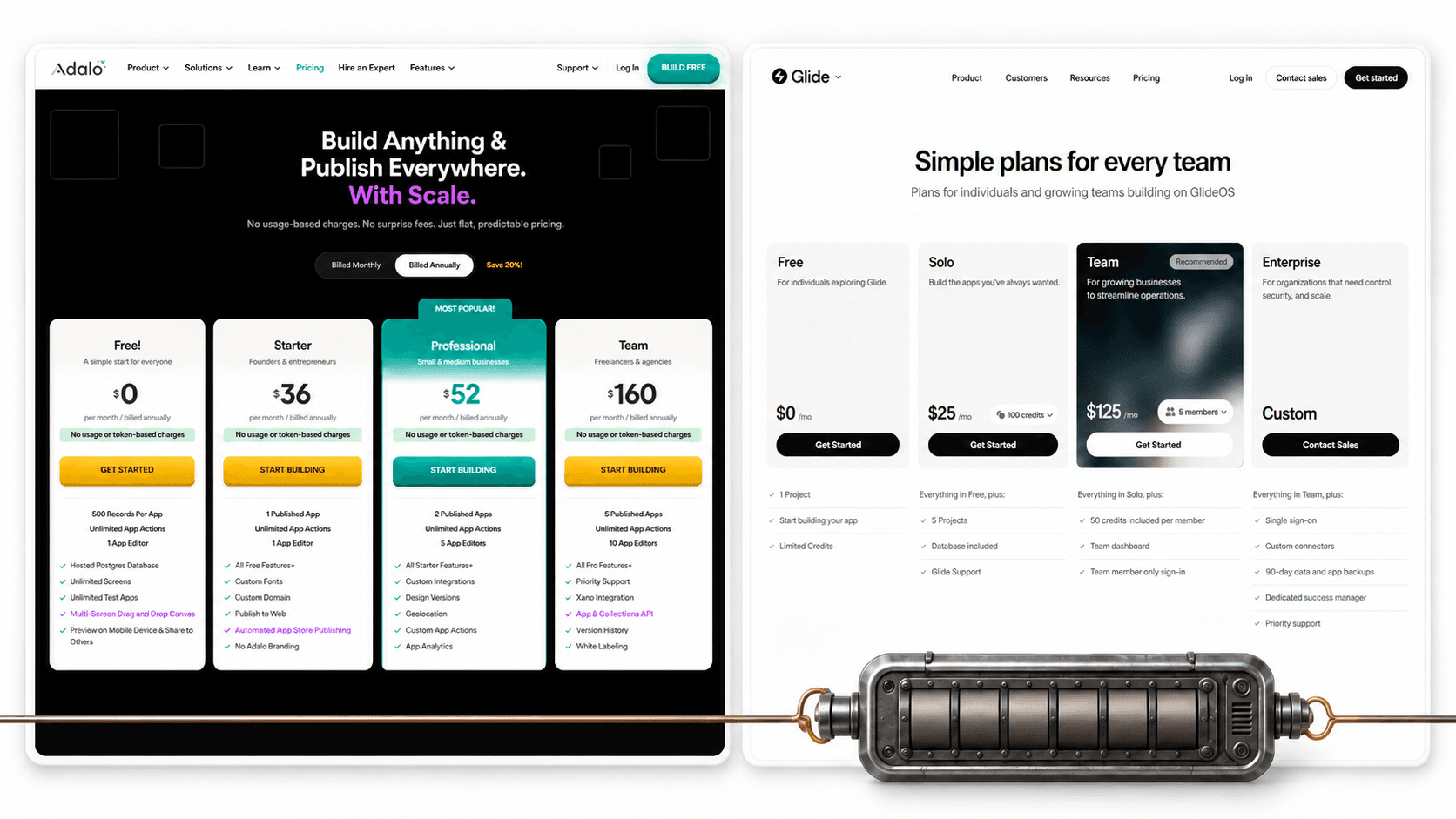
Prices verified against Adalo's pricing page and Glide's pricing page on 17 August 2026. Check both before you buy, because both moved this year. Adalo ships a native app you can submit to the Apple App Store and Google Play. Glide ships a project that runs on Glide's platform, and Glide's own pricing page lists no app store publishing on any plan. That single difference decides most of this comparison before a dollar changes hands. Adalo's pricing page puts "Publish to Apple App Store" and "Publish to Google Play Store" in the Starter plan's feature list, and its FAQ spells out what else you need: "Adalo's Starter plan at $36/month includes publishing to both the Apple App Store and Google Play. You'll also need an Apple Developer account ($99/year) and a Google Play Developer account ($25 one-time fee)." That is an honest sentence, and it is more than most builders will tell you upfront. Glide's pricing page sells projects, credits, members, and a database. It sells single sign-on and custom connectors at the Enterprise tier. It does not sell an App Store listing, because that is not the product anymore. Glide has repositioned around internal business software. Its homepage headline reads "Turn your spreadsheets into apps that run your business," and its 2026 product, GlideOS, is sold as an AI builder for internal business apps rather than as a way to reach a consumer audience. Read Glide's own subheadline: "Glide understands how you work, then builds connected apps for your team, your customers, and every part of your operation. No code required." The nouns are team, customers, operation. Field operations, inventory, executive dashboards, event coordination. Those are the use cases the site leads with. There is a second thing on that pricing page worth reading slowly. Glide states that GlideOS is "a standalone product, completely separate from the original Glide platform (Glide Classic). This means GlideOS has its own plans and pricing, and will require a separate subscription to use," and that GlideOS "is not accessible through the Glide Classic platform." Two products, two subscriptions, and the pricing page you land on sells the one aimed at operations teams. None of that makes Glide a bad tool. It makes Glide a tool for a different buyer. If you run a gym with twelve staff and a scheduling spreadsheet, Glide is a genuinely good answer. If you have 80,000 followers who want an icon on their home screen, you are shopping in the wrong aisle. On Adalo, the realistic first-year cost of one published app is $432 in platform fees plus $99 to Apple plus $25 to Google, which comes to $556. On Glide, the entry cost is $300 a year for Solo, and no plan on the pricing page includes app store publishing. The Adalo math: Starter is listed at $36 per month billed annually, so twelve months is $432. Apple's own support page states that "Enrollment is 99 USD (or in local currency where available) per membership year" for the Apple Developer Program. Google's developer documentation states "There is a US$25 one-time registration fee" for a Play Console developer account. Those two accounts are yours regardless of which builder you use, and neither builder includes them. The Glide math is simpler and the answer is different in kind. Solo at $25 a month is $300 a year for five projects and a database. What you get at the end of it is a Glide project, not a listing that ranks in App Store search. Glide meters. Adalo does not. Glide's plans allocate credits, starting at 100 on Solo and starting at 500 plus 50 per member on Team. Adalo states on every plan that there are "No usage or token-based charges." This is the cost line that surprises people six months in, and it cuts in a specific direction. A metered platform bills you more when your app succeeds. If your community grows and people use the thing every morning, the meter runs faster. Adalo's FAQ is blunt about its own model: "Adalo's paid plans have no usage-based charges, you pay a flat monthly fee with no per-action metering."
Adalo's flat monthly pricing beside Glide's metered usage pricing, represented by a mechanical usage meter
Flat pricing is not automatically the better deal. It is the more predictable one, and predictability is worth real money when you are deciding whether a $9 monthly subscription can carry a product. A metered bill turns your unit economics into a moving target right at the moment you need to model them.
#CostAdaloGlide (GlideOS)
1Entry paid plan$36 a month, billed annually$25 a month
2Apple Developer Program99 USD per membership year, not included99 USD per membership year, not included
3Google Play registrationUS$25 one-time, not includedUS$25 one-time, not included
4Usage meteringNone on any planCredits, from 100 on Solo
5Second published appProfessional at $52 a monthSolo already covers 5 projects
6Extra editors or seatsProfessional, 5 editors, $52 a monthTeam, from 5 members, $125 a month
7Charging your audienceApple's commission on in-app purchasesApple's commission on in-app purchases
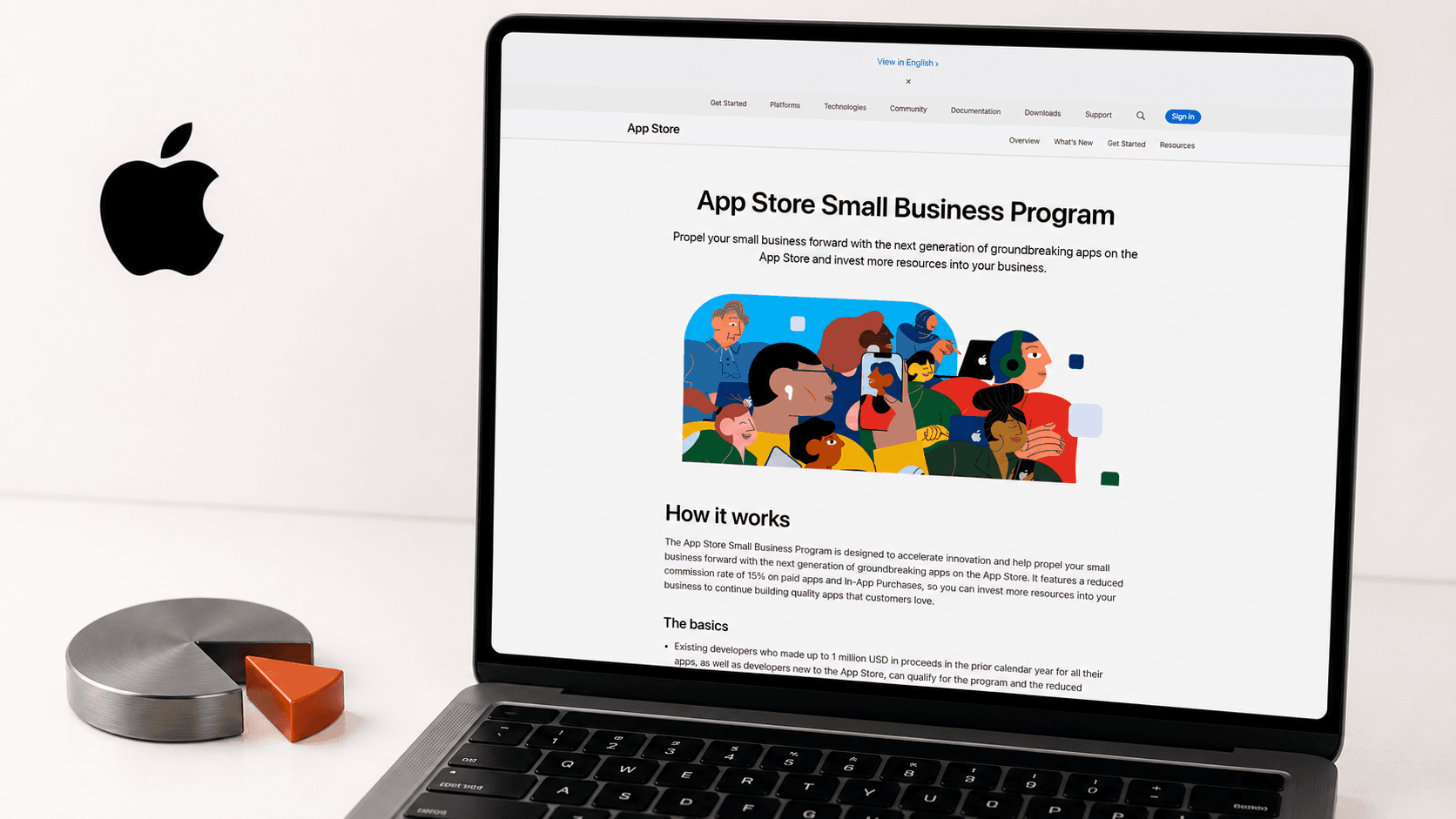
Cost 5 is where Adalo's plan ladder gets expensive fast. Starter includes 1 Published App and 1 App Editor. A second app moves you to Professional at $52 a month with 2 Published Apps and 5 App Editors, and five apps means Team at $160 a month. Glide inverts that: five projects sit inside the $25 Solo plan, because projects are cheap when none of them has to survive App Store review. Cost 6 is the seat problem. The moment a second person needs to touch the build, Adalo wants Professional and Glide wants Team at $125 a month starting at 5 members, with credits that scale at 50 per member. Solo work is priced for solo work on both. Cost 7 is the largest number in this entire article and it appears on neither pricing page. If your app sells a subscription through Apple's in-app purchase system, Apple takes a commission before you see a cent. Apple's Small Business Program page describes "a reduced commission rate of 15% on paid apps and In-App Purchases" for developers who made up to 1 million USD in proceeds in the prior calendar year, and states that once proceeds pass 1 million USD in the current year, "the standard commission rate applies to future sales." We broke down what that means for a creator's first year in our piece on the App Store Small Business Program.
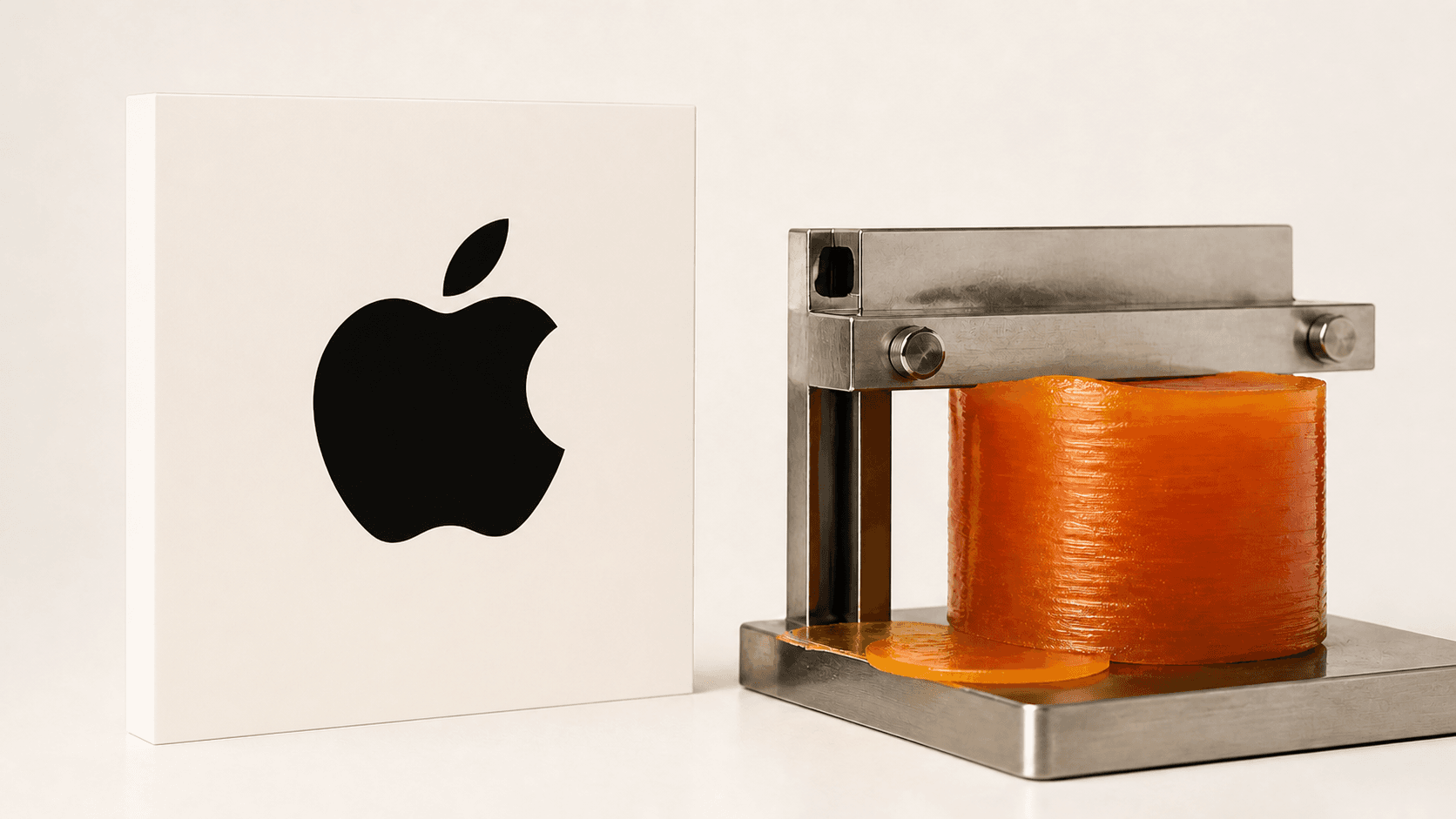
Apple's Small Business Program beside a machined orange disc with a 15 percent wedge removed before payout
Fifteen percent of a real subscription business is a much bigger number than $36 a month. It is also the cost that decides whether the product works, and no no-code builder will help you model it, price against it, or design a paywall that survives it. Then there is the cost that never shows up as a line item at all: the work after launch. App Store review rejections. iOS version bumps that break a screen. Push notifications that stop firing. Churn in month three. Nothing about a monthly builder subscription addresses any of it, which is why so many weekend-built creator apps are last updated eleven months ago. Choose Adalo if you need a native app on the App Store this quarter and you can accept the ceiling that comes with a drag-and-drop builder. Choose Glide if you are building an internal tool on top of a spreadsheet. Choose neither if the app is meant to be a business your audience pays for every month. If you are a fitness creator with 50,000 engaged followers and a training program people already buy, Adalo can get something real into TestFlight. Be clear about the trade you are making. You are buying speed with a builder that owns your architecture, and every custom behavior your audience asks for later has to fit inside what Adalo supports. If you are a course creator with an operations problem, a client roster, a content calendar, an affiliate ledger, Glide is aimed at exactly that and priced well for it. Build the internal tool. Do not expect it to be your product. And if what you actually want is subscription revenue that arrives whether or not you posted this week, the builder question is the wrong question. The revenue math of an owned app against the alternatives is worked out in our app versus course comparison, and the number that matters is not $36 or $25. It is retention at month six. Run one test on any builder decision. If this company changed its product direction tomorrow, what would you still have? Glide answered that question out loud this year. It launched a separate product, put it on its own subscription, and told existing customers it is "not accessible through the Glide Classic platform." That is a company allowed to make that call, and it is also a demonstration of what a platform dependency feels like from the customer's side. With Adalo you would have an app in the App Store, which is genuinely more than most creators get. What you would not have is the code, the ability to hire anyone to extend it, or a product that keeps improving after the month you stopped building. BUILT BY FOUNDRY builds the other version: a real subscription software business in about three weeks, $0 upfront, on a revenue share. The creator owns the business and the revenue. Then we keep improving it after launch, because a revenue share only works for us if the product keeps earning for you. A $36 monthly plan is not the cost of building a creator app. It is the cost of finding out what building one actually involves. No. Adalo's entry paid plan is $36 a month billed annually and Glide's Solo plan is $25 a month. Adalo costs more per month and is the only one of the two whose pricing page lists publishing to the Apple App Store and Google Play. Glide's public pricing page lists no App Store or Google Play publishing on the Free, Solo, Team, or Enterprise plans. Glide's 2026 product, GlideOS, is sold as an AI builder for internal business apps, and its homepage headline is "Turn your spreadsheets into apps that run your business." Yes. Apple charges 99 USD per membership year for the Apple Developer Program and Google charges a US$25 one-time registration fee for a Play Console account. Neither Adalo nor Glide includes those fees in its plan price. Glide's pricing page states that GlideOS is "a standalone product, completely separate from the original Glide platform (Glide Classic)," that it "has its own plans and pricing, and will require a separate subscription to use," and that it "is not accessible through the Glide Classic platform." Adalo can publish an app that sells a subscription, and Apple's commission applies to in-app purchases at the reduced 15% rate under the Small Business Program for developers who made up to 1 million USD in proceeds in the prior calendar year. What a builder subscription does not cover is paywall design, retention work, App Store optimization, and the ongoing maintenance that decides whether the subscription survives month six.

Creator app strategy

Curious what your app could be?

Enter your handle and BUILT BY FOUNDRY will research your audience and present custom app concepts. Free.

Adalo vs Glide 2026: 7 Costs Compared for Creators