

Creator Economy Trends

Why the Best Creator Apps Are Pulling Away in 2026

Built by Foundry
July 8, 2026
Share
Why the Best Creator Apps Are Pulling Away in 2026

Get Creator Revenue Insights

How creators are turning audiences into subscription businesses
Share
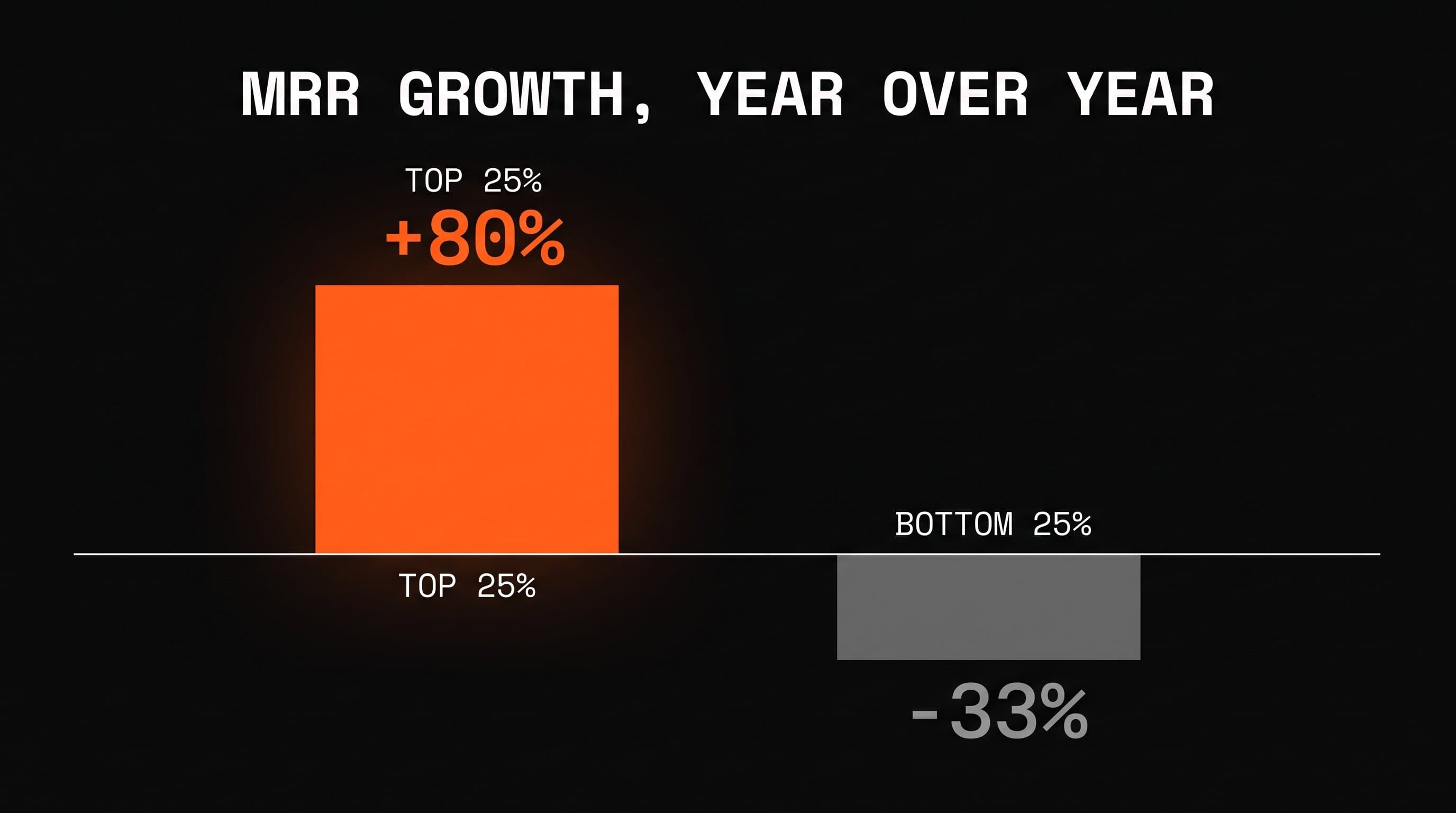
The subscription app market stopped being a rising tide in 2026. It split. The top 25% of apps grew their monthly recurring revenue by more than 80% year over year, while the bottom 25% shrank by more than a third, according to RevenueCat's State of Subscription Apps 2026. Same stores, same economy, opposite directions. The gap between a winning app and a dying one has never been wider, and the reasons are no longer a mystery. Key Takeaways:
  • The top quartile of subscription apps grew MRR 80%+ year over year; the bottom quartile shrank more than 33% (RevenueCat, 2026).
  • The market now moves $16 billion across 115,000+ apps, and the money is concentrating in apps that follow a known playbook.
  • Winners share four traits: hard paywalls, annual plans, long free trials, and prices in the $7.99 to $9.99 range.
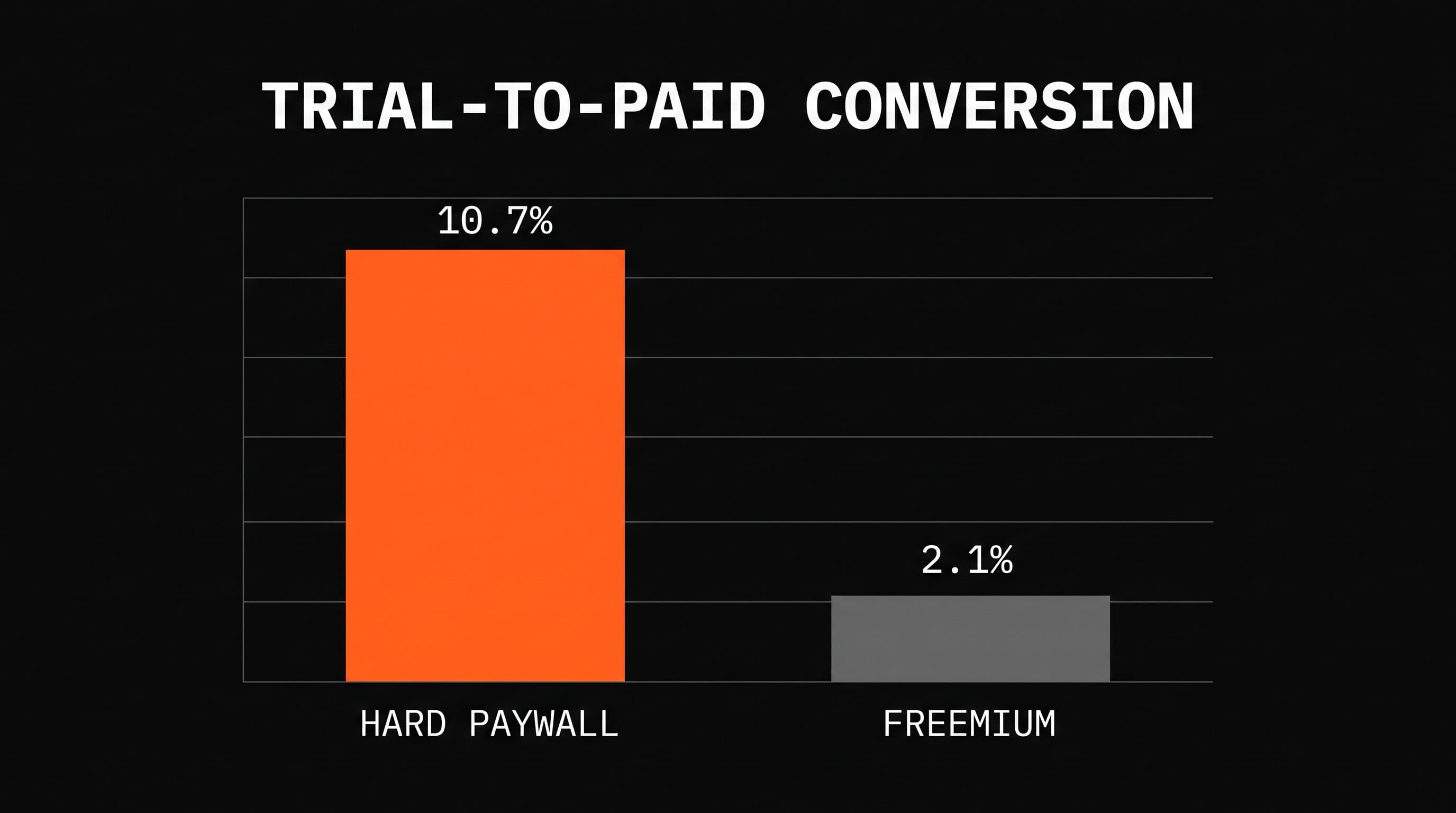
  • Hard paywalls convert at 10.7% versus 2.1% for freemium, an 8x revenue gap per install (RevenueCat, 2026).
  • Creators start with the one thing losing apps spend millions trying to buy: a trusting audience.
For years, launching a subscription app meant guessing. Nobody knew what price to set, how long a trial should run, or whether to give the app away free. That era is over. The playbook is written, the benchmarks are public, and the apps that follow them are eating the ones that don't. Here's what's actually happening, and why it hands creators an opening most of them are sleeping on. The money is concentrating. Subscription apps now move $16 billion a year across more than 115,000 apps, per RevenueCat's 2026 report, but that growth isn't spread evenly. It's flowing to a shrinking set of winners while everyone else stalls or slides backward. The single most telling number: the top 25% of apps grew MRR by more than 80% year over year, while the bottom 25% lost more than a third of theirs. There's no comfortable middle anymore. You're either compounding or you're leaking. This is what a maturing market looks like. The early gold-rush phase, where any app could ride a rising tide, is done.
Bar chart showing the top 25 percent of subscription apps growing MRR over 80 percent while the bottom 25 percent shrink 33 percent
That sounds like bad news. For most developers, it is. For creators, it's the opposite, because the thing separating winners from losers isn't technology or luck. It's a set of decisions anyone can copy. Winners follow a playbook that used to be secret and is now measured. Four decisions account for most of the gap, and none of them require a bigger budget. First, winning apps gate access behind a hard paywall with a free trial instead of giving away a free-forever version. Hard paywalls convert at a 10.7% median trial-to-paid rate versus 2.1% for freemium, and they earn $3.09 per install by day 60 versus $0.38, per RevenueCat's 2026 data. That's an 8x revenue difference from the same install, just from asking for the sale.
Bar chart comparing hard paywall trial-to-paid conversion of 10.7 percent against freemium at 2.1 percent
Second, they lean on annual plans. Yearly subscribers stay far longer than monthly ones, and the standard structure prices an annual plan at roughly a 67% discount versus 12 months of monthly, according to Business of Apps' 2026 benchmarks. Third, they run long trials. Trials of 17 to 32 days convert at 42.5%, more than 15 points higher than trials under 4 days. Fourth, they price with confidence, landing at $7.99 to $9.99 a month rather than racing to the bottom at $2.99.
DecisionLosing AppWinning App
Access modelFree forever tierFree trial, hard paywall
BillingMonthly onlyAnnual anchored, ~67% off
Trial length3 days or none2 to 4 weeks
Monthly price$1.99 to $2.99$7.99 to $9.99
None of that is a technical moat. It's product discipline, and creators can copy every line of that table on launch day. Losing apps spend fortunes buying the one thing creators already own: an audience that trusts them. That's the whole game now, and creators are starting it on third base. The hardest, most expensive part of running a subscription app is getting qualified people to install it and start a trial. Faceless app developers pay for every one of those installs through ads, and they fight rising acquisition costs while the numbers above squeeze their margins. A creator with an engaged following can fill a launch with people who already want what they make. We broke down how this distribution edge works in why non-game apps are beating games for creators, and it's the same advantage here: attention you don't have to rent. The proof is in creators already doing it. Tori Dunlap turned a $100K savings challenge into a finance app by pointing an audience that already trusted her money advice at a product built around it. She didn't buy her users. She'd already earned them. That's the difference between launching into a headwind and launching into a tailwind, and it's exactly the gap the top quartile is exploiting. It treats the launch as the start, not the finish. Landing in the top 25% isn't a one-time event. It's a set of habits that compound month after month while the bottom quartile sets pricing once and walks away. Here's what the winners keep doing after launch:
  • They test the paywall constantly. The winning price and trial length are found through experiments, not guessed at launch. A paywall is a dial, not a switch.
  • They fix onboarding fast. A big share of annual cancellations happen in the first month, so winners make the first session prove the app belongs in someone's day.
  • They ship on OS updates. Apple and Google release major versions every year, and apps that don't keep up quietly break and churn users. That ongoing work is what app care covers so a launch doesn't rot.
  • They read their own numbers. Winners watch conversion, trial length, and retention like a founder watches a P&L, then adjust.
None of that is glamorous. It's the boring, repeated work that separates a business from a dead app in the store. Most apps don't fail dramatically. They fail by default, through small decisions nobody revisits. The bottom quartile tends to make the same handful of them. They give the product away free and hope users upgrade, converting at a fraction of a trial-gated app. They offer monthly billing only, re-earning every subscriber 12 times a year and losing most. They set a $2.99 price to "stay competitive" and cap their own ceiling. And they launch to no one, with no audience to fill the trial, then pay for every install through ads until the math stops working. We laid out the full picture in the true cost of a creator app, and the pattern is always the same: the expensive part isn't building the app, it's finding people to use it. Markets consolidate. The subscription app economy is doing it right now, and the apps that establish themselves in a category get harder to dislodge every quarter. Being early to a niche is worth more than being perfect and late. The opening for creators is real but temporary. The playbook is public, the tools exist, and most creators still haven't moved. That's the whole opportunity. The creators who launch an app in their niche this year, built on the winning decisions instead of the losing ones, become the incumbent everyone else has to fight. The ones who wait get to compete against their own audience's new favorite app. To understand why building your own product beats renting a platform in the first place, our team's approach to building creator businesses lays out the model. Yes, but unevenly. The overall market moves $16 billion a year across 115,000+ apps, yet growth is concentrating. The top 25% of apps grew revenue more than 80% year over year while the bottom 25% shrank by more than a third. Four decisions: a hard paywall with a free trial instead of a free-forever tier, an annual plan priced at a discount to monthly, a free trial of two to four weeks, and monthly pricing in the $7.99 to $9.99 range. Apps that follow this pattern convert and retain far better than those that don't. The most expensive part of running a subscription app is acquiring users. Creators already have an engaged audience that trusts them, so they can fill a launch with qualified installs instead of paying for every one through ads like faceless developers do. Apple takes 30% of subscription revenue in the first year a subscriber is active and 15% after 12 months. Developers earning under $1 million a year qualify for the 15% rate immediately through the App Store Small Business Program. Want to launch your app while the window is open? We build custom apps for creators. $0 upfront, three weeks to the App Store, built on the playbook that puts apps in the top quartile.
Let's Build →

Creator app strategy

Want us to review your creator business?

Apply for a Foundry Creator App Review. We'll tell you whether there is a real app opportunity hiding in your audience.

Why the Best Creator Apps Are Pulling Away in 2026