
Why Some Creators Earn 4x More (2026 Data)

Why Some Creators Earn 4x More (2026 Data)

Foundry
April 13, 2026
Key Takeaways:
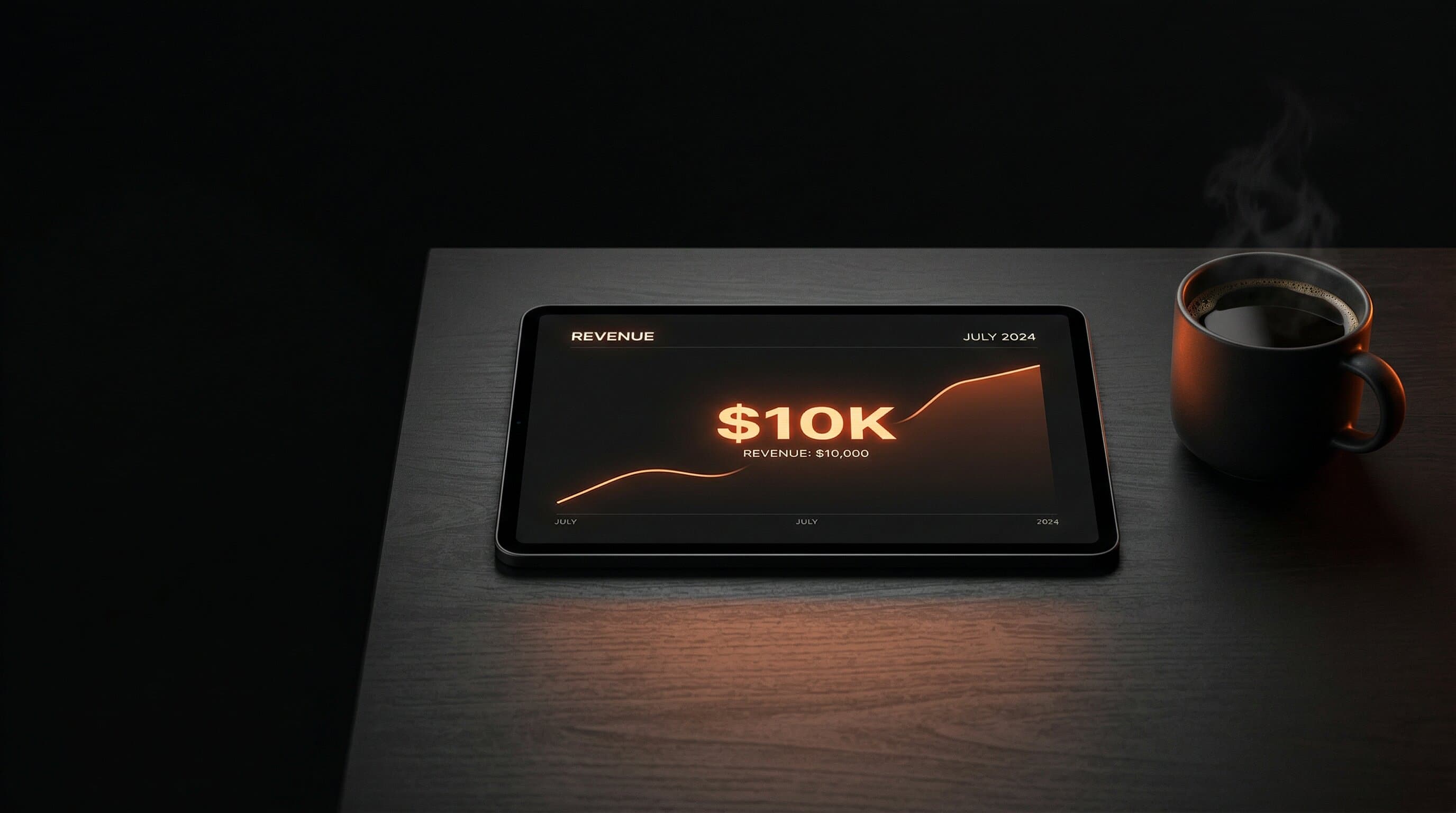
  • Subscription-focused creators earned $185,000 on average in 2025, 4.2x the $44,000 creator average (inBeat)
  • The creator economy is projected to reach $480B by 2027, nearly doubling from $250B in 2025 (Goldman Sachs)
  • 14,700 new subscription apps launch every month, a 7x increase since January 2022 (RevenueCat)
  • Top earners maintain 3.3 revenue streams compared to 2.2 for those earning under $500/month
  • The top 10% of subscription apps capture 94.5% of all revenue
The average creator in the U.S. earns $44,000 a year. Roughly $22 an hour. Not bad for a side hustle. Terrible for someone trying to build a business. But creators who focus on subscriptions tell a different story: $185,000 on average in 2025. A 28% jump from the year before. And the gap between these two groups keeps widening. The numbers don't lie: what you sell matters more than how many followers you have. Goldman Sachs published a creator economy report in March 2025 that put the total addressable market at $250 billion. Their projection: $480 billion by 2027. Nearly double in two years. The growth isn't coming from more people joining Instagram. It's coming from creators building real businesses. Subscriptions, software, owned products. Revenue that compounds instead of resetting to zero. Goldman estimates 67 million people globally call themselves creators in 2025, headed to 107 million by 2030. But the professional tier, those earning enough to call this a career, will shrink as a percentage. The top is pulling away from the middle. The math rewards owners, not renters. Brand deals still account for roughly 70% of creator income overall. That's not a sign of strength. It's a sign of dependency. The creators posting numbers that make the rest of the industry look sideways? They've moved beyond brand deals into subscription revenue. As we broke down in the math behind brand deals vs. MRR, a $10K brand deal sounds great until you compare it to $10K in monthly recurring revenue. The single biggest differentiator between six-figure creators and those stuck under $10K a year isn't follower count. It's revenue stream count. Top earners maintain an average of 3.3 income sources. Creators earning under $500/month average 2.2. That one extra stream isn't a rounding error. It's the difference between renting your income and owning it. The creator middle class, those pulling $10K to $50K per month, share a pattern: none of them rely on a single platform for income. They've all built at least one owned asset. An app. A subscription community. A product line. Here's how income breaks down for creators making $100K+:
Revenue SourceShare of Income
Brand deals~30%
Newsletter/email~25%
Digital products~20%
Affiliate marketing~15%
Merchandise~10%
Owned revenue (digital products, subscriptions, email) now accounts for more than half of top-creator income. Platform-dependent revenue (brand deals, affiliate) is still there, but it's no longer the foundation.
Creator revenue breakdown showing owned vs platform-dependent income in 2026
The RevenueCat State of Subscription Apps 2026 report analyzed 115,000+ apps generating $16 billion in revenue. New subscription app launches hit 14,700 per month by January 2026. That's a 7x increase from 2,000 per month in January 2022. The gold rush is real. The part most people miss: it's working. The top quartile of subscription apps grew MRR by 80%+ year over year. Health and fitness apps lead with a median 14-day ARPU of $0.44, and upper-quartile apps hit $1.31 per user. The 60-day revenue per install for health and fitness is $0.66, nearly 5x what gaming apps generate. Why does subscription revenue beat brand deals? Three reasons:
  • It compounds. A brand deal pays once. A subscriber pays every month. 500 subscribers at $20/month is $10K/month, and that number grows.
  • It doesn't depend on your algorithm. Brand deal rates rise and fall with your engagement metrics. Subscription revenue is independent of platform reach.
  • It reaches people who've never heard of you. App Store discovery brings in users who didn't come from your social content. Your next 10K fans won't come from social media.
The opportunity is massive. The competition is brutal. Both are true. RevenueCat's data shows the top 10% of subscription apps capture 94.5% of all revenue. The top 5% of newly launched apps make 400x what the bottom 25% earn. And only 17.3% of new apps reach $1,000 in monthly recurring revenue within two years. The median app earns $492 per month. That's not a business. That's a hobby with hosting costs.
App Performance TierMonthly RevenueShare of Total Revenue
Top 10%$10,000+94.5%
Middle 40%$500 to $10,000~5%
Bottom 50%Under $500~0.5%
This isn't a reason to avoid the space. It's a reason to take it seriously. The apps earning $492/month are the ones built in a weekend with a no-code tool and abandoned after launch. The apps in the top 10% had real product strategy, real development, and real ongoing investment. That's the difference between a demo and a product. Three things, based on the data: 1. Real product thinking. The Adapty State of In-App Subscriptions 2026 report found that apps with proper onboarding flows convert 10.9% of installs to trials, and 25.6% of trials to paid subscribers. Those aren't accidental numbers. They come from deliberate product design, not templates. 2. Professional development. Lifestyle AI apps saw 691% revenue growth year over year, but only when they actually worked. The vibe-coded prototypes and Replit experiments are in the bottom 50%. Real apps need real engineering, real App Store optimization, and real payment infrastructure. 3. Ongoing operation. Weekly subscription plans now generate 55.5% of all app revenue, up from 43.3% in 2023. Users are making weekly purchase decisions. If your app isn't being updated and optimized every week, you're losing subscribers every week. This is what Built by Foundry does. We build, launch, and run the entire product. $0 upfront, revenue share. The creator brings the audience and expertise. We bring the product team. Most trend reports miss this angle entirely: your app doesn't just generate subscription revenue. It generates content. Every user submission is a reaction video. Every leaderboard update is a weekly roundup post. Every before-and-after result writes a transformation story. The creator's number one daily problem, "what do I post next?", gets solved by the very product they own. We've written about 6 ways your app writes your content for you, and the creators who get this are the ones posting consistently without burnout. The data backs it up. Creators with subscription products maintain higher posting frequency and lower burnout rates because their content calendar fills itself. The app feeds the social channels that feed the app. That flywheel is what separates $44K creators from $185K creators. The average U.S. creator earns $44,000 per year. But the average is misleading: 48.7% earn under $10K, while subscription-focused creators average $185,000. Revenue model matters more than follower count. Subscription-based products, especially apps, outperform brand deals, merch, and one-time digital products on revenue per customer and long-term value. Top earners combine subscriptions with 2-3 other income streams. Top earners maintain 3.3 revenue streams on average. The minimum for sustainable income is 2-3, with at least one being an owned asset like a subscription app or product. No. 14,700 new subscription apps launch every month, and the top quartile grew MRR by 80%+ year over year. The market is growing fast enough to absorb new entrants, but only when they're built properly. The window favors creators who move now with real products, not those who wait.
The math is simple. The creators earning 4x more aren't 4x more talented. They don't have 4x the followers. They built something they own, and it pays them every month whether they post or not. Want to be in the 5%? Built by Foundry builds custom apps for creators. $0 upfront, 3-week delivery, we handle all the tech forever.
Let's Build →

Get Creator Revenue Insights

How creators are turning audiences into subscription businesses

You might also enjoy...

Why Some Creators Earn 4x More (2026 Data)