

Why the Best Creator Apps Are Boring

Why the Best Creator Apps Are Boring

Foundry
March 24, 2026
Key Takeaways:
  • The highest-revenue creator apps are built on boring, proven product categories: workout trackers, meal planners, habit logs
  • Novelty kills creator apps. Your audience wants your expertise packaged into something they already understand
  • Kayla Itsines made $400M selling workout plans in an app. Not AR. Not AI. Workout plans
  • The creator IS the innovation. The product category should be the most predictable thing about the business
  • Boring products retain better, convert faster, and generate content on autopilot
Every creator who considers building an app has the same instinct: make something nobody has ever seen before. A new kind of social network. A gamified learning experience. An AI-powered recommendation engine. Something "disruptive." This instinct is wrong. And it's expensive. The creators who actually make money from apps build the most predictable products imaginable. Chloe Ting built a workout app. Joe Wicks built a workout app. Kayla Itsines built a workout app and sold it for $400 million. Pamela Reif built a workout app. Whitney Simmons built a workout app. See the pattern? The product category is identical. The creator is what's different. Three reasons, and none of them are complicated. 1. Zero user education required. When someone downloads a workout app, they know what to expect. Open it, pick a program, press play. There's no learning curve, no onboarding tutorial, no "what does this button do?" moment. Every minute a user spends confused is a minute closer to uninstalling. Boring products skip that phase entirely. 2. Proven retention mechanics. Workout trackers, meal planners, and habit apps have decades of behavioral design behind them. Daily streaks, progress photos, weekly check-ins. These retention loops are battle-tested across millions of users. You don't need to invent new engagement patterns when the old ones work. 3. Predictable monetization. Subscription pricing for utility apps is well understood. Users pay $9.99/month for a fitness app without thinking twice. Try charging $9.99/month for a "creator-powered social experience" and you'll spend six months explaining what that even means.
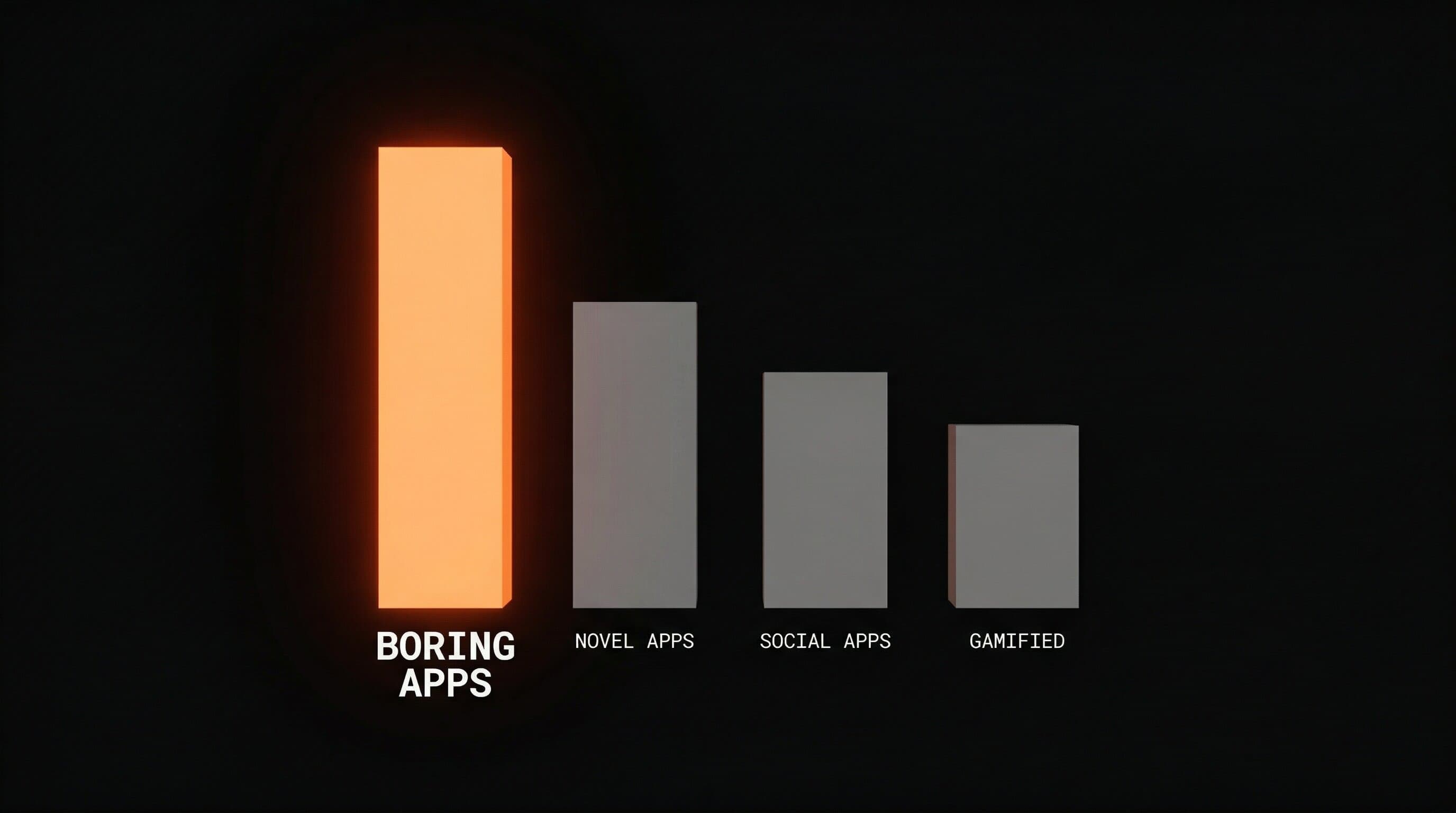
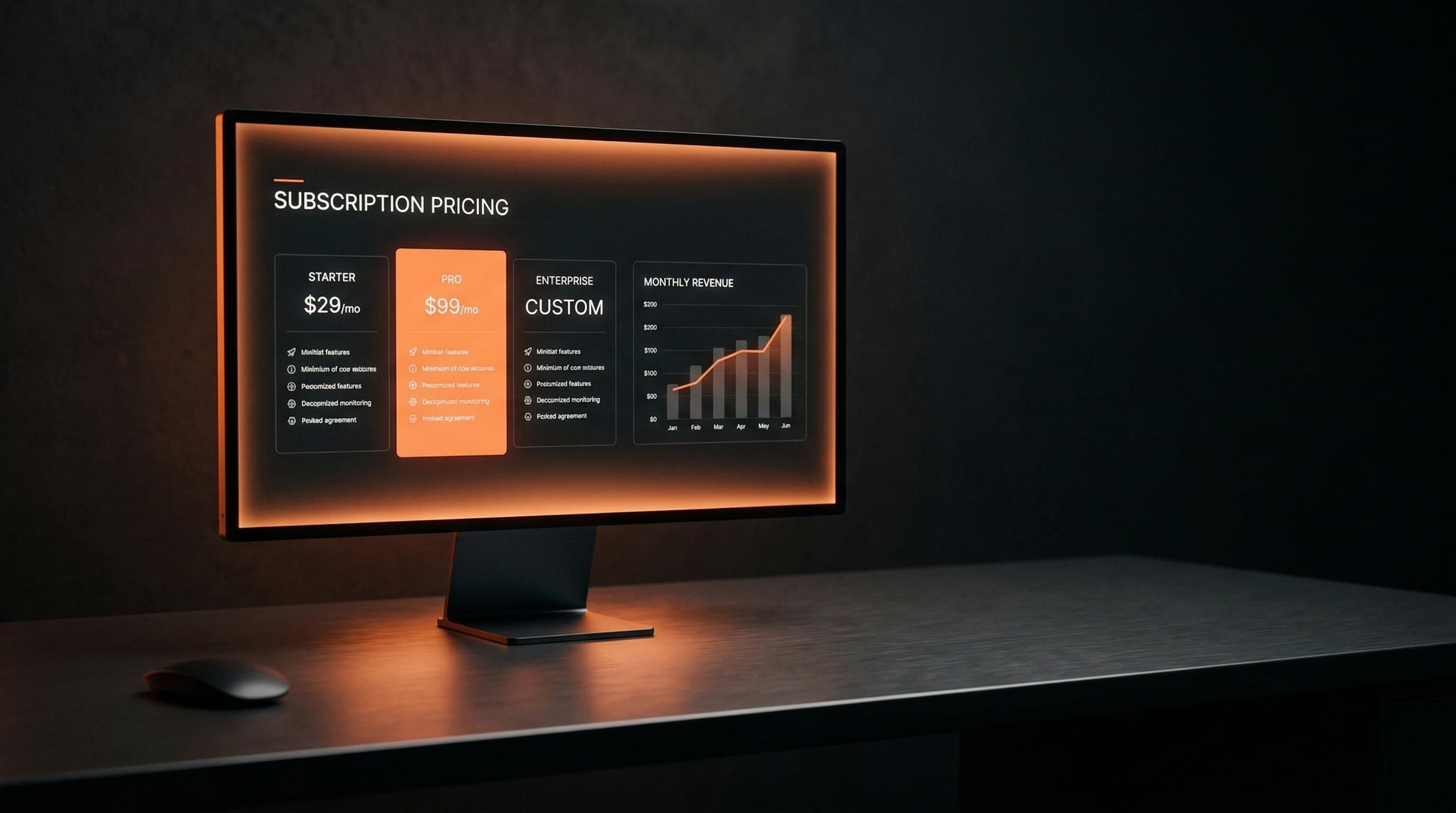
A dark conceptual image showing a simple, minimal app interface glowing against a black background, representing the power of boring, proven products
The numbers make the case better than any argument. Here's what boring creator apps earn compared to "innovative" ones:
Product TypeExamplesAvg Monthly RevenueRetention at 90 Days
Workout trackerSweat, Body Coach, CORE$15,000 to $50,000+35 to 45%
Meal plannerMacroFactor, Prep$8,000 to $25,00030 to 40%
Habit/progress trackerGrowthDay, streaks apps$5,000 to $20,00025 to 35%
Novel social/gamified appVarious creator experiments$1,000 to $5,00010 to 15%
Sources: Sensor Tower app intelligence data; Business of Apps revenue benchmarks, 2025. The gap is massive. Boring products don't just earn more on day one. They keep earning because users stick around. A 35% retention rate at 90 days means a third of your subscribers are still paying three months later. At 10%, you're replacing your entire user base every quarter. Jeff Nippard's involvement with MacroFactor tells the same story. A nutrition tracking app. Not a "revolutionary AI coach." Not a "personalized content experience." A place to log your food and see your macros. The app crossed $30M in valuation. This is the part creators don't expect. A "boring" app solves the biggest daily problem every creator faces: what do I post today? When your app is a workout tracker, every user transformation is a before-and-after post. Every leaderboard update is a weekly roundup. Every new program launch is a content series. Your app becomes your content calendar without you thinking about it. Novel apps don't generate content this way. If your product is hard to explain, it's hard to post about. If users don't have visible progress, there's nothing to screenshot. Boring products are content machines because the outcomes are visual, measurable, and shareable. Brendon Burchard's GrowthDay app sends users daily prompts and tracks their scores across six categories. Every score update, every streak milestone, every journal entry is content the user creates inside the app and shares outside it. Burchard barely needs to brainstorm. His app does the brainstorming for him. No. It's the opposite. Creators who chase novelty are usually trying to prove something to themselves. "I'm not just a fitness influencer, I'm a tech entrepreneur." That ego play costs real money and real time. The creators who build boring products are the ones comfortable enough in their expertise to say: "I know exactly what my audience needs, and I'm going to give it to them in the most frictionless way possible." That's confidence, not compromise. What is a creator app? It's your expertise in a box that people pay for monthly. The box doesn't need to be interesting. The expertise inside it does. Think about it differently. Nike doesn't innovate on the concept of "shoes." They innovate on materials, fit, and design within a category everybody already understands. You already know what shoes are. Nike makes you want their shoes specifically. The same principle applies to creator apps. Before you build anything, run your idea through these five questions: 1. Can you explain it in one sentence? "It's a workout app with my programs" beats "It's a gamified social fitness experience with AI-powered progression and community challenges" every time. If the sentence is longer than ten words, simplify. 2. Does the category already exist on the App Store? Good. That means people already search for it, already pay for it, and already understand it. You're not creating demand. You're redirecting it. 3. Will users open it daily without you posting? Workout trackers get opened because the user has a workout scheduled. Meal planners get opened because the user needs to eat. If your app only gets opened when you post about it, your retention will collapse the first week you take a break. 4. Does usage create shareable moments? Progress photos, streak counts, completed challenges. If the app produces artifacts that users want to share on their own stories, you've got a content engine. If not, you've got a tool that lives and dies by your posting schedule. 5. Can you price it between $5 and $15/month without explaining why? Pricing a creator app should feel obvious to the buyer. "I pay $9.99/month for Chloe Ting's workout app" needs zero justification. "I pay $9.99/month for a creator-powered interactive experience" needs a sales deck. Here's the real thesis. When you build a boring product, you aren't competing with every fitness app on the App Store. You're competing with nobody. Because no other fitness app has you. Your coaching style. Your program design. Your way of explaining things. Your community. Your personality. That's the differentiation. Not the product architecture. Not the feature set. Not some proprietary algorithm. Kayla Itsines didn't outcompete Nike Training Club on features. She outcompeted them on trust. Her audience didn't want "a workout app." They wanted Kayla's workout app. The product category was irrelevant. The creator was the moat. This is why Built by Foundry builds apps in three weeks, not three years. The product doesn't need to be reinvented. It needs to be wrapped around the right creator. The boring infrastructure already exists. Your audience already exists. The only missing piece is the connection between them. Ready to build something boring that makes real money? We build custom apps for creators. $0 upfront, 3-week delivery, we handle all the tech forever.
Let's Build →
The best creator apps are utility products that solve a daily problem for the creator's audience. Workout trackers, meal planners, habit apps, and progress trackers all work because users open them daily, the category is well understood, and subscription pricing is natural. No. The creator's expertise and personality are the differentiator, not the product category. Multiple creators can build workout apps and all succeed because each one serves a different audience with different trust and different programming. Traditional agencies charge $50K to $200K for a custom app. Built by Foundry builds creator apps for $0 upfront on a revenue-share model. The app ships in approximately three weeks. Creator apps in proven categories like fitness and nutrition typically generate $8,000 to $50,000+ in monthly recurring revenue within the first year, depending on audience size and engagement. Creators with 50K+ engaged followers are the best candidates. Novel products require user education, lack proven retention mechanics, and have unclear pricing anchors. Users don't know what to expect, don't form daily habits, and hesitate to pay for something they can't compare to existing products.

Get Creator Revenue Insights

How creators are turning audiences into subscription businesses

You might also enjoy...