

How Mat Fraser Built HWPO Into a CrossFit App Empire

How Mat Fraser Built HWPO Into a CrossFit App Empire

Foundry
May 8, 2026
In February 2021, Mat Fraser walked away from competitive CrossFit at the top. Five Games titles. A 545-point winning margin in his final year. Most athletes retire and slide into a coaching cameo or a supplement endorsement. Fraser retired and shipped a subscription app two months later. Today the HWPO Training app charges roughly $40 per month for the same programming Fraser used to dominate the sport. It runs on its own platform, sells inside Rogue Fitness, and turns a 2 million follower count into recurring revenue that compounds while he sleeps. He didn't build a brand. He built a business. Key Takeaways:
  • Fraser retired from CrossFit on February 2, 2021, and launched HWPO Training programming in April 2021, two months later.
  • HWPO sells subscription tracks at roughly $40 per month, including HWPO Flagship, HWPO Sweat, and HWPO Daily.
  • His 2M Instagram following on @mathewfras and 309K on @hwpotraining funnel into the app, but the app keeps earning when he doesn't post.
  • Fraser holds a mechanical engineering and business degree from the University of Vermont, which shaped how he treats programming as a product, not a content drop.
  • The HWPO model proves the same thesis Foundry sells: turn expertise into software, not another course.
Mat Fraser is a retired CrossFit athlete and the founder and Chief Product Officer of HWPO Training. He won the CrossFit Games five years in a row, from 2016 through 2020, the first athlete in the sport's history to do that. He still holds the largest single-year winning margin in Games history, 545 points, set in his final season (Wikipedia). Before any of that, he was a kid from Vermont who finished second at the Games twice in a row, in 2014 and 2015, and decided runner-up wasn't a career. He graduated from the University of Vermont in May 2016 with degrees in mechanical engineering and business. The same month, he won his first Games title. That detail matters. Fraser is not a creator who stumbled into a business. He's an engineer with a brand most influencers would kill for. When he started building HWPO, he treated the app like an engineered product, not a fan club. The HWPO model is the cleanest example we've seen of the Foundry thesis: turn expertise into software, not another digital download. The product is the system. Subscribers get programmed daily workouts written by Fraser, video demos, scaling notes, and tracking. New programs ship on a calendar. The catalog is now segmented into specific tracks:
  • HWPO Flagship — the original elite programming track, modeled on Fraser's own competition prep.
  • HWPO Sweat — a 45 minute per day track for general fitness subscribers.
  • HWPO Daily — a community focused metcon program.
Each track is a standalone product with its own conversion math. That structure is why HWPO can sell to a 22 year old chasing a Games invite and a 41 year old garage gym dad in the same checkout flow. One creator, multiple SKUs, one monthly bill. The pricing strategy follows what we've covered in our creator subscription pricing guide: premium price, narrow audience, no apologies. At $40 a month, HWPO is roughly 4x the price of a generic fitness app, and that's the point. Fraser is not competing with Apple Fitness Plus. He's competing with a personal coach. Most retired athletes write a book and call it a business. Fraser wrote the book too, HWPO: Hard Work Pays Off, published in February 2022. The book is the funnel. The app is the business. A PDF sells once. A course sells once and ages. An app charges monthly and gets better the longer a subscriber uses it because the programming evolves, the catalog grows, and the user data feeds the next cycle of products. That's the same math we wrote about in Brand Deals vs Subscription Apps: A Creator's Math Problem. The numbers favor software brutally. A creator with 100,000 engaged fans selling a $50 PDF once gets a one time bump. The same creator selling a $40 monthly subscription to 2% of that audience generates $80,000 a month forever. Fraser has 2 million followers. Even a 1% conversion on his Instagram alone is roughly 20,000 paying subscribers. At $40 a month, that's $9.6M a year of recurring revenue with no ad spend. He doesn't have to post for that to keep coming in. That's the difference between a content creator and a founder.
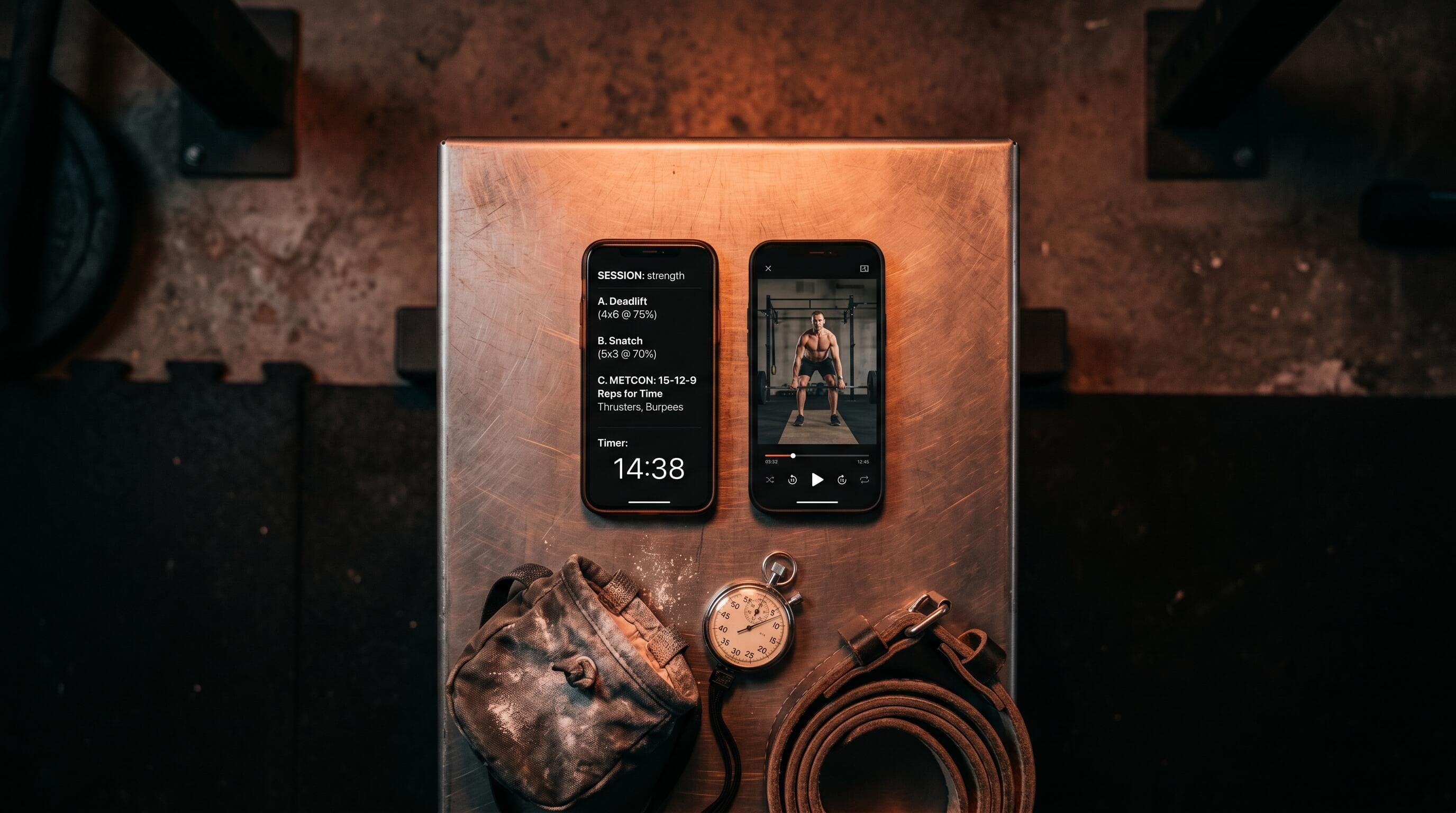
Mat Fraser HWPO Training app on a phone next to a barbell in a gym
Three things, all learnable. 1. Distribution beyond the personal feed. HWPO is sold on its own site, on the App Store, on Google Play, and through Rogue Fitness, the largest functional fitness retailer in the world (Rogue Fitness). Most creators try to convert their own audience and stop there. Fraser uses retail partners to reach buyers who never followed him. 2. Real product segmentation. HWPO Flagship, Sweat, and Daily are not feature flags on one app. They are distinct programs with distinct subscribers. That's a product team move, not a creator move. It also means churn on one track doesn't kill the whole business. 3. The team is treated like a team. Fraser is the Chief Product Officer, not the entire company. HWPO has coaches, programmers, and operators. The app is a business with him in it, not a costume he wears between Instagram posts. That's the model we wrote about in Jeff Nippard: How a YouTuber Became Co-Owner of a $30M App, and it's the model behind every creator app that crosses $10M ARR. He retired in February 2021 and launched HWPO Training programming in April 2021. Two months. The first version was a programming subscription, not the polished native app it is today. The native app on the App Store followed later, after the audience proved the demand. That sequencing matters. Fraser didn't wait for a perfect app to start charging. He shipped the smallest thing that could collect money, validated the audience, and then invested in the platform. We've written before about how creators do this faster than they think in How to Get Your First 1,000 App Subscribers. For comparison, Joe Wicks' Body Coach app took years and a $3M ITV investment to reach scale. Fraser hit it with two months and his own brand. The difference is not talent. It's that Fraser had a team, a real product roadmap, and a finished engineering degree on the wall. Five things, in order.
  • Charge premium from day one. $40 a month is not a typo. Fraser priced for the audience he wanted, not the audience he had. Cheap pricing attracts cheap subscribers who churn.
  • Own the platform. HWPO is not a Patreon tier. It's an app on the App Store with its own brand, its own data, and its own checkout. We covered this in Why Creators Are Leaving Patreon for Apps in 2026.
  • Segment the catalog. Don't sell one product to everyone. Sell three products to three audiences who all happen to follow you.
  • Use partners, not just your feed. Rogue Fitness sells HWPO. Your podcast guest's audience can buy your app. Your industry's biggest retailer can carry it. Stop relying only on your own social distribution.
  • Treat it like a company. Hire coaches, hire engineers, hire operators. The creator is the chief product officer, not the only employee.
This is exactly the playbook we run for creators at Foundry. We build the app, we ship it in three weeks, we run it forever, and the creator is the face and the chief product officer (learn more about how we work). $0 upfront. Revenue share. The creator keeps the brand and the business. You don't need 2M followers. You need a system worth subscribing to. Fraser's edge is not his Instagram count. It's that he has programming most lifters cannot write themselves. A nutritionist with 80,000 engaged followers has the same edge in macros. A music teacher with 50,000 has it in lessons. A sleep coach with 30,000 has it in protocols. The audience size only sets the ceiling. The system sets the floor. A creator with 50,000 highly engaged followers converting at 2% to a $20 subscription generates $20,000 a month. That's a real business. That's not a side hustle, and it's not a brand deal flip. It's recurring revenue that earns whether the creator posts or not. We do the math in detail in The Subscription App Squeeze: Why Creators Still Win. The reason most creators don't do this is not that they can't. It's that they don't see themselves as founders yet. Fraser did, the day he retired. The HWPO Training app costs roughly $40 per month, with multiple subscription tracks including Flagship, Sweat, and Daily. Free trials are available to new subscribers (HWPO Training). Yes. Fraser is the lead programming engineer at HWPO and personally writes the warmups, strength work, intervals, and accessory work for the Flagship track. The other tracks are supervised by his team of HWPO coaches. Mat Fraser has roughly 2 million followers on Instagram at @mathewfras. The HWPO Training brand account @hwpotraining has roughly 309,000 followers. Both accounts feed into the app subscription business. HWPO stands for "Hard Work Pays Off," Fraser's longtime motto and also the title of his 2022 book. He used the phrase across his competitive career and built the entire training brand around it. Yes. The HWPO model works with any expertise that's hard to copy and worth paying for monthly. A creator with 50,000 engaged followers and a real system, programming, protocols, lessons, audits, can build a $10K to $50K per month subscription app. The audience size sets the ceiling. The expertise sets the floor. Mat Fraser built it. Your turn. You don't need five Games titles. You need expertise worth paying for, and a partner who can ship the app in three weeks instead of three years. Want to turn your expertise into an app? We build custom apps for creators. $0 upfront, 3 week delivery, we handle the tech and the operations forever, you keep the brand and the business.
Let's Build →

Get Creator Revenue Insights

How creators are turning audiences into subscription businesses

You might also enjoy...

How Mat Fraser Built HWPO Into a CrossFit App Empire