
Platform Reviews

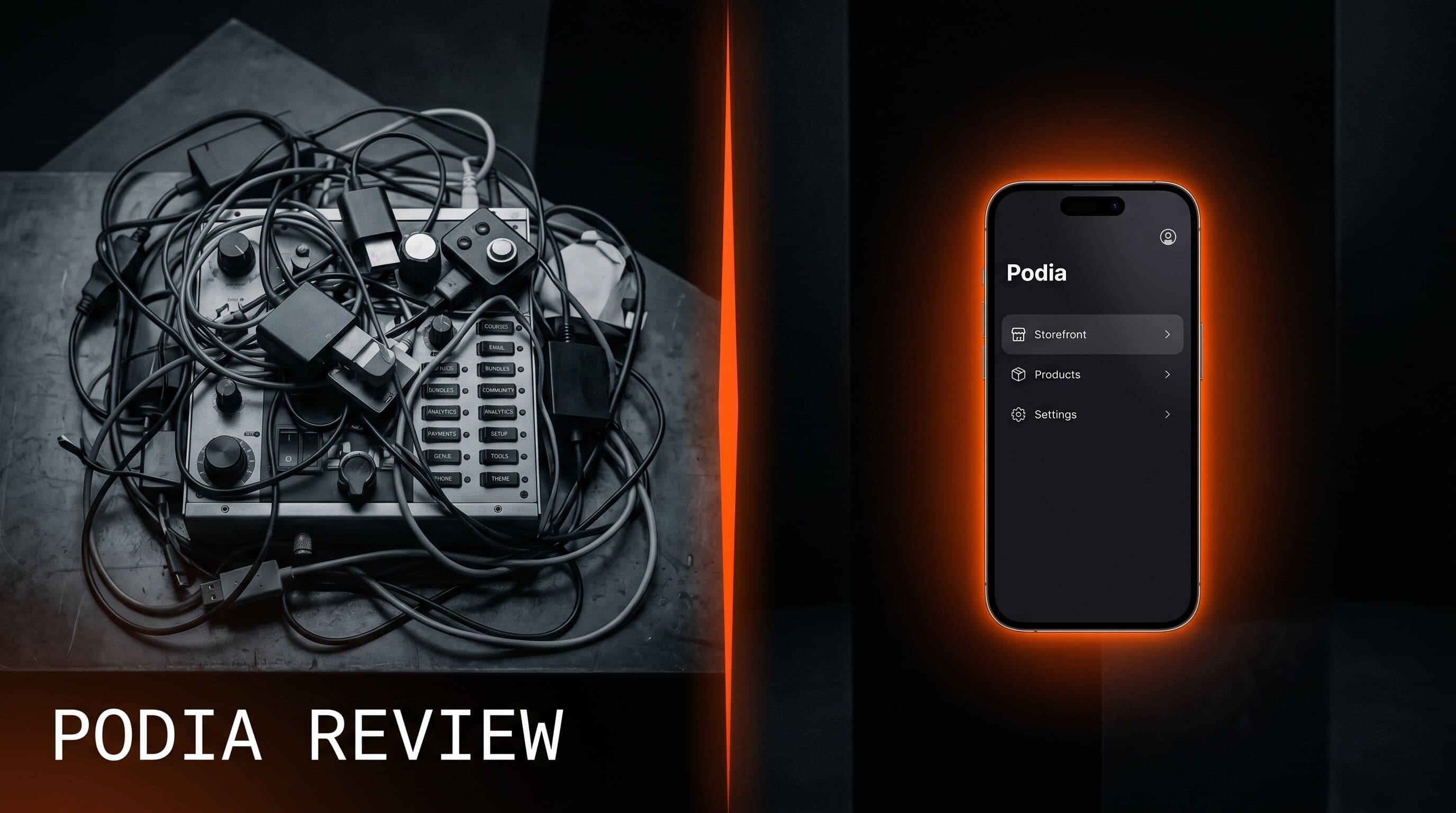
Podia Review 2026: Is It Worth It for Creators?

Foundry
June 1, 2026
Share
Podia Review 2026: Is It Worth It for Creators?

Get Creator Revenue Insights

How creators are turning audiences into subscription businesses
Share
Our verdict: Podia is a clean, all-in-one home for courses, memberships, and digital downloads, with email marketing built in. But the free plan's 8% fee, the lack of a branded mobile app, and a community feature that still trails Skool keep it from being a serious business platform. Rating: 3.0/5. Key Takeaways:
  • Podia bundles courses, memberships, digital downloads, webinars, and email in one tool, which is real value for solo creators
  • The free plan charges an 8% transaction fee on every sale, and the Mover plan still takes 5%
  • The Shaker plan at $89/month drops transaction fees to 0% but caps you at 5 published products
  • Podia has no branded mobile app and no native iOS or Android presence in the App Store
  • Founder Spencer Fry has built a profitable, bootstrapped business, but bootstrapped product velocity means features ship slowly
Podia is an all-in-one creator platform that lets you sell online courses, memberships, digital downloads, webinars, and coaching from a single hosted website, with email marketing built into the same tool. Spencer Fry founded Podia in 2014 as Coach. The pitch was simple: stop stitching together Teachable, ConvertKit, Patreon, and Gumroad. Run the whole creator business from one dashboard. The company is bootstrapped, profitable, and remote-first, with a team Fry has openly described in his blog posts (Spencer Fry on Twitter). The product has grown. Today Podia sells courses, memberships, digital products, webinars, and one-on-one coaching sessions. It ships with a website builder, email marketing, an affiliate program, and a Community feature for paid groups. That breadth is the pitch. The price is the catch.
CategoryScore
All-in-one bundling4/5
Ease of setup4.5/5
Pricing value2.5/5
Email marketing3/5
Community features2.5/5
Mobile experience1.5/5
Ownership and portability2.5/5
Overall3.0/5
Podia earns its score on simplicity. One login, one dashboard, one bill. It loses points on the things creators need to actually scale a business: a real mobile app, deep analytics, and an exit path that doesn't strand your customer data. Podia runs four pricing tiers, with the usual creator-platform pattern: cheap entry, painful jump as you grow.
PlanMonthlyAnnual (per month)Transaction FeeProductsEmail Sends
Free$0$08%1100 contacts
Mover$39/mo$33/mo5%Unlimited5,000 contacts
Shaker$89/mo$75/mo0%Unlimited15,000 contacts
Earthquaker$199/mo$166/mo0%UnlimitedCustom
Stripe and PayPal fees stack on top of every plan. The 8% transaction fee on the free plan is what gets new creators. Sell a $100 course on the free plan and Podia takes $8 before payment processing eats another 2.9% plus $0.30. Across a $5,000 month, the free plan costs you roughly $545 in combined platform plus processing fees. The Mover plan kills the platform-creator math even faster. At 5% transaction fees plus a $39/month base, a creator doing $10,000/month pays Podia about $539 before processor fees. The Shaker plan removes transaction fees at $75/month annual, which is where most working creators land. This is the same trap we cover in our Teachable review: platforms make their money on a percentage of yours. Credit where it's earned. Podia does several things better than its bigger competitors. The setup is fast. You can publish a course, set a price, and accept payments in under an hour. The builder uses clean, opinionated templates. There are fewer knobs than Kajabi, which is the point. Most creators do not need 80% of Kajabi's surface area. Bundling email is real value. Podia ships with broadcast emails, drip automations, and segments tied to product purchases. It is not ConvertKit. It does not pretend to be. But for a creator running one funnel and one product line, you do not need to pay another $30 to $80 a month for an outside email tool. Pricing is honest about itself. The plans are listed cleanly on the public site. There is no enterprise pricing maze. You will not be sold into a "Pro" tier you did not need. Customer support is strong. Podia's live chat is staffed by humans during business hours, and creators report fast resolution times. Bootstrapped companies tend to take support seriously because they cannot afford a churn problem. Podia is no exception. The free plan exists. Most competitors killed their free plans in 2024 and 2025. Podia kept theirs. It is fee-heavy at 8%, but it lets a creator test an idea with zero monthly commitment. Here is where the honest review gets honest. No branded mobile app. This is the biggest miss. Podia has no native iOS or Android app for your customers. Your members access your courses through a mobile browser. That is fine for a side project. It is not fine for a business. The creators who build app-first audiences, like Kayla Itsines, whose Sweat app sold for $400M, did not build through someone's website. They built a real product in the App Store. The Community feature trails Skool. Podia launched Community in 2022. It is functional. It is not great. Threaded posts, basic notifications, and group access tied to membership tiers. But Skool has eaten the community-first creator market because the feed feels native and the gamification works. If community is the core of your offer, Podia is a step behind. Email deliverability is shared. All Podia customers send from Podia's shared IP pool. If one creator blasts a spammy list, every other creator's inbox-placement gets dragged. Dedicated IPs are not on the menu. For creators with lists above 25,000 contacts, this matters. Analytics are thin. You get revenue, refunds, and basic email opens. You do not get cohort retention, lifetime value by acquisition source, or a real funnel view. If you want to optimize, you are exporting CSVs into a spreadsheet. Data export is limited. You can pull contact lists and order history. You cannot pull course progress, completion data, member tenure, or community engagement metrics in a clean format. If you ever leave Podia, your business intelligence stays behind. Bootstrapped means slow. Spencer Fry has publicly chosen profitability over growth, which is admirable for the company but means feature velocity is modest. Major requests sit on the roadmap for 12 to 18 months. Compare that to a venture-backed competitor and the gap shows.
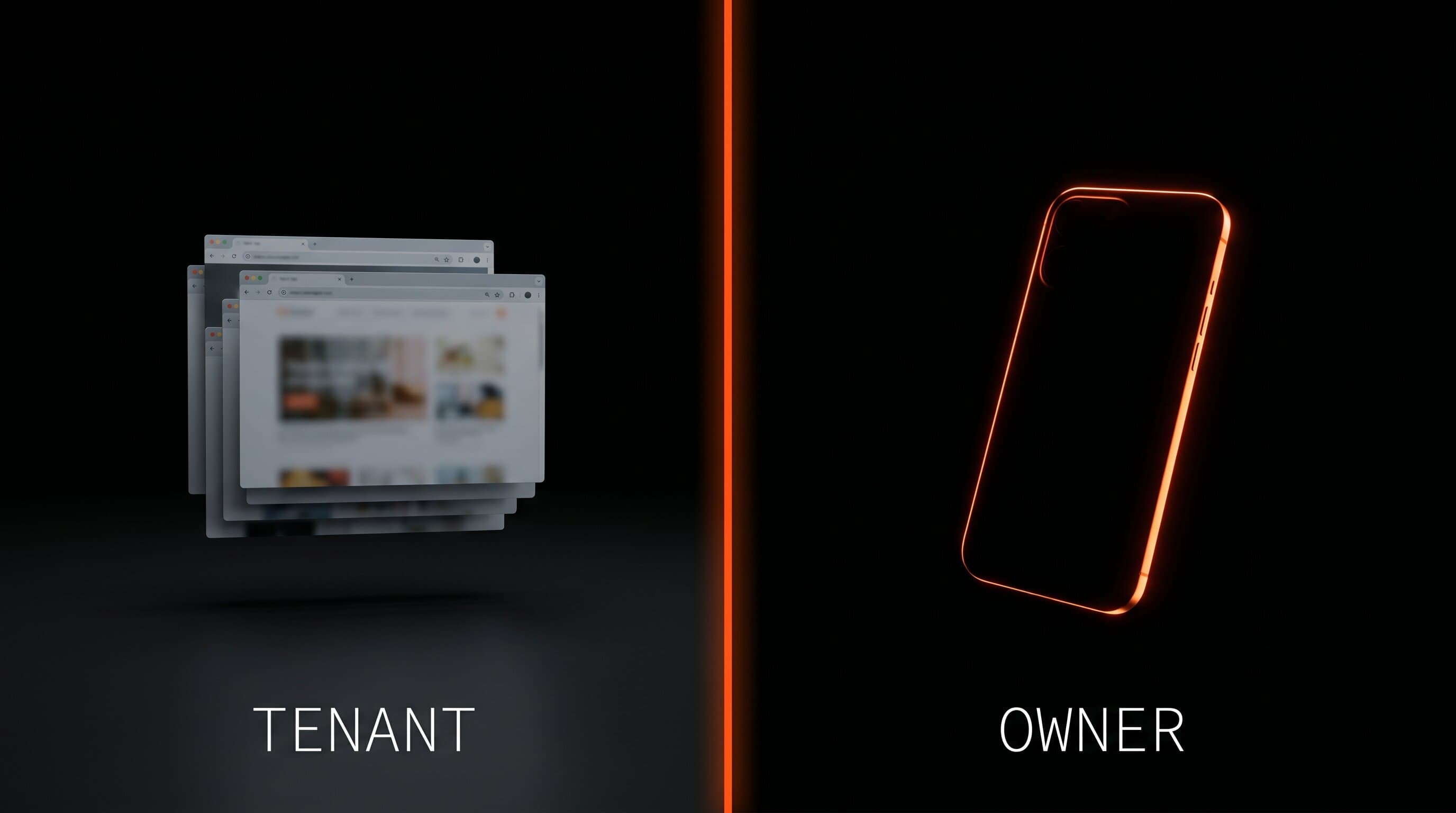
Side-by-side comparison of creator platform feature scope versus owning a branded mobile app
Podia is genuinely good for a narrow band of creators. You are a good fit if:
  • You sell one product line, like courses or a single membership
  • You want to run your whole business from one tool with one bill
  • You do not need a mobile app, push notifications, or App Store discoverability
  • You make less than $10,000 a month, where the Shaker plan's flat $75 is cheap
  • You already have an audience and just need a delivery system
You are not a good fit if:
  • You want to build a subscription business with real recurring revenue
  • You want a branded app your fans can download and open daily
  • Your community is the core product, in which case Skool wins
  • You need deep analytics, dedicated email infrastructure, or advanced segmentation
  • You are trying to build a business you could sell
If you are evaluating, our five Podia alternatives roundup walks through the closest competitors and where each one wins.
FeaturePodiaKajabiSkoolCustom App
Course builderStrongStrongBasicCustom-built
Email marketingBuilt-inBuilt-inNonePush notifications
CommunityBasicBasicExcellentCustom-built
Mobile appNoneGeneric (Kajabi-branded)PWA onlyYour brand in App Store
Starting price$0 (8% fee)$69/mo$99/moPlans start at $49/month
Transaction fees0-8%0%0%0%
Data ownershipLimited exportLimited exportLimited exportFull ownership
Scalability ceilingEmail send limitsContact capsPlatform-dependentUnlimited
Each platform solves one slice. Podia bundles the most slices for the lowest price, which is why it wins on the entry-level pitch. None of them give you a real branded app. That is the gap. Roughly flat, which is its own answer. Podia has stayed conservative. They added Community in 2022, refined the email tool in 2023 and 2024, and tightened pricing in early 2025. They have not added a mobile app, a public API worth using, or a real analytics layer. They have not aggressively chased the AI-native features that competitors like Kajabi are launching. This is what bootstrapped looks like. It is honest. It is steady. It is also why a creator who hits $25K a month on Podia almost always ends up shopping for something else within 18 months. The platform is built for the first $10K, not the next $100K. The pattern matches what we wrote about in our Kajabi review: every all-in-one creator platform tops out at a certain scale, and then the creator has to make a choice. Stay on a tenant model. Or own the product. Most pick wrong because the platform's UI does not show them the math. For the operational side of "what happens after you launch," see our take on the work of running a creator app post-launch. That is what the platforms quietly do not handle. If you have an audience and you want to run one product line with one tool, yes. The Shaker plan at $75/month annual gives you unlimited products, zero transaction fees, email marketing, and basic community. For a creator launching their first course and email list, that is a reasonable starting point. The free plan is a trap below $1,000 a month in sales because the 8% fee outpaces the Mover plan upgrade. Plan fees range from $0 to $199/month. The real all-in cost includes Stripe processing at roughly 3%, optional bolt-on tools, and the transaction fees on the free and Mover plans. A creator doing $5,000/month on the Mover plan pays Podia and Stripe roughly $430 in combined fees. The Shaker plan at $75/month annual is cheaper once you cross about $2,000 a month in revenue. You can export contact lists and order history as CSVs. You cannot export course content, student progress, completion data, or community engagement in a clean migration-ready format. Moving to another platform means rebuilding your course structure, re-uploading video, and re-enrolling members manually. The lock-in is real but is less hostile than Kajabi's. Podia does not have a native mobile app for creators or their customers. Your members access courses, communities, and emails through a mobile web browser. There is no branded iOS or Android app, no push notifications, and no App Store presence. For creators who want their audience to download something and open it daily, this is the dealbreaker. It depends on the bottleneck. Skool is better for community. Kajabi has deeper marketing tools. Thinkific is cheaper for pure course delivery. If the bottleneck is that you do not own the product, the answer is your own app. At Built by Foundry, we build subscription apps for creators with $0 upfront and a revenue share model. You ship in the App Store under your own brand, in three weeks, and you own the business outright.
Podia rents you a storefront. You should be building a business. We build subscription apps for creators. Your brand, your users, your revenue, in the App Store in three weeks.
Let's Build →

Creator app strategy

Want us to review your creator business?

Apply for a Foundry Creator App Review. We'll tell you whether there is a real app opportunity hiding in your audience.

Podia Review 2026: Is It Worth It for Creators?