Case Studies & Success Stories

Melissa Wood Health: 92K Subscribers From an iPhone

Foundry
June 22, 2026
Share
Melissa Wood Health: 92K Subscribers From an iPhone

Get Creator Revenue Insights

How creators are turning audiences into subscription businesses
Share
Melissa Wood Health started with a woman, an iPhone, and a yoga mat in her living room. Today it is a subscription app with a 4.9-star rating across 5,498 reviews on the Apple App Store, more than 1,000 workouts and meditations, and a paying membership that renews every month. Melissa Wood-Tepperberg built it by giving the short, low-impact movement away for free, then charging for the place where all of it lived. That is the gap worth studying. A former model who battled anxiety and an eating disorder picked up a phone and turned mindful movement into a wellness business that earns while she sleeps. Most creators in her seat would have sold a program and chased the next sponsor. She built software. Key Takeaways:
  • Melissa Wood-Tepperberg spent a decade modeling before mindful movement pulled her out of anxiety and disordered eating, then she started filming workouts on her iPhone in 2015
  • She has roughly 1 million Instagram followers (@melissawoodtepperberg) and turned that audience into the MWH app, launched in 2019
  • A Harvard Business School case documented 92,000 paying subscribers as of October 2020; the platform now reports 100,000+ members
  • The MWH app carries 1,000+ workouts, Pilates, meditations, nutrition, and live classes, with a 4.9-star rating across 5,498 ratings
  • The app turns a free Instagram following into members who pay every month, instead of a course that sells once
What is Melissa Wood Health? Melissa Wood Health (MWH) is a subscription wellness app built by creator Melissa Wood-Tepperberg. Members get 1,000+ low-impact workouts, Pilates and sculpt classes, guided meditations, nutrition, and live sessions, billed monthly or annually with a free trial. Melissa Wood-Tepperberg is a wellness creator and the founder of MWH. Before any of that, she spent about ten years working as a model and actress, and she has been open that the work came with a punishing relationship with her own body. She has talked publicly about years of anxiety, binge eating, and purging that started as a teenager. What pulled her out was not a bootcamp or a cleanse. It was mindful movement, low-impact Pilates and yoga, paired with a daily meditation practice she has said changed her life. In a WWD interview she described building the brand around being honest about that, not hiding it. The personal context matters because it became the product. She was not selling a fantasy. She was filming the exact routine that fixed her own head and body, then handing it to people who felt the same way. Here is the origin most creators skip past. In 2015, Wood-Tepperberg set up a tripod and an iPhone in her apartment and filmed short, quiet workouts. No studio, no crew. She posted them to Instagram, and the following grew because the routines were doable and the tone was calm in a category that usually screams at you. She could have stopped there and lived off sponsored posts forever. Brand deals pay, and they reset to zero the second you stop posting. Instead, in 2019 she packaged everything into the MWH app and put a subscription on it. The free videos became the funnel. The app became the business. By October 2020, a Harvard Business School case study titled "How to Win in the Creator Economy" pegged MWH at 92,000 paying subscribers, with her Instagram audience north of 650,000 at the time. That ratio is the whole lesson: she did not need tens of millions of followers to build a real subscription business. She needed a result people would pay to keep. The app is the product, not a companion to it. Members get a library of 1,000+ workouts and meditations, Pilates and sculpt classes, a weekly schedule that updates, nutrition and recipes, lifestyle content, and live streamed classes. New classes drop every week, so there is always a reason to open it tomorrow.
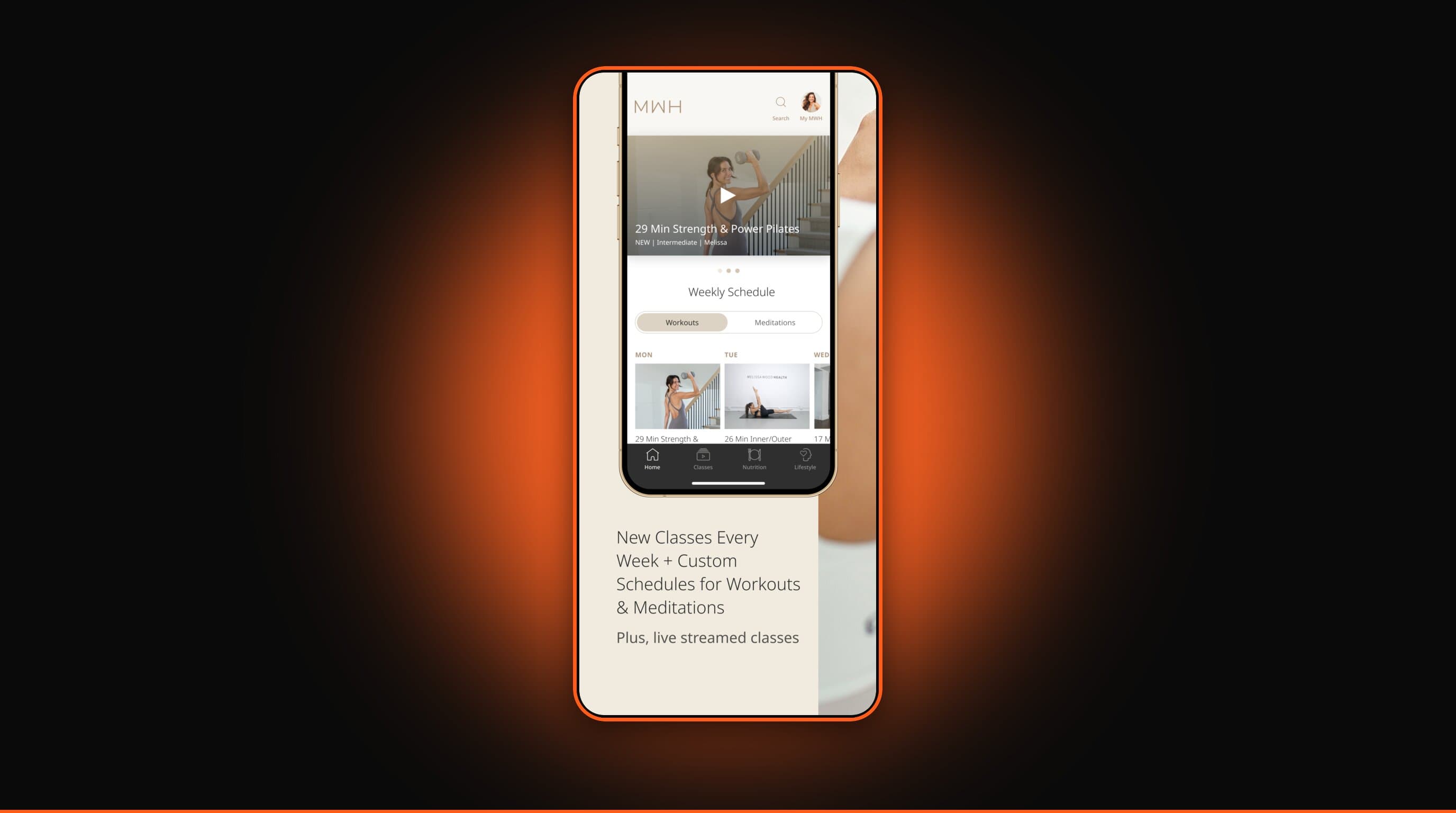
The MWH app home screen showing a featured Pilates class, weekly schedule, and workout and meditation tabs
Look at what that does that a one-off program cannot. Every class a member finishes is a reason to come back, and every new week of content is engagement that does not depend on her filming a viral reel. The app runs the relationship, so the business earns whether or not she posts. It also pulls in new members through App Store search, people who never saw a single Instagram video. That second channel is exactly what we break down in App vs Course: The Revenue Math for Creators. The membership is free to download with a subscription inside, roughly $10 a month or $99 a year with a free trial, live on the Apple App Store and Google Play. The 4.9-star rating across 5,498 ratings tells you the experience holds up after the download. Melissa Wood Health reported 92,000 paying subscribers in the 2020 Harvard Business School case and now lists 100,000+ members. Put a number on that. At roughly $10 a month, 100,000 members is on the order of $1 million in recurring revenue every month, before annual plans and churn math. That is the difference between a content brand and a software company.
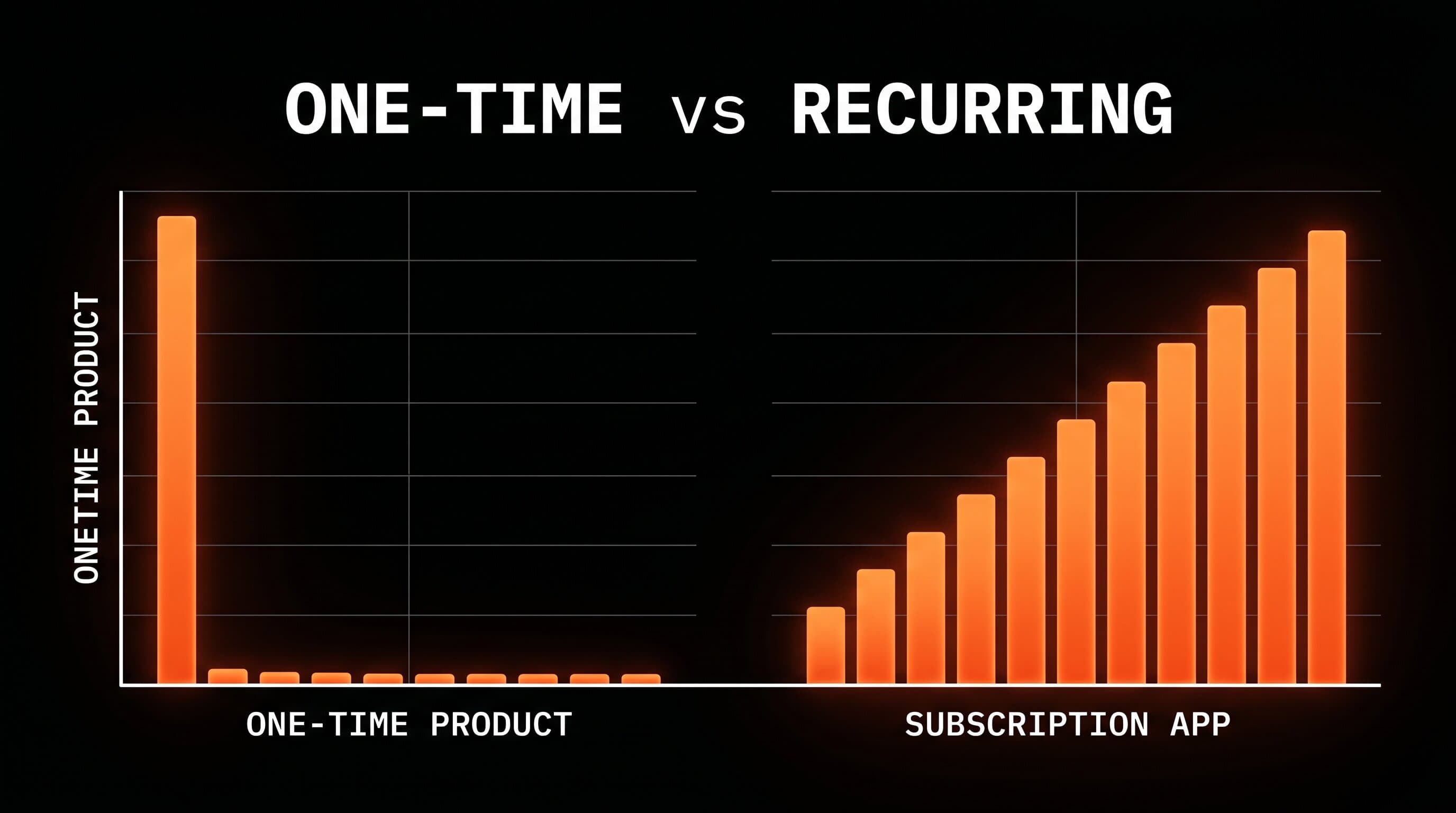
A chart contrasting a one-time product that spikes then flatlines against subscription revenue that climbs month over month
A one-time product is a spike. A subscription is a staircase. Run the same audience through both and the gap widens every single month.
Monetization MethodRevenue TypePays Again Next Month?Scales Past Your Followers?
Brand deal / sponsored postOne-timeNoNo
Workout PDF or programOne-timeNoNo
Online courseOne-timeBarelyNo
Subscription appRecurringYesYes
Three of those four cap out. Only the app bills again in thirty days, and the month after that, and brings in strangers off App Store search while it does. A member who bought a $40 program is gone once they finish it. A member who loves the app renews on autopilot. For how to set that price, see our guide on how to price a creator subscription app. Wood-Tepperberg could have stayed a content brand with a shop bolted on. Plenty of wellness creators do. But selling programs one at a time is a content problem wearing a product costume: you launch, you discount, you relaunch, and your income tracks your posting calendar instead of your audience size. An app changes the math three ways at once. It earns recurring revenue whether or not she films this week. It acquires new members through the App Store, far past the reach of any one account. And it turns passive followers into daily users who treat the app as part of their morning. That is the same flywheel behind Emily Skye's $36M fitness app and Joe Wicks and the Body Coach app empire. The audience is the start. The product is the business. There is a quieter benefit too. She does not have to ship updates, fix bugs, or answer App Store reviews herself to keep earning. Someone has to keep the software alive for years, and ongoing app care is the part most creators underestimate when they imagine building one. Build the thing that bills again. Her Instagram gave her reach; the app gave her a business that renews every month. If you have to choose what to build next, build the one that charges next month too. Your story is the on-ramp, not the product. People followed her because she was honest about anxiety and recovery. They paid because the classes worked. The narrative earns attention; the software keeps it. And you do not need millions of followers. She crossed 92,000 paying subscribers with an audience under a million, because the result was specific and the price was fair. You need a real problem you have solved, proof it works, and the will to ship a product instead of another post. MWH (Melissa Wood Health) is a subscription wellness app with 1,000+ low-impact workouts, Pilates and sculpt classes, guided meditations, nutrition, and live streamed sessions. It is free to download with a subscription inside, available on the Apple App Store and Google Play, and holds a 4.9-star rating across 5,498 ratings. A Harvard Business School case study documented 92,000 paying subscribers as of October 2020, and the platform now reports more than 100,000 members. At roughly $10 a month, that scale puts MWH in the range of seven figures of recurring revenue per month. She worked as a model and actress for about ten years, then used mindful movement and meditation to recover from anxiety and an eating disorder. In 2015 she started filming short workouts on her iPhone and posting them to Instagram, and she launched the MWH subscription app in 2019. Most agencies charge $50K to $200K and take six to twelve months. Built by Foundry charges $0 upfront, ships in about three weeks, takes a revenue share, and runs the app for you forever. You approve the vision. We handle design, development, App Store submission, and ongoing updates. Melissa Wood built it. Your turn. She turned an iPhone and a recovery story into a wellness app with six figures of members. Your audience already has a market hiding inside it. We build custom apps for creators, $0 upfront, three-week delivery, and we handle all the tech forever.
Let's Build →

Creator app strategy

Want us to review your creator business?

Apply for a Foundry Creator App Review. We'll tell you whether there is a real app opportunity hiding in your audience.

Melissa Wood Health: 92K Subscribers From an iPhone