

Turning Knowledge into Products

How to Turn Coaching Into an App: A 6-Step Guide

Built by Foundry
July 3, 2026
Share
How to Turn Coaching Into an App: A 6-Step Guide

Get Creator Revenue Insights

How creators are turning audiences into subscription businesses
Share
What is a coaching app? A coaching app is a creator-owned mobile product that delivers a coach's method, plans, and accountability to clients for a recurring monthly fee. Instead of trading hours for dollars in 1-on-1 sessions, the coach packages their framework into software thousands of people can follow at once. Key Takeaways:
  • The global coaching market topped $4.5 billion in annual revenue, with roughly 109,200 professional coaches worldwide (ICF 2023 Global Coaching Study)
  • One-on-one coaching is capped by the hours in your calendar. A coaching app earns while you sleep.
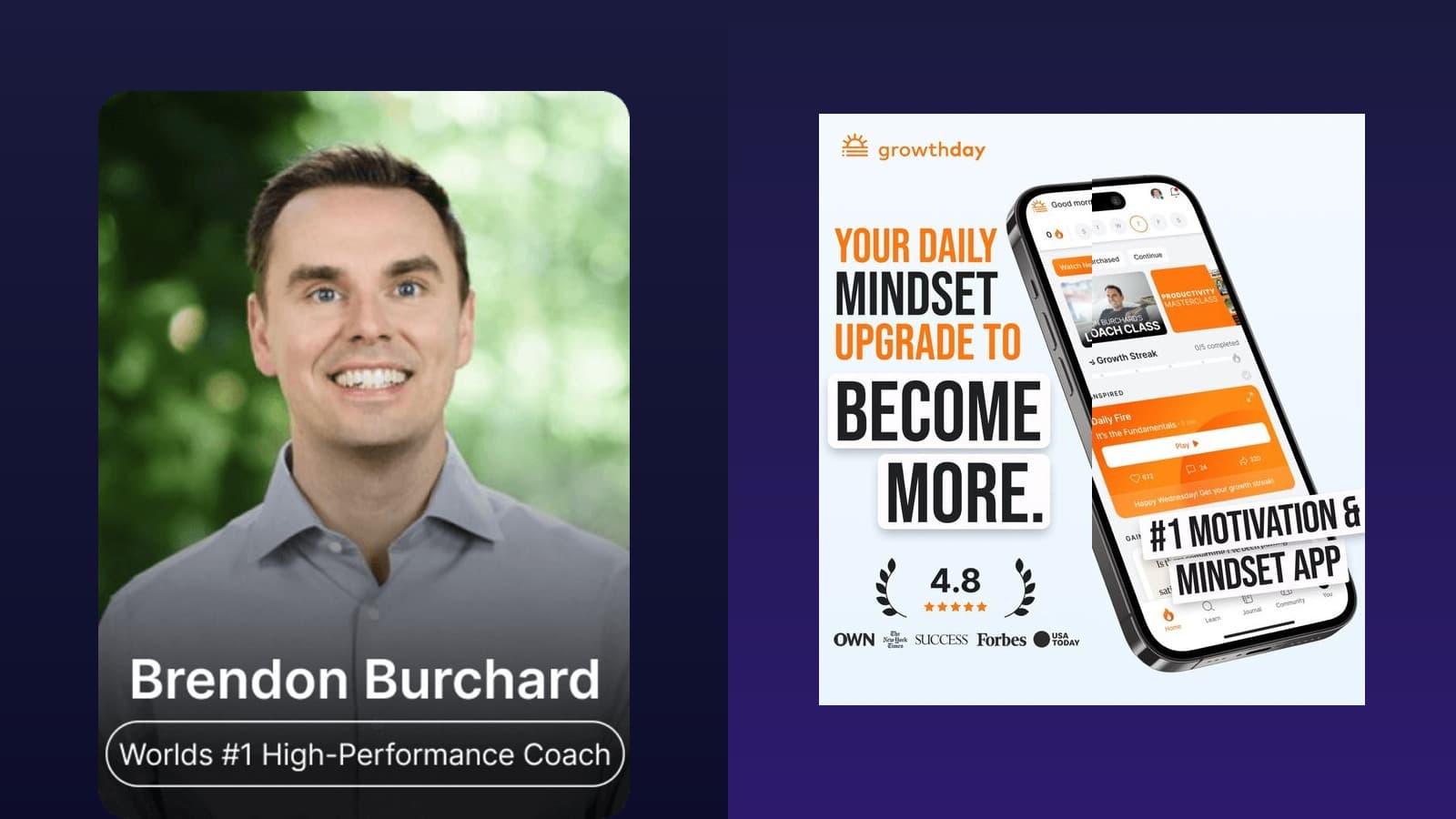
  • Layne Norton's Carbon app holds a 4.8-star rating across about 7,900 App Store reviews, and Brendon Burchard's GrowthDay holds 4.8 stars too. Both packaged coaching into software.
  • Higher-priced subscription apps generate roughly 7x the lifetime value of cheap apps ($55.21 vs $8.08 per user, per RevenueCat)
  • Six steps separate "a coach with a Calendly link" from "a coach who runs a subscription business"
You sell your time. That's the trap. Your calendar fills up. To earn more, you either raise your rates or add more sessions. Both hit a ceiling fast, because there are only so many hours in a week and only so much a client will pay for one of them. The best coaches in the world still cap out somewhere south of what a mediocre app makes on autopilot. The coaching industry is huge and growing. It reached $4.5 billion in global revenue, up about 60% since 2019, according to the ICF 2023 Global Coaching Study. But almost all of that money is still trapped in the hourly model. The coaches breaking out aren't the ones with the fullest calendars. They're the ones who turned their method into an app. Here's how they did it. Because the hourly model punishes success. The better you get, the more demand you create, and the more your own time becomes the bottleneck. Think about what actually happens when a coach gets great. Word spreads. The waitlist grows. Rates go up. Then the calendar hits a wall at maybe 25 or 30 paid sessions a week before burnout sets in. A coach charging $200 a session and working flat out lands around $20K to $24K in a strong month, and every dollar of it stops the moment they stop working. An app breaks that link. You record the framework once. You build the plans once. Then 500 or 5,000 people run through your system without booking a minute of your time. The work you already did keeps earning. Layne Norton is the clearest proof. He's a natural pro bodybuilder with a PhD in nutritional sciences, and he built Carbon Diet Coach, an app that adjusts a client's calories and macros every week the way he would in person. It holds a 4.8-star rating across roughly 7,900 reviews. As we covered in Layne Norton's path from coach to app founder, the app coaches more people in a day than he could reach in a year of one-on-one calls. Coaching converts because it's a relationship with a job to do, and that job repeats. A course is a one-time transaction. Someone buys it, half-finishes it, and never pays you again. Coaching is different: clients come back every week because the problem comes back every week. That recurring need is exactly what a subscription is built for. You aren't asking someone to buy information once. You're charging them to keep making progress, the same reason they hired you in the first place. The revenue gap is real. Higher-priced subscription apps generate about 7x the lifetime value of cheap apps, $55.21 versus $8.08 per user, according to RevenueCat's State of Subscription Apps 2025. And that lifetime value grows roughly 60% from month one to month twelve as clients stick around. A course can't compound like that. It sells once and resets to zero. We broke this down in detail in our app vs course revenue math for creators. Before you build anything, name the transformation. Not the topic. The specific change a client pays you to create. A nutrition coach doesn't sell "nutrition advice." They sell "I finally hit my macros without guessing." A business coach doesn't sell "business strategy." They sell "I stopped second-guessing every decision and started closing." A mindset coach sells "I show up as the person I keep saying I'll be." Write yours in one sentence, in your client's words. This sentence becomes the entire app. Every feature either moves someone toward that transformation or it gets cut. Coaches who skip this step build bloated apps full of features nobody uses. Coaches who nail it build something with an obvious reason to open it every day.
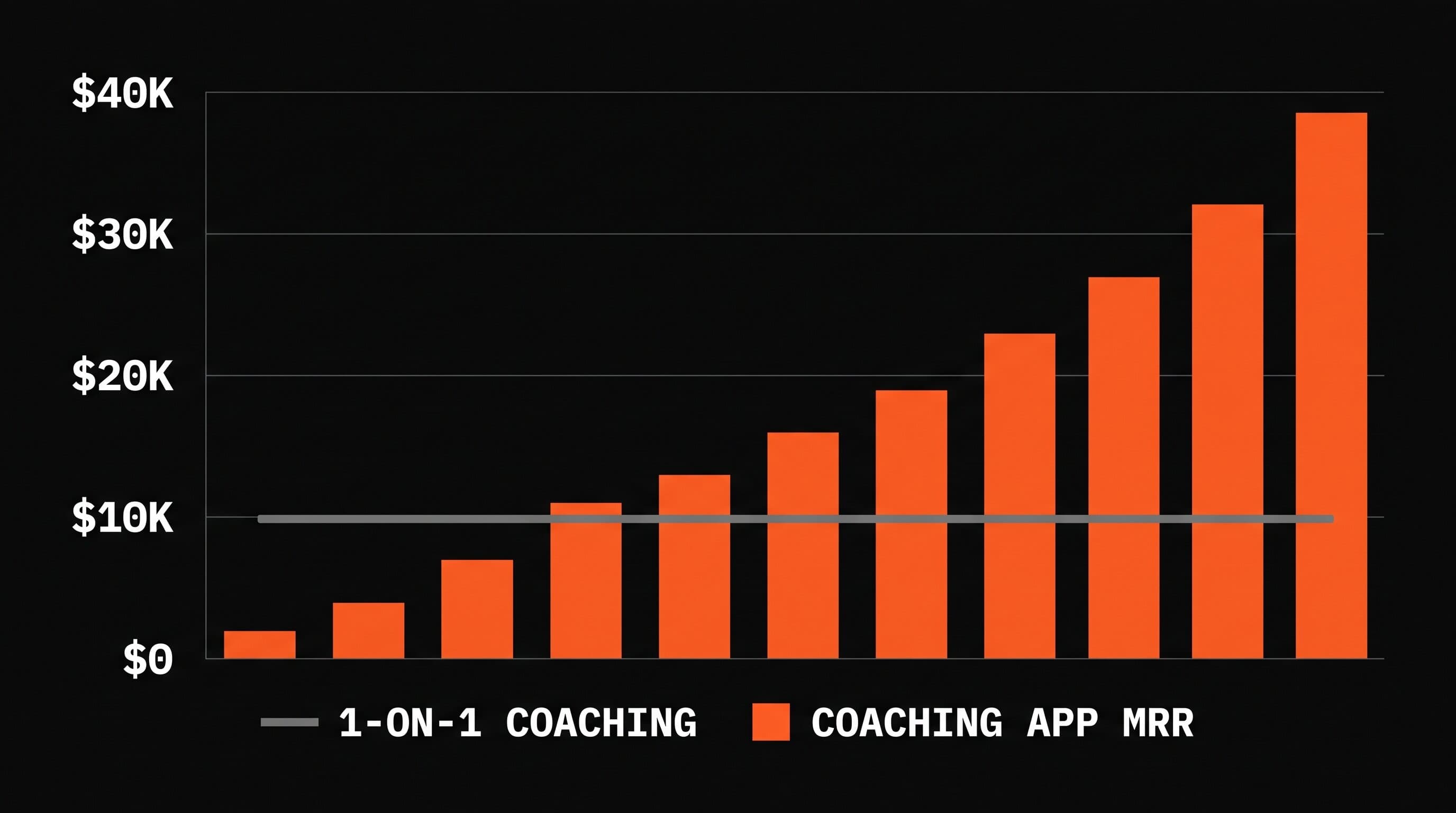
A bar chart comparing flat 1-on-1 coaching income against rising monthly recurring revenue from a coaching app over twelve months
Every good coach has a framework, even if they've never written it down. It's the repeatable system you run every client through. That system is your product spec. Take the thing you do in sessions and map each piece to a feature:
  • The assessment you do on the first call becomes an onboarding quiz
  • The custom plan you write becomes a personalized plan the app generates and updates
  • The weekly check-in becomes a progress log and a push notification
  • The accountability you provide becomes streaks, reminders, and milestones
  • The "here's what to adjust" moment becomes an algorithm or a weekly update
Brendon Burchard did exactly this with GrowthDay, a daily mindset app that turned his coaching method into habit tracking, journaling, daily prompts, and an AI coach. It holds 4.8 stars, and the same structure that built GrowthDay's coaching empire is one any coach can copy: take what you do live, and make the app do it on repeat. The instinct is to price low because "it's just an app." That's backwards. Your app delivers your coaching, and your coaching is valuable. Price like it. Most coaching apps land between $9.99 and $29.99 a month. The right number depends on how much of the transformation the app delivers on its own. A tracker with light guidance sits at the bottom. An app that fully replaces a $200 session sits near the top. Annual plans, priced at roughly 8 to 10 months of the monthly rate, pull in cash up front and cut churn hard. Run the math before you pick. At $14.99 a month, 1,000 subscribers is about $15,000 in monthly recurring revenue, or $180,000 a year, from work you did once. We walk through the full pricing framework in how to price a creator subscription app, including where free trials help and where they quietly kill conversion. You don't need to code. You need a product partner who turns your framework into a real, shippable app and then keeps it running. This is where most coaches stall. They try a no-code tool or an AI app builder, get a demo that looks fine on screen, then discover the demo can't take payments, can't send push notifications, and can't pass App Store review. A demo is not a product. The gap between them is where the actual work lives: subscriptions, accounts, data, updates, and the ongoing app care that keeps a live product healthy month after month. The alternative is a partner who owns all of that. At Built by Foundry, we build the whole product, ship it to the App Store, and run it forever, so you never touch a line of code or a bug ticket. You approve the vision. We build and operate the business. Read how our model works for the full breakdown. Your first subscribers already know you. Don't launch to strangers. Launch to the people currently paying for your time. Offer your one-on-one and group clients the app at a founding rate. Frame it honestly: same method, always in their pocket, a fraction of the per-session cost. A meaningful share will convert, because they already trust the transformation. That early cohort gives you revenue on day one and, more importantly, the reviews and usage data that make the App Store surface your app to people who've never heard your name. That App Store discovery is the part coaches underestimate. Your next thousand subscribers won't all come from your audience. Many will find the app by searching for the problem you solve, then discover you. Here's the quiet superpower. Once the app is live, it solves the problem every coach and creator wrestles with daily: what do I post next? Every user milestone is a post. Every before-and-after is a testimonial you didn't have to script. Every leaderboard, streak, or aggregate result is a piece of content the app generated for you. Your product stops being something you market and starts being something that markets itself, feeding your feed while it earns. That flywheel, product creates content, content brings users, users create more content, is why a coaching app beats a coaching calendar on every axis that matters. More than your calendar ever will, and it compounds. Here's how the models stack up:
Monetization ModelTypical PriceRevenue CeilingEarns While You Sleep?
1-on-1 coaching$150 to $300 / sessionCapped by your calendarNo
Group program$500 to $2,000 / cohortCapped by launch cyclesNo
Online course$199 one-timeResets to zero per saleNo
Coaching app$9.99 to $29.99 / monthCompounds every monthYes
Now put subscriber numbers against a single price point. At $14.99 a month, the math moves fast:
SubscribersPrice / MonthMonthly Recurring RevenueAnnualized
250$14.99$3,748$44,970
1,000$14.99$14,990$179,880
2,500$14.99$37,475$449,700
A coach with 2,500 app subscribers earns almost half a million a year and never opens their calendar to do it. A coach with a fully booked schedule caps out at a quarter of that and has no life. That's the whole argument. Want to turn your coaching method into an app? We build custom apps for coaches and creators. $0 upfront, three-week delivery, and we handle all the tech forever.
Let's Build →
Most agencies charge $50K to $200K to build a custom app. Built by Foundry charges $0 upfront. We build your coaching app and take a revenue share, so we only earn when you earn. No. You need a method that gets people results and an audience that trusts you. Certification helps credibility, but the App Store rewards apps that deliver a real transformation, not credentials. There's no hard minimum, but an existing base of even a few dozen paying clients gives you day-one subscribers, early reviews, and usage data. Those signals help the App Store surface your app to new users who never followed you. Only if you want it to. Most coaches keep a small number of premium one-on-one spots at high rates and use the app to serve everyone else. The app handles scale. Your calendar handles your highest-value clients. Traditional agencies take 6 to 12 months. Built by Foundry ships in about three weeks. We handle design, development, App Store submission, and ongoing updates so you stay focused on coaching.

Creator app strategy

Want us to review your creator business?

Apply for a Foundry Creator App Review. We'll tell you whether there is a real app opportunity hiding in your audience.

How to Turn Coaching Into an App: A 6-Step Guide