

Creator Economy Trends

7 Creator App Trends Driving Revenue in 2026

Foundry
May 17, 2026
Share
7 Creator App Trends Driving Revenue in 2026

Get Creator Revenue Insights

How creators are turning audiences into subscription businesses
Share
The fastest-growing creator businesses in 2026 are not the ones with the biggest follower counts. They are the ones with the biggest annual revenue per user. The gap between a 200K-follower creator pulling $40K/month in MRR and a 5M-follower creator chasing the next brand deal is now measured in product decisions, not audience size. Seven app trends are doing most of the heavy lifting. Each one is observable in public App Store rankings, paywall screenshots, and subscription analytics reports. None of them require a bigger audience. All of them require a real product. Key Takeaways:
  • Annual pricing is now the default first plan shown to new users, not a discount toggle hidden at the bottom of the paywall.
  • AI features are moving from gimmick to premium tier, with creator-led apps charging $5 to $20 extra per month for personalized coaching.
  • Onboarding quizzes have become standard, lifting trial start rates by 2x to 3x versus a static paywall.
  • App Store search is now a bigger growth channel than social media for the top creator apps, driven by aggressive ASO.
  • Lifetime offers, community bundles, and faceless micro-niches are quietly delivering higher revenue per user than traditional creator funnels.
Creator app revenue is growing because subscriptions, not content, are now the unit of value. App Store paid subscriptions hit record highs in 2024 according to Apple's own ecosystem report, which credited subscription apps with the largest share of the $1.3 trillion in billings on the platform. Subscription apps grew faster than the rest of the App Store again last year. RevenueCat's State of Subscription Apps 2024 report tracked roughly 30,000 apps and found that the top quartile of subscription apps earn more than 200x what the bottom quartile earns, with the gap driven almost entirely by paywall design, pricing structure, and retention. The companies winning are not always the ones with the most users. They are the ones turning each user into more money over time, an idea we broke down in our ARPU guide for creators. These seven trends are how the winners are doing it. The first plan a user sees on a paywall in 2026 is annual, not monthly. Most creator apps now hide monthly behind a small text link or remove it entirely from the initial paywall. The math is brutal. A monthly $9.99 plan with a 6-month average lifetime is worth about $60. The same user on a $59.99 annual is worth $60 on day one and likely to renew. Annual buyers churn at roughly half the rate of monthly buyers in RevenueCat's benchmarks, and creator apps are reacting accordingly. The new paywall pattern looks like this.
Position on paywall2022 default2026 default
Top of paywallMonthly $9.99Annual $59.99 with "save 50%" tag
Second optionAnnual $59.99Monthly $9.99 in smaller text
Bottom of paywall"Free trial" toggle"Other plans" expandable link
Headline valuePriceTotal saved versus monthly
Two creators with identical apps, identical traffic, and identical content will earn very different revenue based on which plan appears first. Annual default is one of the cheapest changes a creator can make and one of the highest-impact. Every serious creator app shipping in 2026 has an AI coach built in. The difference between the winners and the also-rans is whether the AI is free or paid. The winners moved AI to a premium tier. A base subscription gives the user content and tracking. The AI tier gives them a coach that texts them, adjusts their plan, answers questions in the creator's voice, and remembers their goals. That tier prices at $5 to $20 more per month than the base plan, and the upgrade rate is high because users have already paid once and the marginal jump feels small. This is why most app growth playbooks now talk about a coach layer rather than a chatbot bolt-on, and why we wrote about the rise of AI coaches inside creator apps. The AI is not the product. The creator is. The AI is the multiplier that lets one creator talk to a hundred thousand users at once. A static paywall converts at one number. An onboarding quiz followed by a paywall converts at two to three times that number, sometimes more. This is now well-established in fitness, mental health, finance, and language apps, and creators are catching on fast. The mechanic works for three reasons. First, the user has invested two minutes answering questions, so abandoning feels like a sunk cost. Second, the paywall feels personalized, because it references the user's specific goals back to them. Third, the quiz captures data the creator can use later for re-engagement and lifecycle email. Cal AI, Noom, Rise Sleep, and most of the top-grossing creator-led fitness apps use this pattern. A typical quiz runs 8 to 15 questions over 60 to 90 seconds before showing a paywall. The paywall headline is no longer "Get unlimited access." It is something specific like "Your custom plan is ready" or "You're 14 weeks from your goal."
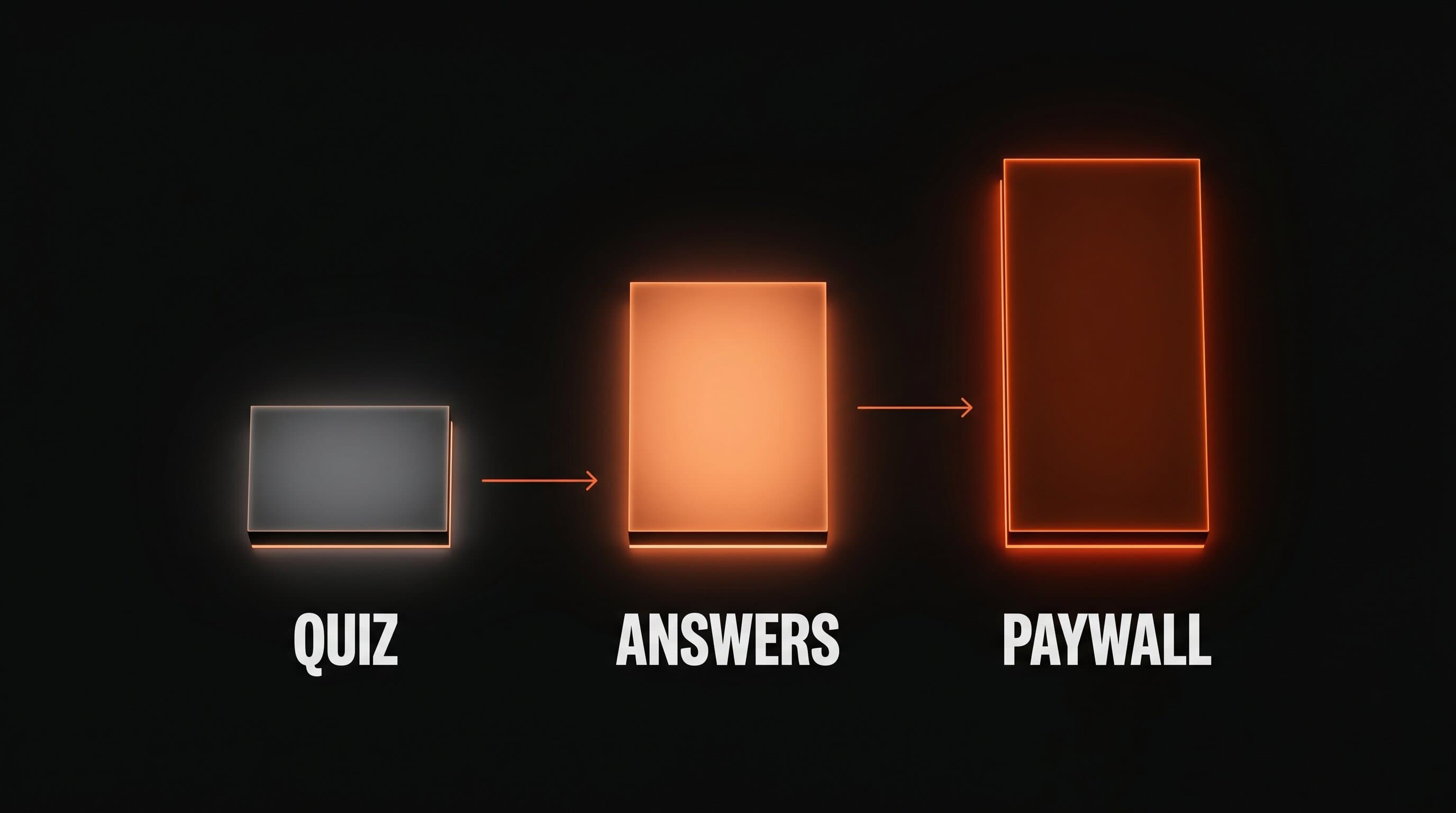
Conceptual visualization of a creator app onboarding quiz flow into a paywall
The seven-day free trial used to be the standard. In 2026, the leaders are testing three-day trials, one-day trials, hard paywalls without trials, and reverse trials where the user gets premium first and pays after a soft expiration. The shift is not because shorter trials convert better in isolation. They do not always. The shift is because creator apps are getting better at picking the right trial for the right segment. A user who scored "very motivated" on the onboarding quiz gets a hard paywall and a discounted annual. A user who scored "just exploring" gets a longer free trial. The matching is automated and the data shows up in revenue per install within a week. We broke down the tradeoffs in detail in our free trial versus paywall analysis, but the bigger pattern matters here. Trials are no longer a single setting. They are a segmented offer. For most of the last decade, creator apps grew off the back of the creator's social audience. In 2026, the math has flipped for the top tier of creator apps. App Store search and Apple featuring drive more new installs than the creator's own social media for many leading creator-led apps, based on the growth of App Store Optimization spending tracked by Sensor Tower. This is the quiet revolution most creators are missing. The App Store is a discovery engine of about 650 million weekly visitors. A well-optimized creator app shows up in search results for thousands of generic terms like "weight tracker", "habit streak", "guided meditation", or "speed reading". Most of those installs are from users who have never heard of the creator, never seen their content, and never followed them on any platform. We wrote a full breakdown of how creator apps get featured by Apple. A founder builds for App Store search. A creator builds for social. The leading creator apps in 2026 bundle a community inside the subscription. The community is not a Discord server stapled to the side. It is a tab inside the app, with feed posts, member-only live drops, leaderboards, and direct messages with the creator or their team. This works for two reasons. The first is retention. A user who has friends in the app churns at a fraction of the rate of a user who is alone with the app. The second is content gravity. Every user post in the community is one less post the creator has to write themselves, which solves the content treadmill problem at the same time it strengthens the product. The bundle pricing typically looks like a small premium over a content-only app. Where a content app charges $9.99 per month, the community plus app charges $14.99 to $19.99. Users pay it. Churn drops. ARPU rises. It is one of the rare moves where everything gets better at the same time, which is part of why we cover retention tactics for creator apps in depth. The most talked-about creator apps are tied to massive personalities. The fastest growing ones in 2026 are often tied to no personality at all. Faceless creator apps target tiny, specific verticals: postpartum sleep for new moms, breath work for ADHD adults, mobility training for desk workers over 45, weight tracking for people on GLP-1 medications, niche language pairs ignored by Duolingo. The creator behind them is a small team or a single founder with deep domain experience and no follower count to speak of. Their growth comes entirely from App Store search, paid acquisition, and word of mouth inside the niche. These apps work because the niches are too small to interest the giants and too profitable to ignore. A faceless app with 10,000 paying users at $9.99 per month is $1.2M in annual revenue, and there are thousands of niches like that hidden inside the App Store. We profiled a few of them in 12 creator apps that actually make money.
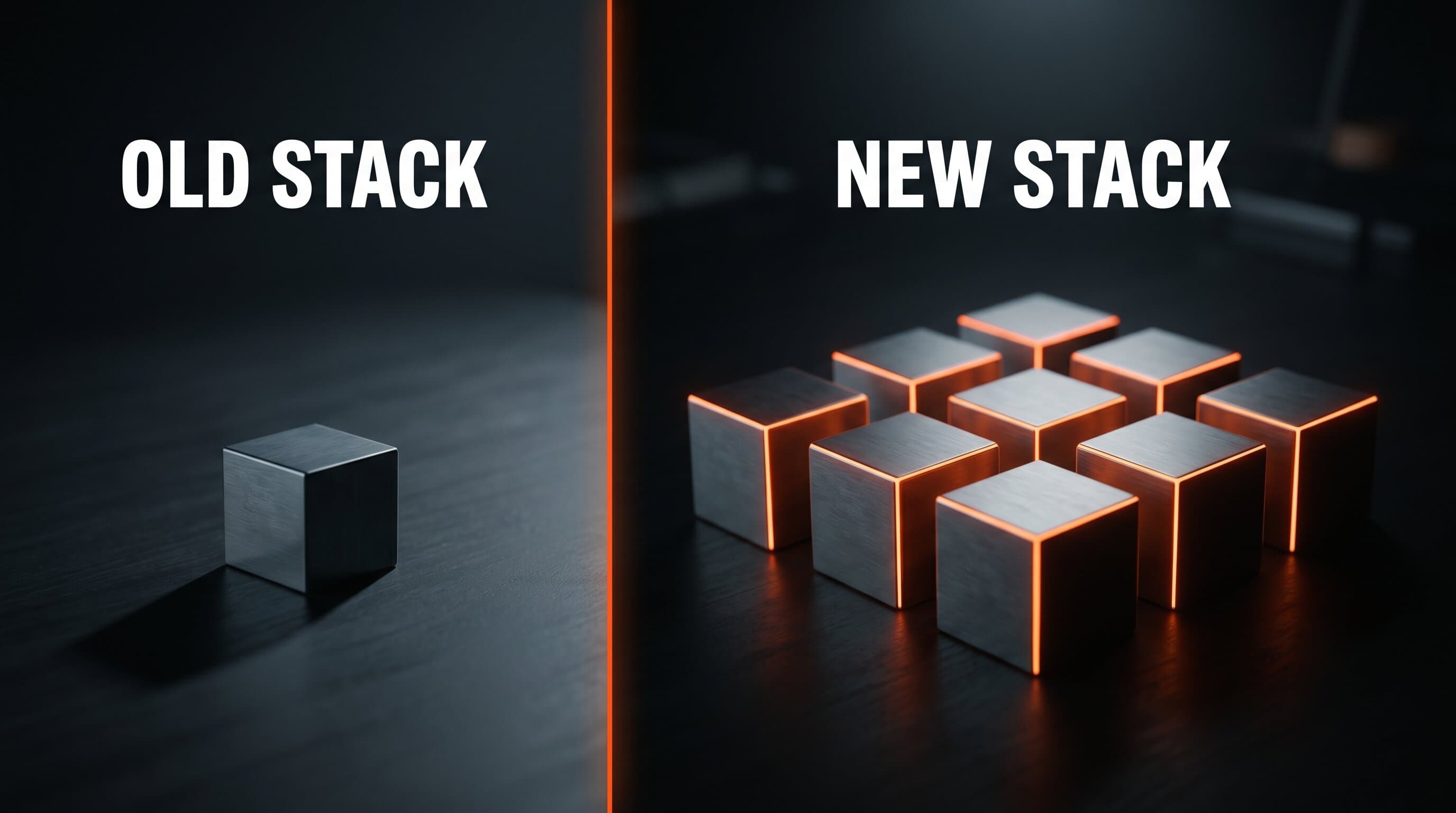
Cinematic comparison visualization of creator app trends in 2026
The seven trends fit together into a single playbook. Build a niche app, ship a quiz-driven onboarding, lead with an annual paywall, layer in an AI tier, bundle a community, optimize for App Store search, and tune the trial logic by segment. Compare that to what a typical creator was doing four years ago.
Decision2022 default2026 defaultWhy it changed
Primary plan shownMonthlyAnnualHigher LTV and lower churn
AI integrationNone or chatbotPremium tier with creator voiceUsers pay for a coach, not a chatbot
OnboardingDirect to paywallQuiz then paywall2x to 3x trial conversion
Trial length7 days fixedSegmented by user signalSmarter matching, higher revenue per install
Top install channelCreator's social audienceApp Store search and featuring650M weekly App Store visitors
BundleApp onlyApp plus communityHigher retention and content gravity
NicheBroad creator brandHyper-specific verticalProfitable small niches outearn broad ones
Each row is a decision a creator app team has to make. Each row also represents an experiment with public, observable winners. None of them require a bigger audience. All of them require a real product to put the decisions inside. Want a product that earns from these trends instead of watching them from the sidelines?
Let's Build →
We build, launch, and run subscription apps for creators on a $0-upfront, revenue-share model. Every app we ship uses these seven patterns by default, because they are not opinions, they are what the data says works. You can read more about how we approach it on our about page. A creator with 50,000 engaged followers and the right product can outearn a creator with 5 million passive followers and a Linktree. The trends above are why. The question is which side of that gap you want to be on twelve months from now. Defaulting to annual pricing on the paywall. It is the cheapest change to make and one of the highest-impact moves on lifetime value. Annual subscribers churn at roughly half the rate of monthly subscribers and bring in a year of revenue on day one. For the top tier of creator apps, yes. App Store Optimization and Apple featuring can drive more new installs than the creator's own social audience, especially in evergreen niches like fitness, sleep, language, and finance. The App Store has roughly 650 million weekly visitors looking for solutions, not following creators. In the apps we see publicly, an AI tier typically prices $5 to $20 above the base plan and converts a meaningful share of existing subscribers. That is real expansion revenue from users who already paid once. Yes. Onboarding quizzes followed by a paywall typically lift trial starts 2x to 3x versus a static paywall in fitness, mental health, finance, and language verticals. The development cost is small relative to the lifetime revenue lift. Easily, if the niche is right and the product is built well. A faceless app with 10,000 paying users at $9.99 per month earns more than $1M per year, with no posting schedule, no brand deals, and no audience risk.
7 Creator App Trends Driving Revenue in 2026