6 Podcasters Building Subscription Empires Beyond Ads

6 Podcasters Building Subscription Empires Beyond Ads

Foundry
May 13, 2026
Key Takeaways:
  • Sam Harris built Waking Up into an estimated $700K per month meditation business by charging the same audience that already listened for free.
  • Andrew Huberman's premium podcast tier raised $500K+ for research in its first year on top of an estimated $7M+ in annual revenue.
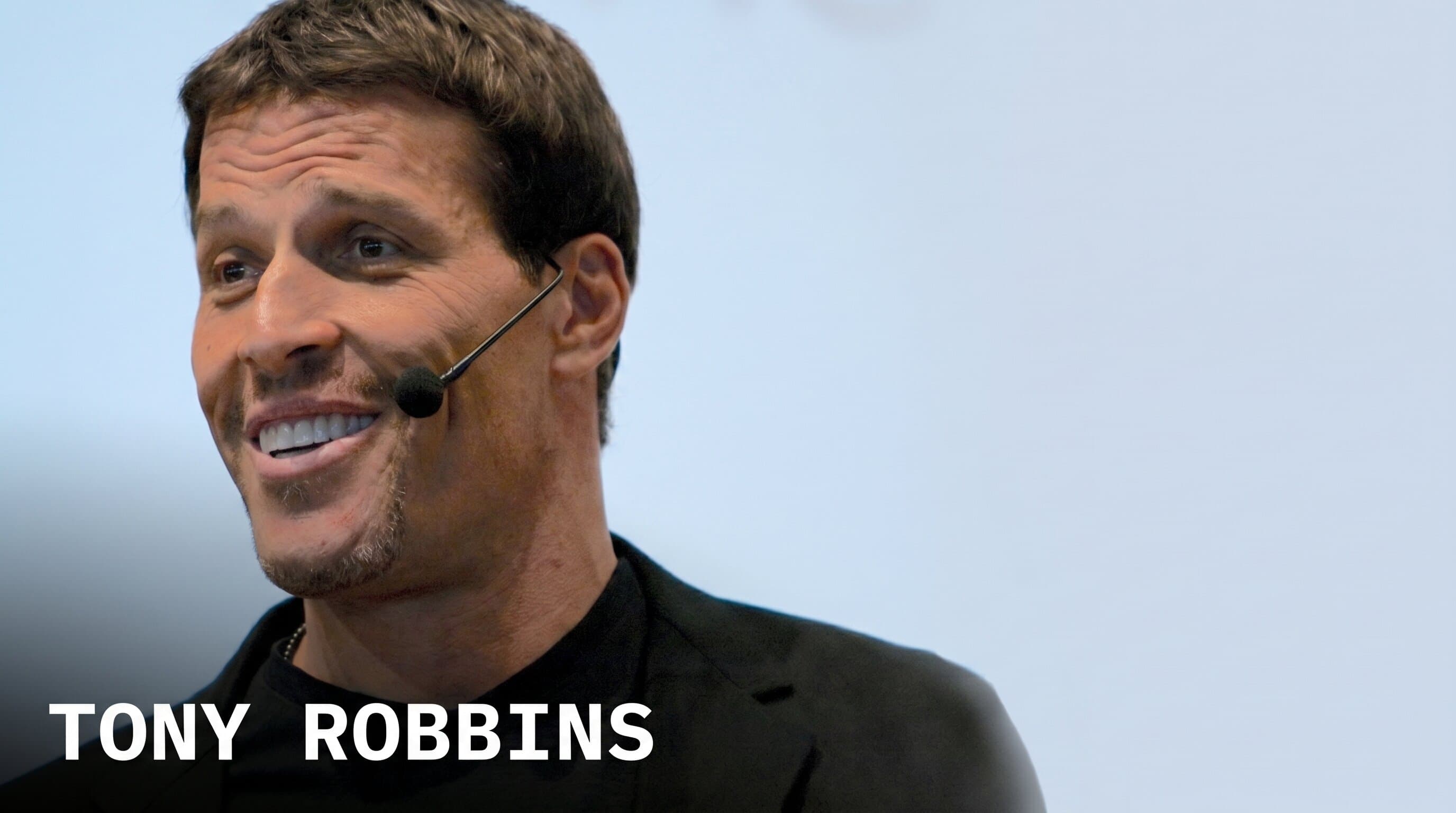
  • Tony Robbins launched a $99 per month AI coaching app in May 2025, the cleanest subscription pivot of any 65-year-old creator in the world.
  • Brendon Burchard's GrowthDay sells daily personal development at $49 per month or $249 per year, on top of a $200M coaching business.
  • The pattern is consistent: free podcast at the top of funnel, paid subscription product underneath, ownership of the customer relationship at every step.
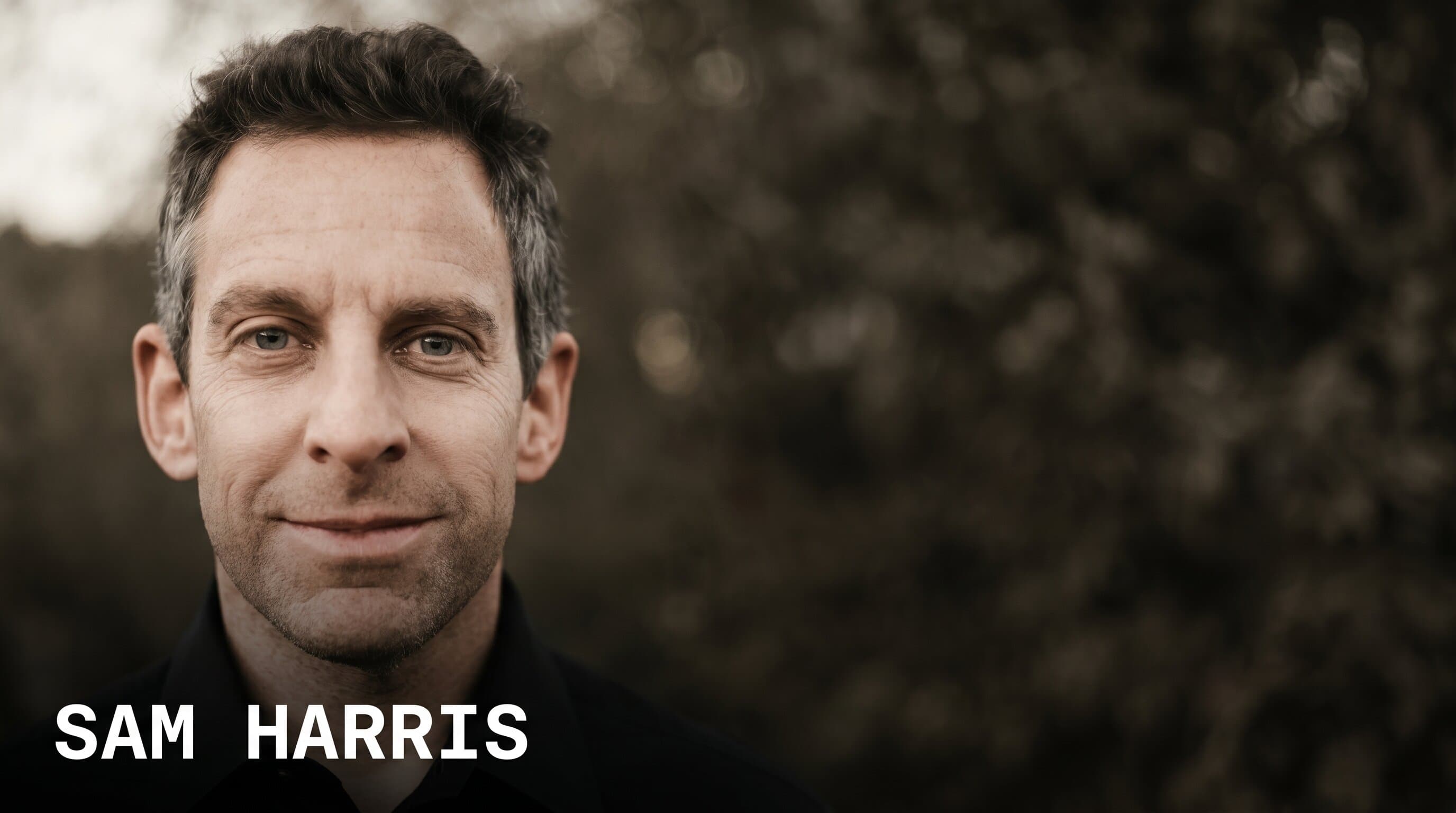
A podcast is not a business. It is a permission slip. The business is what you build for the people who give you that permission every week. Six podcasters figured this out and stopped renting their audience to advertisers. They sold them software instead. Here is the roster, the math, and the pattern every podcaster with a real audience should be running through their head right now. The math on podcast advertising is brutal. A $25 CPM means 1,000 listeners produce $25 of revenue. A 50,000-download show that runs three ads per episode and ships twice a week is grossing roughly $30,000 a month in ad reads, minus production, minus a sponsor agency cut, minus the 20% the host's talent agency keeps. Net it out and most "successful" podcasts are netting their host $10,000 to $20,000 a month, on a show that took five years to build. Now run the same audience through a $10 per month app. You do not need every listener to subscribe. You need 5%. Five percent of 50,000 listeners at $10 a month is $25,000 in MRR. Annualize it. That is $300,000 a year from the audience you already have, no new sponsors required. This is the move every podcaster on this list made. They built the app the audience already wanted. If you want the long version of the math, we wrote a $10K brand deal vs $10K MRR breakdown that walks through year-one and year-three numbers side by side. Sam Harris is a neuroscientist, philosopher, and host of the Making Sense podcast. He has roughly 1.7M followers on X as @SamHarrisOrg, five New York Times bestsellers, and a PhD in cognitive neuroscience from UCLA. In September 2018, five years after starting his podcast, he launched Waking Up, a meditation app that charges $19.99 per month or $119.99 per year. The app combines guided meditation with philosophy, neuroscience, and conversations with experts. It is not a Calm clone. It is a thinking person's meditation app, priced like one. Sensor Tower estimates Waking Up at roughly $700,000 in monthly revenue and 20,000 downloads as of early 2026. In 2020 Harris pledged 10% of profits to effective charities through Giving What We Can, the first company to take that pledge. The takeaway: Harris already had the trust. He just gave his listeners something to pay for. We covered the full playbook in Sam Harris: From Podcast to Meditation App Founder. Andrew Huberman is a tenured Stanford neurobiologist and host of the Huberman Lab podcast, the #1 health and science show on both Apple and Spotify. His YouTube channel has 7.4M+ subscribers. In October 2022 he launched Huberman Lab Premium, a $10 per month subscription tier built on Supercast. Subscribers get monthly AMA episodes, transcripts, and the company commits to matching subscription revenue and donating it to research. According to TIME, the premium tier raised more than $500,000 for research in its first year. That is on top of an estimated $7M+ in annual revenue from sponsorships and YouTube. Huberman's premium subscription is not the main income line yet. It is the wedge. The audience he built for free is being asked, politely, to pay for the next layer of access. Many of them are. For the full revenue stack, see Andrew Huberman: Stanford to Podcast Empire. Tony Robbins is the original creator economy. Forty years of stage events, eight books on the New York Times list, an estimated $600M net worth, and an 8M+ Instagram following. His podcast, The Tony Robbins Podcast, runs interviews and breakdowns of his frameworks. In May 2025 he licensed his voice, his content library, and four decades of coaching frameworks into an AI coaching app and put it on the App Store at $99 per month, with a $1 14-day trial and a 30-day money-back guarantee. It is voice-first, available in 23 languages, runs 24/7, and was announced in a May 2025 press release. The pricing is the lesson. Robbins is not competing with Calm. He is competing with a coaching session. His audience is used to spending $10,000+ on a live event. $99 per month feels like a steal. We broke down the full launch in Tony Robbins: From Stage Seminars to a $99 AI App. Brendon Burchard is a high-performance coach and the host of The Brendon Show podcast. Forbes named him the world's leading high-performance coach. Over 3 million people in 190 countries have completed his programs. His YouTube channel and Instagram combined run well past a million followers. He launched GrowthDay in 2021. It is a subscription personal development app priced at $49 per month or $249 per year. The app includes daily audio coaching (called Daily Fire), journaling, habit tracking, an AI life coach, and 2,000+ hours of expert content from creators including Mel Robbins, Trent Shelton, and Ed Mylett. According to Burchard's own published claims, his coaching business has generated over $200 million. GrowthDay is the recurring layer on top of that. The full background is in Brendon Burchard: GrowthDay's Personal Dev Empire. The conversion playbook is shorter than it looks.
  • Pick the one daily problem your audience already trusts you to solve.
  • Build a product that solves it on a phone, every day.
  • Mention it inside the podcast, in the show notes, and in the email list, like a sponsor would. The host read just happens to be the host's own product.
  • Make the price low enough that a single fan can say yes without thinking. Make it high enough that 1,000 fans saying yes is a real business.
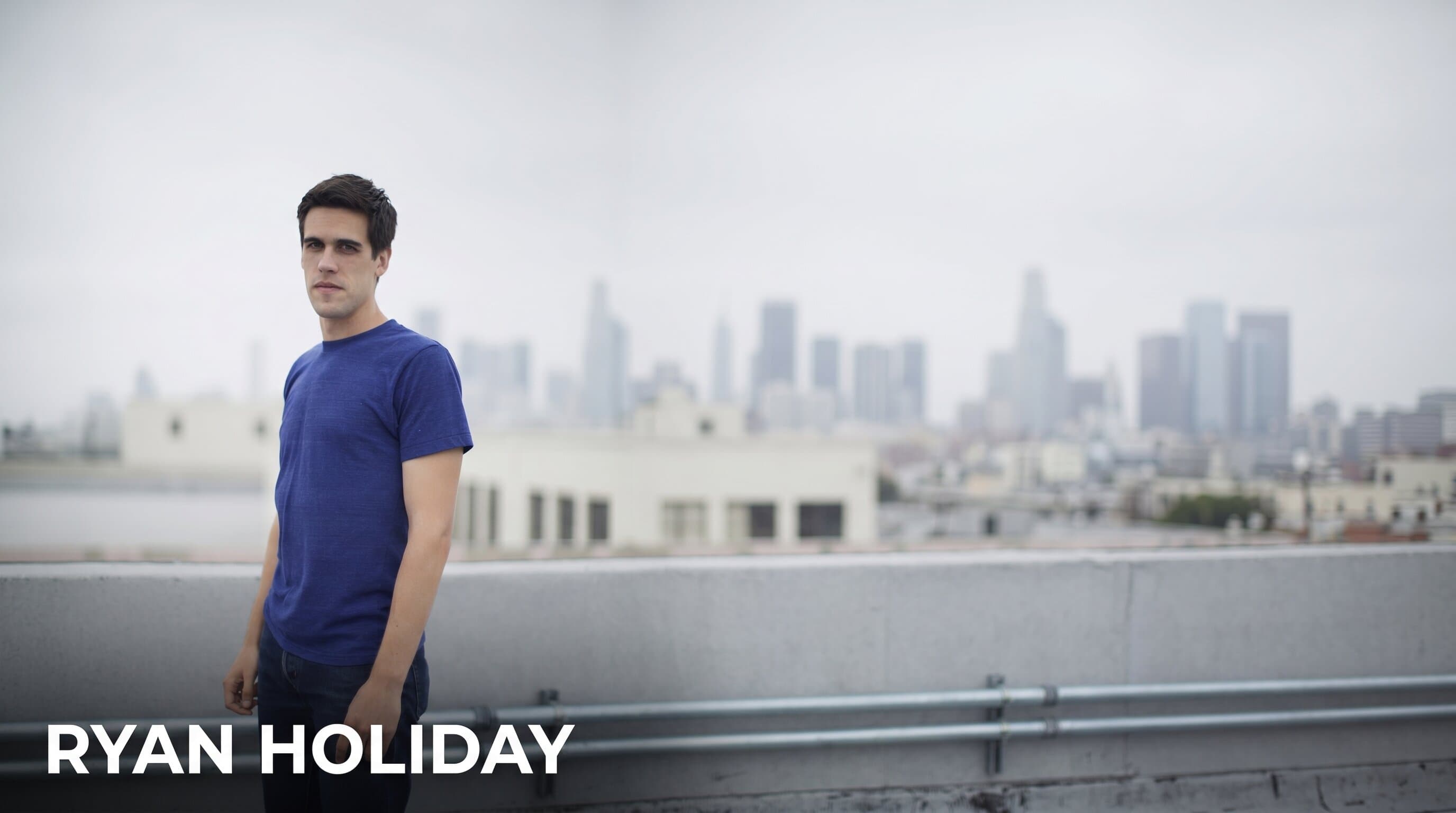
That is the entire playbook. The reason most podcasters do not run it is that they treat the podcast as the product. The podcast is the marketing. The app is the product. If you are still in the "what would I even build" phase, 5 ways to validate your app idea before building walks through the cheapest tests to run before you write a line of code. Ryan Holiday hosts The Daily Stoic Podcast and runs the Daily Stoic Instagram account, one of the largest philosophy followings online. His books, including The Obstacle Is the Way, have moved hundreds of thousands of copies and put him on the Wall Street Journal bestseller list. His Daily Stoic newsletter, per Kit's published case study, has 320,000 subscribers and holds a 40% open rate. On top of that audience, Daily Stoic runs an annual paid membership called Daily Stoic Life. Members get courses, a private community, and direct access to Holiday's writing on Stoic practice. It is a subscription product, even if it is not yet a phone-first app. The interesting part is what is missing. Daily Stoic has 320,000 newsletter readers, a top podcast, a book and merch shop in Bastrop, Texas, and no daily-use app. That gap is the next product. The full backstory is in How Ryan Holiday Built the Daily Stoic Empire. Hank Green is one half of the Vlogbrothers, co-host of long-running podcasts including Dear Hank & John and SciShow Tangents, and the founder of Complexly, DFTBA Records, and VidCon. His channels have billions of cumulative views and his personal net worth is estimated at $12M, built almost entirely from creating things online. In August 2025 he shipped Focus Friend, a productivity app starring a knitting bean as the focus mascot. The app hit #1 on Apple's App Store in the US, ahead of ChatGPT, Google, and Threads. It has been downloaded more than 1.4 million times and was named Google Play's App of the Year. Estimated revenue is around $100,000 a month. This is the most important case in the list because Hank Green is a generalist. He does not have a fitness vertical. He does not sell coaching. He just had a giant, trusting audience and a small, useful product. That is the only formula that needs to be true. The full story is in Hank Green: How a YouTuber Built the #1 Productivity App.
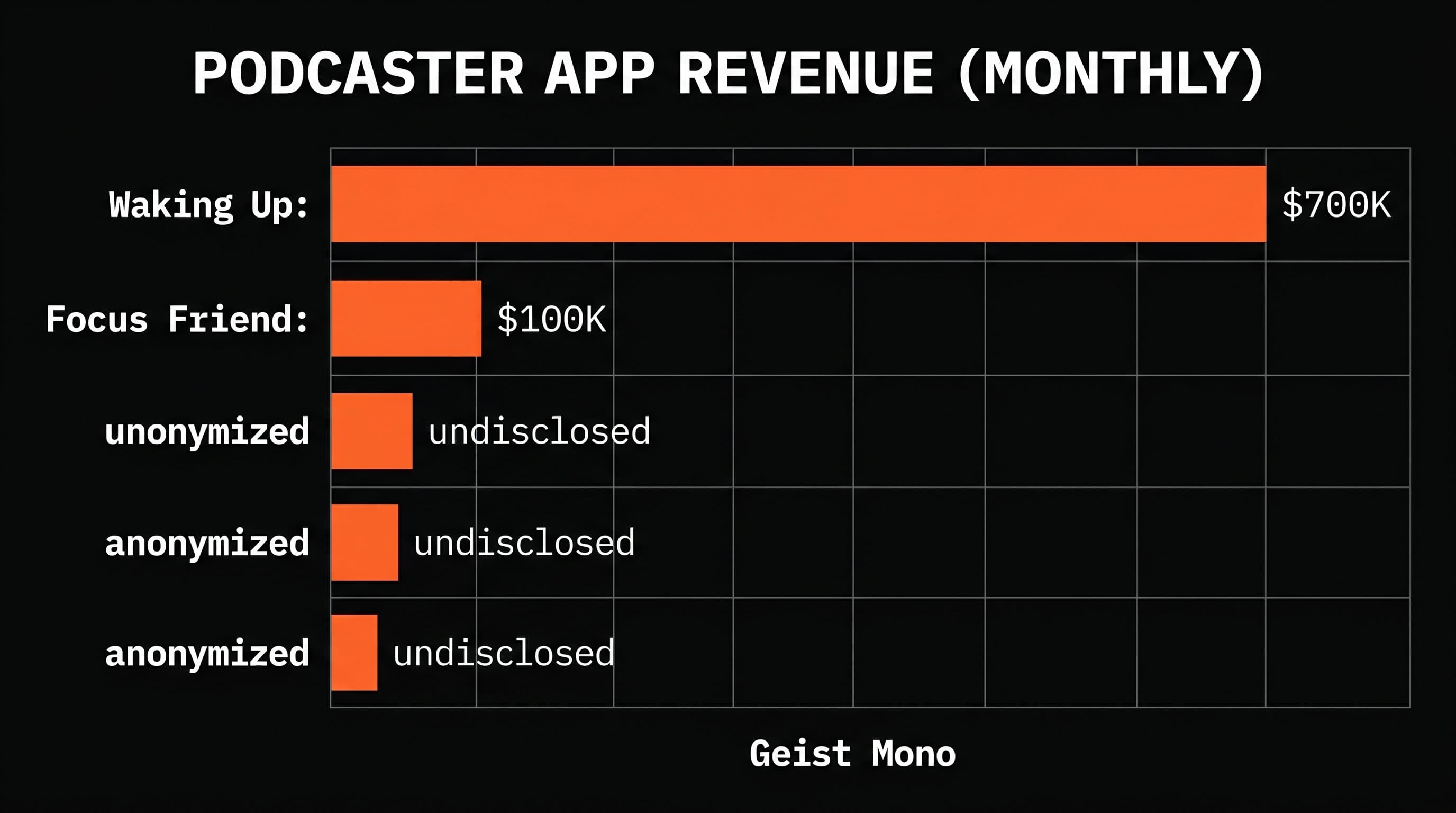
Bar chart comparing estimated monthly revenue of podcaster subscription apps, with Waking Up at $700K and Focus Friend at $100K leading the disclosed numbers
Public numbers vary, but here is the rough revenue picture across the six. Where official numbers are unavailable, we use third-party estimates (Sensor Tower for app revenue, public press for the rest).
CreatorPodcastSubscription ProductPriceRevenue Estimate
Sam HarrisMaking SenseWaking Up app$19.99/mo or $119.99/yr~$700K/mo (Sensor Tower)
Andrew HubermanHuberman LabHuberman Lab Premium$10/mo via Supercast$500K+ donated to research in year 1
Tony RobbinsThe Tony Robbins PodcastAI Coach app$99/moNot disclosed
Brendon BurchardThe Brendon ShowGrowthDay$49/mo or $249/yrPart of $200M+ coaching business
Ryan HolidayThe Daily StoicDaily Stoic LifeAnnual membershipNot disclosed
Hank GreenDear Hank & John, SciShow TangentsFocus Friend$2.99 IAP / freemium~$100K/mo
The takeaway is not the size of the biggest number. It is the floor. Even the smallest known revenue line on this list is roughly $100,000 per month from a single app. That floor is what most podcasters do not realize they can clear. Six different niches. Six different shows. One identical move.
  • Each one had a podcast first. The podcast built the trust.
  • Each one identified a single, repeatable daily problem the audience already came to them for. Meditation. Focus. Productivity. Coaching. Philosophy. Personal development.
  • Each one built a product around that one problem, priced for the size of the audience, not the size of the niche. Hank Green's app is cheap and mass. Tony Robbins' app is expensive and high-end. Both work.
  • Each one kept the podcast free. The podcast is the funnel. The app is the floor.
  • Each one owns the customer relationship inside the app. No platform fee like Substack. No 20% talent-agency cut like a brand deal. App Store / Play Store fees only.
The last point is the one that compounds. A subscription customer is yours. A brand-deal listener belongs to the sponsor. We wrote the longer version of that argument in The platform trap: creators build on rented land. Probably yes, and probably smaller than you think. The math says you need a few thousand active listeners willing to pay $5 to $20 a month, not millions. The the creator middle class post breaks down what $10K to $50K of monthly app revenue actually looks like at different audience sizes. The cleaner question is not "is my show big enough." It is "do my listeners come to me for one specific thing, every week, without fail?" If the answer is yes, you have the audience. The next step is building the product. That is what we do. See how Built by Foundry works for the full operating model, and App Care for what running the app looks like after launch. Public revenue varies widely. Sam Harris's Waking Up is estimated by Sensor Tower at roughly $700,000 per month. Hank Green's Focus Friend is estimated at around $100,000 per month. Andrew Huberman's premium tier raised over $500,000 for research in its first year on top of a $7M+ annual business. The floor for a well-built podcaster app with an engaged audience is in the low-six-figures of monthly revenue. The ceiling is open. No. A $10 per month app needs roughly 1,000 paying subscribers to clear $10,000 in MRR. If 2% of your audience converts, that is 50,000 monthly listeners. A 50,000-download show is not viral. It is a focused, niche podcast. Most successful niche podcasts on Apple Podcasts qualify. Patreon is a paid podcast tier and community on someone else's platform. A subscription app is your own product on the App Store, with your own pricing, your own data, and your own customer list. Both can work. Apps tend to compound faster because the App Store sends you new customers who never heard your show, and because the product is in your audience's pocket every day. For more, see why creators are leaving Patreon for apps in 2026. A custom app typically takes 6 to 12 months with a traditional agency. Built by Foundry ships in three weeks at $0 upfront and runs the app on a revenue-share basis. The constraint is not engineering time. It is product clarity. If you can name the one daily problem your audience pays you to think about, the app is mostly designed. It depends on the audience and the problem. The apps on this list span $2.99 in-app purchases (Focus Friend) to $99 per month (Tony Robbins AI Coach). The cleanest rule: price as high as the audience already pays for adjacent products in your niche. Coaching audiences are used to $99 per month. Meditation audiences are used to $10 per month. Generalist productivity audiences are used to $3 to $5. Match the floor your audience already walks on. Every podcaster on this list ran the same play. Free podcast on top, paid subscription underneath, owned customer relationship in the middle. They did not invent it. They just did it. The question is whether you are still treating your show as the product, or whether you are ready to treat it as the marketing for the real product. Your listeners are not the business. The thing you build for them is. Ready to find out what your podcast audience would pay for?
Let's Build →

Get Creator Revenue Insights

How creators are turning audiences into subscription businesses

You might also enjoy...

6 Podcasters Building Subscription Empires Beyond Ads