

Tone It Up: How 2 Creators Built a Fitness Empire

Tone It Up: How 2 Creators Built a Fitness Empire

Foundry
March 19, 2026
Key Takeaways:
  • Karena Dawn and Katrina Scott built Tone It Up from YouTube fitness videos starting in 2009
  • They expanded from content into nutrition products that landed on Target shelves nationwide
  • Their subscription app generates recurring revenue independent of any social platform algorithm
  • The brand's foundation was community — an identity their audience bought into before any product existed
  • Two creators with no tech background built a multi-channel empire by owning their audience relationship
Most fitness creators are one algorithm change away from starting over. Karena Dawn and Katrina Scott built something different — a brand that doesn't live or die on YouTube views or Instagram reach. Tone It Up started as workout videos for women. It became a subscription app, a nutrition line at Target, a book deal, and a television series. The two best friends turned their energy and authenticity into a business that generates revenue whether or not they posted that week. Here's how they did it — and what every creator can learn from the playbook. Karena and Katrina met in 2008 and launched Tone It Up in 2009 on YouTube, posting workout videos for women who wanted a community around their fitness journey, not just exercise routines to copy. Their Instagram became a natural extension of that energy as the platform grew. The early content was beach workouts, bikini series programs, and meal prep guides. The production quality was raw. What wasn't raw was the warmth — the two founders talked directly to their community, shared their real lives, and made fitness feel like something you did with friends, not something you suffered through alone. That positioning — fitness as friendship — turned out to be a moat that competitors couldn't replicate. The Tone It Up community isn't just a following — it's an identity. While most fitness creators built audiences around aesthetics or performance metrics, Karena and Katrina built around belonging. Members called themselves part of the TIU community. They shared progress photos, tagged each other in workouts, and showed up for each other through plateaus and setbacks. It felt less like following a channel and more like joining a club. This community-first model meant the Tone It Up audience wasn't just watching content — they were invested in the brand's success. When products launched, buying them was a way of participating in something they already cared about. That distinction is everything. It's what turns a following into a customer base: not the size of the audience, but the depth of the relationship. A creator with 500,000 deeply connected members will outconvert a creator with 5 million passive viewers every time. The Tone It Up business expanded in deliberate stages — each one built on the trust and community equity established by the content. Nutrition Products The first major product launch was nutrition: protein powders, bars, and supplements formulated for women and sold as part of the Tone It Up lifestyle. The products weren't positioned as generic supplements — they were positioned as what the TIU community eats. That framing made them easy to sell. The nutrition line eventually earned shelf space at Target locations across the United States. For context: most supplement brands spend years and millions in distribution deals to reach Target's retail ecosystem. Tone It Up earned that real estate through community credibility before spending a dollar on traditional retail marketing. The Subscription App The Tone It Up app, available on iOS, is where the content business became a product business. Subscribers get access to workout classes, meal planning tools, and community features — the same three pillars that defined the YouTube channel, now packaged as a recurring revenue product. Subscription apps fundamentally change a creator's economics. A YouTube channel earns when people watch. A subscription app earns when people are subscribers — regardless of what they watched that week or whether the algorithm served their content to new users. The business stops depending on platform behavior it can't control. Books and Television Karena and Katrina extended the brand into publishing with fitness and lifestyle books. They also landed their own reality series on Bravo — Tone It Up on Bravo TV — which introduced the community story to mainstream television audiences who'd never seen the YouTube channel. Television discovery drove app downloads and nutrition sales without the founders needing to create a single piece of social content for those viewers. Each channel of the business cross-promotes the others. A new Target customer discovers the app. An app subscriber buys the nutrition line. A book reader follows the Instagram. The flywheel builds. The most important thing Tone It Up did wasn't any individual product launch. It was the sequence. They built trust through free content. They turned that trust into a community with its own identity. They launched products that community members wanted to buy as an act of belonging. And they built recurring revenue — subscriptions, retail repurchase — that doesn't reset to zero at the start of every month. That's the path from content to product that most creators understand conceptually but rarely execute. What made Tone It Up different was the clarity of their positioning — women's fitness, community-first, built on friendship — and the discipline to stay in that lane as the business scaled. Compare this to Kayla Itsines' journey with Sweat: different brand energy, same structural logic. Build community, build trust, build a product that community pays for on a recurring basis. Sweat eventually sold for $400 million. The path that got there starts with the same community investment Tone It Up made in 2009.
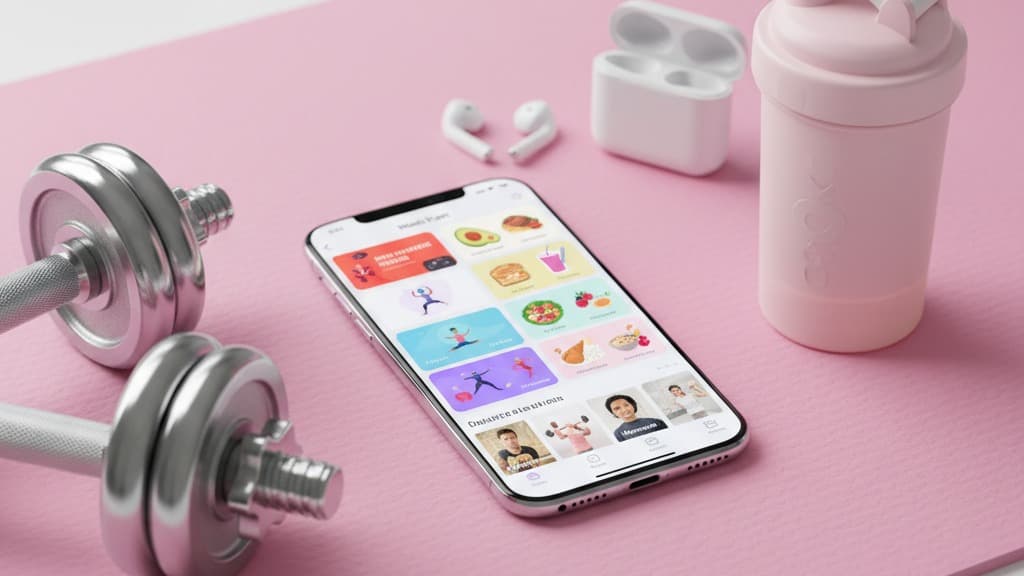
Tone It Up fitness app on a smartphone surrounded by workout gear and nutrition products, representing the creator-built subscription fitness platform
1. Community beats follower count. Karena and Katrina didn't accumulate passive viewers — they built people who identified with the brand. That identity is what enables product launches that feel natural instead of forced. 2. Product expansion should follow trust, not trend. They launched nutrition when their audience already trusted them with fitness guidance. The product felt like a next step, not a cash grab. Sequence matters more than timing. 3. Recurring revenue changes what you're building. A subscription app turns monthly members into monthly revenue. That stability is what separates a business from a hustle — and what makes an eventual exit possible. 4. Different channels reinforce each other. YouTube grew Instagram. Instagram grew the app. The app drove nutrition purchases. Television expanded the top of the funnel. Each part of the business made the others work better. 5. You don't need to be a tech founder. Karena and Katrina were fitness people, not software engineers. The app exists because they knew what their community needed and found the right partners to build it. The idea was theirs. The execution didn't have to be. The platforms Tone It Up launched on in 2009 look completely different today. Instagram's algorithm has shifted several times. YouTube's monetization policies have changed. New platforms have emerged and faded. None of that ended Tone It Up. The subscription app still generates monthly revenue. The Target nutrition line still generates retail sales. The books still sell. The community still shows up. Because the business wasn't built on a platform — it was built on a relationship. The platform was just the channel. That's what creators who've built the most durable businesses have in common: they found a way to own the relationship with their audience outside of whatever platform they started on. A subscription app is the clearest expression of that ownership — monthly revenue, direct communication, your brand in the App Store under your name. Tone It Up didn't need to go viral in 2026 to be a real business. Most creators haven't figured that out yet. The ones who do build something worth owning. Tone It Up was founded by Karena Dawn and Katrina Scott, who met in California in 2008 and launched the brand in 2009. They built the company from YouTube fitness videos into a multi-channel business including a subscription app, nutrition line at Target, books, and a Bravo television series. Yes. The Tone It Up app is available on iOS and offers subscription access to workout classes, meal planning tools, and community features. The subscription model generates recurring monthly revenue for the business that isn't dependent on social media algorithm performance. Tone It Up nutrition products — including protein powders and bars — are available at Target stores nationwide and through the Tone It Up website. The Target retail distribution represents one of the brand's most significant business milestones and a major expansion beyond direct-to-consumer digital sales. Tone It Up's growth was built on community identity rather than just content volume. Karena and Katrina created an audience that identified as part of the TIU community — members who supported each other, tracked progress together, and were emotionally invested in the brand. That depth of relationship enabled product adoption rates that follower count alone doesn't explain. The key lessons: build community identity before launching products, sequence expansion so each move feels natural to your audience, prioritize recurring revenue (subscriptions) over one-time transactions, and find the right development partners for the technical work you can't do yourself. Tone It Up demonstrates that a creator business built on trust and community can expand into retail, software, publishing, and media simultaneously — without the founders needing to be experts in any of those industries.
Want to build the app your community has been waiting for? We build subscription software for creators — $0 upfront, on the App Store in 3 weeks, we handle everything forever.
Book Your Free Strategy Call →

Get Creator Revenue Insights

How creators are turning audiences into subscription businesses

You might also enjoy...