
Key Takeaways:
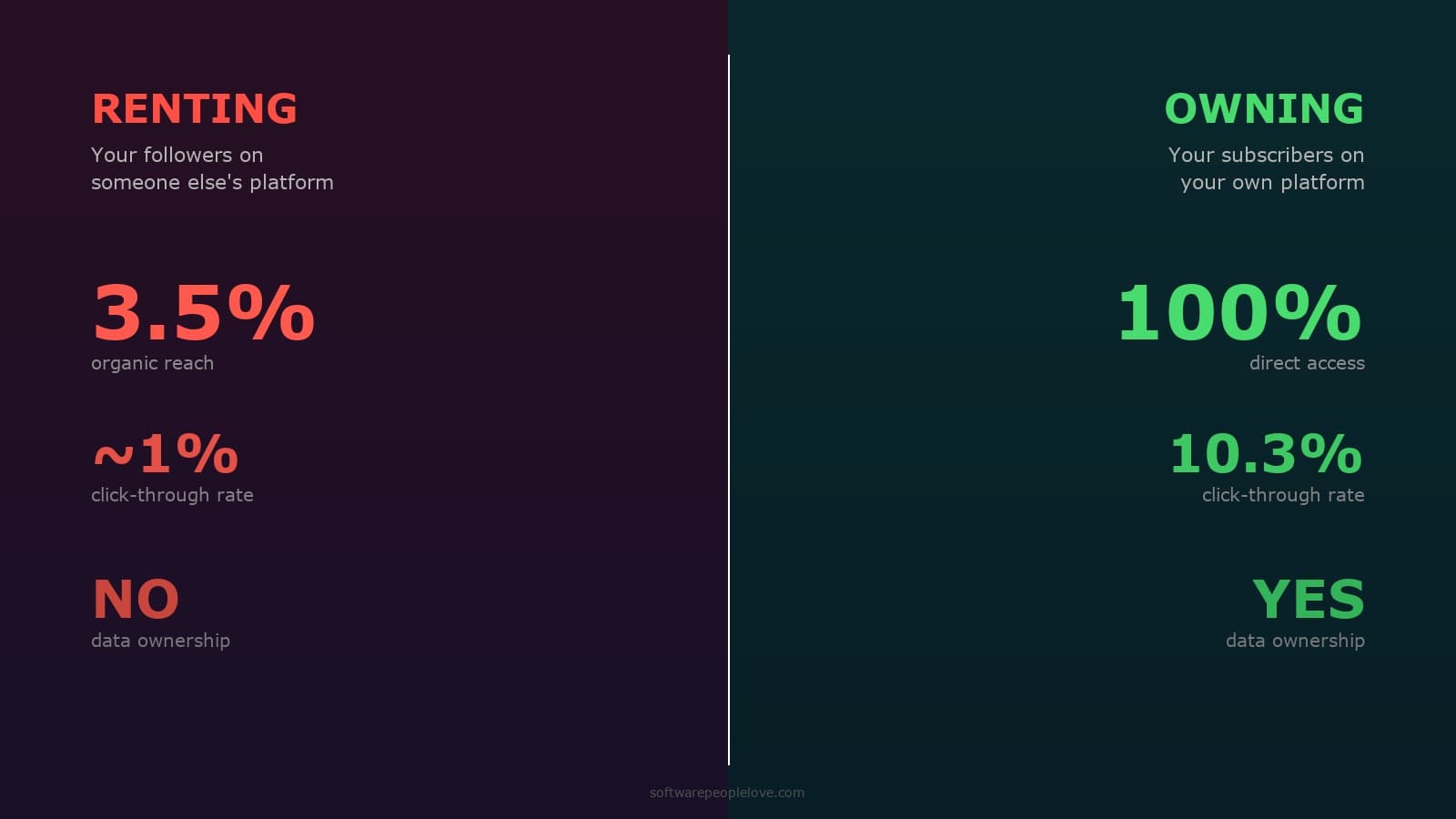
- Linktree and Beacons are redirect tools — they send visitors somewhere else and keep all the data
- Every person who clicks your Linktree and leaves gives you nothing: no email, no push notification, no way to reach them again
- Your own app lives in the App Store and Google Play with your brand on it — Linktree does not
- Creators generating $5K+/month consistently outgrow link pages and move to subscription products they own
- The switch isn't about features — it's about whether you're building an asset or renting a tool
If you're a creator looking for Linktree alternatives, here's the honest answer: the real question isn't which link-in-bio tool is better. It's whether a link page is the right tool at all.
Linktree works. That's not the debate. It's fast to set up, free to start, and does exactly one thing well: organize your links in a tidy list. For a creator just getting started, it's fine.
But creators who are building serious recurring revenue — the ones generating $5K, $10K, $20K per month — aren't using Linktree as their primary product. They've moved to something they own.
Here's why.
Before going deeper, here's the honest side-by-side of where each option actually stands:
| Feature | Linktree Free | Linktree Pro ($9/mo) | Beacons Pro ($40/mo) | Your Own App |
|---|
| Your URL | linktr.ee/you | linktr.ee/you | beacons.ai/you | App Store listing + your domain |
| Push notifications | No | No | No | Yes |
| Recurring subscriptions | No | No | Basic | Yes |
| Customer data you own | None | None | Limited | Fully owned |
| App Store / Play Store | No | No | No | Yes |
| Brand on home screen | No | No | No | Yes |
| Who owns your audience | Linktree | Linktree | Beacons | You |
The "who owns your audience" row is the one most creators ignore — until they want to do something with that audience and realize they can't reach them directly.
Want to own your audience, not rent them?
We build fully branded apps for creators — $0 upfront, 3-week delivery, we handle everything.Book a free strategy call →
Is Linktree Earning You Money—or Just Moving Traffic?
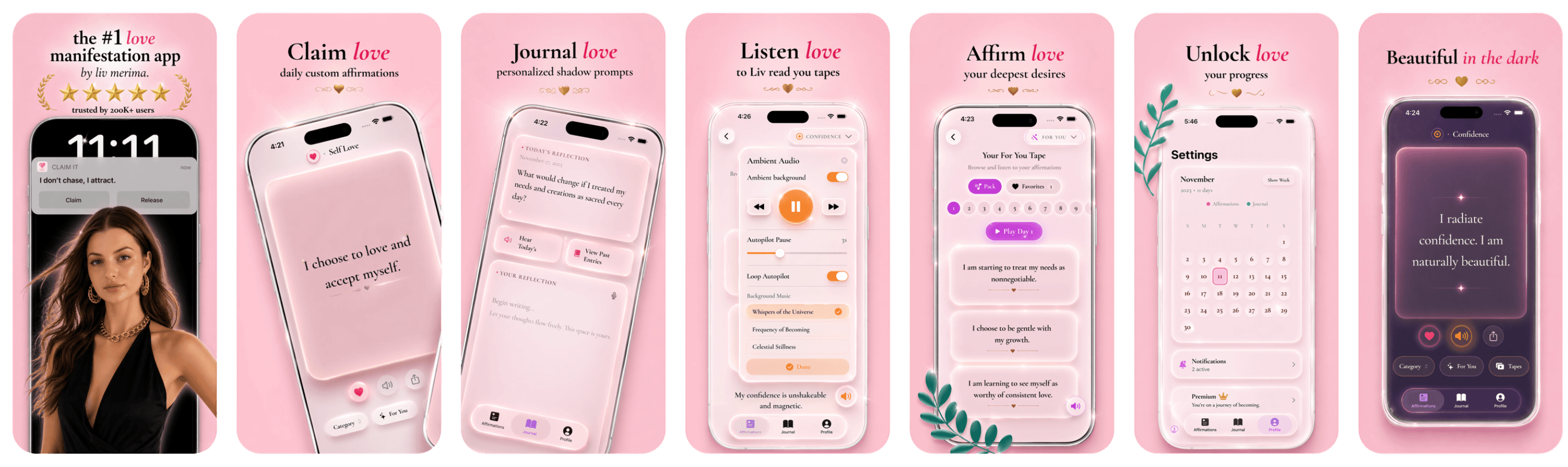
Linktree's job is to be a list of links. Click your Instagram bio → see a list → click one → leave Linktree. That's the entire product.
Every person who visits your Linktree is a visitor who will never hear from you again unless they find you on one of the platforms you link to. You have no way to follow up. No email. No push notification. No second chance. They were there, and then they were gone.
A subscription app works differently. A user who downloads your app has given you something concrete: space on their home screen and permission to notify them. You can send content, announce new features, offer renewal incentives, and build a daily habit around your product. The relationship is yours to maintain — not mediated by whatever algorithm controls their feed that day.
The real question isn't "which tool is better." It's: what happens after someone shows interest in what you do? With Linktree, the answer is: they scroll away. With a branded app, the answer is: they become a subscriber.
What Do Your Visitors Actually Give You?
Nothing. And that's the problem.
Linktree's free tier captures zero user data on your behalf. The Pro plan at $9/month gives you click analytics — how many people tapped each link. Not who they are. Not how to reach them. Not what they were interested in.
Beacons is a step forward with basic email capture and some monetization features. But even on Beacons Pro, your audience data sits in their system, under their terms, on their platform. If Beacons changes pricing, updates policies, or shuts down, you export a CSV and start from zero.
Your audience is an asset — but only if you treat it like one. A business is built on relationships you own. A link-in-bio tool gives you relationships you're borrowing.
What you lose by not capturing data:
- No ability to email your audience when a platform algorithm tanks your reach
- No push notifications for new content, products, or launches
- No direct billing relationship with subscribers
- No customer profiles for personalization or re-engagement
- No audience to fall back on when your Instagram or TikTok account has an issue
What a branded app gives you instead:
- Push notification access — the highest-converting channel in mobile
- Apple ID and Google account as the billing relationship (Apple and Google handle fraud, renewals, and disputes)
- App Store reviews that serve as social proof for every new potential subscriber
- Behavioral data: what features they use, how often, and when they're most engaged
Linktree's Brand Grows. Yours Doesn't.
Linktree has over 50 million registered users. Every one of them sends their audience to linktr.ee/[their name]. Every click, every visit, every moment of user attention on that page builds Linktree's domain authority — not yours.
This is by design. Linktree's business model depends on your traffic flowing through their domain.
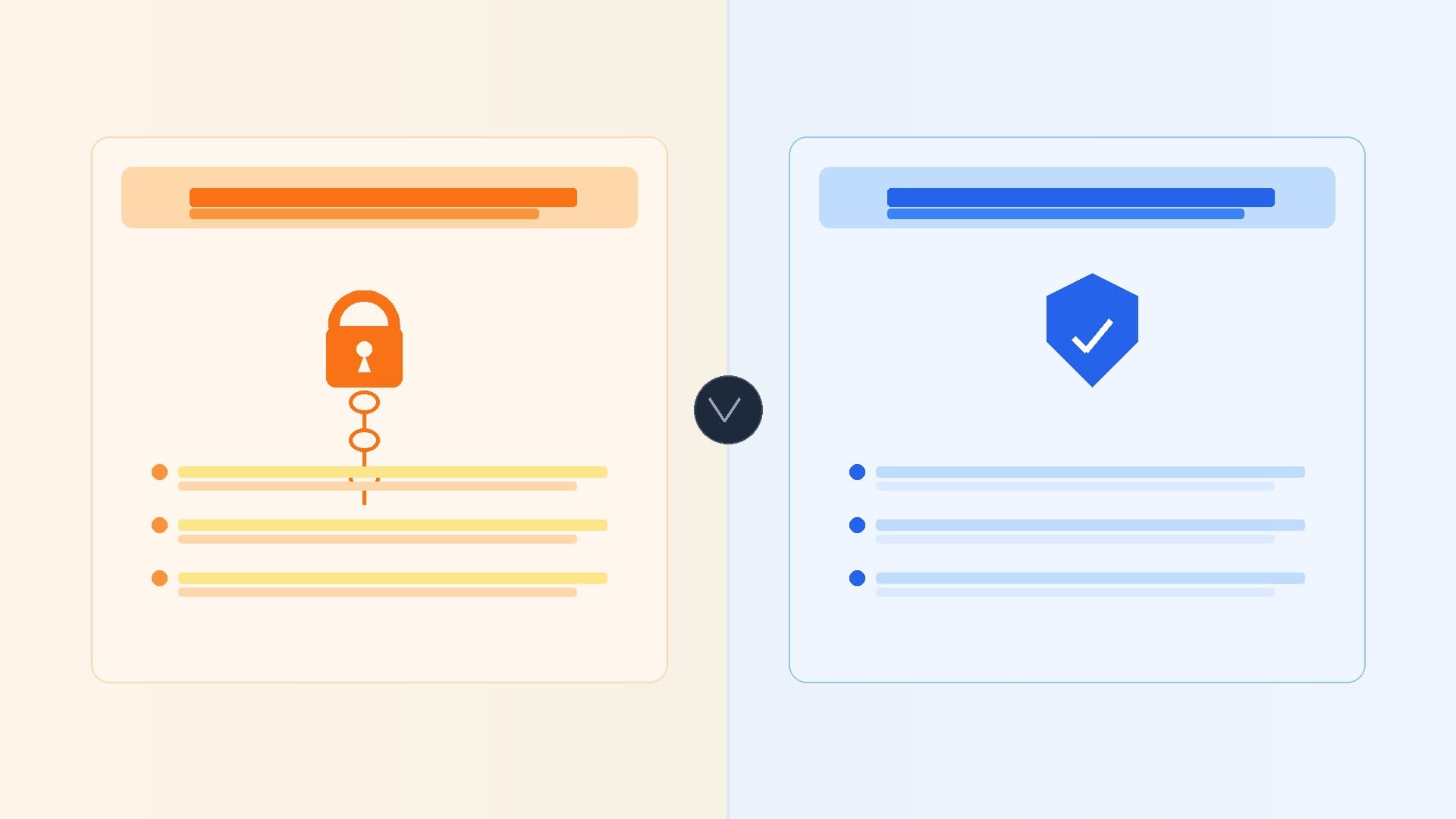
Compare that to a branded app in the App Store: your name, your icon, your screenshots. When someone searches your name on the App Store, they find you. When Apple or Google features apps in their editorial sections, your app can surface. App Store Optimization (ASO) is a distribution channel that works for you even when you're not posting.
Linktree has no App Store listing. It is not searchable on mobile devices. It builds zero brand equity for you.
The compounding difference: an app with 1,000 five-star reviews earns trust for every new visitor automatically. A Linktree page builds nothing — because it's not the destination. It's just the redirect.
Your brand belongs in the App Store, not just your bio.
We build custom creator apps that put your name on the App Store and Google Play — with your branding, your subscribers, your data.Schedule a strategy call →
Can a Link Page Replace a Subscription Product?
No. And this is the most fundamental issue with the comparison.
Linktree can link to your subscription product. It can send someone to your Patreon or your Stan Store or your Kajabi course. But it cannot be the product. It cannot create a subscription relationship. It cannot charge recurring revenue. It is a directory of places to go — not a place people stay.
The creators who generate sustainable recurring revenue own the product their subscribers pay for. Kayla Itsines didn't build a $400M exit on a link page — she built the Sweat app, and her subscribers paid Sweat directly for access. Krissy Cela built a £70M business with EvolveYou — a branded fitness app her audience downloaded specifically for her content.
Both of them had Instagram followings before they had apps. Neither built the income that changed their lives from a link page.
What is a subscription app? A subscription app is a branded mobile product that charges users a recurring monthly or annual fee for access to content, features, or experiences. Unlike link pages or digital storefronts, subscription apps create ongoing relationships, generate predictable monthly revenue (MRR), and build customer lifetime value over time.
The jump from link-in-bio to subscription app is the same as the jump from content creator to founder. Link pages are traffic tools. Apps are businesses.
If you're evaluating which platform to build your subscription product on, our breakdown of Kajabi, Stan Store, and custom apps covers the revenue math in detail — but at some point, you'll outgrow all of those platforms too.
How Exposed Are You to Platform Risk?
Every creator who uses Linktree also depends entirely on social platforms to send traffic there. Instagram, TikTok, YouTube — each controls your reach. When their algorithm changes, your traffic drops. When your account has an issue, your income disappears.
Linktree doesn't fix this. It adds one more dependency: now your traffic routes through both the social platform and Linktree's servers. You're renting two landlords instead of one.
A branded app on the App Store is structurally different: Apple and Google are distribution channels, not content platforms. They don't have algorithms that decide how many subscribers see your content. Once someone downloads your app, you can reach them directly — regardless of what happens to your Instagram reach that week.
This isn't an argument to abandon social media. It's an argument to stop treating platforms as your only real estate. The creator middle class earning $10K–$50K per month has learned this the hard way: the platforms that built your audience won't protect your business.
The App Store Discovery Channel You're Missing
This is the one most creators underestimate.
The App Store has 650+ million weekly visitors. Google Play reaches similar numbers. Both platforms have editorial teams that feature apps, search algorithms that surface them for relevant queries, and review systems that provide compounding social proof.
Your Linktree is on neither platform.
If someone searches "workout app for women" on the App Store, they might find Whitney Simmons' Alive app, Krissy Cela's EvolveYou, or Kayla Itsines' Sweat. If they search "home workout app," they might find Joe Wicks' Body Coach app. They will never find your Linktree, because Linktree is a web page — not a mobile app.
App Store Optimization is an entirely separate discovery channel from social media. Creators who own apps have two ways to acquire new subscribers: social platforms and the App Store. Creators who use Linktree have one.
Who Should Keep Using Linktree
To be fair: Linktree is useful. If any of these describe your situation, it's the right tool for now:
- You're in early content creation mode and need a fast way to organize links while building your library
- You haven't yet validated that your audience wants to pay for something
- You sell through external platforms (Etsy, Shopify, Amazon) and just need to organize your off-platform presence
- You're running validation experiments before committing to an app build
Linktree makes sense at the start. It stops making sense when you're serious about recurring revenue.
You've outgrown link-in-bio tools if any of these describe you:
- Your audience regularly asks where they can subscribe or get more from you
- You're on multiple platforms and your best content gets buried in algorithm changes
- You're already generating $2K+/month and want that revenue to compound
- Your content is daily, habitual, or routine-based — workouts, meditations, study sessions, meal plans
- You've tried Kajabi, Stan Store, or Patreon and hit the ceiling on brand ownership
The math isn't complicated. Sustainable creator revenue is built on subscription products you own, not traffic tools you rent. Every creator who has crossed the $10K/month threshold owns something their audience pays for monthly. Not all of them have apps — but none of them built their primary income from a Linktree.
Frequently Asked Questions
Is Linktree free to use?
Linktree has a free plan with basic link pages and limited analytics. Pro plans start at $9/month and unlock custom backgrounds, analytics, and link scheduling. Beacons offers similar pricing with more monetization options. Neither platform gives you a branded mobile app, an App Store listing, push notification access, or ownership of your subscriber data.
What's better than Linktree for creators who want recurring revenue?
For recurring revenue, the question isn't which link-in-bio tool to use — it's whether to build a subscription product at all. Kajabi, Stan Store, and Patreon offer subscription revenue via web storefronts. A branded mobile app offers recurring revenue plus App Store distribution, push notifications, and full audience ownership. See how these platforms compare in detail.
Can I keep my Linktree while I build my own app?
Yes — most creators do exactly this during the transition. Linktree stays in the bio pointing to the new app download page. Once the app has enough subscribers, most creators simplify to a direct App Store link.
How much does it cost to build a creator app?
Traditional app development costs $50K–$200K upfront. Software People Love operates on a $0 upfront, revenue-share model — we build, ship, and operate your app in exchange for a percentage of subscription revenue. We earn when you earn. Learn how our model works on our about page.
What about Beacons — is it a better alternative to Linktree?
Beacons is a meaningful upgrade from basic Linktree: it adds monetization features, email capture, and digital product sales. At $40/month Pro, it's a reasonable stepping stone. But Beacons is still a web platform — not an App Store listing. Your subscribers are stored in Beacons' system, not yours. It's a better rental, not ownership.
Does Linktree work for fitness creators specifically?
Linktree can link to your fitness content, but it cannot be your fitness product. Fitness is a daily-use category — the creators who've built durable fitness businesses all have apps: Sweat, EvolveYou, Alive, the Pam App. A link page can direct your audience toward your content. It cannot hold their habit, track their progress, or send a push notification when they're about to miss a workout.
Link pages got you here. They won't build what you're actually trying to build.
Talk to us about building your creator app →