

Creators Don't Scale. Products Do.

Creators Don't Scale. Products Do.

Foundry
April 9, 2026
Key Takeaways:
  • Over 50% of full-time creators earn less than $15,000/year because creator income is capped by personal output
  • Products compound: Feastables went from $0 to $250M in sales in two years while MrBeast kept making videos
  • Every major creator exit (Sweat, Feastables, Chamberlain Coffee, Ipsy) was a product exit, not a content exit
  • A creator with 100K followers and a $15/month app needs just 2,000 subscribers to earn $30K/month
You can film more videos. Reply to more DMs. Say yes to more brand deals. Work harder, post more, stay on longer. But you can't clone yourself. And that's the whole problem with the creator business model. It doesn't scale. Products do. The gap between those two realities is where the smartest creators build their fortunes. The numbers are ugly. According to NeoReach's 2025 Creator Earnings Report, over 50% of full-time creators earn less than $15,000 per year. Not because they're lazy. Because creator income is tied directly to creator output. More videos = more views = more ad revenue. More posts = more engagement = more brand deals. Stop posting and the money stops. Take a vacation and the algorithm punishes you. Your income resets to zero every month. That's not a business model. That's a job. One without benefits, without equity, and without a safety net. What is a revenue ceiling? It's the maximum income a creator can earn when their revenue depends on the number of hours they work and posts they publish. There are only so many hours in a day, so there's a hard cap on growth. The ceiling hits everyone. A fitness creator with 200K followers might max out at $8K/month in brand deals and affiliate links. A beauty creator with 500K might hit $15K/month. The number changes. The ceiling doesn't. And the toll is real. A 2025 Billion Dollar Boy study found that 52% of creators have experienced burnout as a direct result of their career. 55% cite financial instability as their most severe stressor. The ceiling isn't just a math problem. It's a burnout machine. Products don't need you to show up every day. A subscription app serves customers at 3 AM while you're sleeping. It collects payment on the first of every month without you filming a single video. And the App Store brings in users who have never seen your content. That's the difference between scaling yourself and scaling code. Look at the math:
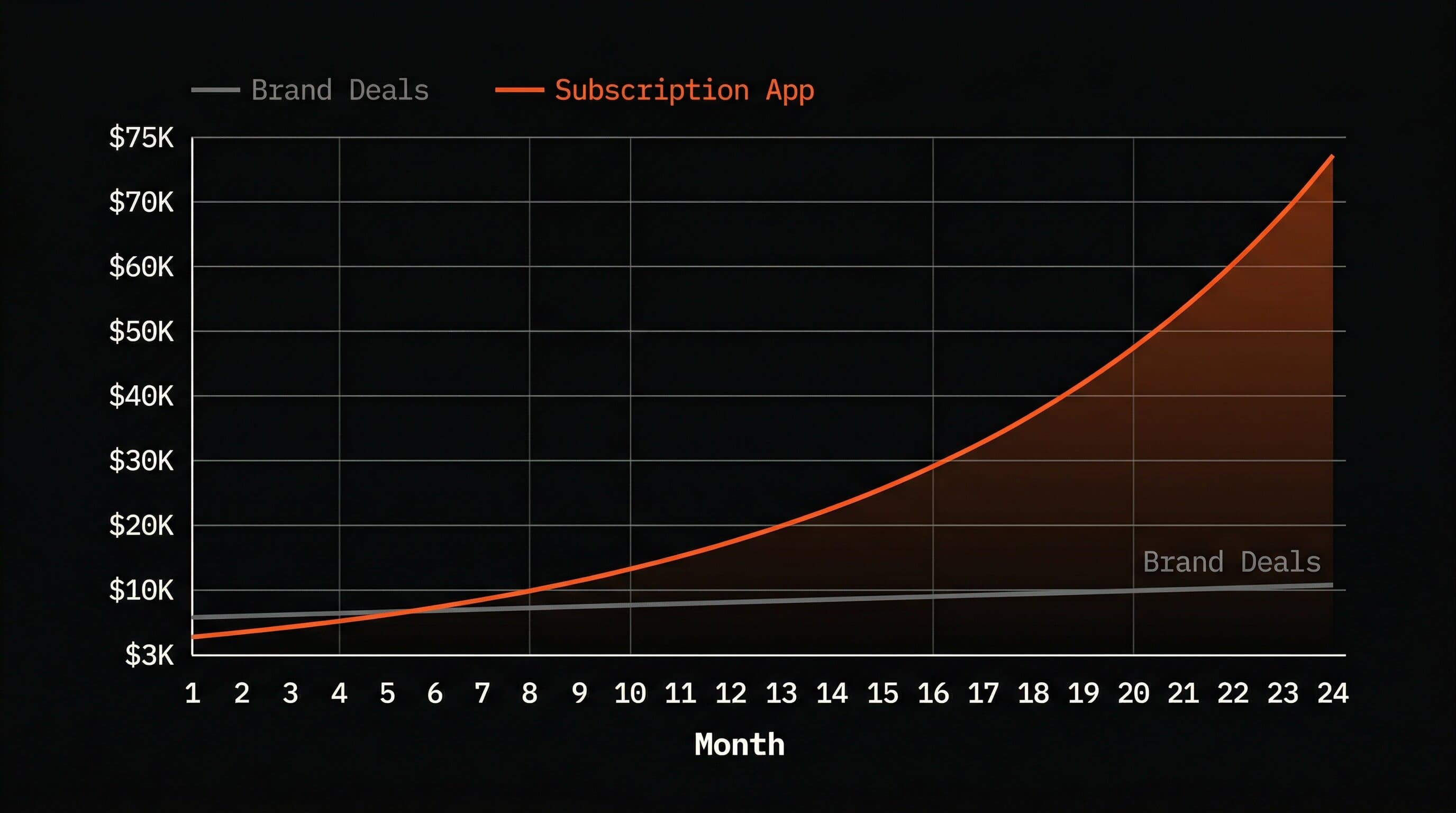
Brand DealsSubscription App
Month 1$5,000 (one deal)$3,000 (200 subs at $15/mo)
Month 6$30,000 (6 deals)$12,000 (800 subs)
Month 12$60,000 (12 deals, if you're lucky)$30,000 (2,000 subs)
Month 24$120,000 (still trading time)$75,000+ (5,000 subs, still growing)
Year 3+Same ceilingNo ceiling
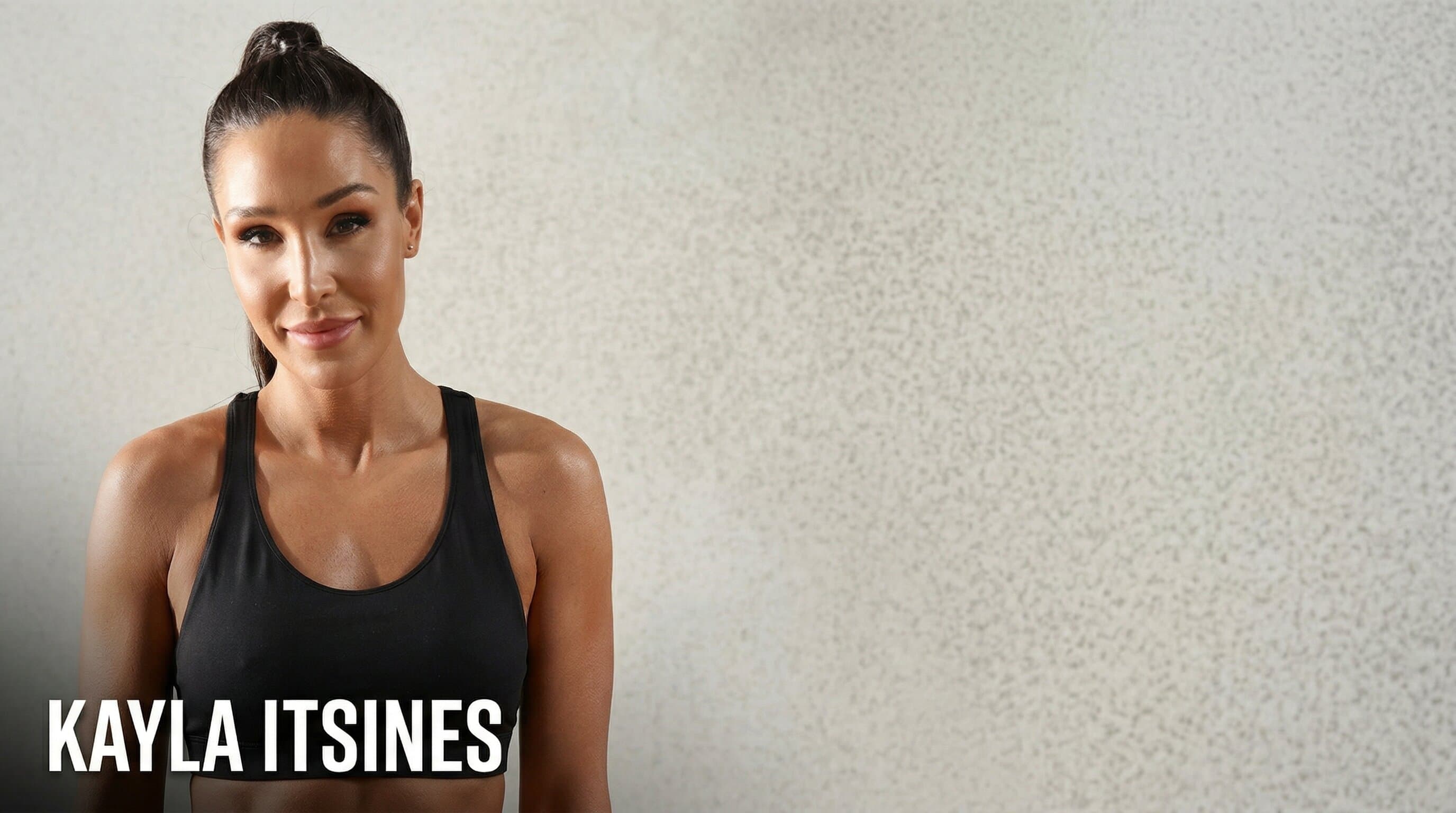
Brand deals scale linearly at best. You do more deals, you earn more money, but there's a cap on deals you can close per month. Subscription apps compound month over month. Every new subscriber adds to the base of subscribers who already pay you. The gap between these two models gets wider every single month. Here's where it gets uncomfortable. MrBeast's Feastables went from $0 to $250 million in annual sales in just two years. His YouTube ad revenue, which requires him to produce content, is still large. But Feastables surpassed it in 2024. The product outgrew the creator. Kayla Itsines started with Instagram workout posts. She sold a $52 PDF. Then she built the Sweat app, which grew to 450,000+ paying subscribers. She sold the business for $400 million in 2021. No number of Instagram posts would have gotten her there. Emma Chamberlain turned bedroom vlogs into Chamberlain Coffee, projecting $33 million in 2025 revenue across 8,500 retail locations. She posts less on YouTube than she did in 2019. Her product doesn't care.
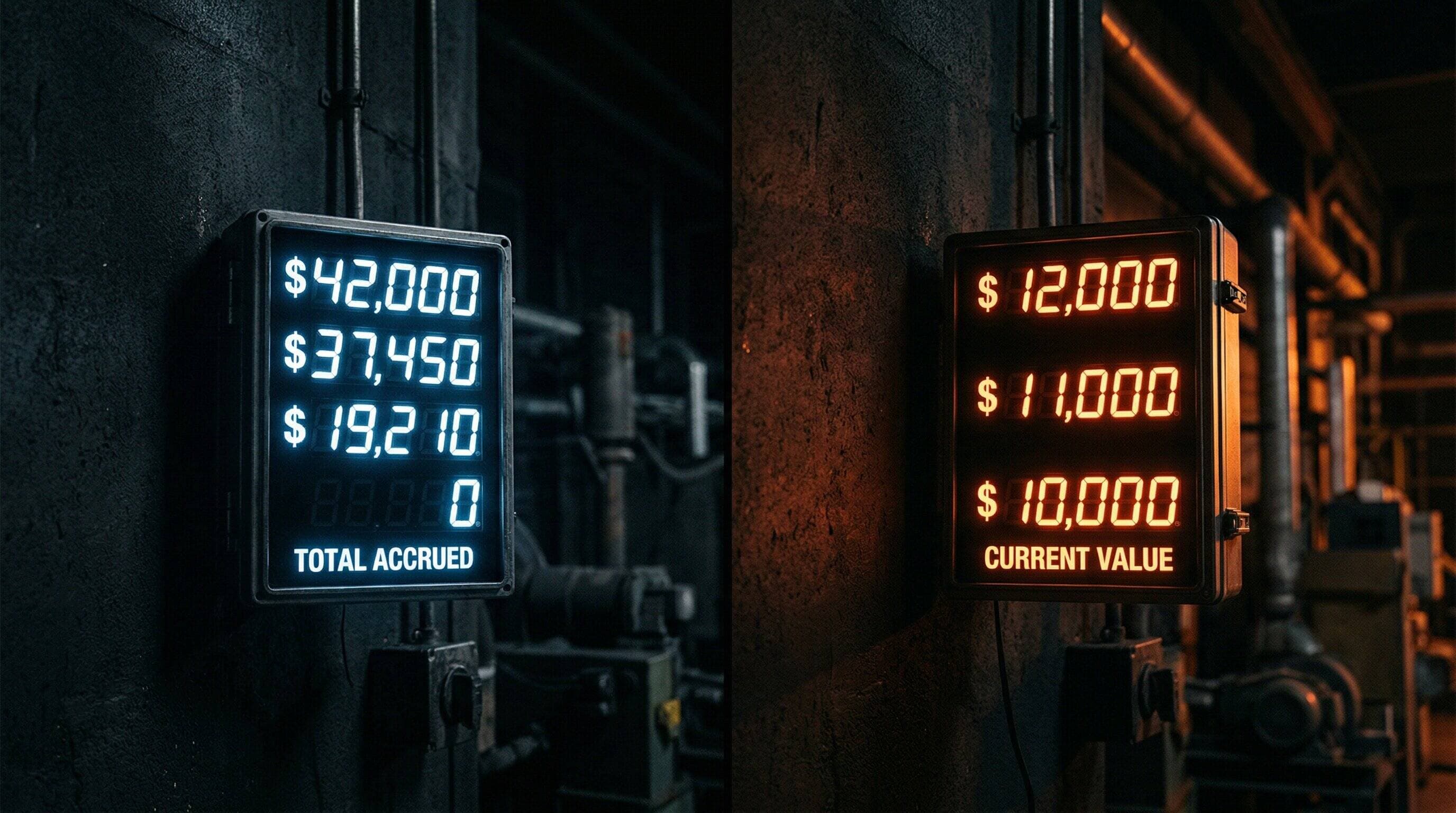
The compounding gap between linear creator income and exponential product revenue
The pattern is the same every time. Creator builds audience. Creator launches product. Product outgrows creator. Product compounds. Creator works less, earns more. Goldman Sachs projects the creator economy will reach $480 billion by 2027. But most of that value won't go to creators posting content. It will go to creators who own products. The biggest creator exits in history tell the story:
  • Kayla Itsines sold Sweat for $400M
  • MrBeast's Beast Industries valued at $5B
  • Michelle Phan co-founded Ipsy, valued at over $1B
  • Cassey Ho built POPFLEX into an 8-figure athleisure brand
None of them sold a really good Instagram account. They sold businesses. You don't need 20 million subscribers to do this. A creator with 100K engaged followers and a $15/month subscription app serving 2,000 subscribers earns $30K/month in recurring revenue. That's $360K/year. From a product that runs while you sleep. "I'm not a tech person." You don't need to be. Built by Foundry builds the entire app in three weeks. You approve the vision. We handle code, design, App Store submission, and ongoing maintenance. "I need a bigger audience first." No, you don't. 500 paying subscribers at $15/month is $7,500/month. If you have 50K engaged followers, 1% converting to subscribers is all it takes. "I don't have time." Building a product takes less of your time than one brand deal negotiation. We handle the build. You keep creating. The product runs on its own. The real question isn't whether you can build a product. It's how long you're willing to stay on the treadmill before you do. Ready to stop trading time for money? We build custom apps for creators. $0 upfront. Three weeks to launch. Revenue share, so we only earn when you earn.
Let's Build →
Yes. Creator-built subscription apps typically charge $10-$20/month. With 1,000 subscribers, that's $10,000-$20,000 in monthly recurring revenue. Kayla Itsines reached 450,000+ subscribers at peak. MrBeast's Feastables generated $250M in sales in 2024. Most agencies charge $50K-$200K upfront. Built by Foundry charges $0 upfront and operates on a revenue-share model. We build the app in three weeks and handle everything after launch. No. Built by Foundry handles all development, design, App Store submission, and ongoing updates. You focus on your content and your audience. We build and run the product.

Get Creator Revenue Insights

How creators are turning audiences into subscription businesses

You might also enjoy...

Creators Don't Scale. Products Do.