
Case Studies & Success Stories

Chris Heria: 7.8M Fans, One Calisthenics App

Foundry
June 15, 2026
Share
Chris Heria: 7.8M Fans, One Calisthenics App

Get Creator Revenue Insights

How creators are turning audiences into subscription businesses
Share
Chris Heria posts free calisthenics workouts to millions of people. Then he sells the thing those free videos can't give them: a system that adapts to them every week. Heria Pro holds a 4.8-star rating across more than 7,500 reviews, and it's the part of his business he owns outright. He didn't start with a gym chain or a famous name. He started doing pull-ups in a Miami park with a camera running. Key Takeaways:
  • Chris Heria grew the THENX YouTube channel to 7.8M subscribers and 4.5M Instagram followers, then built a paid app on top of it.
  • Heria Pro is a subscription calisthenics app at $11.99 a month or $119.99 a year, with a 4.8-star App Store rating and 7,500+ ratings.
  • One published estimate puts his ThenX-led business at roughly $8 million, built from free content plus paid software (Creative Roots).
  • The free YouTube library is the funnel. The app is the business, and it earns whether or not he posts that week.
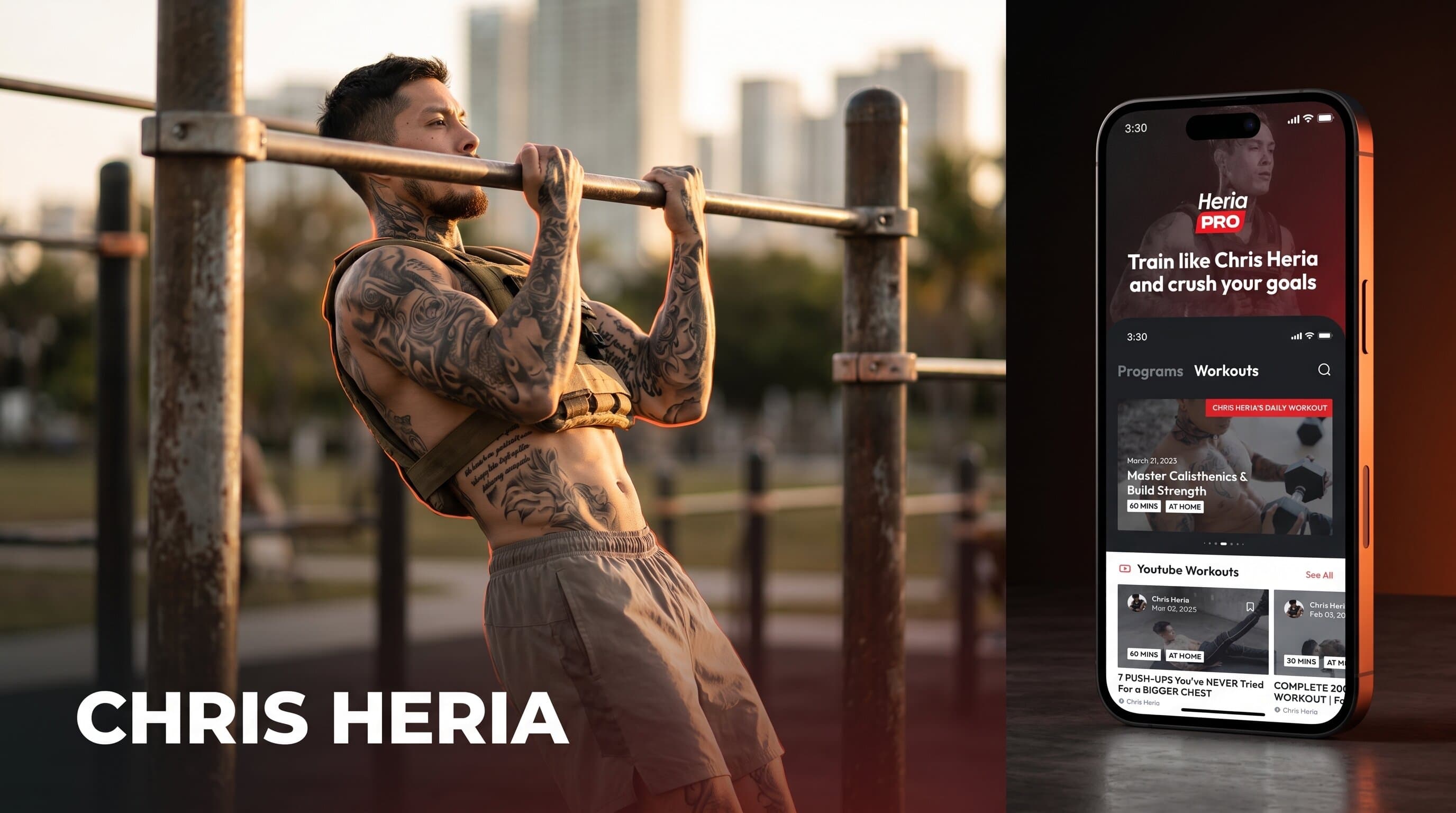
Chris Heria is an American calisthenics trainer and founder of THENX, born in Miami in 1991. He launched the THENX YouTube channel in 2013 and spent years filming bodyweight tutorials: muscle-ups, handstands, clean high-rep routines anyone could copy without a gym membership. That was the relatable part. He didn't invent a new sport. He took something free, the human body and a pull-up bar, and turned it into the most-watched calisthenics content on the internet. Plenty of trainers teach the same skills. What Heria built was a repeatable content habit and, eventually, a product to sell to the people who wanted more than a video. Here's the origin-to-outcome jump every creator wants. A guy filming workouts on public playground bars built an audience of millions and a software business on top of it. For years, the income looked like every other creator's: ad revenue, an apparel line, sponsorships. Real money, but rented. YouTube sets the ad rates. Sponsors leave when the campaign ends. None of it compounds, and none of it shows up on a quiet month. Most creators stop there. They build the audience, cash the deals, and never build a product the audience returns to and pays for monthly. Heria built the product. The same move plays out across fitness, like when Joe Wicks turned The Body Coach into a £24M app business. Free reach in front, owned product behind.
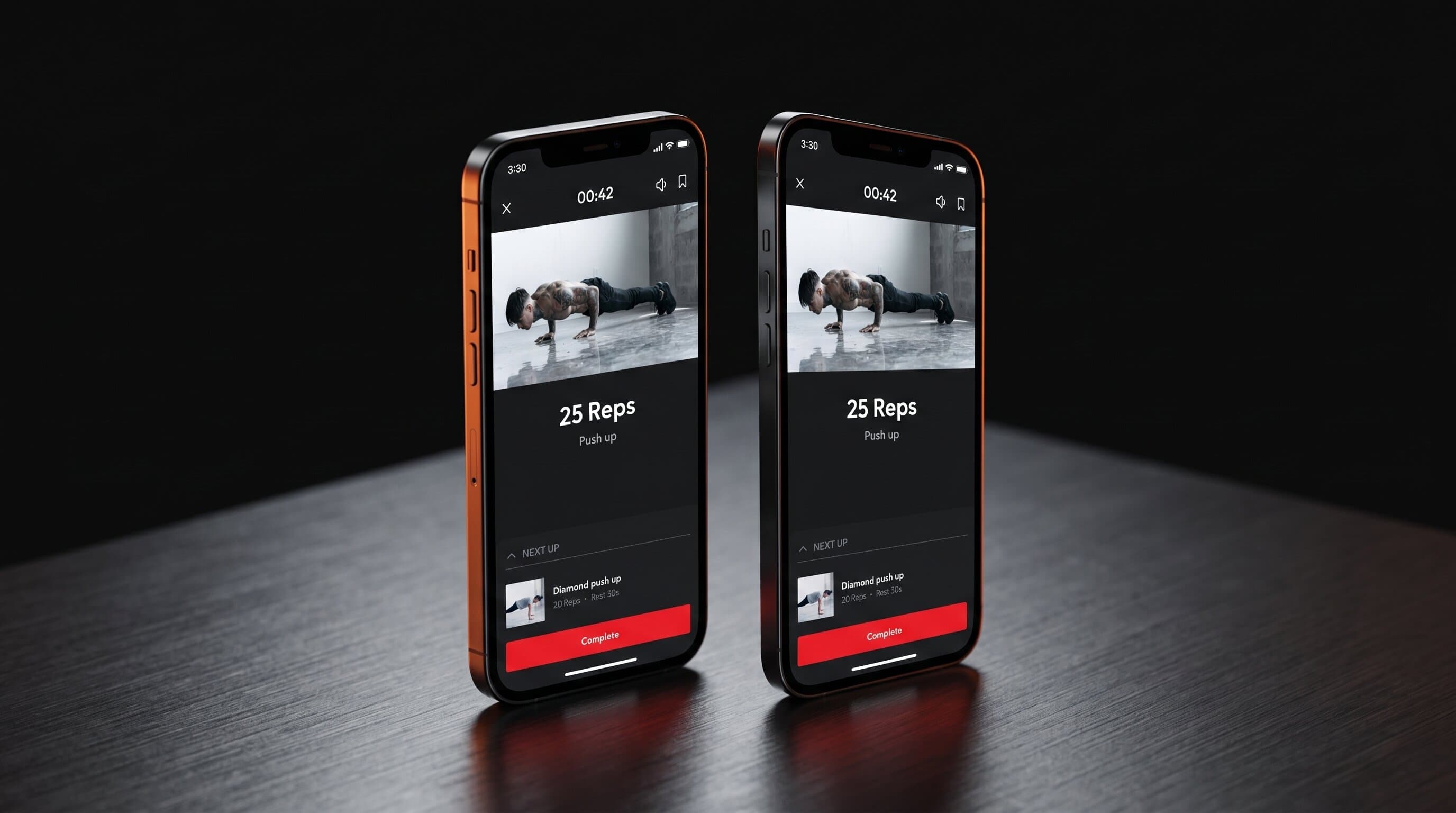
The Heria Pro calisthenics app shown on two phones displaying a push-up workout, on a dark surface with warm orange accent lighting
Heria Pro is a subscription calisthenics app that builds personalized workout programs from a user's goals, equipment, and skill level. Its algorithm learns what you do, then customizes routines for strength, fat loss, or skill work, and tracks every session over time. Free YouTube videos and a paid app do different jobs. A free library is reach: it gets discovered, shared, and ranked, and it brings in the millions. But a scattered playlist of 300 videos isn't a plan. A beginner doesn't know which muscle-up tutorial to watch on a Tuesday in week three. The app answers that. It hands the committed fan a structured path: what to do today, how to progress, and proof they're getting stronger. People pay every month for that structure. That's recurring revenue, and it's his. It's the exact model we break down in our guide on turning a YouTube channel into a subscription app: keep the free funnel wide, then sell the depth to the people who raise their hand. Heria Pro makes money on a straightforward subscription: $11.99 a month or $119.99 a year for full access to personalized programs and tracking. The app carries a 4.8-star rating across 7,500-plus reviews, which tells you the people who pay tend to stay. Run the math on the annual plan. App Store reviews are a fraction of total subscribers, but even a conservative base of 20,000 paying members at $119.99 a year is roughly $2.4 million in recurring revenue, before a single sponsorship or merch sale. And unlike an ad payout, that money arrives whether or not he uploads that week. Here's how the income paths compare for a creator at his scale.
Income SourceWho Controls ItRecurring?Scales Past Followers?
SponsorshipsThe brandNoNo
YouTube ad shareThe platformVolatileNo
Subscription appThe creatorYesYes, via App Store
The last row is the only one a creator owns end to end. It's also the only one that keeps growing through App Store search, where someone typing "calisthenics workout app" finds Heria Pro before they ever find Chris Heria on YouTube. New customers, delivered by the product itself. Calisthenics is a near-perfect fit for a subscription app, and the reason is structure. Bodyweight training is all progression: you can't muscle-up until you can do clean pull-ups, and you can't do those until you can do negatives. That ladder is exactly what an app can sequence and a YouTube playlist can't. It also has no equipment barrier. The market isn't people who own a squat rack. It's anyone with a floor and a doorway, which is most of the planet. That's the kind of wide, specific niche that an app can own on the App Store, the same dynamic we cover in our creator app benchmarks for 2026. And the content engine runs itself. Every new skill tutorial Heria films is both a free YouTube video and a reason to download the app that programs it for you. The free post feeds the paid product, and the paid product gives him the next thing to post. He never stares at a blank content calendar, because the workouts are the content. The lesson isn't "do calisthenics." It's "own the structure." Chris Heria's free audience proves the demand. Heria Pro captures it. That order matters: the content earns trust, the product earns money, and each one feeds the other. Every free workout points new people at the app, and every app program gives him more to film for free. The model isn't unique to fitness. It works for any creator whose expertise is a repeatable system, which is most of them. The bottleneck has never been the idea. It's that building, launching, and running a real subscription app is a full engineering job, not a weekend in a no-code tool. That's the part we handle at Built by Foundry, where the $0-upfront, revenue-share model means we only earn when your app does. The uncomfortable question for any creator reading this: you already have the audience. Where's your app?
Conceptual image of a single pull-up bar lit by warm orange light against a dark background, representing an owned creator business
Heria Pro costs $11.99 per month or $119.99 per year. The subscription unlocks personalized calisthenics programs, an adaptive workout algorithm, scheduling, and analytics that track your exercises, target muscles, and training frequency over time. The THENX YouTube channel has around 7.8 million subscribers, and Chris Heria has roughly 4.5 million Instagram followers, plus a separate personal YouTube channel with several million more. Estimates vary and his exact finances are private. One published figure puts his ThenX-led business at roughly $8 million, built from a mix of YouTube ad revenue, apparel, and the Heria Pro subscription app. Most agencies charge $50K to $200K upfront. Built by Foundry charges $0 upfront and takes a revenue share, so we only earn when your app does. We handle design, development, App Store submission, and ongoing updates. Want to turn your expertise into an app you own? We build custom subscription apps for creators. $0 upfront, three-week delivery, and we run the tech forever.
Let's Build →

Creator app strategy

Want us to review your creator business?

Apply for a Foundry Creator App Review. We'll tell you whether there is a real app opportunity hiding in your audience.

Chris Heria: 7.8M Fans, One Calisthenics App