
Case Studies & Success Stories

Bret Contreras: How the Glute Guy Built an App

Foundry
May 27, 2026
Share
Bret Contreras: How the Glute Guy Built an App

Get Creator Revenue Insights

How creators are turning audiences into subscription businesses
Share
Most fitness creators sell a PDF and call it a business. Bret Contreras spent two decades publishing peer reviewed research, invented a piece of gym equipment that now sits in every commercial gym on earth, then turned all of it into an app that bills every month. The Booty by Bret app is where the credibility cashes in. It's a subscription. It runs whether he posts a TikTok tomorrow or not. Key Takeaways:
  • Bret Contreras holds a PhD in Sport Science from the Auckland University of Technology and has published over 50 peer reviewed studies on strength training (Greatest Physiques)
  • He invented the barbell hip thrust in 2006, which is now a fixture in commercial gyms worldwide
  • His Instagram @bretcontreras1 has roughly 1.2 million followers; his TikTok @gluteguy adds another 300,000+
  • The Booty by Bret app prices at $29.95/month or $289.99/year, plus a separate $119 every 28 days for personalized programming
  • The lesson: research becomes content, content becomes a category, and the category becomes a subscription product
Bret Contreras is a sport scientist known to the internet as "The Glute Guy." He's a PhD in Sport Science from the Auckland University of Technology, a Certified Strength and Conditioning Specialist, and the author of Glute Lab (Victory Belt, 2019) and Strong Curves (Victory Belt, 2013). He owns Glute Lab gyms in San Diego, Las Vegas, and Fort Lauderdale, runs the equipment company BC Strength, and posts science based glute training content to roughly 1.2 million Instagram followers and 300,000+ TikTok followers. The short version: he is the rare creator whose authority predates his audience. Bret spent six years teaching high school math before going back to school for sport science (AFMag). He earned his PhD in 2015 under biomechanics expert John Cronin at AUT in New Zealand. The thesis years were a long arc of electromyography experiments, much of it focused on the gluteal muscles, which had been understudied compared to chest, quads, and back. That research turned into a body of work nobody else owned. Over 50 peer reviewed studies. A piece of equipment, the barbell hip thrust, invented in 2006 and now standard in commercial gyms. A category, "glute training," that he effectively defined. The audience came later. The credibility came first. The Booty by Bret app is a subscription glute training program built from Bret Contreras's research on hypertrophy, periodization, and exercise variation. It ships monthly periodized plans: 3 full body sessions plus 2 optional glute specialty days, with exercise demos, auto progression tracking, a private community, and a discount on BC Strength equipment for active members.
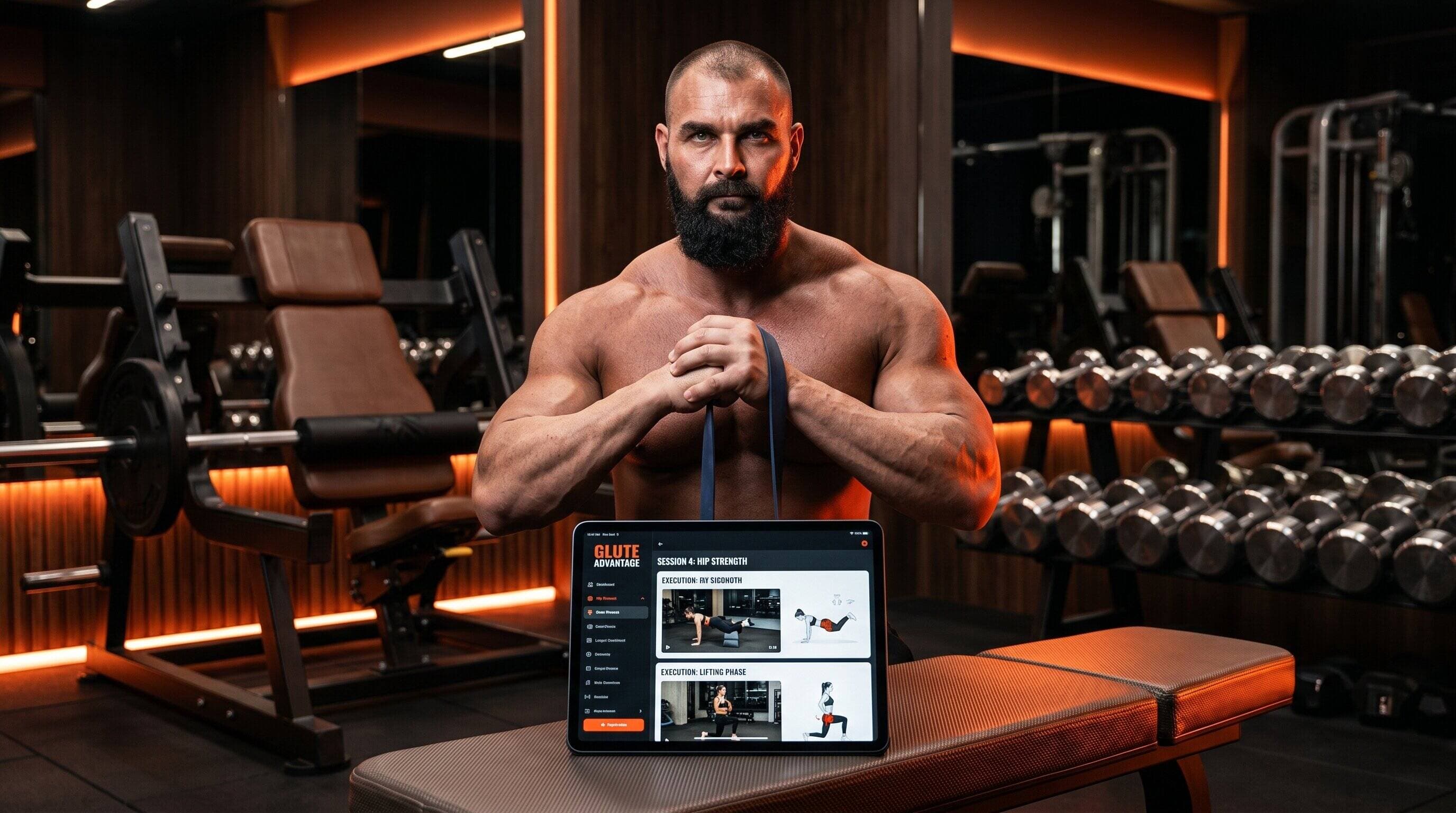
A clean modern gym with a barbell hip thrust station, orange rim lighting from a setup spotlight, and a tablet on a bench showing a workout app screen
Pricing runs $29.95 a month or $289.99 a year on the Apple App Store. A separate, higher tier called Personalized Programming with the Glute Guy bills $119 every 28 days for one to one program design (bretcontreras.store). A $30 book earns $30 once. A $290 a year subscription earns $290 a year, every year the user stays. For a creator whose audience trusts the research, that gap is a different kind of company. Because the book reader and the app user are different customers. Glute Lab is a 480 page reference. It tells you how to program a mesocycle, when to deload, how to bias one head of the glute over another. The book reader has to translate theory into a weekly spreadsheet they will probably abandon by week three. The app reader opens their phone at the gym and does the next set. The exercise demo plays. The weight from last session is already filled in. Progressive overload happens because the app does the bookkeeping. That's the friction gap, and it is where most creator businesses leak money. The book sells the idea. The app sells the result. Bret has stacked four businesses on the same intellectual property: the books, the equipment line (BC Strength), the physical gyms (Glute Lab), and the app. Each one captures a different willingness to pay.
ProductTypePriceRevenue Pattern
Glute Lab bookOne time$30 to $40Pay once, read forever
BC Strength ThrusterEquipment$700 to $2,500Pay once, pays creator once
Glute Lab gym membershipLocalVaries by cityRecurring, capped by physical capacity
Booty by Bret appSubscription$29.95/monthRecurring, no capacity cap
Personalized ProgrammingHigh tier coaching$119 every 28 daysRecurring, capped by Bret's time
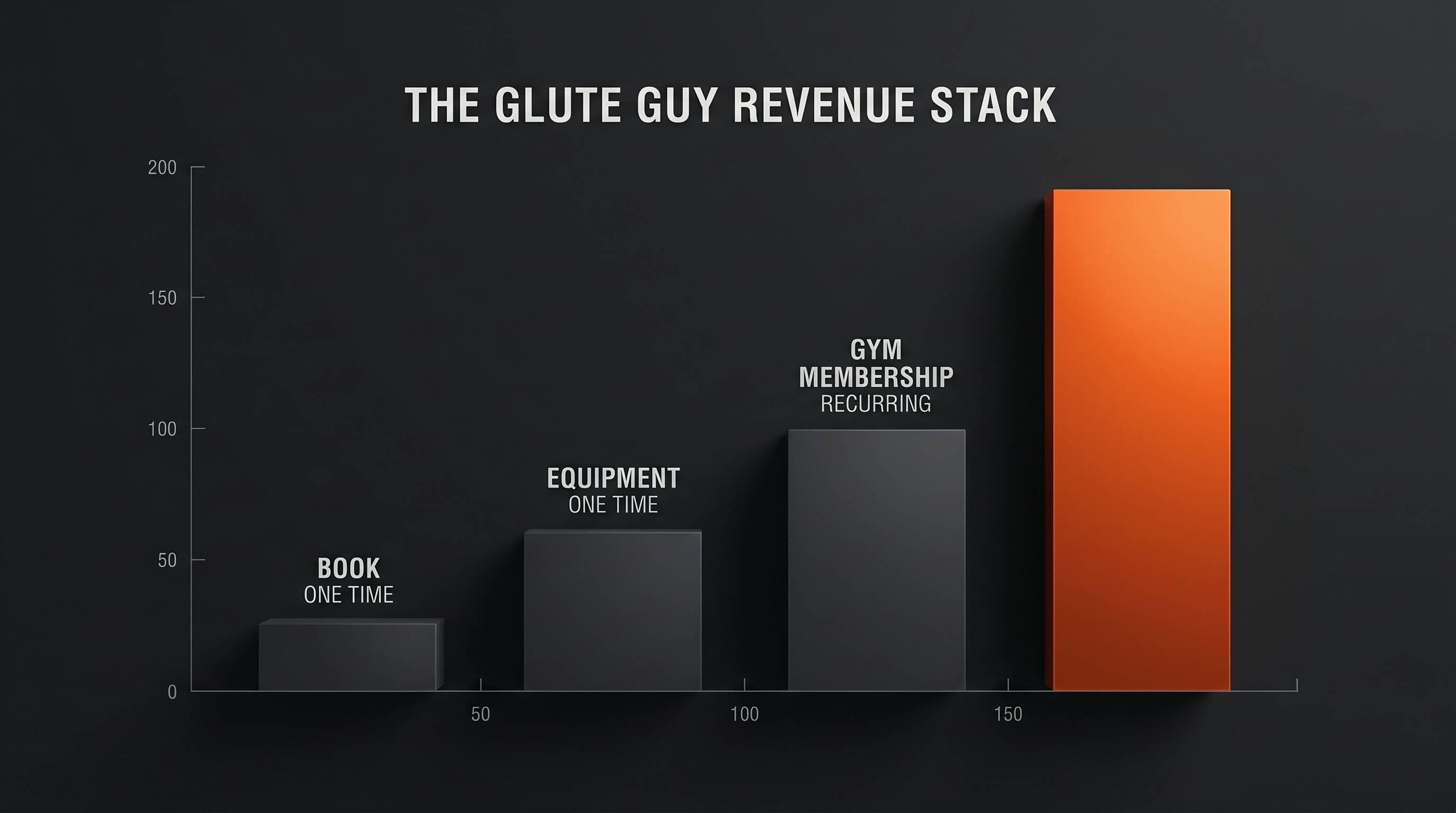
The app is the only line that earns every month and has no ceiling on subscriber count. That's why apps end up at the top of every creator's stack, not the bottom.
Bar chart titled THE GLUTE GUY REVENUE STACK comparing book, equipment, gym membership, and app subscription, with the subscription bar tallest and glowing orange
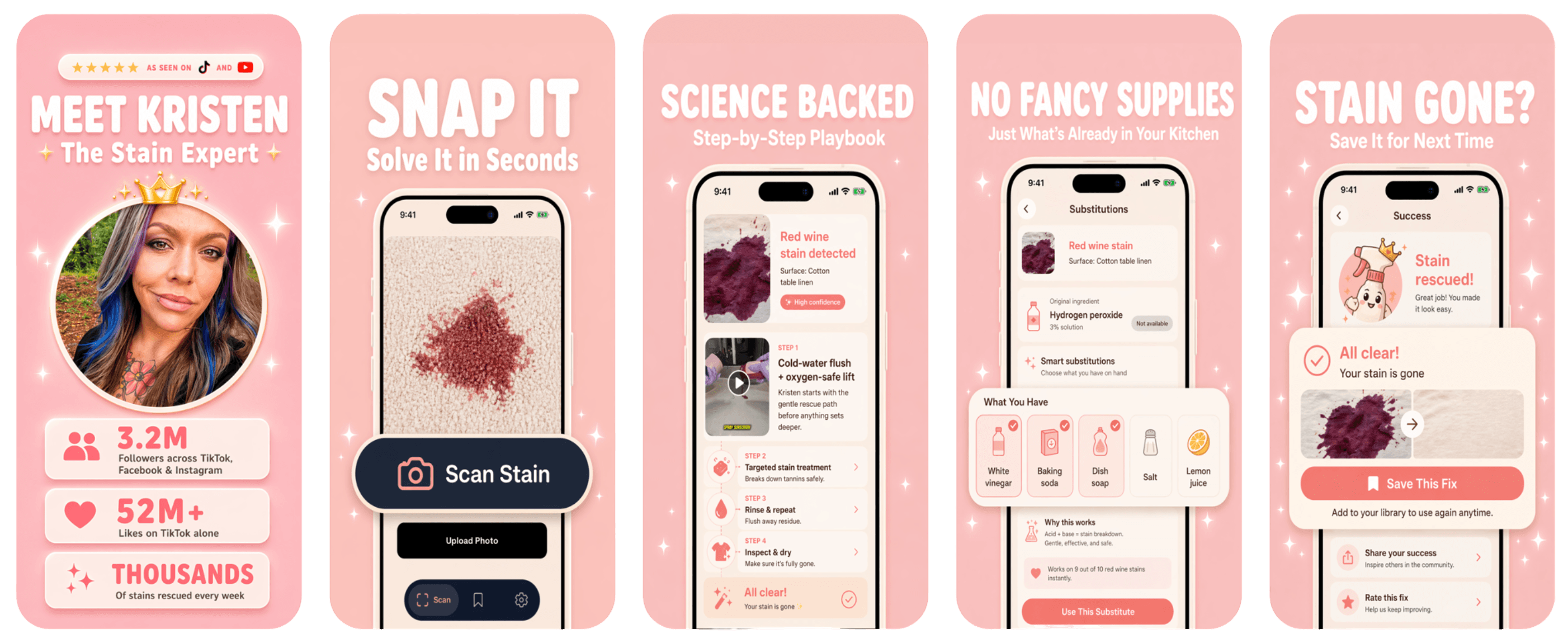
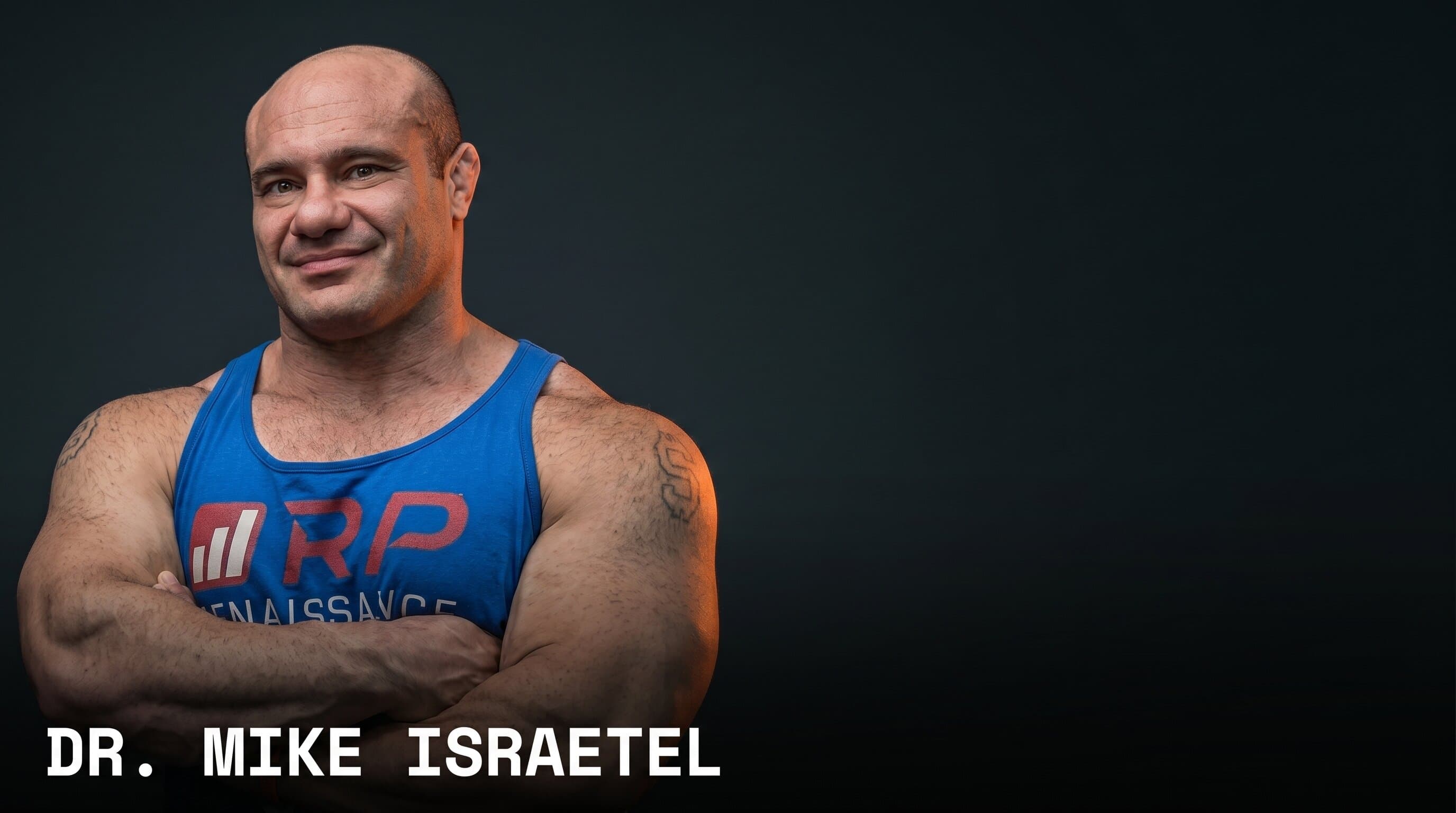
This is the same pattern we walked through in Dr. Mike Israetel's RP Hypertrophy app. Science based fitness creators keep arriving at the same conclusion: books and one time products cap out, apps compound. A niche is something you sell to. A category is something you defined that didn't exist before you started talking about it. Before Bret, "glute training" in mainstream gym culture was an afterthought tacked onto leg day. Squats, lunges, maybe some kickbacks. Bret's electromyography work, popularized through Instagram and YouTube, made the case that the gluteal muscles are the largest in the body, are trainable independently, and respond best to hip extension under load (the hip thrust) rather than knee extension (the squat). Once that argument went mainstream, the entire commercial gym industry rebuilt around it. Glute focused machines appeared on every Planet Fitness floor. "Glute day" became a normal split. Hip thrust stations became standard equipment. Bret didn't invent the muscle. He invented the category, then sold the products inside it. That is the move worth copying. Most creators try to compete inside a category somebody else built. The ones who compound build a category they get to name. The audience is bigger than the follower count suggests, because Bret's content gets picked up by other creators. His TikTok @gluteguy at roughly 314,000 followers is where he reacts to other creators' technique, and a single one of those videos has crossed 22 million views. The Instagram account at 1.2 million is the polished, research forward channel. The TikTok is the reaction engine. The two together do something most creators struggle with: they generate organic discovery (TikTok) while building authority (Instagram), and both funnel into the same app. This is why niche creator apps quietly beat big tech apps in the App Store. The big fitness apps spend on user acquisition. Bret's funnel is free because every video is a top of funnel ad for the app. Four moves worth copying, in order: 1. Build the credibility before the audience. Bret had a PhD and a body of research before he had 100,000 followers. Most creators try the reverse, then have to retrofit authority once the audience exists. The harder version is to build one credible thing, repeatedly, until nobody questions why you are the voice in the category. 2. Define the category, then sell into it. "Glute training" was not a mainstream thing until Bret made it one. If you can name a category, you own the products inside it. If you compete in someone else's category, you are bidding against everyone in it. 3. Stack the income, top with the subscription. Books, equipment, gyms, app. Each layer captures a different price point. The subscription sits on top because it is the only one that pays every month with no manual labor. 4. Use the second channel as a top of funnel for the first. TikTok reacts and grows. Instagram teaches and converts. The app cashes the check. Most creators run one channel and one product, then wonder why growth stalls. The credential is not the point. The credibility is. A pilates instructor who has trained 2,000 clients has the same kind of expertise Bret built, expressed differently. A nutrition creator who has tested 50 protocols on themselves and their clients has it. A finance creator who has helped 500 readers pay down debt has it. The form of the credibility varies. The pattern of converting it into a subscription product does not. Bret turned research into an app. A pilates creator turns programming into an app. A finance creator turns budgets into an app. The mechanics are identical: take the work the creator already does, put it inside a container that bills every month, and stop relying on one time sales and brand deals. That container is what Built by Foundry builds, launches, and runs. The creator stays in the content seat. The app handles the rest. You can see the same shape in Kayla Itsines's path from PDF guides to the $400M Sweat app exit. Different niche, same physics. And the broader pattern of why fitness creators end up on this path is laid out in why fitness creators dominate the app economy. A creator publishes a study. A founder cites the study inside a product that auto adjusts your next set. A creator sells a book once. A founder sells a subscription every month. A creator builds a following on TikTok. A founder builds a customer base on the App Store, where new users find the product without ever seeing the founder's face. Bret still posts. The app keeps billing whether he posts or not. That is the only kind of business worth building once you have the audience to support it. The Booty by Bret app is published by Booty by Bret LLC, the company Bret Contreras runs around his glute training intellectual property. Bret is the named developer on the App Store listing and the public face of the brand. Related companies in his stack include BC Strength (equipment) and Glute Lab (gyms). Subscriptions on the Apple App Store run $29.95 a month or $289.99 a year. A separate Personalized Programming tier on his website bills $119 every 28 days for one to one program design. Always check the App Store or bretcontreras.com for current pricing. He holds a PhD in Sport Science from the Auckland University of Technology, awarded in 2015. He is a doctor of sport science, not a medical doctor. He taught high school mathematics for six years before going back to school for sport science. The fitness career started as a hobby that turned into a research program that turned into a coaching business. Yes. The PhD helped Bret define a category. The app model does not require academic credentials. It requires expertise the audience already pays attention to, plus a product that captures that expertise in a container that bills every month. Foundry builds the container; the creator brings the expertise and the audience.
Want to turn your expertise into an app? We build custom subscription apps for creators, plans start at $49/month, three weeks to App Store, and we run the whole thing forever.
Let's Build →

Creator app strategy

Want us to review your creator business?

Apply for a Foundry Creator App Review. We'll tell you whether there is a real app opportunity hiding in your audience.

Bret Contreras: How the Glute Guy Built an App