
5 Fitness Creators Who Built Million-Dollar Apps

5 Fitness Creators Who Built Million-Dollar Apps

Foundry
March 25, 2026
Key Takeaways:
  • Kayla Itsines sold Sweat for $400M after starting with Instagram workout photos in her parents' backyard
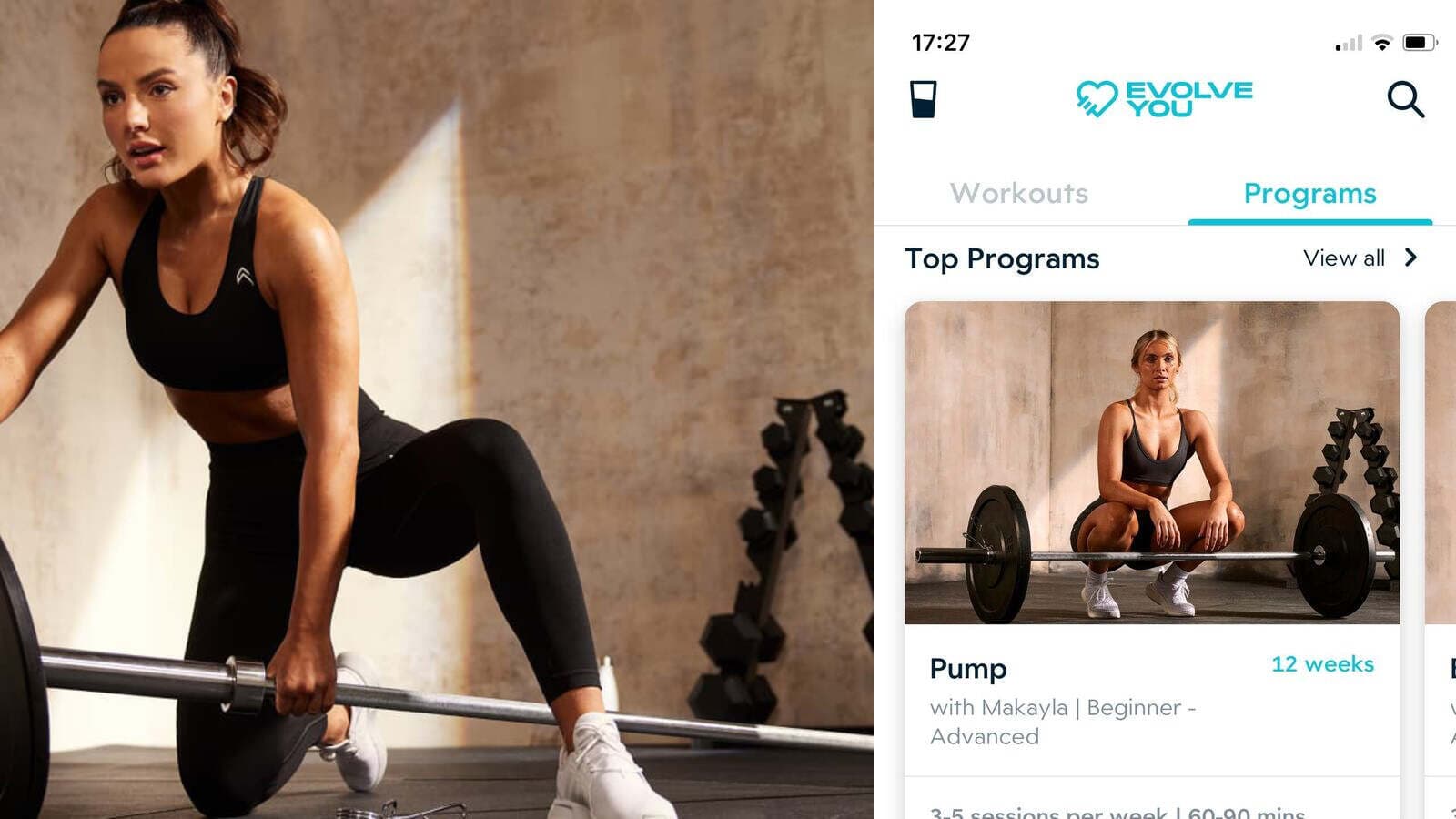
  • Krissy Cela built EvolveYou (80K subscribers) and Oner Active ($34M revenue) with zero outside funding
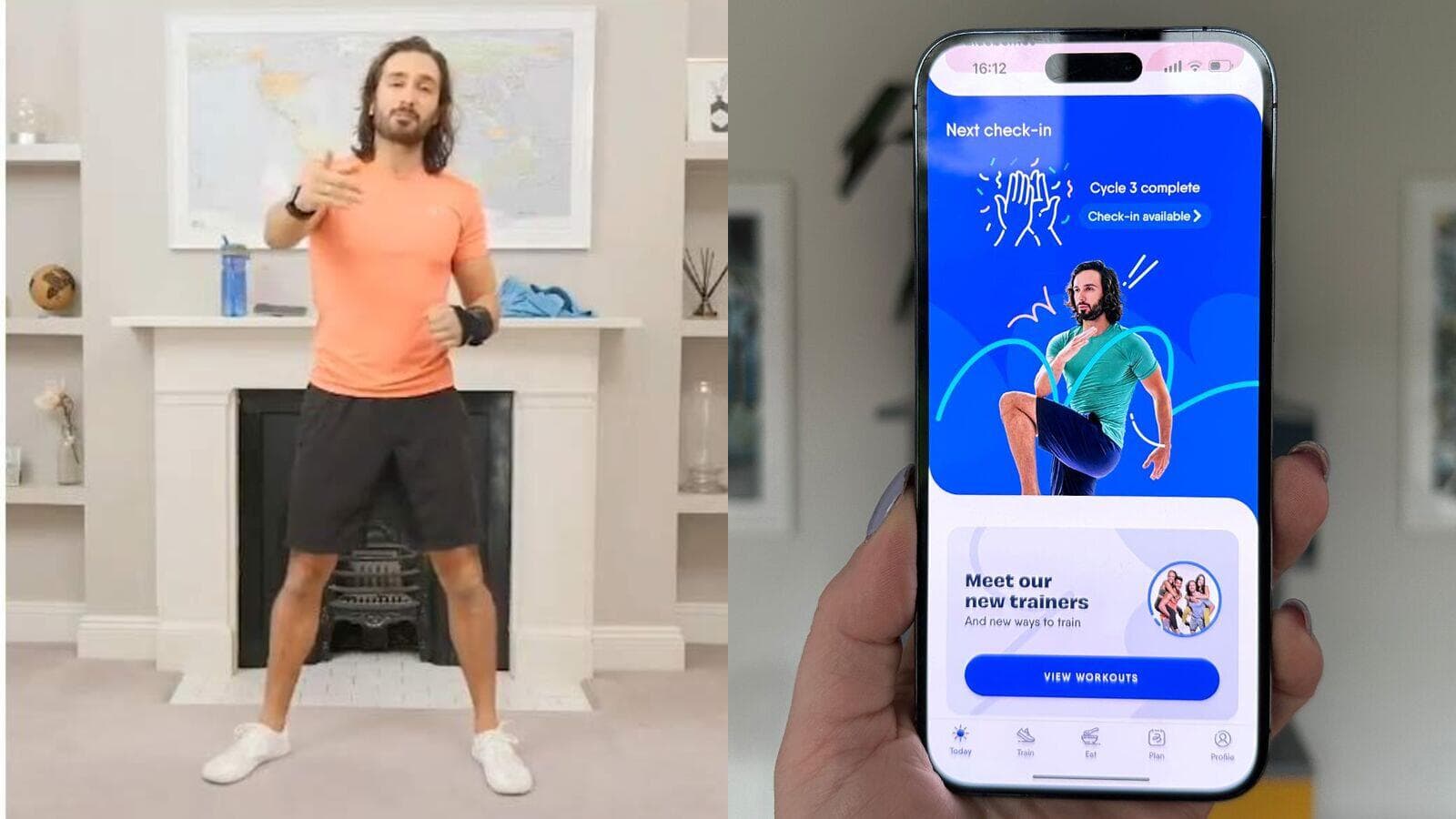
  • Joe Wicks turned a Guinness World Record lockdown livestream into The Body Coach App, attracting £3M from ITV
  • Chloe Ting's Core app hit 660,000+ downloads within a year of launching
  • Cassey Ho grew Blogilates into an Inc. 5000 brand with 7M+ YouTube subscribers and a subscription app at $3.99/month
Fitness is the one niche where creators don't just post content. They build products. Look at the App Store's health and fitness category. The top charts are full of creator names, not faceless corporations. Sweat. Body Coach. Alive. EvolveYou. Core. BODY by Blogilates. These are subscription businesses pulling in millions, and they were all started by people who used to give away workouts for free. Here are five fitness creators who stopped being content machines and started being founders. Fitness content has a structural problem: it works too well for free. YouTube has millions of full workout videos. TikTok has 30-second routines. Instagram has training splits. Creators give everything away, and then wonder why brand deals are their only revenue stream. An app fixes this. It takes the same expertise a creator already shares and packages it into a structured, personalized experience worth paying for monthly. Instead of one workout video that gets watched and forgotten, an app delivers a training program, tracks progress, and keeps users coming back daily. The five creators below figured this out. Some early, some late. But all of them turned free fitness content into subscription revenue that compounds every month. The numbers: 15.6 million Instagram followers. $400M exit. 450,000+ peak paying subscribers. Kayla started as a personal trainer in Adelaide, Australia. In 2013, she began posting before-and-after transformation photos of her clients to Instagram. She wasn't a marketer. When she hit 100 followers, she asked her partner Tobi Pearce, "What's a follower?" (Startup Daily). The posts went viral. Women started asking to buy her programs. She sold a $70 PDF workout guide called the Bikini Body Guide. It sold thousands of copies. Then she made the leap: she and Pearce built the Sweat app in 2015. The app converted her one-time PDF buyers into monthly subscribers paying $19.99/month. At its peak, Sweat had over 450,000 paying subscribers. In 2021, she sold the company for a reported $400 million. In 2023, she bought it back. The lesson: Kayla didn't build something new. She put the same workouts into a format people would pay for repeatedly. PDFs were a one-time sale. The app was a business. Read the full Kayla Itsines breakdown for the complete story. The numbers: 3.5 million Instagram followers. $70M+ combined revenue. Forbes 30 Under 30. Krissy Cela arrived in the UK from Albania at age 4. Her family had nothing. Her mother worked three jobs. Krissy started posting gym videos on Instagram to check her own form, not to build an audience. The audience came anyway. By her early 20s, she had millions of followers. She launched EvolveYou, a workout app, which now has 500,000+ downloads and 80,000 active subscribers bringing in £7.4M per year. Then she launched Oner Active, an activewear brand that hit $34M in annual revenue with zero outside funding. Combined, her businesses generate over $70M. She did all of this by 28. What makes Krissy's story unusual: she built two businesses, not one. The app generates recurring revenue. The apparel brand generates product revenue. Both feed off the same audience. Get the full Krissy Cela story. The numbers: 4.4 million YouTube subscribers. 130,000+ paying subscribers. £3M investment from ITV. Joe Wicks started with 15-second Instagram recipe videos. Quick, energetic, no-frills. He parlayed that into cookbooks, selling 900,000 copies of his first one alone. Then COVID hit, and everything changed. On March 24, 2020, Wicks set a Guinness World Record when 955,185 households tuned into his PE With Joe livestream simultaneously. He ran daily live workouts for the entire UK lockdown, all free. The Queen gave him an MBE for it. Most creators would have cashed out with sponsorships. Wicks built The Body Coach App instead, launching in December 2020. It hit 1 million downloads in its first year. Google Play named it App of the Year in 2022. Apple gave it Editor's Choice. In January 2026, ITV invested £3 million through a media-for-equity deal. A media company investing real money in a creator's app, not a sponsorship, not a brand deal. That's the shift. Read the complete Joe Wicks profile for the full timeline. The numbers: 25 million YouTube subscribers. 3+ billion views. 660,000+ app downloads. Chloe Ting was an actuarial analyst in Melbourne before she started making fitness videos. She holds a Master's degree in Financial Marketing. She published academic research. Then one day she uploaded a workout video called "Get Abs in 2 Weeks." That video has over 517 million views. It sparked a TikTok trend where millions of people filmed themselves trying her challenges. The hashtag #chloetingchallenge racked up billions of views. In 2024, Ting launched Core, her own fitness app with 500+ workouts and AI-powered meal tracking. It hit 660,000+ downloads with a 4.9-star rating. The interesting part: Chloe waited years to launch an app. She had the audience from 2019 onward. She could have built it much sooner. Every month without an app was a month her 25 million subscribers watched free content while someone else's app collected subscription fees. See the full Chloe Ting analysis for what that delay cost her. The numbers: 7+ million YouTube subscribers. 3+ billion views. Inc. 5000 company. In 2009, Cassey Ho was 22 and about to leave 40 Pilates students for a corporate job in Boston. She filmed one workout video as a goodbye gift. That video kept getting views. She kept uploading. Blogilates became one of the biggest fitness channels on YouTube. She launched POPFLEX activewear in 2016, which grew 800%+ since 2019 and made the Inc. 5000 list. Her Blogilates for Target line sold half of 1.1 million units in under a week. The BODY by Blogilates app offers subscription fitness plans starting at $3.99/month with a 4.7-star rating. It's the recurring revenue engine underneath a brand empire that includes activewear, retail partnerships, and a content library with over a decade of workouts. Cassey's path shows the compounding effect: free content built the audience, the audience bought the products, the products funded the app, and the app generates monthly revenue whether she posts or not. Read the full Cassey Ho profile.
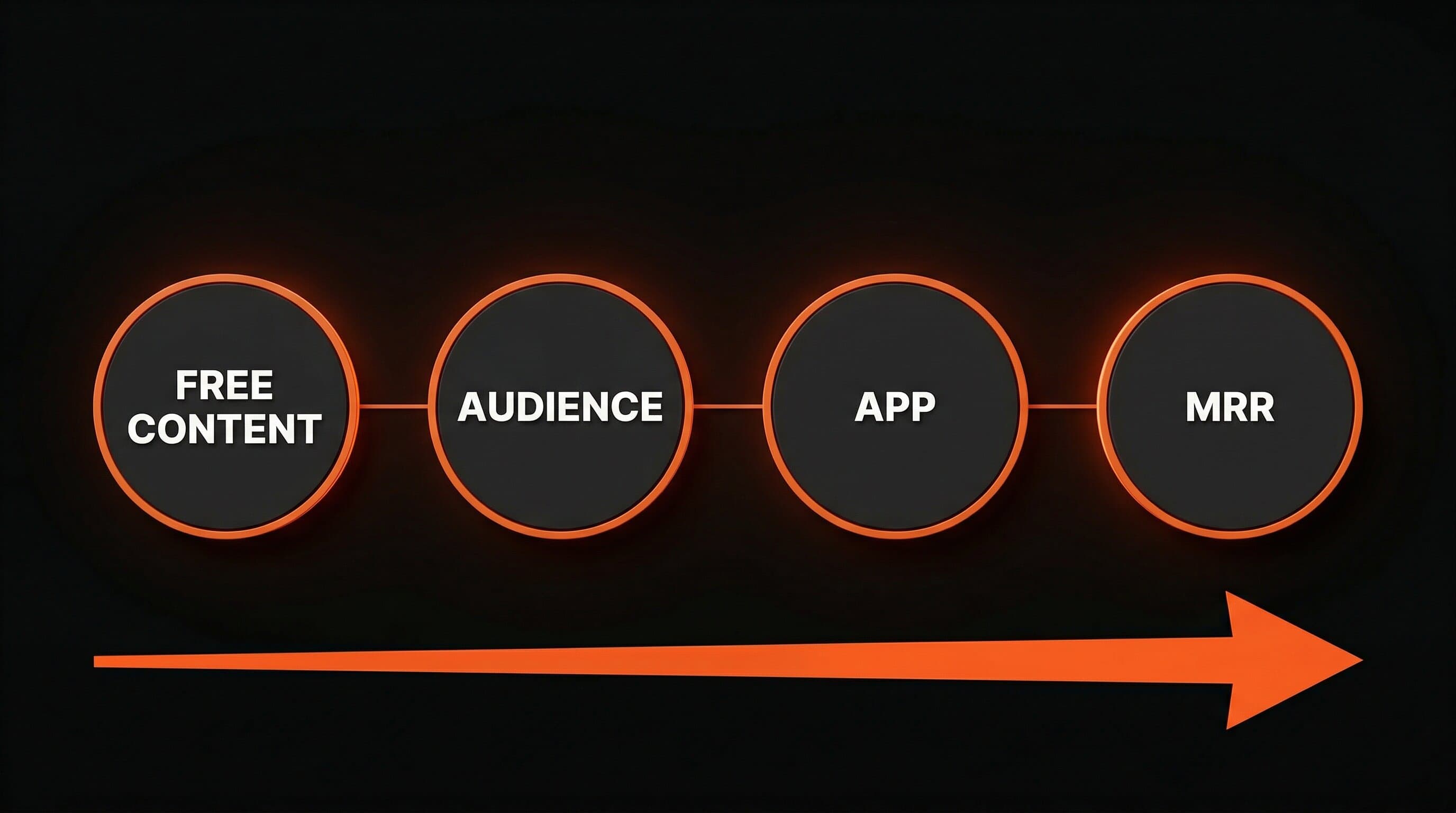
The fitness creator to app founder pipeline: free content builds audience, audience funds app, app generates MRR
Every creator on this list followed the same basic sequence, even though they didn't coordinate and come from different countries and backgrounds. Pattern 1: Free content first, product second. Nobody launched an app on day one. They all built audiences with free content for years. Kayla posted transformations. Joe made 15-second recipes. Chloe uploaded challenge videos. The app came after the audience was already there. Pattern 2: The product packages what they already teach. None of these apps introduced new content. They packaged existing workouts into structured programs with tracking, progression, and personalization. The app doesn't replace the content. It organizes it. Pattern 3: Subscription pricing turns a following into recurring revenue. PDFs sell once. A $14.99/month app subscription generates $180/year per user, and it compounds. At 10,000 subscribers, that's $1.8M annual recurring revenue. Pattern 4: The app grows beyond the creator's audience. People discover Sweat, Core, and EvolveYou by searching the App Store. They find the app first, then the creator. That's a growth channel social media can't replicate. As we explored in why your next 10K fans won't come from social media, the App Store is an acquisition engine most creators ignore.
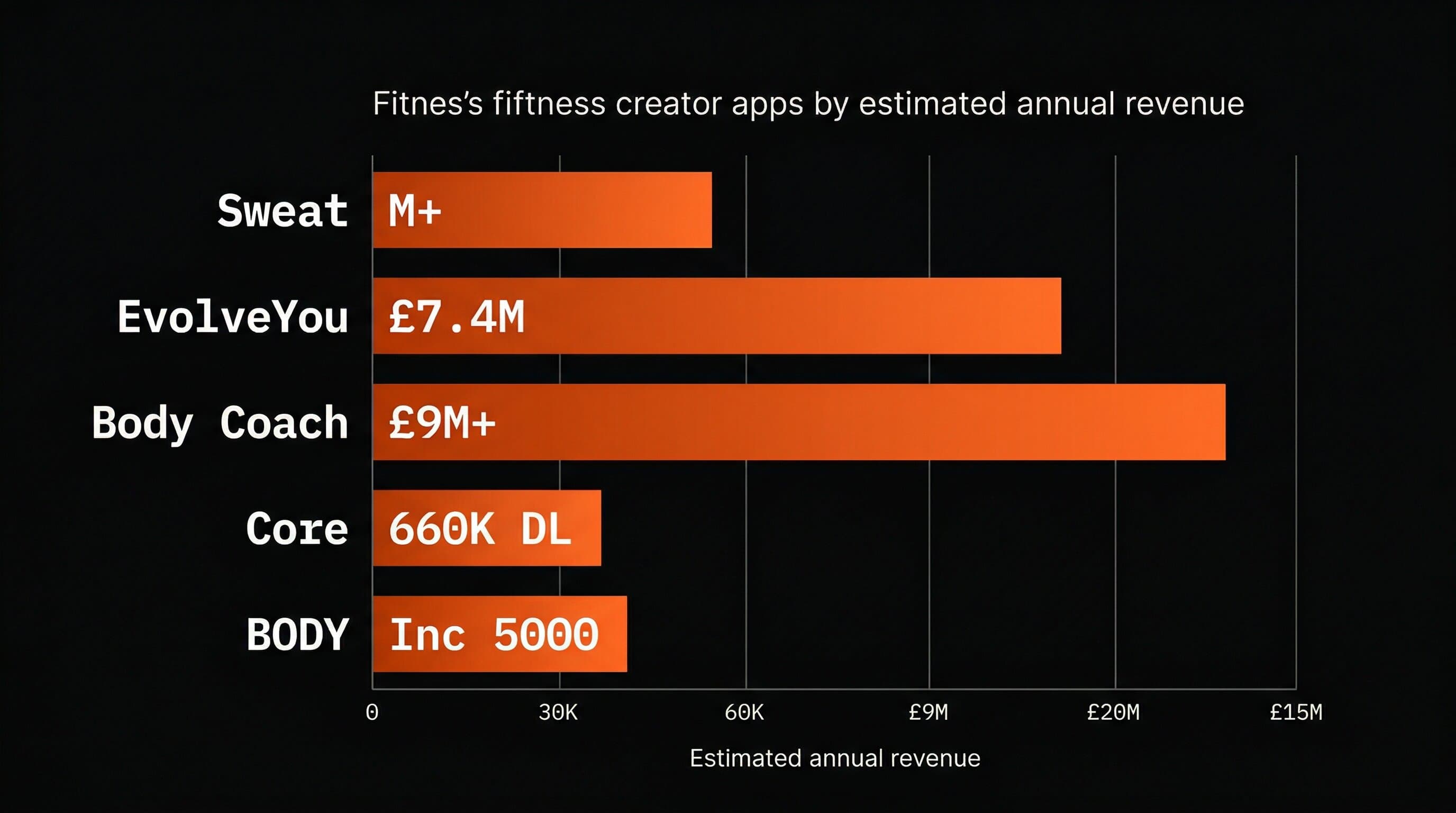
Estimated annual revenue comparison across five fitness creator apps
Here's what the publicly available data tells us:
CreatorAppSubscribers/DownloadsPricingEst. Annual Revenue
Kayla ItsinesSweat450,000 peak subscribers$19.99/month$100M+ at peak
Krissy CelaEvolveYou80,000 active subscribers£9.99/month£7.4M
Joe WicksBody Coach130,000+ subscribers£69.99/year£9M+
Chloe TingCore660,000+ downloadsFreemiumUndisclosed
Cassey HoBODY by BlogilatesActive subscribers (undisclosed)$3.99/monthUndisclosed
The range is wide, but the floor is significant. Even the "smaller" apps on this list generate millions in annual revenue. Compare that to brand deals, where most fitness creators with 1M+ followers earn $5,000 to $25,000 per sponsored post, and each deal requires new negotiation, new content, new approval cycles. A subscription app earns while you sleep. A brand deal earns while you work. Traditional agencies charge $50K to $200K+ for a fitness app. Built by Foundry builds subscription apps for creators at $0 upfront on a revenue-share model. You don't pay unless the app earns. No. Every creator on this list partnered with developers or agencies. Kayla Itsines had Tobi Pearce handle the business side. Joe Wicks hired a development team. The creator's job is the vision and the audience. The tech partner handles the build. Most agencies take 6 to 12 months. Built by Foundry ships in approximately 3 weeks. The faster you launch, the sooner your audience starts converting to paying subscribers. The apps on this list share common features: structured workout programs, progress tracking, video demonstrations, and subscription billing. Some add meal planning (Core by Chloe Ting), community features (EvolveYou), or integration with wearables (Sweat). Start with the core features and add based on user feedback. Yes. You don't need 10 million followers. Built by Foundry works with creators starting at 50K engaged followers. At 50K followers with a 2% conversion rate, that's 1,000 paying subscribers generating $15K/month at $14.99. The math works at much smaller scales than these headline numbers suggest.
These five creators proved that fitness content is more valuable as a subscription product than as free social media posts. Every one of them already had the workouts, the knowledge, and the audience. The app just gave their expertise a price tag that renews every month. You have the same ingredients. The question is whether you'll keep posting free workouts while someone else's app collects the subscription fees. Ready to turn your fitness content into a subscription app? Built by Foundry builds, launches, and runs the entire product. $0 upfront. Three weeks to App Store. We handle everything so you can focus on your content and your community.
Let's Build →

Get Creator Revenue Insights

How creators are turning audiences into subscription businesses

You might also enjoy...